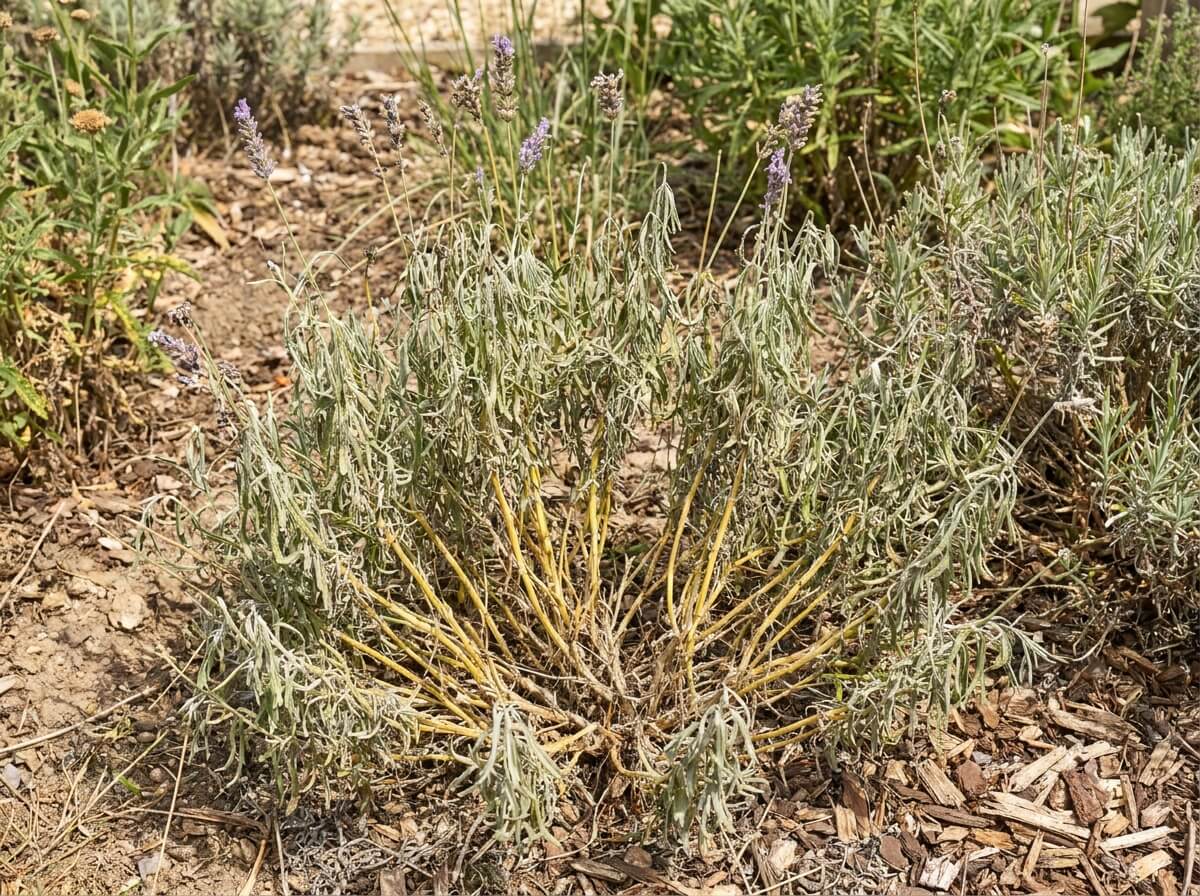
The heat arrives. Your lavender starts to wilt. You reach for the watering can. That single reflex kills more lavender than any drought ever has. Lavender wilts in summer heat not because it’s thirsty, but because it’s stressed by heat — and adding water at that moment triggers root rot within days. Here’s what’s truly happening. What can you do right now, while the plant is still salvageable?
Lavender comes from the rocky, sun-blasted hillsides of southern France, Spain, and the Mediterranean coast. Those are places where summer rain is rare; soil drains in mere seconds. The plant’s entire physiology is built for dry heat, not moist warmth. It’s a non-negotiable part of its makeup.
When temperatures spike, lavender closes its stomata. The plant goes into a kind of heat-pause. Its foliage droops. It looks desperate. But the thing is, its roots need air and dryness at that moment — definitely not water. So, soil that stays damp above 10–12°C for more than a week starts suffocating those delicate roots. And the fungal rot Phytophthora moves in fast, causing a real issue.
With El Niño pushing temperatures to record highs across multiple continents, this issue is arriving earlier and hitting harder than usual. Even in gardens that have shot up lavender successfully for years. Things are changing.
Root rot in lavender is silent for about 10–14 days. For a while, the plant looks like it might properly recover. But it’s often a dodgy sign.
Then the stems go grey. The base turns brown and soft. And the whole thing collapses at once. By that point, it’s gone. Done for.
Even without rot, lavender overwatered through summer develops weak, leggy growth. That growth just won’t survive the following winter. And then the woody base splits. Game over.
Flowering drops off. The plant then lingers, looking truly miserable for another season. Then it dies quietly.
And if you’re in a garden with clay soil — common across much of the UK, the US Midwest, and parts of New Zealand’s North Island — the risk truly multiplies. Clay holds water around the crown for days, even after light rainfall. That’s a huge issue.
Lavender planted directly into clay rarely lasts more than three summers. Mark that down.
First: stop watering. Push a finger 3cm into the soil, directly beside the plant. This is non-negotiable.
If there’s any moisture at all, leave it completely alone for at least 10 days, regardless of the heatwave. It doesn’t need more.
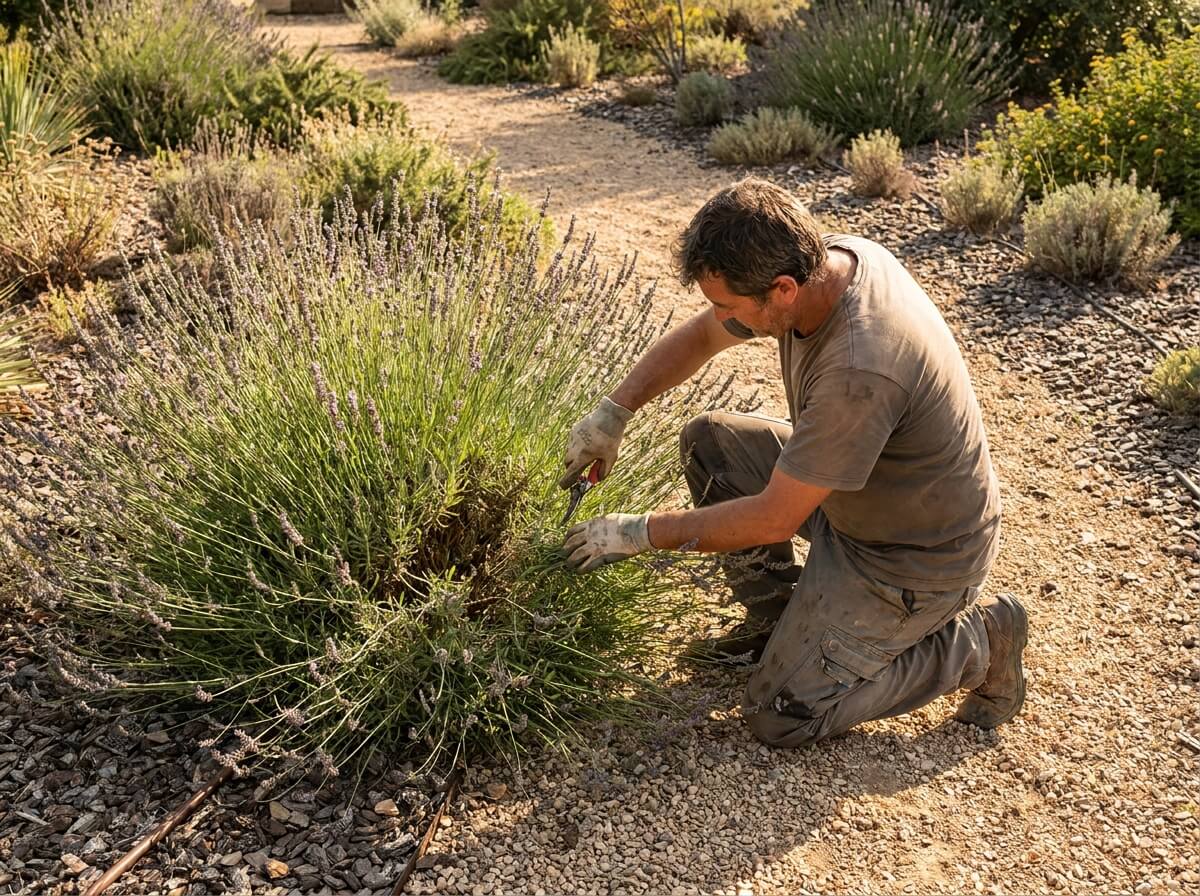
Second, prune. This is the non-negotiable step most gardeners skip in summer. They wrongly assume it’s only a spring or autumn job. Cut back all grey, soft, or leggy stems to firm green wood — typically about one-third of the entire plant. This does wonders for moisture demand immediately, and significantly improves airflow around the crown. The RHS confirms that lavender benefits from a light trim after flowering. And in a hot summer, doing this early prevents far worse damage.
Yes, the pruning feels brutal when the plant already looks stressed. It’s fiddly. Worth it. The difference between a plant that survives and one that doesn’t is almost always this cut.
Wilting is obvious. But there are earlier warnings most gardeners miss, until it’s too late. Way too late.
If you’re also watching other plants struggling this summer, the water-loss patterns happening across lawns right now follow the same logic. Too much interference often does more damage than the heat itself. The bacterial disease Xylella fastidiosa is also spreading through lavender and olive in warmer regions; this is worth ruling out if your plant doesn’t recover after correcting watering. This issue isn’t going away soon.
Southern Hemisphere gardeners: This dynamic also applies to your December–January period. Lavender faces the exact same heat stress then. Pay attention.
Smart tip: If the soil beside your lavender smells earthy and damp, it doesn’t need water — not even in a heatwave. Trust your nose.
Established lavender in the ground needs watering once every 2–3 weeks at most. That’s only if there has been no rain. And only if the soil is properly dry 3cm down. Container lavender needs slightly more: once a week, maximum. Don’t overdo it.
If there’s any firm green wood left at the base, prune back to it immediately. Then move the plant to sharper-draining soil or a gritty compost mix. But if the entire base is brown and soft, the plant can’t be saved. You’ll need to take cuttings from any remaining healthy tips. Start again from scratch.
Gritty, alkaline, and extremely free-draining. The RHS recommends adding up to 30% horticultural grit to regular border soil before planting; that’s proper advice. In heavy clay, raised beds or containers are the only reliable long-term solution. Don’t skip this part.
Yes — the silver-grey colouring intensifies in heat as a natural sun-protection response. That alone isn’t a warning sign.
The issues to watch for are softness at the stem base, a musty smell, or yellowing rather than silvering of the leaves.