Home » Health » Elderflower and elderberry: traditional uses, growing and home preparations
Elderflower and elderberry: traditional uses, growing and home preparations
·
0
Elder grows in hedgerows, gardens and field margins across most of the temperate world, and it gives two harvests a year: creamy scented flowers in early summer, dark berries by late summer. This page covers which part to pick, when, and how to turn it into infusions, syrups and tinctures at home — plus the safety points that matter with this particular plant.
Elder at a glance
Item
Detail
Botanical name
Sambucus nigra (and the closely related Sambucus canadensis)
Family
Adoxaceae
Parts used
Open flower heads; ripe berries, always cooked
Forms of use
Infusion, cordial, syrup, tincture, steam inhalation, cooked in jellies and vinegars
Harvest season
Flowers: late spring to early summer. Berries: late summer to early autumn
Taste
Flowers floral, honeyed, muscat-like; cooked berries dark, winey, tart with a slight earthiness
What it is credited with
Elderflower infusion is traditionally used as a hot “sweating tea” in European folk medicine at the first shiver of a winter chill.
Herbalists recommend elderflower for a stuffy head, blocked sinuses and seasonal sniffles, usually as a steam inhalation or a hot drink.
Naturopathy credits cooked elderberry preparations with supporting the body through the cold months — hence the household habit of making syrup in autumn.
The flowers have a long reputation as a gentle skin wash; cooled, strained infusion was used on the face and on tired eyes in country practice.
In traditional herbalism, elderflower was valued for its mild action on fluid balance, which is precisely why the interaction with diuretic medication below matters.
Elderberry cordial is a classic winter kitchen remedy across northern Europe, taken by the spoonful in hot water.
Growing and harvesting
Elder tolerates poor soil, clay, partial shade and periods of waterlogging. Full sun gives the heaviest fruiting.
Left alone it reaches 4–6 m. Most gardeners cut it back by about half in late winter to keep it as a large shrub.
For a generous berry crop, grow the species form or the cultivar ‘Haschberg’. Purple-leaved ornamentals such as ‘Black Lace’ do flower and fruit, but far more sparingly.
Propagate from hardwood cuttings of the current season’s growth taken in winter; they root readily.
In Australia and New Zealand, elder fruits best in cooler districts — Victoria, Tasmania, the South Island. In warm subtropical zones, fruiting is unreliable.
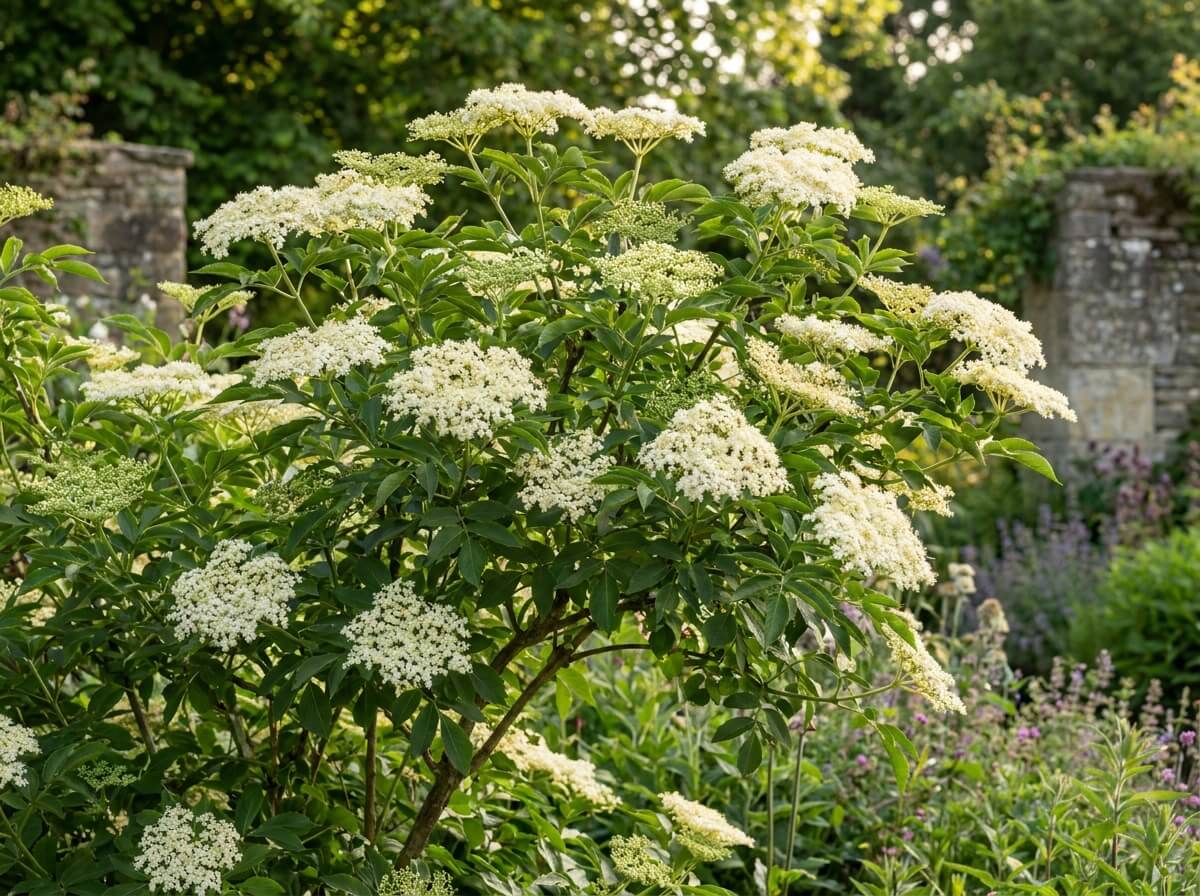
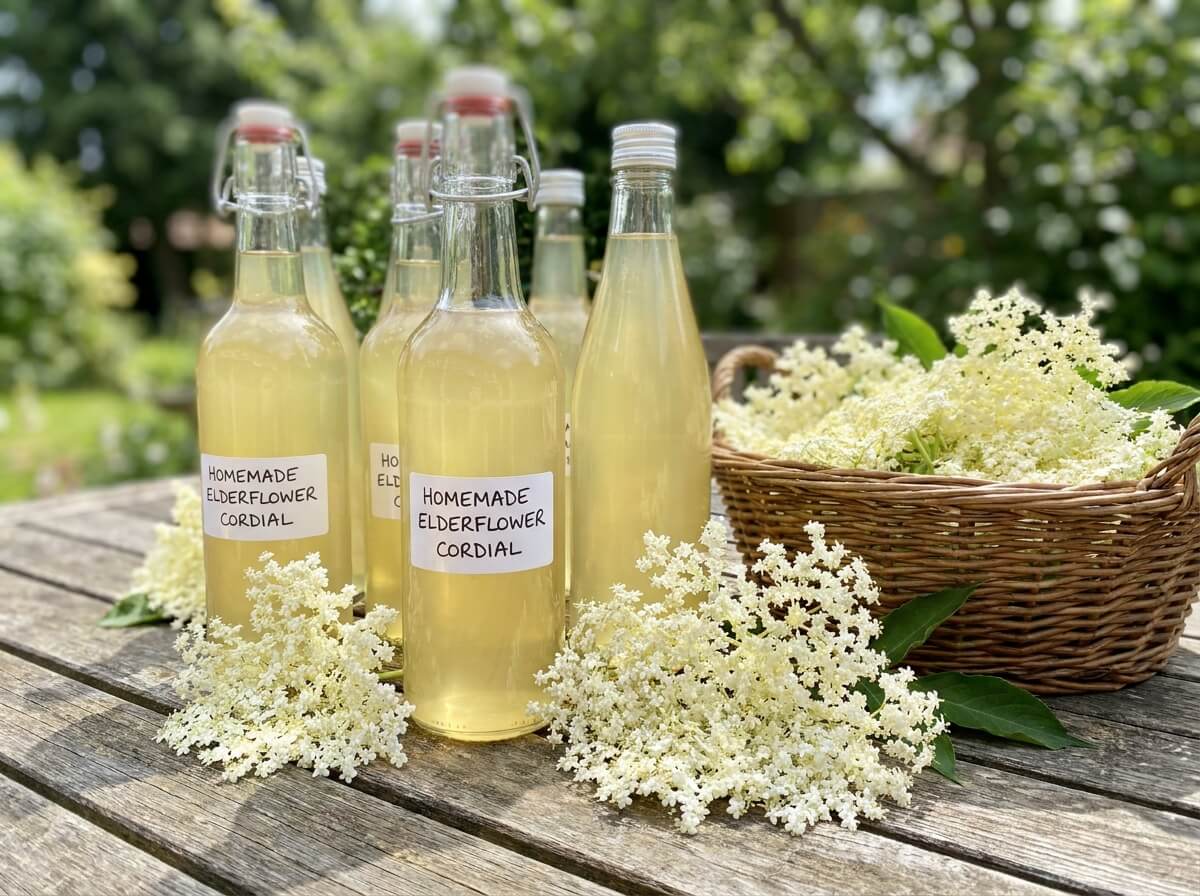
Picking the flowers: choose a dry morning, early, before the sun warms the heads. Take flat-topped corymbs that are fully open, creamy white and strongly fragrant, with perhaps a few unopened buds at the centre. Snip the whole head with scissors and lay them loose in a basket, never in a plastic bag.
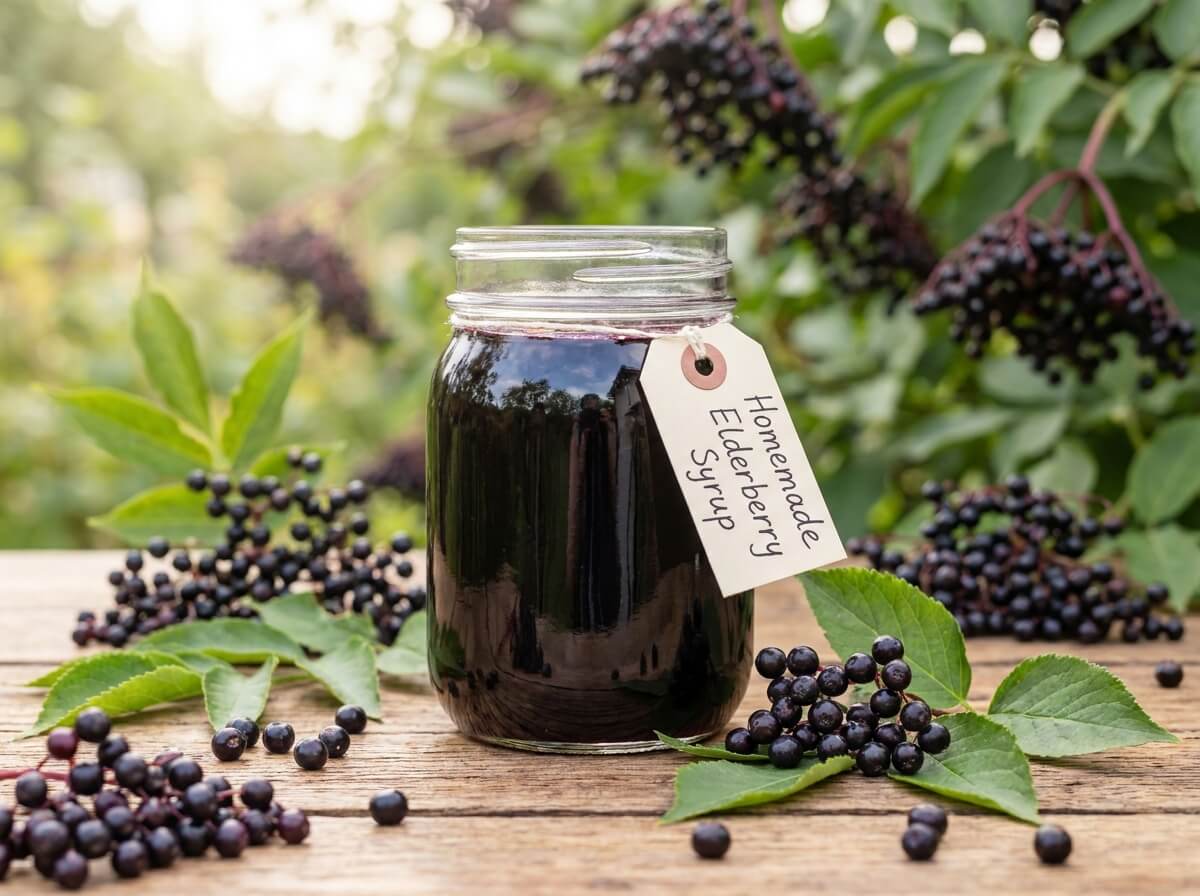
Picking the berries: wait until the entire cluster is deep purple-black and the fruit gives slightly under gentle pressure, from late summer into early autumn. Cut whole clusters, then strip the berries off the stalks at home with a fork. Never harvest beside busy roads — elder takes up pollutants readily.
How to use it
Elderflower infusion
Pour a mugful of just-boiled water over two fresh flower heads, or a heaped teaspoon of dried flowers.
Cover the cup and steep for about ten minutes — covering keeps the aromatic oils in the drink rather than in the room.
Strain and drink hot. Traditionally taken no more than three cups across a day, and only for a few days at a time.
Taste: light, floral, slightly honeyed. A slice of lemon suits it; so does a spoon of honey once it has cooled a little.
Elderflower steam inhalation
Three or four flower heads in a bowl of just-boiled water.
Lean over the bowl with a towel over your head and breathe for five to ten minutes, eyes closed.
Old-fashioned and pleasant. Keep the bowl well away from children.
Elderflower tincture
Pack a sterilised jar loosely with fresh flower heads and cover them completely with vodka.
Seal, keep in a cool dark cupboard for about four weeks, shaking it every few days.
Strain through muslin, press the flowers, bottle in dark glass. Traditionally taken well diluted in a little water.
Kept away from light, it holds its quality for a couple of years.
Elderberry syrup
Put a large bowlful of stripped ripe berries in a pan with enough cold water to cover them generously.
Add two cinnamon sticks, a few cloves and a spoonful of grated fresh ginger.
Bring to the boil, then simmer gently for about three quarters of an hour, until the liquid has reduced by roughly a third.
Take the pan off the heat, mash the fruit with a fork and strain through muslin, pressing hard.
Let it cool to lukewarm before stirring in raw honey — boiling honey destroys what makes it worth adding.
Bottle in sterilised dark glass and refrigerate at once. It keeps around three months chilled, or up to a year frozen in small portions.
Taste: dark, winey and spiced. A spoonful stirred into hot water is the classic winter drink.
Berries must be cooked before they go anywhere near a jar
Which elder preparation for which moment
Form
Part used
How it is made
What it is traditionally used for
Hot infusion
Flowers
Steeped covered for ten minutes
The traditional hot “sweating tea” of European folk medicine
Steam inhalation
Flowers
Steeped in a bowl, breathed under a towel
Credited by herbalists with easing a stuffy head
Tincture
Flowers
Macerated in vodka for four weeks
A keeping form, used diluted out of flowering season
Syrup or cordial
Cooked berries
Simmered, strained, sweetened once cooled
The classic winter spoonful of northern European households
If you want to get more from every picking, the principles in our guide to the medicinal herb harvest apply directly to elder. For another long-used hedgerow plant, see common vervain.
Frequently Asked Questions
The one thing to remember: cook elderberries every single time — and pick the flowers on a dry morning, before the sun takes their scent.
Can I use ornamental elders like ‘Black Lace’ for home preparations?
Yes, their flowers and cooked berries are usable, but the yields are much lower than the species form. If you want a worthwhile harvest rather than a handsome shrub, plant Sambucus nigra itself or the cultivar ‘Haschberg’. The same cooking rule applies to their berries.
How long does homemade elderberry syrup keep?
In a sterilised dark glass bottle in the fridge, it holds for around three months. Freeze it in small portions if you want it to last longer — up to a year. Stir in the honey only once the liquid has cooled to lukewarm.
Are elder leaves usable like the flowers?
No. The flowers are the part used, and the ripe berries once cooked. Leaves, bark, roots and unripe berries carry higher concentrations of cyanogenic glycosides and should not be used in home preparations.
What is the difference between European elder and American elder?
They are closely related and both have a long history of household use. North American gardeners usually work with Sambucus canadensis, which can be prepared in exactly the same ways as Sambucus nigra. Its berries need cooking just the same.
When exactly should I pick the flowers?
From late spring to early summer, on a dry morning before the day warms up. Choose heads that are fully open, creamy white and heavily scented, with a few unopened buds still at the centre. Pass over anything browning at the edges.
This information is provided for general interest and reflects the traditional use of plants. It is not a substitute for medical advice. If you are on medication, pregnant, or in any doubt, ask a healthcare professional.
🌿 Nature & Garden Newsletter
Gardening tips, recipes & seasonal advice, twice a week.