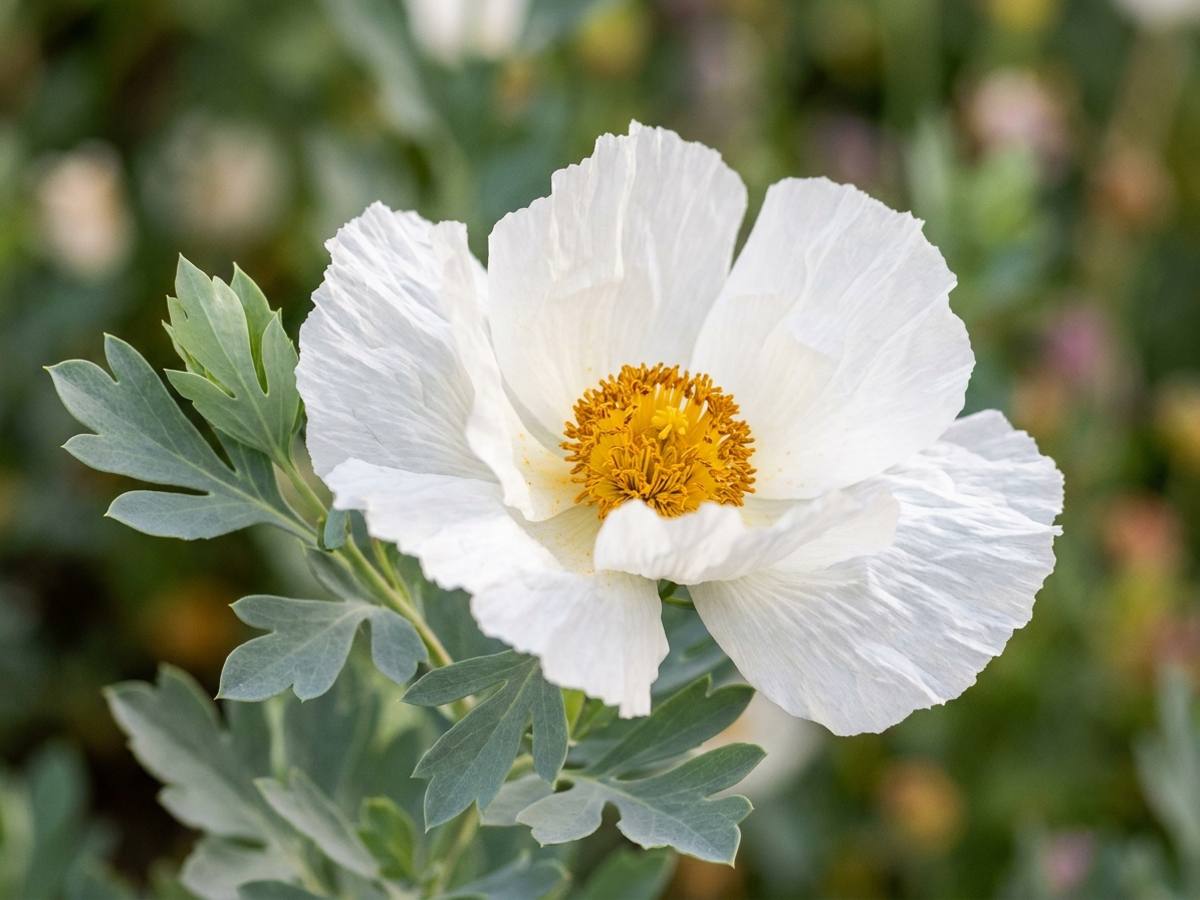
Few perennials make quite the entrance that Romneya coulteri does: satiny white petals the texture of crumpled tissue paper, up to 15 cm across, each cradling a boss of golden stamens like an enormous fried egg. Rising on greyish, glaucous stems to head height, this Californian native brings a sun-baked, chaparral glamour to gravel gardens and hot borders. It is famously slow to settle — but once it decides it likes you, it will colonise with real enthusiasm.
Give Romneya the hottest, brightest position you own — a south- or west-facing wall, a sun-drenched slope, or the open side of a gravel garden. It needs a minimum of six to eight hours of direct sun to flower well and to ripen its stems before winter. In shade or crowded borders it becomes leggy, sparse and reluctant to bloom.
Drainage matters more than fertility. Poor, stony, sandy or chalky soils suit it perfectly, and it is genuinely happy on alkaline ground with a pH of around 7 to 8. Heavy, wet clay is the one condition it will not forgive; if that is what you have, plant into a raised bed or a generously grit-improved mound.
It withstands drought, heat and coastal wind once established, and copes with winter cold provided the roots stay dry. In cooler or wetter regions, treat it as a wall shrub where the eaves and masonry keep the crown drier and warmer.
Plant in late spring, once the soil has warmed and all frost risk has passed, so the fleshy roots have a full growing season to establish before their first winter. Autumn planting in damp climates too often ends in rot.

Almost everything this plant asks of you is a question of timing: when to cut back, when to plant, and when to leave it strictly alone. The table below sets out the year in one view before the detail that follows.
| Season | Main job | Watering and feeding | Watch out for |
|---|---|---|---|
| Early spring | Cut all stems back to 10–15 cm above ground, as flowers appear on new wood | A light scattering of potash-rich fertiliser, never nitrogen | Very slow regrowth — do not write the plant off too early |
| Late spring | Plant out, or detach rooted suckers | Water thoroughly at planting, then keep just moist | Plant only once the soil has warmed and frost risk has passed |
| Summer | Deadhead spent blooms to keep the display tidy and prolong it | Almost no watering; dry roots improve flowering and stem strength | Suckers appearing a metre or more from the parent |
| Autumn | Cut the whole plant down hard to a low framework | Taper watering off completely; apply a dry, gritty mulch over the crown | Do not divide — the roots resent disturbance at that time of year |
| Winter | Take 8 cm root cuttings | Keep the crown dry; mulch with dry material or bracken in cold gardens | Complete dieback to a woody base in hard winters |
Get the timing right and the rest is mostly a matter of leaving the plant undisturbed.
Almost everything this plant asks of you is a question of timing: when to cut back, when to plant, and when to leave it strictly alone. The table below sets out the year in one view before the detail that follows.
Get the timing right and the rest is mostly a matter of leaving the plant undisturbed.
Spring: Cut all stems back to 10–15 cm above ground in early spring if you did not do so in autumn, as flowers appear on new wood. Growth can be alarmingly slow to appear — do not give up before late May. A light scattering of potash-rich fertiliser is ample; nitrogen simply encourages sappy stems that flop.
Summer: Established plants need almost no watering, and dry roots actually improve flowering and stem strength. Deadhead spent blooms to keep the display tidy and prolong it into September. Watch for suckers appearing a metre or more from the parent and pull or dig them out promptly if you want to contain the colony.
Autumn: Once flowering finishes and stems begin to yellow, cut the whole plant down hard to a low framework. Apply a dry, gritty mulch over the crown in colder gardens — bark or leaf mould that holds moisture can do more harm than good. Avoid dividing in autumn; the roots resent disturbance at that time of year.
Winter: The plant dies back to a woody base and disappears entirely in hard winters, resprouting from the roots in late spring. Protect the crown with a dry mulch or bracken where temperatures drop below −10 °C.
Named selections are few, but the differences are worth knowing before you buy.