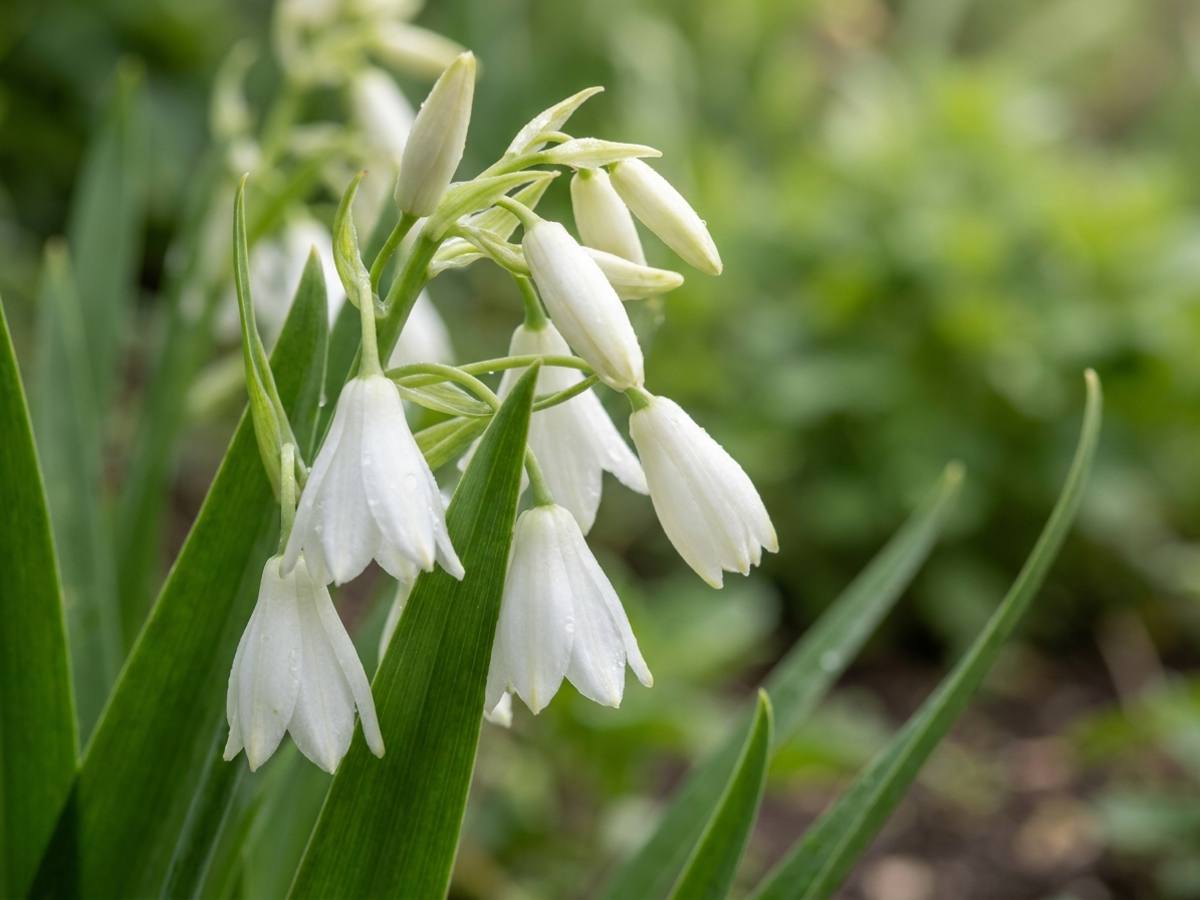
Galtonia candicans brings a cool, elegant note to the late-summer border, sending up metre-tall spires hung with waxy, pure white bells that nod gently in the breeze. Sometimes called the summer hyacinth, it flowers from midsummer into early autumn, precisely when many perennials are beginning to tire. Its greatest charm is the way those luminous white flowers glow at dusk, lightly scented and perfectly at home among grasses, dahlias and late salvias.
Give Galtonia candicans the sunniest spot you can spare. A full day of sun produces sturdy, upright stems, whilst shade encourages floppy growth that leans towards the light. A sheltered position matters too, since the tall flower spikes catch the wind badly in exposed gardens.
Soil should be deep, fertile and rich in organic matter, yet free-draining enough that the bulbs never sit in cold, stagnant wet. A neutral to slightly acidic pH suits it best, though it grows perfectly well on mildly alkaline ground. Heavy clay is the main enemy: winter waterlogging rots the bulbs far more reliably than frost kills them.
Native to the damp summer grasslands of the Drakensberg in South Africa, it enjoys moisture whilst in growth and dryness when dormant. In mild coastal and southern gardens it can stay in the ground year-round; in colder inland areas, lift the bulbs or mulch generously.
Galtonia works to a South African rhythm: dormant and dry in winter, thirsty and fast-growing in summer. This table sets out what the bulb needs at each point in its cycle.
| Season | What to do | What to watch for |
|---|---|---|
| Early to mid-spring | Plant bulbs once the winter wet has passed, 15–20 cm deep and 20–30 cm apart in groups of five to seven | Autumn planting only succeeds in mild, very well-drained gardens |
| Mid to late spring | Mark the position, then feed with a balanced fertiliser or mulch of garden compost as growth begins | Leaves appear later than most bulbs; slugs adore the soft emerging foliage |
| Early summer to early autumn | Water deeply in dry spells and give a high-potash feed every fortnight; stake in windy gardens | Thirstier than most bulbs, and tall spikes lean or snap after storms |
| Mid to late autumn | Let the foliage yellow, then cut it at ground level; mulch the crown or lift and store the bulbs in barely damp sand | Cold, wet clay rots bulbs left in the ground |
| Winter | Leave the dormant bulbs undisturbed and keep them dry | Excess winter moisture, not cold alone, causes most losses |
Get the winter dryness right and the summer watering generous, and the rest of the year looks after itself.
Plant bulbs in spring, from March to early May, once the worst of the winter wet has passed. Autumn planting is possible only in mild, very well-drained gardens.
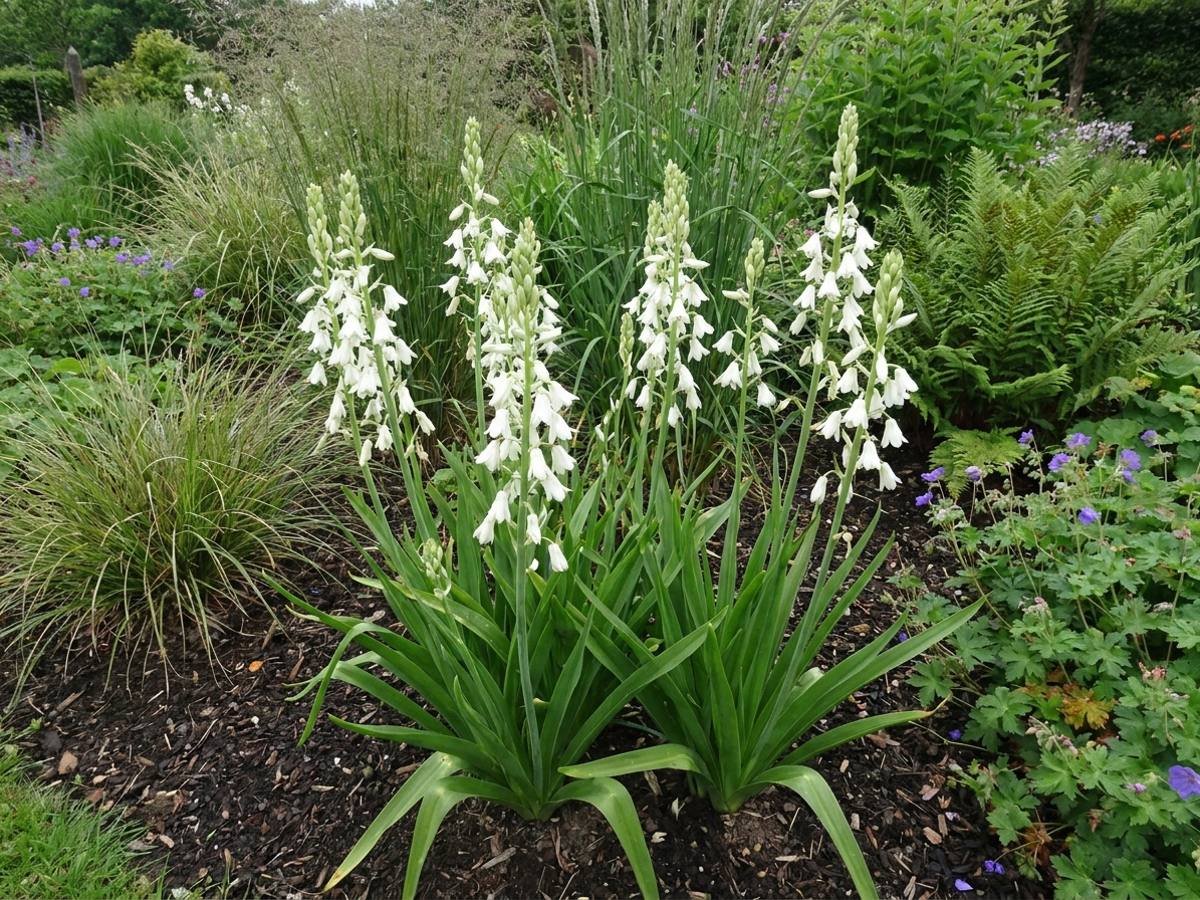
Spring: Strap-shaped grey-green leaves push through from April onwards, later than many bulbs, so mark the position to avoid accidental digging. Apply a balanced general fertiliser or a mulch of garden compost as growth begins. Watch for slugs, which adore the soft emerging foliage.
Summer: This is the plant’s active season and it is thirstier than most bulbs — water deeply in dry spells, especially as the flower spikes extend. A high-potash feed such as tomato fertiliser every fortnight from June improves flower size and count. Stake individually in windy gardens, and remove faded spikes unless you want seed.
Autumn: Allow the foliage to yellow naturally so the bulb can recharge, then cut it away at ground level. In mild regions, cover the crown with 10–15 cm of dry mulch — bark, bracken or straw. In colder gardens, lift the bulbs in October, dry them off and store in barely damp sand somewhere frost-free.
Winter: The plant is fully dormant and disappears completely below ground. Its chief need is dryness: excess winter moisture, rather than cold alone, causes most losses.
The genus is small, so the choice runs to a handful of species and one or two named selections — all worth growing.