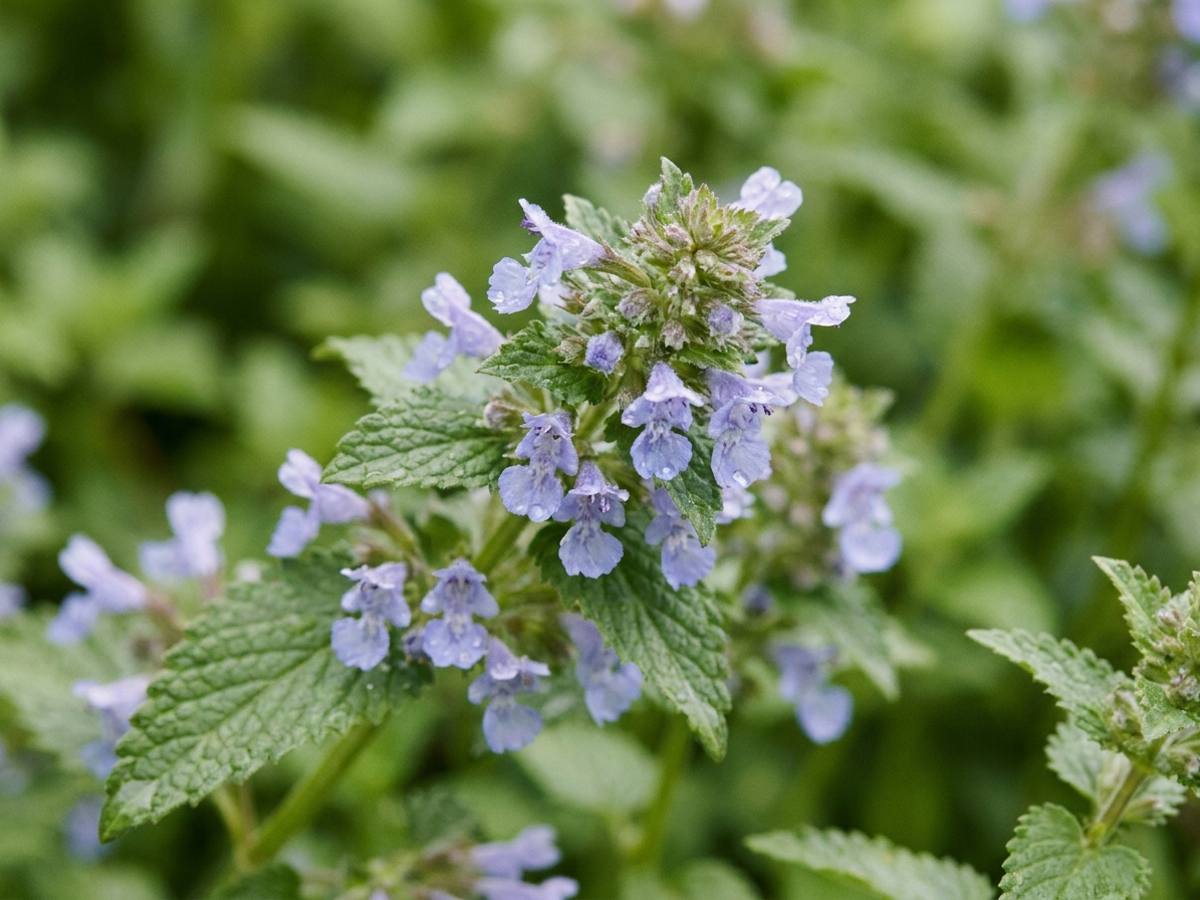
Nepeta nervosa is the neatest and most refined of the catmints, forming tidy hummocks of narrow, conspicuously veined leaves topped by dense, poker-like spikes of clear lavender-blue flowers. Unlike its sprawling cousins, it holds its shape all summer, making it an excellent front-of-border plant, path edging or gravel-garden filler. Bees and butterflies adore it, yet it is far less likely than common catnip to attract the attentions of the neighbourhood cats.
Growing conditions
Give Nepeta nervosa the sunniest spot you can spare. At least six hours of direct sun a day produces compact growth and the densest flower spikes, whilst too much shade causes floppy stems and sparse bloom. A little shade in the hottest part of the afternoon is tolerated in southern gardens.
Drainage matters more than fertility. This is a Himalayan species from stony mountain meadows, so it thrives in light, gritty loam, sandy soil or chalk with a neutral to slightly alkaline pH of around 6.5–7.5. Heavy, wet clay is the one thing it truly resents — improve it with grit and organic matter, or plant on a raised bank.
Once established it is drought-tolerant and fully hardy across the British Isles and northern Europe, surviving −20 °C in dry soil. In high-rainfall western gardens, winter wet rather than winter cold is the usual cause of losses.
How to plant Nepeta
Plant in mid to late spring, once the soil has begun to warm, so the roots establish before winter. Early autumn planting also works in mild, well-drained gardens, but avoid setting out young plants into cold, sodden ground.
Spacing: allow 35–40 cm between plants so air circulates freely and each clump can develop its natural dome shape; plant in groups of three or five for impact.
Depth: set the crown level with the surrounding soil — burying it encourages rot, whilst planting proud leaves roots exposed.
Soil preparation: fork in a couple of handfuls of horticultural grit per planting hole on heavier ground, plus a little garden compost.
Watering in: soak thoroughly after planting, then water weekly for the first six to eight weeks only; thereafter let it fend for itself.
Propagation: divide congested clumps in spring, take basal softwood cuttings in late spring, or sow seed at 15–18 °C in early spring — seedlings vary slightly in flower colour.
Nepeta nervosa growing in a naturalistic garden border
Care through the seasons
Spring: Cut away any remaining old stems as new shoots appear at the base, usually in March. A light scattering of general-purpose fertiliser or a thin mulch of garden compost is plenty — rich feeding produces lush, floppy growth that flops open at the centre. Slug patrol is worthwhile on the tender new shoots.
Summer: Water only in prolonged drought; established plants cope remarkably well on their own. Shear the whole plant back by about a third as the first flush fades in July and it will rebloom within three to four weeks, often carrying on into September. Deadheading individual spikes also keeps things looking smart and limits self-seeding.
Autumn: Leave the seedheads standing into late autumn for birds and winter structure, or tidy plants in October if you prefer a neat border. Division is best left until spring in cold or wet gardens, since autumn-split clumps can rot. Avoid heavy mulching over the crown — it traps moisture.
Winter: The plant dies back completely to a woody rootstock and needs no protection where drainage is good. In pots, move containers to a sheltered wall and raise them on feet so they never stand in water.
Best varieties to grow
Several excellent named selections extend the colour range and refine the habit.
‘Blue Moon’ — compact at around 30 cm with unusually dense, deep violet-blue spikes and a long repeat-flowering season.
‘Forncett Select’ — a strong, upright form with rich blue flowers and particularly well-marked, veined foliage; excellent for edging.
‘Pink Cat’ — soft rose-pink spikes over grey-green leaves, lovely with silver artemisias and pale roses.
‘Blue Carpet’ — a reliable seed-raised strain, low and spreading to about 25 cm, useful for gravel and rock gardens.
Pests, diseases and common problems
Cat damage: some cats roll on and flatten young plants, though N. nervosa is far less alluring than true catnip. Push short twiggy sticks or a low wire cloche over new growth in spring until the clump is sturdy.
Root rot in wet soil: plants blacken at the base and collapse over winter. There is no cure once advanced — prevent it by adding grit at planting, or grow in raised beds and troughs.
Powdery mildew: a white bloom on the leaves in hot, dry late summer, usually on crowded or drought-stressed plants. Improve spacing, water at the roots, and cut affected growth back hard to encourage clean regrowth.
🌿 Nature & Garden Newsletter
Gardening tips, recipes & seasonal advice, twice a week.