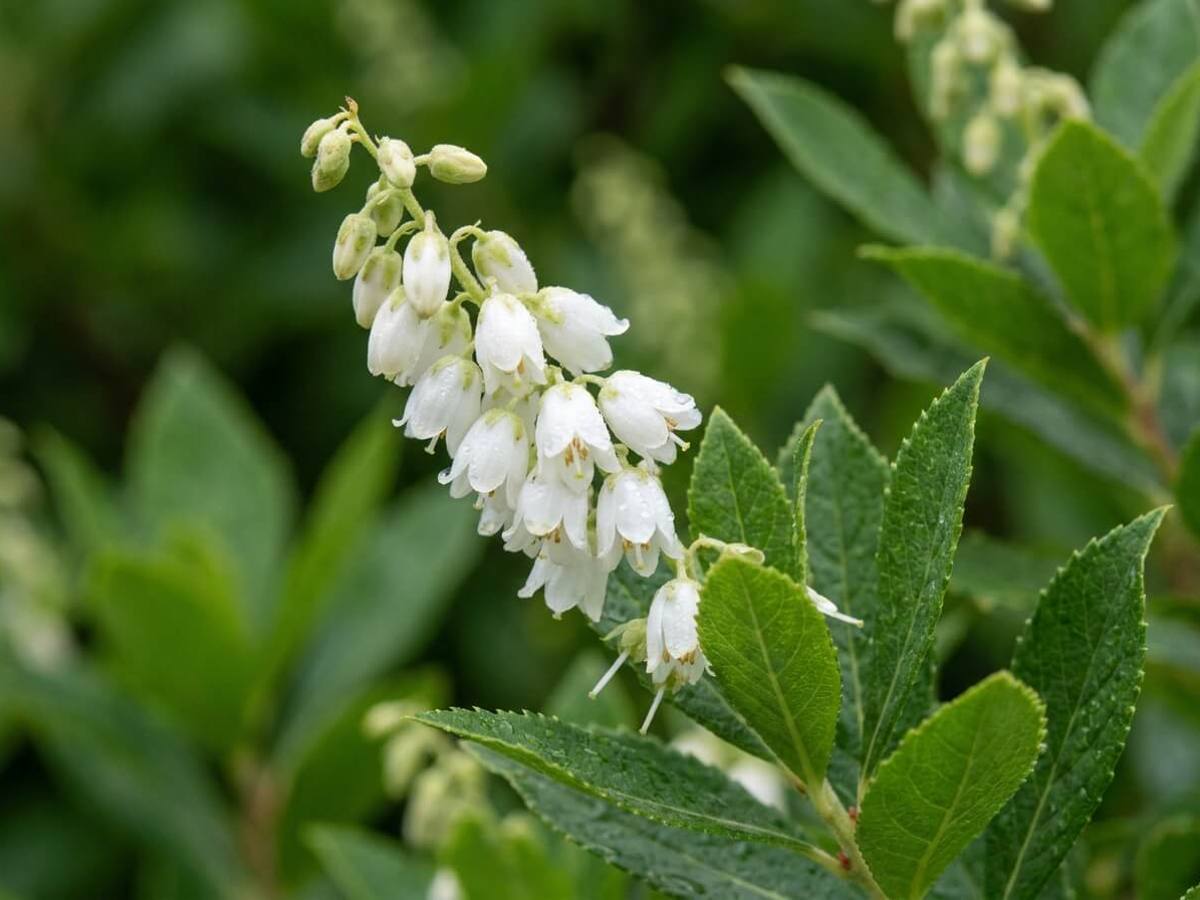
Few shrubs earn their keep in late summer quite like Clethra alnifolia, whose upright spires of tiny cream flowers perfume the garden with a rich honey-and-spice scent long after most shrubs have finished. It is a relaxed, suckering deciduous shrub that thrives where others sulk — in damp, heavy ground and in genuine shade. The foliage turns a clean butter-yellow in autumn, giving a second season of interest.
Growing conditions
Summersweet is unusually flexible about light. In full sun it flowers most heavily and holds a denser, more compact shape, provided the roots stay moist. In partial or even fairly deep shade it still blooms reliably, which makes it one of the very best late-summer flowering shrubs for a woodland edge or a north-facing border.
Soil is where it is fussier. It wants moisture-retentive, humus-rich ground that is acid to neutral — ideally pH 5.0 to 6.5 — and it will happily sit in soil that is seasonally waterlogged, including pond margins and rain gardens. On thin, dry, alkaline or chalky soils the leaves yellow between the veins and growth stalls, so improve heavily with leaf mould and composted bark, or grow it in a large container of ericaceous compost instead.
It is exceptionally hardy, shrugging off hard winters across most of Britain, northern Europe and the northern United States. Native to the coastal swamps of eastern North America, it also has good tolerance of salt-laden wind, making it a genuinely useful seaside shrub.
How to plant Clethra
Plant container-grown specimens in autumn, from September to November, so the roots settle into warm, damp soil before winter. Spring planting from March to May also works well, but those plants will need far more watching through their first summer.
Spacing: allow 1.2–1.5 m between full-sized plants, or 60–75 cm for dwarf cultivars such as ‘Hummingbird’ if you want an informal, colonising drift.
Depth: set the top of the rootball flush with the surrounding soil — never deeper, as buried stems can rot in wet ground.
Soil preparation: fork a generous bucketful of leaf mould, composted bark or garden compost into the planting area; avoid mushroom compost, which is limy.
Watering in: soak thoroughly at planting, then mulch 5–7 cm deep with bark or leaf mould, keeping it clear of the stems.
Propagation: take softwood cuttings in June, or simply lift and sever rooted suckers from the edge of an established clump in early spring.
Clethra alnifolia growing in a naturalistic garden border
Care through the seasons
Spring: Do not panic when the stems stay bare — summersweet is famously one of the last shrubs to break bud, often waiting until May. Prune in late February or March, shortening stems by up to a third and removing the oldest wood at the base. Top-dress with an ericaceous or general shrub feed and renew the mulch.
Summer: Water deeply and regularly during dry spells, especially on light soil and in the first three seasons; drought is the main cause of crisp brown leaf edges and poor flowering. Flower spikes open from July onwards and are among the best nectar sources of late summer, drawing bees, hoverflies and butterflies. Deadheading is optional — the spent seed heads are attractive through winter.
Autumn: Leaves turn clear yellow to gold before falling, best on plants in reasonable light. This is the ideal moment to plant, move or divide, while the soil is still warm and naturally moist. Lift unwanted suckers with a spade if the clump is outgrowing its space.
Winter: The bare, upright stems are fully hardy and need no protection in the open ground. Container-grown plants are the exception: wrap the pot in fleece or hessian to stop the rootball freezing solid.
Best varieties to grow
Named cultivars offer better flower size, richer colour or a more manageable size than the wild species.
‘Paniculata’ — larger, branched white panicles and glossy foliage; a strong, reliable form that holds an RHS Award of Garden Merit.
‘Ruby Spice’ — the deepest pink cultivar, and unlike older pink forms the colour barely fades; also an AGM holder.
‘Hummingbird’ — a compact selection reaching only 75 cm–1.2 m, densely flowered and ideal at the front of a damp border.
‘Sixteen Candles’ — upright, tightly held white spikes on a neat, self-supporting bush around 1.2 m tall.
Pests, diseases and common problems
Lime-induced chlorosis: yellowing leaves with green veins on alkaline soil. Mulch with leaf mould or pine needles, water with rainwater rather than tap water, and apply chelated iron as a short-term fix.
Red spider mite: fine mottling and bronzing of leaves on plants baking in hot, dry positions. Mist the foliage, improve soil moisture, and introduce the predatory mite Phytoseiulus persimilis under glass.
Excessive suckering: the clump gradually widens into neighbouring plants. Slice around the perimeter with a spade each spring and pot up or replant the removed suckers elsewhere.
🌿 Nature & Garden Newsletter
Gardening tips, recipes & seasonal advice, twice a week.