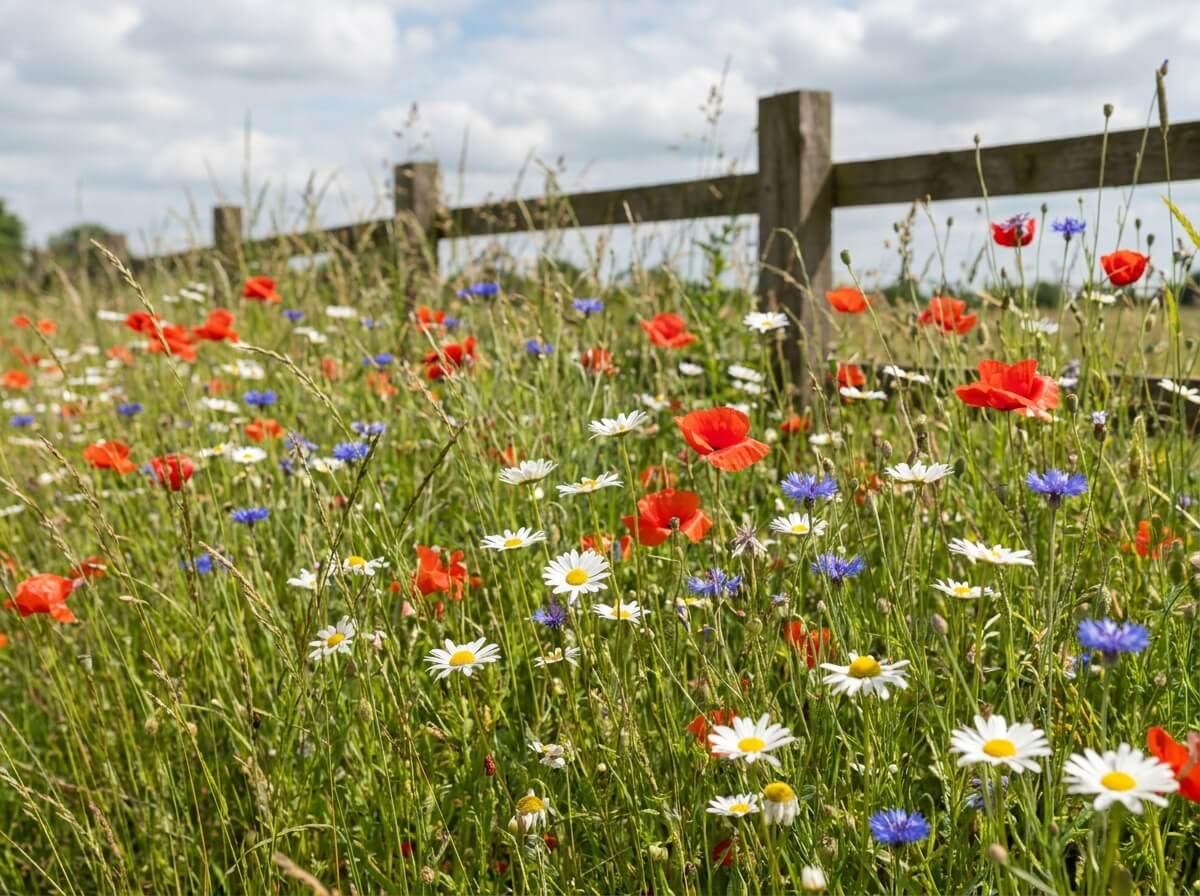
Fall feels like the obvious moment to fix a patchy lawn. It is cooler, calmer, less demanding. But June soil — warm, alive, and biologically active — is far more hospitable to germinating grass seed than the cooling, often waterlogged ground of September or October. Waiting four months means handing bare patches over to weeds, compaction, and heat damage. Here is precisely why the timing logic most gardeners follow is backwards.
Grass seed does not care what month it is. It cares about soil temperature.
And right now, soil at 5cm depth across much of the UK and northern US is sitting between 18°C and 24°C — the precise range where most cool-season grasses like fescue, ryegrass, and bluegrass shoot up fastest and most completely.
Fall seeding is promoted because air temperatures drop and rain returns. But soil temperature in October often dips below 12°C, which slows germination dramatically — sometimes to 6 weeks or more, leaving fragile seedlings exposed to the first frosts before they have developed any real root depth. The RHS confirms that soil temperature, not season, is the non-negotiable factor for successful establishment.
Summer-seeded grass also benefits from longer days and stronger light, which accelerates early leaf growth. The seedlings are not racing a deadline.
Bare soil in summer is never empty for long. Weed seeds — especially annual meadow grass (Poa annua) and plantain — colonise exposed ground within 10 to 14 days. By fall, that patch you planned to seed is already occupied.
Foot traffic compounds this. Summer is peak garden use — barbecues, children, dogs — and bare soil compacts fast under that pressure.
Compacted ground resists seed-to-soil contact. Seed-to-soil contact is non-negotiable. Full stop.
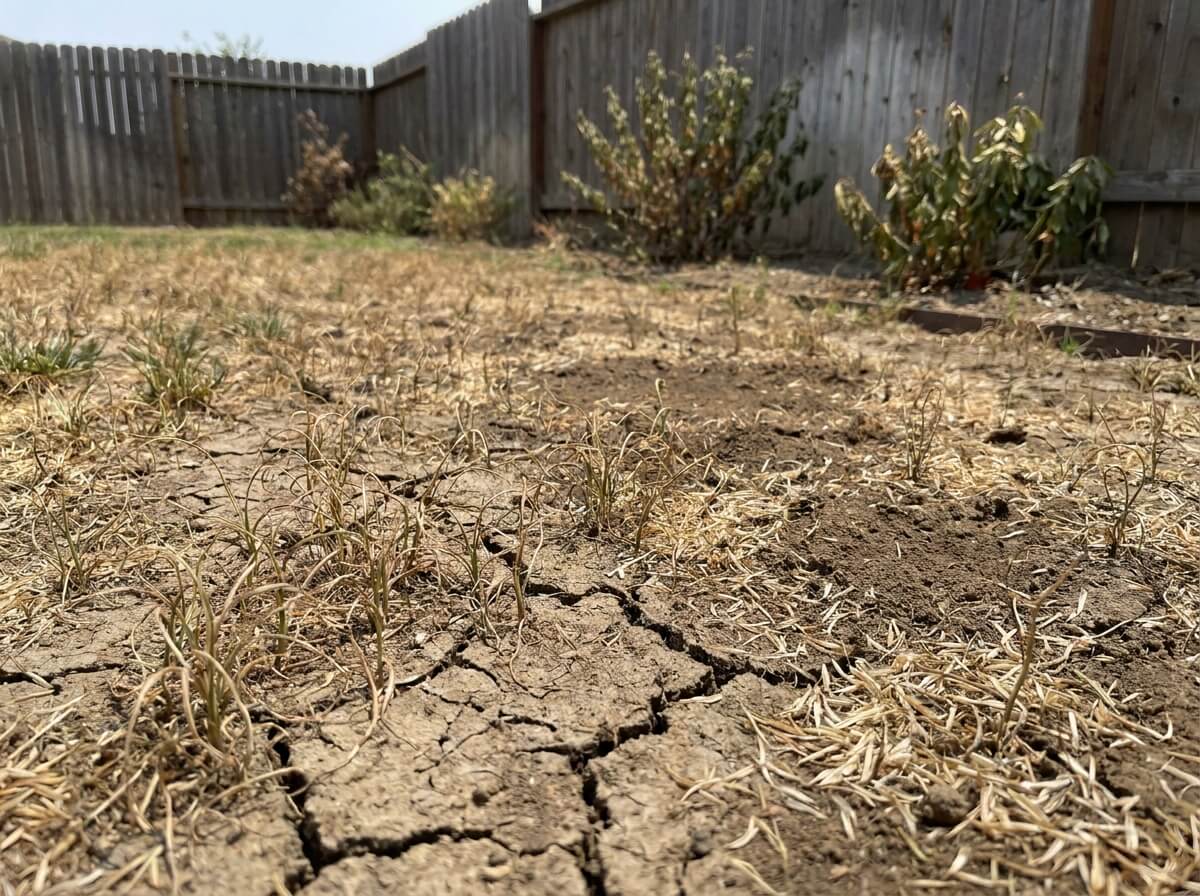
And if your lawn has gone brown in patches after heat stress, some of that browning is dormancy, not death — but some patches genuinely are dead, and the longer bare soil sits, the harder recovery becomes.
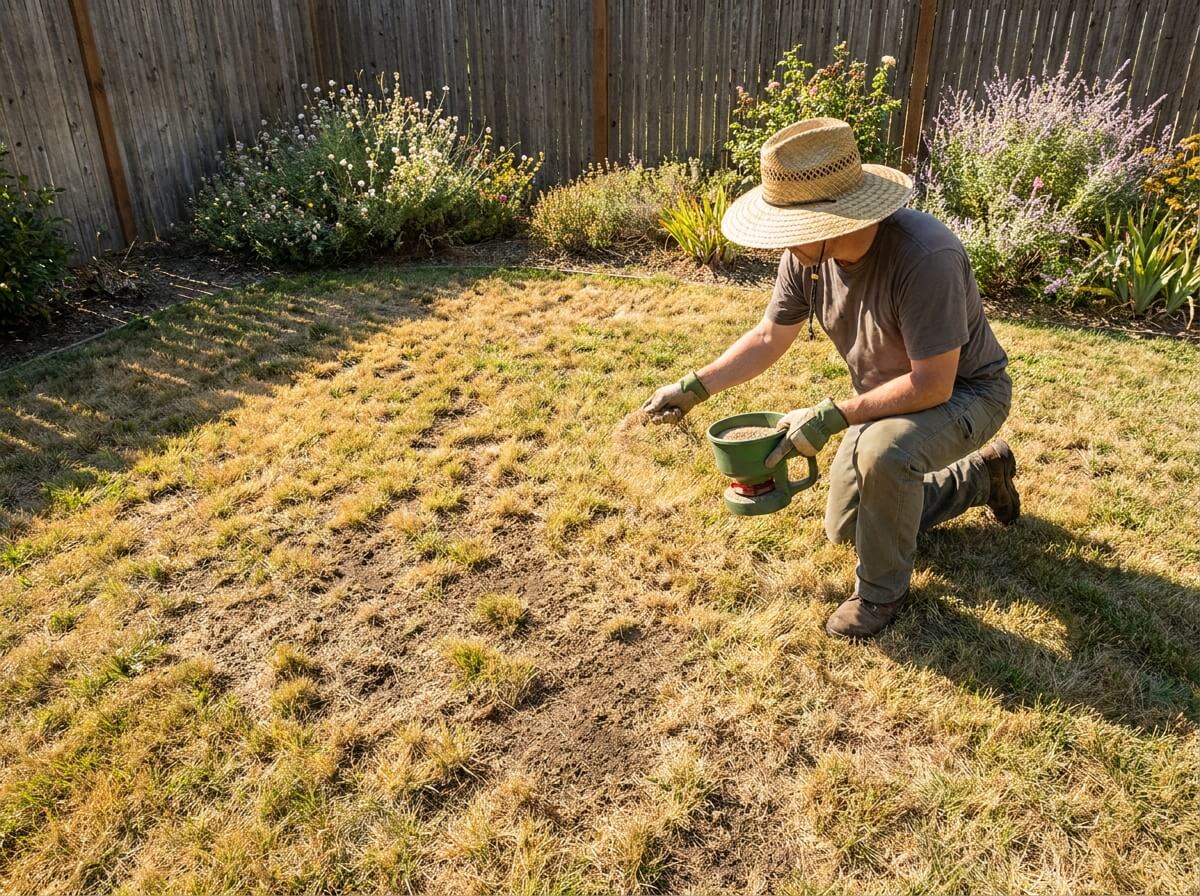
The method is specific. Do this:
Yes, twice-daily watering is a bit much. Do it anyway — a seeded patch that dries out completely even once can lose the entire germination flush overnight.
A cheap timer on your garden tap handles this automatically.
The thing is, many gardeners miss one crucial step: mow surrounding grass slightly shorter before seeding — to 4cm rather than the usual 6–7cm — so new seedlings are not immediately shaded out by their neighbours. That first week of light exposure makes a measurable difference to how even the repair looks.
For more on why summer watering strategy matters for the whole lawn, not just seeded patches, your lawn is probably losing water faster than you think.
Southern Hemisphere gardeners: this applies to your December and January, when soil temperatures peak and warm-season grasses establish rapidly.
Do not wait for obvious bare patches. Seed when you see these early signals:
According to University of Minnesota Extension, thin turf is far easier to thicken by overseeding in warm soil than by waiting for fall renovation — because existing grass roots actively does wonders for binding new seedlings as they develop.
Catch it early and a single summer seeding is enough. Sorted. But leave it until fall and you may need a full lawn renovation — a much bigger project.
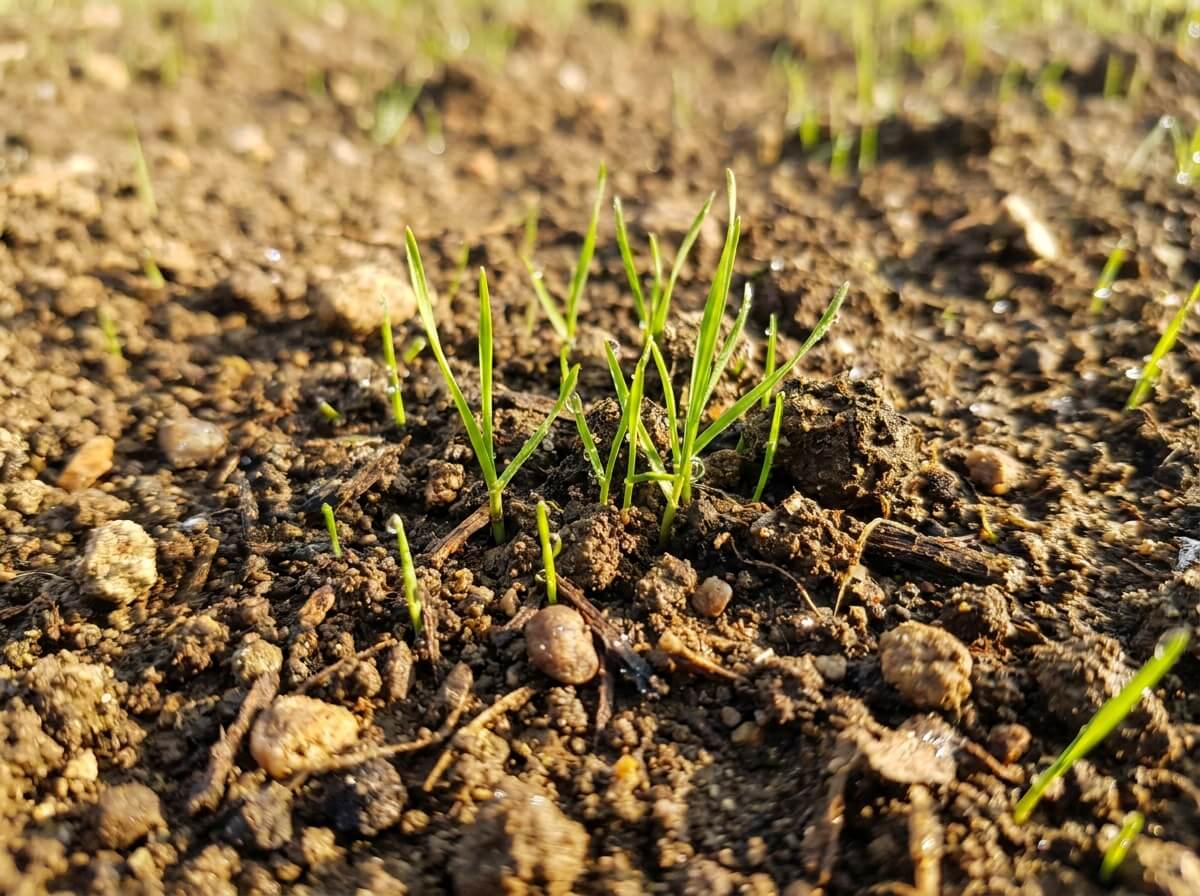
Smart tip: Seed into warm soil above 18°C and water twice daily — those two conditions matter more than the calendar month.
Yes, as long as you water twice daily for the first 14 days and never let the seeded area dry out completely. High air temperature is not the issue — soil moisture loss is.
Perennial ryegrass shoots up fastest in warm soil, often showing shoots within 7–10 days. For shadier patches, fine fescue blends are more reliable and tolerate drier summer conditions better.
Wait until the new grass has been mowed at least twice before applying any fertiliser — usually around week 5 or 6. Feeding too early scorches fragile roots.
Cool-season grasses (fescue, ryegrass, bluegrass) do best when seeded in June–July in the Northern Hemisphere. Warm-season grasses like bermuda and zoysia are better seeded once soil consistently exceeds 21°C, which in southern US states often means May or June anyway.