Early summer, folks, it’s the make-or-break month for tomato growers — and most people, frankly, haven’t got a clue. You can plant perfectly, water diligently, and you’ll still end up with a disappointing harvest simply because you’ve missed the half-dozen critical tasks during these precious three weeks of early summer. Don’t let that be you this year. A total bummer, otherwise.
Five tasks decide whether the crop carries through to autumn, and all of them belong to the same three weeks. Here is what each one involves and what it saves you from.
| Task | What to do | What it prevents | When |
|---|---|---|---|
| Pinch out suckers | Remove any shoot bigger than your little finger with fingers or clean scissors | Side shoots turning into branches that steal energy from the fruit | Early summer, repeated as shoots appear |
| Switch to deep watering | About an inch of water twice a week, delivered slowly at the base | Surface-hugging roots that collapse in a heatwave | Early summer, before the late summer heat |
| Mulch and keep watering even | A 3-inch layer of straw or compost, plus a diluted calcium spray if needed | Blossom end rot on the first fruits | Early summer, as the first fruits set |
| Reinforce the supports | Drive a wooden stake alongside each cage, or use the Florida weave with strong twine | Snapped stems and destroyed fruit when the plant gets heavy | Early summer, while the plants are still light |
| Change the feed | A 5-10-10 blend or tomato-specific feed, applied every two weeks | Lush leafy growth at the expense of fruit set | Early summer, once flowers appear |
Every one of them takes minutes now and pays back through to early autumn.
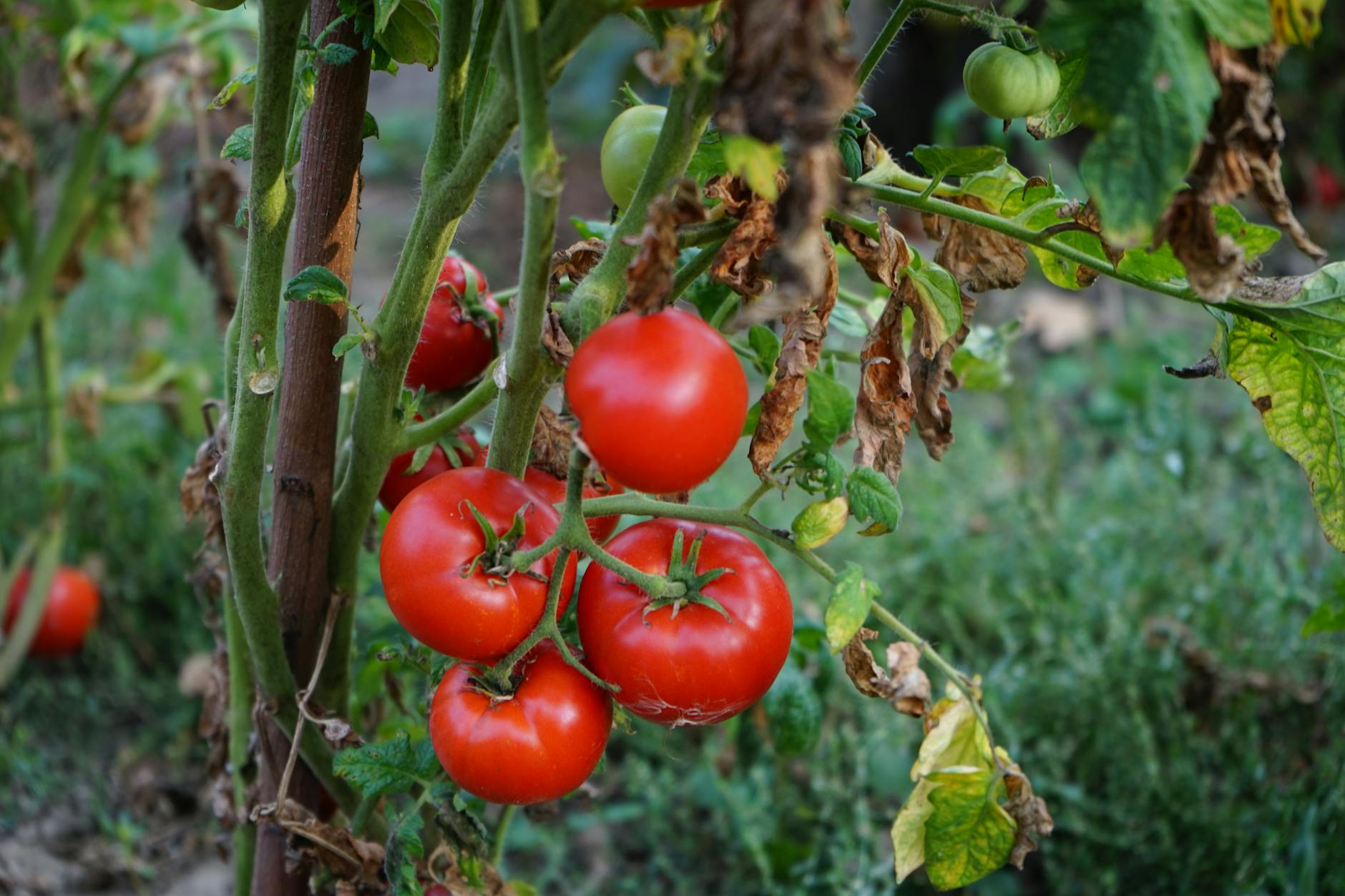
Tomato suckers are the sneaky little shoots that sprout right in the crotch between the main stem and a side branch. Left alone, they’re going to become full-blown branches, stealing energy away from fruit production. For indeterminate varieties like Roma or Cherry tomatoes, pinching suckers in early summer keeps the plant focused on what you actually want — big, ripe tomatoes. Use your fingers or clean scissors and remove anything thicker than a pencil — wait, that’s not quite right — anything bigger than your little finger should go. Leaving them on? Doesn’t work. Full stop. Your future self will be chuffed, trust me.
Shallow, frequent watering in early summer trains tomato roots to stay near the surface — which is a disaster once the relentless late summer heat arrives. So, switch to deep, infrequent watering sessions right now: aim for about an inch of water, twice a week, delivered slowly at the base of the plant, preferably around 7 AM. This encourages roots to chase moisture deeper into the soil, making your plants dramatically more resilient during heatwaves. A 50-foot Dramm soaker hose does wonders here and saves you 20 minutes every single morning.
Nothing’s more heartbreaking than spotting that ugly black patch on the bottom of your first tomatoes. Blossom end rot isn’t actually a disease — it’s a calcium deficiency caused by inconsistent watering. But here’s the thing: Early summer is when your plants are setting their first fruits, so this is the moment to act. Mulch heavily around the base (a good 3-inch layer of straw or compost), keep watering consistent, and if needed, apply a diluted calcium spray to your lower leaves every Tuesday morning. Prevention now saves your entire crop later. And your sanity.
If your tomato cage looks a little dodgy or your stakes seem borderline sturdy enough — you’ve got to fix them in early summer. By late summer, a healthy indeterminate tomato plant can weigh over 10 pounds and stand nearly six feet tall. Collapsing support structures mid-season can snap stems, destroy fruit, and genuinely break your gardening heart. Reinforce cages with a wooden stake driven alongside them, or upgrade to the Florida weave method with strong twine. A little effort now prevents a catastrophic topple later. You won’t regret it.
Early in the season, nitrogen helps your tomatoes grow lush and green. But now that flowers and fruits are forming, too much nitrogen is actually your enemy — it’s encouraging leafy growth at the expense of tomatoes. So, in early summer, make the switch to a fertilizer higher in phosphorus and potassium, like a 5-10-10 blend or a quality tomato-specific feed. Apply every two weeks, and you’ll notice a remarkable difference in how heavily your plants set fruit through the rest of the season. They’re starved for the good stuff right about now.
Tomatoes reward attention in early summer more than any other month — the small things you do right now ripple forward all the way to early autumn. You’ve really got to stay on top of it. Which of these tasks have you already tackled, and which one surprised you most? Drop a comment below and let’s talk tomatoes! 🍅