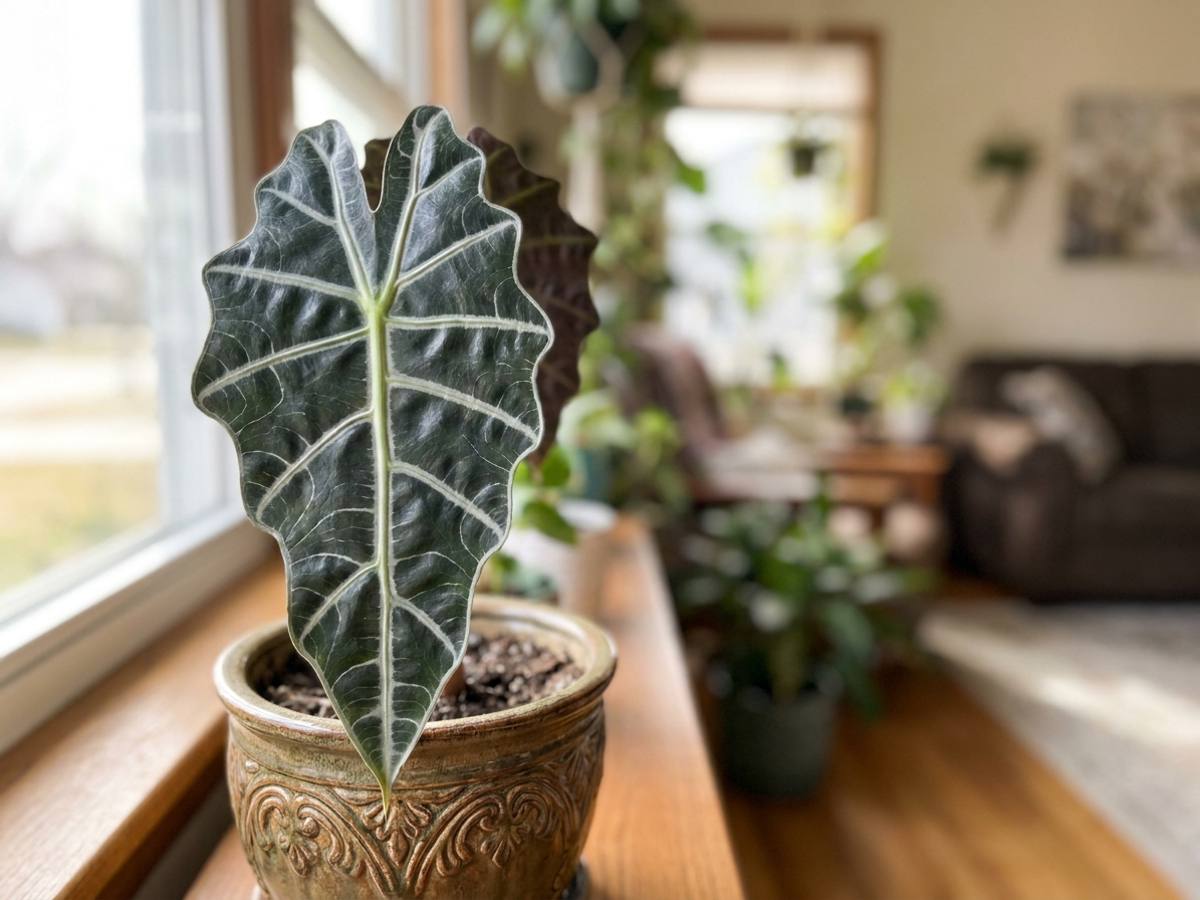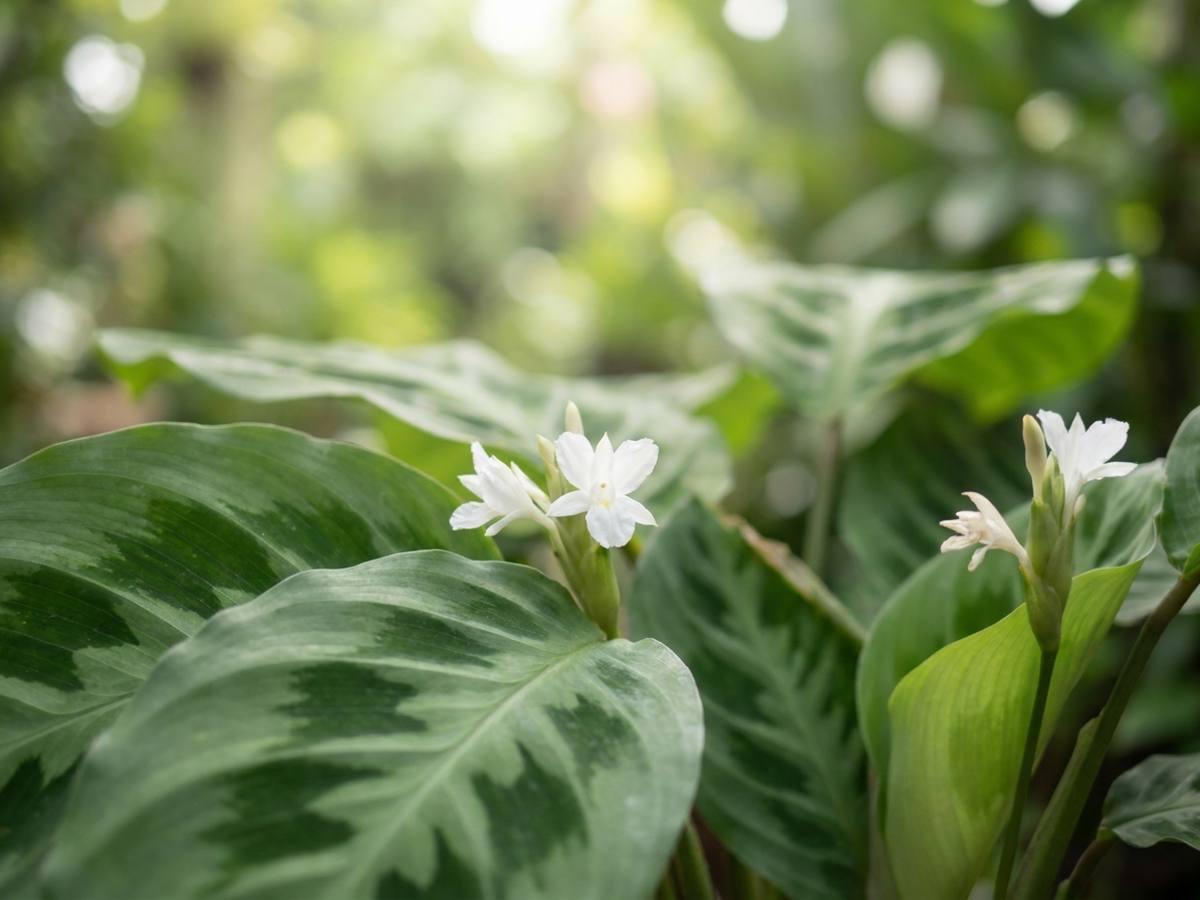
Calathea orbifolia is a striking houseplant prized for its large, silvery-green leaves adorned with delicate darker veining that creates an almost painted appearance. It brings an elegant tropical aesthetic to indoor spaces and works beautifully as a focal point in living rooms, offices, and conservatories. This foliage plant is renowned for its dramatic leaf movements, which close at night in a phenomenon called nyctinasty, earning it the affectionate nickname “Prayer Plant”.
| Latin name | Calathea orbifolia |
|---|---|
| Common name(s) | Prayer Plant, Orbifolia Calathea, Round-leaved Prayer Plant |
| Family | Marantaceae |
| Type | Herbaceous perennial |
| Height | 45–60 cm |
| Spread | 30–45 cm |
| Flowering | Rarely flowers indoors; occasionally in summer |
| Hardiness | Tender; minimum 15 °C required |
| Sun | Partial shade to bright indirect light |
| Soil | Well-drained, moisture-retentive, rich in organic matter |
Calathea orbifolia thrives in bright, indirect light — position it near an east or west-facing window where sunlight is filtered through a sheer curtain. Direct sun will fade the leaf markings and may scorch the foliage, whilst insufficient light causes slower growth and smaller leaves. Avoid dark corners; the plant needs enough light to maintain its vibrant variegation.
This plant prefers well-drained, slightly acidic soil enriched with peat moss, bark chips, or coir to maintain moisture without waterlogging. A moisture-retentive mix is essential because the plant dislikes both drying out completely and sitting in wet soil. Add perlite or coarse sand to improve drainage and prevent root rot, which is a common problem in poorly draining composts.
Calathea orbifolia is strictly a tropical houseplant and requires consistent warmth between 18–24 °C year-round. It will not tolerate temperatures below 15 °C and is sensitive to cold draughts, so keep it away from radiators, air conditioning units, and open windows in winter.
Calathea orbifolia is only one member of a large group of patterned prayer plants sold as houseplants. The selections below are widely stocked in garden centres and share the same warmth, humidity and indirect light requirements.
| Variety | Leaf pattern | Mature height | Best for |
|---|---|---|---|
| ‘Sanderiana’ | Glossy dark leaves ruled with fine pink pinstripes | 60–90 cm | A tall, upright accent plant |
| ‘Kerchoveana’ | Pale green leaves with dark brown paired blotches | 20–30 cm, trailing | Hanging pots and shelf edges |
| ‘Medallion’ | Dark green leaves with a pale feathered centre and deep purple undersides | 40–60 cm | A bold single specimen on a side table |
| ‘Dottie’ | Near-black leaves outlined with a bright pink brushstroke | 30–50 cm | Compact spaces and dark-toned plantings |
| ‘Freddie’ | Pale apple-green leaves finely barred in darker green | 45–60 cm | Brightening a shaded corner of a room |
The best time to pot or repot Calathea orbifolia is in spring when the plant is entering its active growing season. Repotting every 12–18 months encourages vigorous growth and refreshes the soil, which naturally depletes over time.
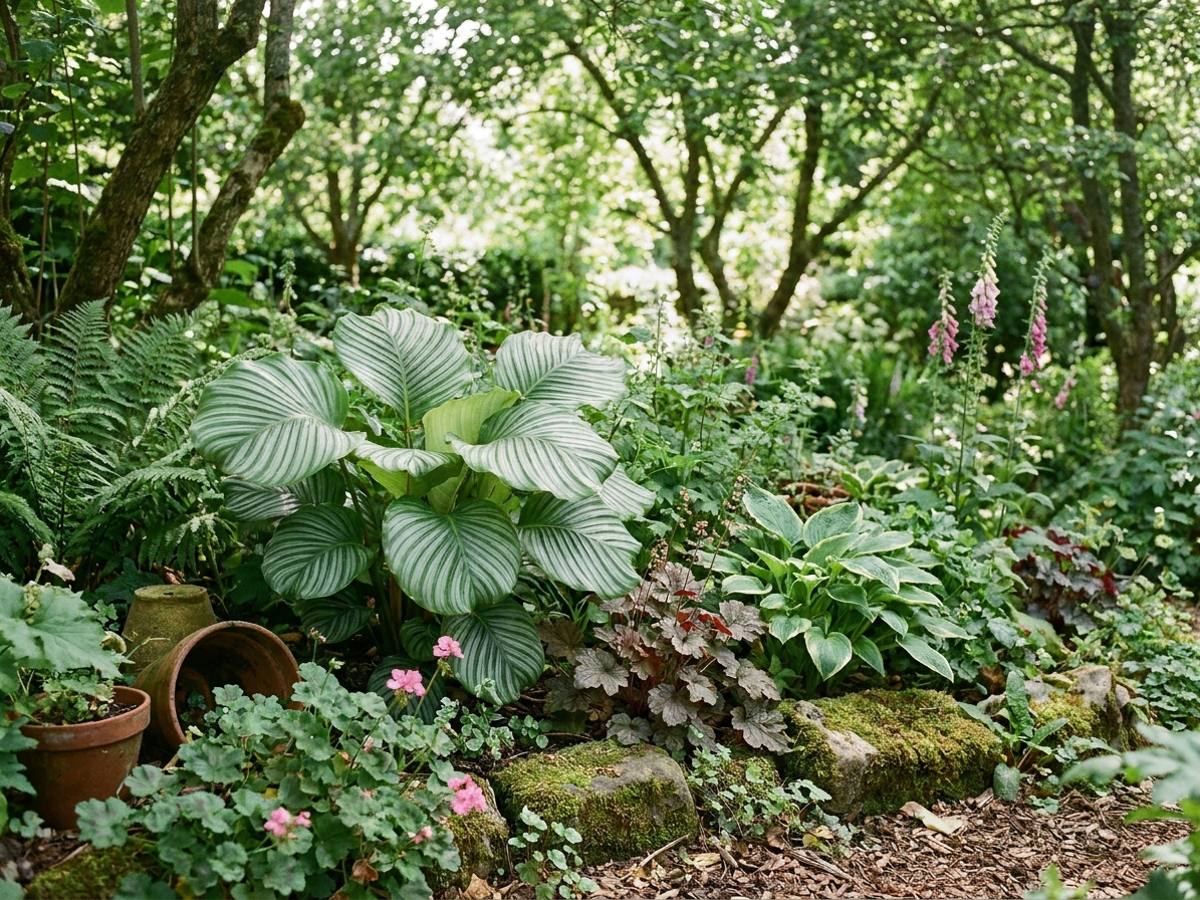
Spring: As new growth emerges, feed fortnightly with a balanced, half-strength liquid fertiliser to support leaf development. Inspect the plant for signs of pest infestation and repot if it has outgrown its current container. Wipe leaves gently with a damp cloth to keep the foliage dust-free and maximise light absorption.
Summer: Water regularly to keep the soil consistently moist but never waterlogged; check soil moisture with your finger before watering. Increase humidity by misting leaves regularly or standing the pot on a pebble tray filled with water to replicate tropical conditions. Maintain warm temperatures and avoid positioning the plant in direct sun, which intensifies during these months.
Autumn: Gradually reduce watering frequency as daylight decreases and growth slows, but do not allow the soil to dry out completely. Stop fertilising by September to avoid encouraging tender new growth that may be damaged by cooler temperatures ahead. Check the undersides of leaves weekly for pest infestations, which are more common in autumn.
Winter: Water sparingly and allow the top 2–3 cm of soil to dry slightly between waterings. Keep the plant away from cold windows and heating vents, which create temperature fluctuations and very dry air that stresses the foliage.
Watering and feeding shift with the light levels through the year. This table sets out what changes from one season to the next.
| Season | Watering | Feeding | Main task |
|---|---|---|---|
| Spring | Resume normal watering as growth restarts | Fortnightly, balanced liquid fertiliser at half strength | Repot if outgrown, inspect for pests, wipe leaves clean |
| Summer | Regularly, keeping soil consistently moist but never waterlogged | Fortnightly through the growing season | Raise humidity by misting or using a pebble tray; keep out of direct sun |
| Autumn | Gradually less often, but never letting the soil dry out | Stop by September | Check leaf undersides weekly for pests |
| Winter | Sparingly; let the top 2–3 cm dry slightly between waterings | None | Keep away from cold windows and heating vents |
Consistency matters more than any single adjustment: sudden swings in moisture or temperature are what mark the foliage.
Several cultivars and related selections offer subtle variations in leaf size and marking intensity.