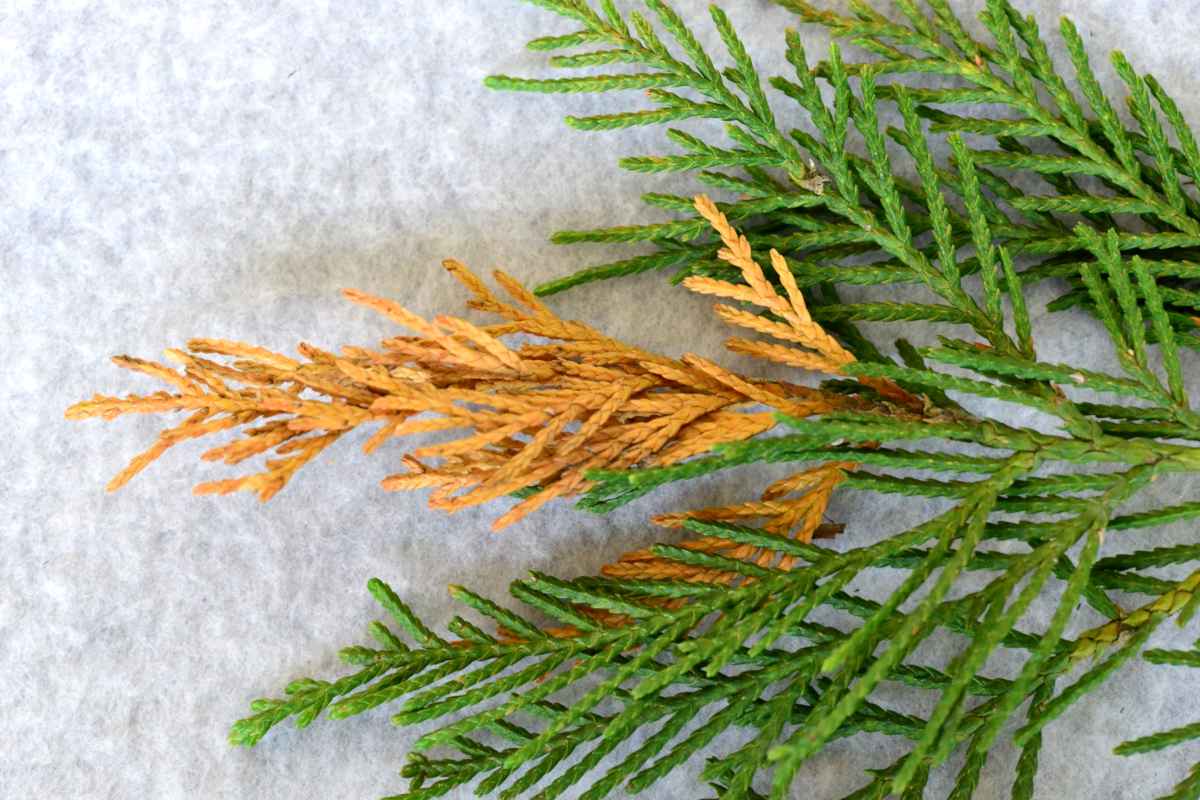
Branches turn rust-coloured one after another and die off, until an entire hedge is devastated. Cypress canker is a microscopic fungus that sneaks in under the bark; no treatment truly works, so cutting out and burning blemished branches as soon as you spot them is the only way to control it.
Although generally quite hardy, a canker infection can devastate an entire hedge and neighboring plants.
It tends to expand to the entire tree, and branches will start turning rust-colored and then die off one at a time.
No doubt about it: canker.
This is a microscopic fungus that sneaks in under the bark and can devastate entire forests – or hedges – of cypress.
The article deals with the disease rather than with particular plants, so here are the conifers most often planted as hedges and screens in gardens. Knowing which ones the fungus favours helps when you are choosing a replacement for a hedge that has been lost.
| Variety | Habit and use | Typical size | Canker risk |
|---|---|---|---|
| Leyland cypress | Dense fast screening hedge | Over 20 m if unpruned | High |
| ‘Stricta’ | Narrow exclamation-mark accent | 10–15 m, very narrow | Susceptible |
| ‘Blue Ice’ | Steel-blue specimen or screen | 8–10 m | Lower than Monterey cypress |
| ‘Smaragd’ | Neat formal hedge | 3–5 m | Rarely affected |
| ‘Goldcrest’ | Lemon-scented column, pots or hedge | 5–10 m | High |
Sadly, there isn’t any truly effective treatment against canker. Only controlling the spread is possible when it appears.
Cut any branch that has developed rust-colored blemishes at its base as soon as you detect the disease, and burn them.
It is preferable to be drastic and leave a scrawny cypress standing, than to hope against hope that it will go away: the only thing to go away will be more cypresses…