Pratia pedunculata: growing guide, care tips and best varieties
·
0
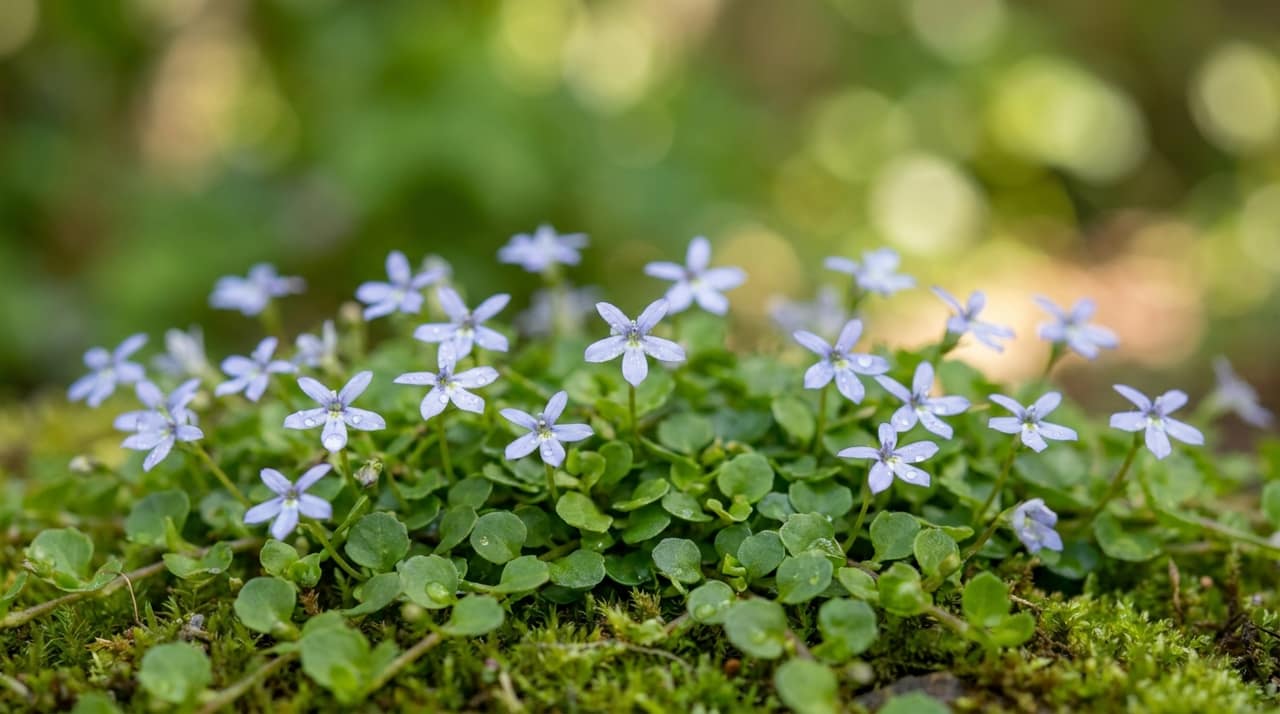
Pratia pedunculata, commonly known as Heartsease or Blue Star Creeper, is a charming ground-cover plant prized for its delicate white or pale blue flowers and dense, trailing habit. It is ideal for softening edges of borders, clothing alpine troughs, or cascading from containers and hanging baskets. This vigorous little perennial establishes quickly and rewards gardeners with months of modest but cheerful bloom.
Growing conditions
Pratia pedunculata thrives in partial shade to full sun, though it prefers a cool, lightly shaded spot in hot regions. In cooler northern climates, it tolerates and even benefits from more direct sunlight, which encourages flowering. Avoid planting in deep shade, where growth becomes sparse and flowers less prolific.
This plant favours moist, well-drained soil rich in organic matter. It will tolerate most soil types provided they do not waterlog in winter, though it dislikes very dry, sandy conditions without amendment. A slightly acidic to neutral pH is ideal; add leaf-mould or peat-free compost to lighten heavy clay soils and improve moisture retention.
Pratia pedunculata is fully hardy across most of the United Kingdom and northern Europe, surviving frosts to −12 °C or lower. In exceptionally cold areas or on exposed sites, a light mulch in late autumn provides additional protection to the root crown.
How to plant Pratia
Plant Pratia pedunculata in spring or early autumn when soil is moist and warm enough to encourage root establishment. Avoid planting during drought or hard frost, as young plants need consistent moisture in their first few weeks.
Space plants 30–45 cm apart; closer spacing (20–30 cm) creates a denser mat more quickly in formal settings
Plant with the root crown at soil level; do not bury stems, as this invites rot
Amend planting holes with peat-free compost or well-rotted organic matter to improve drainage and nutrient content
Water thoroughly after planting and maintain consistent moisture for the first month
Propagate by division in spring or autumn, or by softwood cuttings in early summer rooted in a sandy compost mix
Care through the seasons
Spring: As new growth emerges, apply a balanced, slow-release fertiliser (such as a 10–10–10 blend) or work a layer of peat-free compost around the plant. Remove any dead or winter-damaged stems and tidy the mat once the frost risk has passed. Water regularly if spring is dry; young mats are especially vulnerable to desiccation.
Summer: Keep soil consistently moist, particularly during established flowering. Mulch around (but not over) the plant with coarse grit or bark to retain moisture and suppress weeds. In regions with hot, dry summers, afternoon shade becomes invaluable; increase watering frequency if leaves begin to wilt or turn pale.
Autumn: Deadhead spent flower stems to prolong blooming and tidy appearance. In early autumn, divide congested mats or take cuttings to refresh vigour. Apply a light mulch of composted bark or shredded leaves in late autumn in colder areas, though established plants usually overwinter without protection in the UK.
Winter:Pratia is dormant but evergreen; it requires little input beyond ensuring drainage remains unobstructed. In unusually harsh winters, heavy snow or prolonged waterlogging poses the main threat; keep gutters and drainage channels clear to prevent ice and standing water from damaging the crown.
Best varieties to grow
Whilst Pratia pedunculata itself is the most widely cultivated form, a few named selections offer subtle refinements for different garden settings.
Pratia pedunculata ‘Alba’ — Pure white flowers on a compact, dense mat, ideal for alpine troughs and formal edging where a crisp appearance is desired.
Pratia pedunculata (blue form) — Pale sky-blue or lavender flowers, the form most commonly seen in garden centres; vigorous and very reliable.
Pratia pedunculata ‘County Park’ — A vigorous, very low-growing selection with a trailing habit perfect for hanging baskets and rock gardens.
Pratia pedunculata ‘Treadwellii’ — Compact, with slightly larger white flowers; a good choice for container displays and alpine collections.
Pests, diseases and common problems
Slugs and snails: Young foliage is occasionally damaged by slugs, which rasp holes in leaves and stems. Encourage ground beetles by maintaining mulch and avoiding pesticides; set beer traps or remove pests by hand after rain or at dusk.
Powdery mildew: In humid, poorly ventilated conditions, a fine grey powder may coat leaves, weakening the plant. Improve air circulation by thinning overcrowded growth; spray with sulphur solution or potassium bicarbonate fungicide at the first sign of infection.
Root rot and damping off: Waterlogged soil or standing water causes soft, blackened stems and root decay, especially in winter. Improve drainage immediately; remove affected portions and repot in fresh, well-drained compost if in a container.
Poor flowering: Excessive shade or nitrogen-rich fertiliser promotes leafy growth at the expense of flowers. Increase light exposure if possible and switch to a balanced or slightly phosphate-rich feed (such as a 5–10–10 blend) in summer.
Sparse, bare patches: Vigorous mats may thin in the centre as older stems age or competition intensifies. Divide and rejuvenate every 2–3 years; discard woody old growth and replant vigorous outer portions in fresh compost.
“`html
“`
🌿 Nature & Garden Newsletter
Gardening tips, recipes & seasonal advice, twice a week.