Alchemilla mollis: growing guide, care tips and best varieties
0
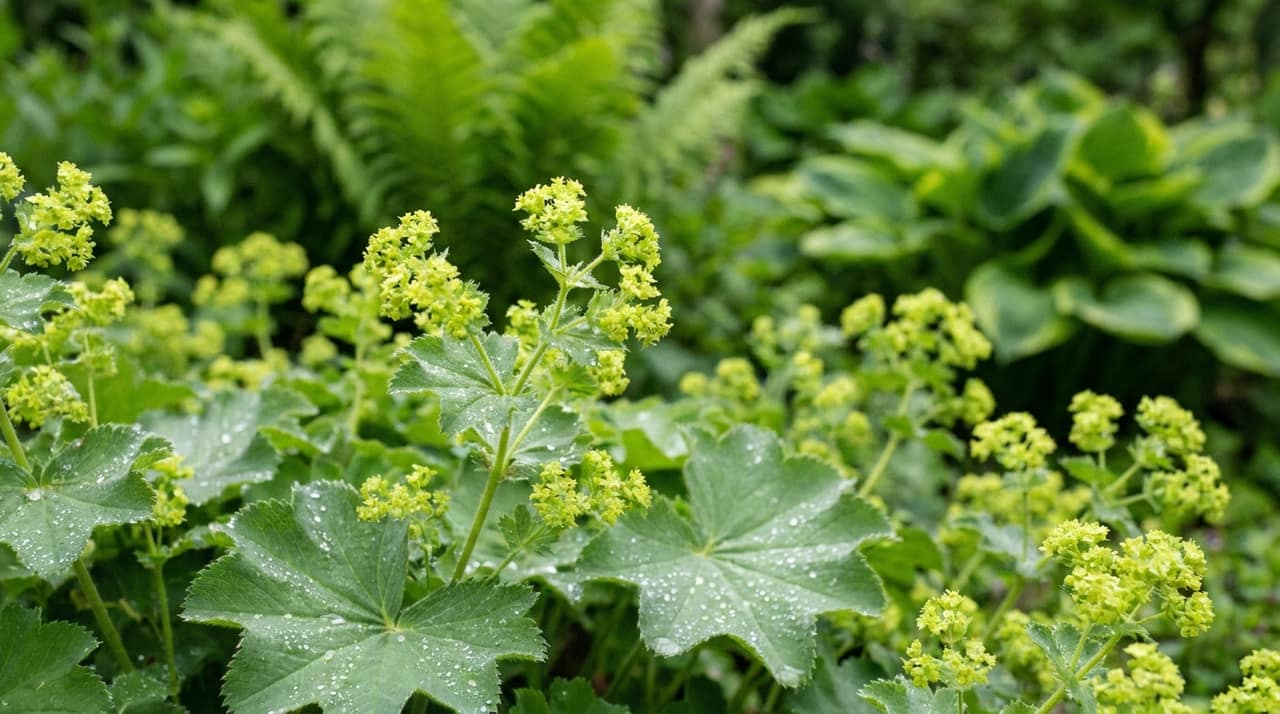
Alchemilla mollis, commonly known as lady’s mantle, is one of the most valuable perennials in the modern garden. Its soft chartreuse-yellow flower clusters create a luminous haze above delicate, fan-shaped foliage throughout summer. This cottage garden stalwart is treasured not only for its elegant blooms and foliage texture, but also for its remarkable ability to collect dewdrops in its pleated leaves—a magical sight on early mornings.
Growing conditions
Alchemilla mollis thrives in partial shade but is remarkably adaptable and will tolerate full sun provided the soil remains consistently moist during hot spells. In cooler regions or gardens with dappled afternoon shade, it produces more vibrant foliage and longer-lasting flowers. Morning sun combined with afternoon shelter is ideal for most British gardens.
This plant is unfussy about soil type and will grow in poor, gravelly, or clay conditions, though it prefers well-drained soil enriched with organic matter. It tolerates neutral to slightly alkaline conditions and is not fussy about pH. A moderately fertile soil encourages better flowering and foliage development without encouraging excessive self-seeding.
Alchemilla mollis is fully hardy throughout the UK and northern Europe and requires no winter protection. It performs well from Scotland to southern England and is equally at home in coastal and inland gardens.
How to plant Alchemilla
Plant Alchemilla mollis in spring (March to May) or autumn (September to October) whilst soil is warm and moist, allowing roots to establish before summer drought or winter dormancy.
Space plants 45–60 cm apart; they will spread gradually to fill borders and soften edges naturally
Plant with the crown at soil level—do not bury the crown, as this invites rot
Incorporate well-rotted compost or leaf mould into the planting hole to improve structure and moisture retention
Water thoroughly after planting and keep moist for the first four weeks whilst roots establish
Divide established clumps every three to four years in spring or autumn to maintain vigour and control spread
Care through the seasons
Spring: As new growth emerges, apply a balanced granular fertiliser around each plant or mulch with compost to feed the soil naturally. Remove any tired or frost-damaged foliage from winter. Watch for the first flower buds forming by late May.
Summer: Deadhead spent flower clusters to encourage repeat flowering and prevent prolific self-seeding (unless you wish the plant to naturalise). Water well during hot, dry spells—a soaker hose delivers moisture directly to the root zone. Remove any foliage touched by mildew by cutting stems back to ground level; fresh growth will emerge.
Autumn: Cut back hard to 5 cm above ground level in September or October after flowering finishes; this rejuvenates the plant and removes disease spores. Divide overcrowded clumps, using a spade to split mature plants into manageable sections, and replant with fresh compost. Apply a 5 cm mulch of composted bark or leaf mould around plants to protect roots and feed the soil.
Winter:Alchemilla mollis is dormant and requires no maintenance. In very wet winters, check that mulch has not compacted, allowing poor drainage; loosen if necessary. The structure of the plant remains attractive throughout winter in many gardens.
Best varieties to grow
Whilst Alchemilla mollis is itself the most popular form, a few worthwhile variants and closely related species offer alternative heights or subtle differences.
Alchemilla mollis — The standard form with soft yellow-green flowers and reliable 40–50 cm height; the most widely available and reliable choice
Alchemilla ‘Thriller’ — A more compact, clump-forming cultivar reaching 30 cm, ideal for smaller gardens and containers
Alchemilla erythropoda — A dwarf alpine species, just 20–30 cm tall, with blue-tinged foliage and tiny yellow flowers; excellent for rockeries and edging
Alchemilla xanthochlora — A taller cousin reaching 60 cm, with deeper yellow-green flowers and more robust spreading habit for naturalistic planting
Pests, diseases and common problems
Powdery mildew: White, powdery coating appears on foliage during humid summers or when air circulation is poor. Cut affected stems to ground level, improve spacing between plants, and ensure good air flow; the plant will regenerate quickly
Excessive self-seeding: Countless seedlings appear if flowers are left to set seed, potentially becoming weedy. Deadhead immediately after flowering, or allow a few seeds to fall deliberately if you welcome naturalistic spread in wild areas
Slugs and snails: Holes appear in young foliage in spring and wet summers. Encourage ground beetles and birds by avoiding slug pellets; hand-pick pests in evening, or use nematode biocontrols in mild, damp years
Poor flowering: Sparse or greenish blooms result from shade that is too dense or poor soil fertility. Move plants to a sunnier spot with afternoon dappling, or apply a balanced fertiliser in late spring
“`html
“`
🌿 Nature & Garden Newsletter
Gardening tips, recipes & seasonal advice, twice a week.