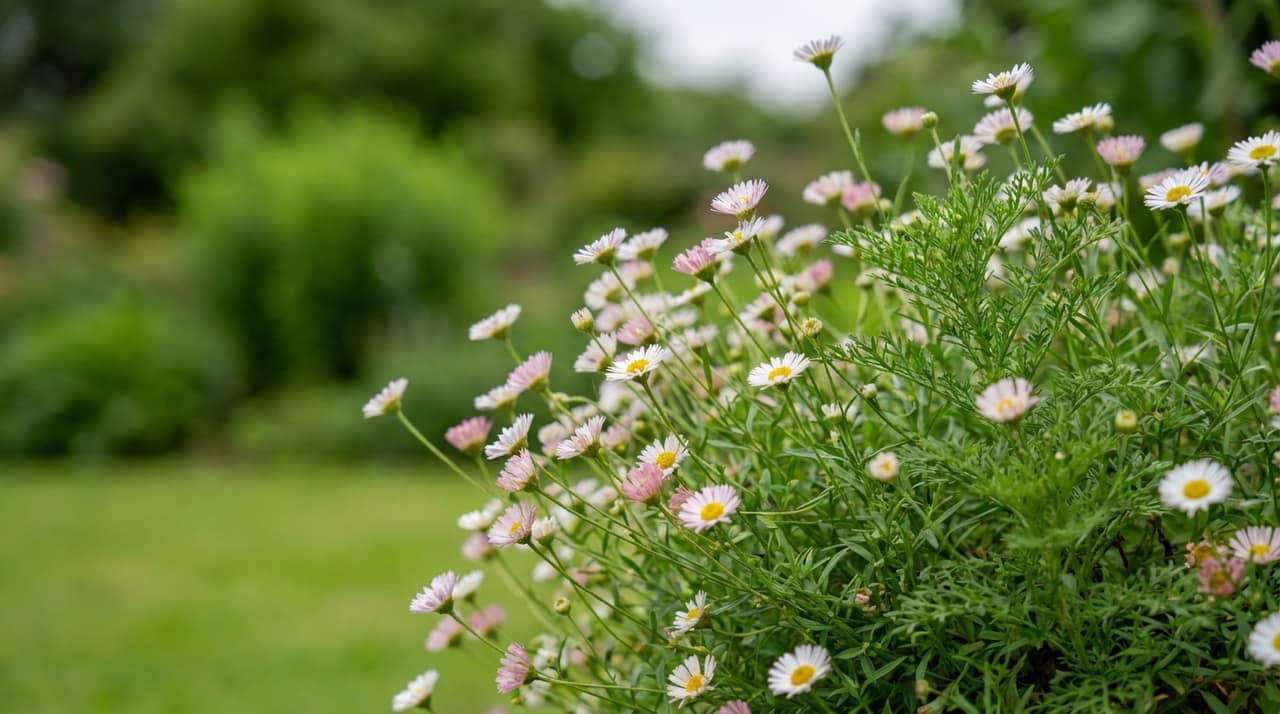
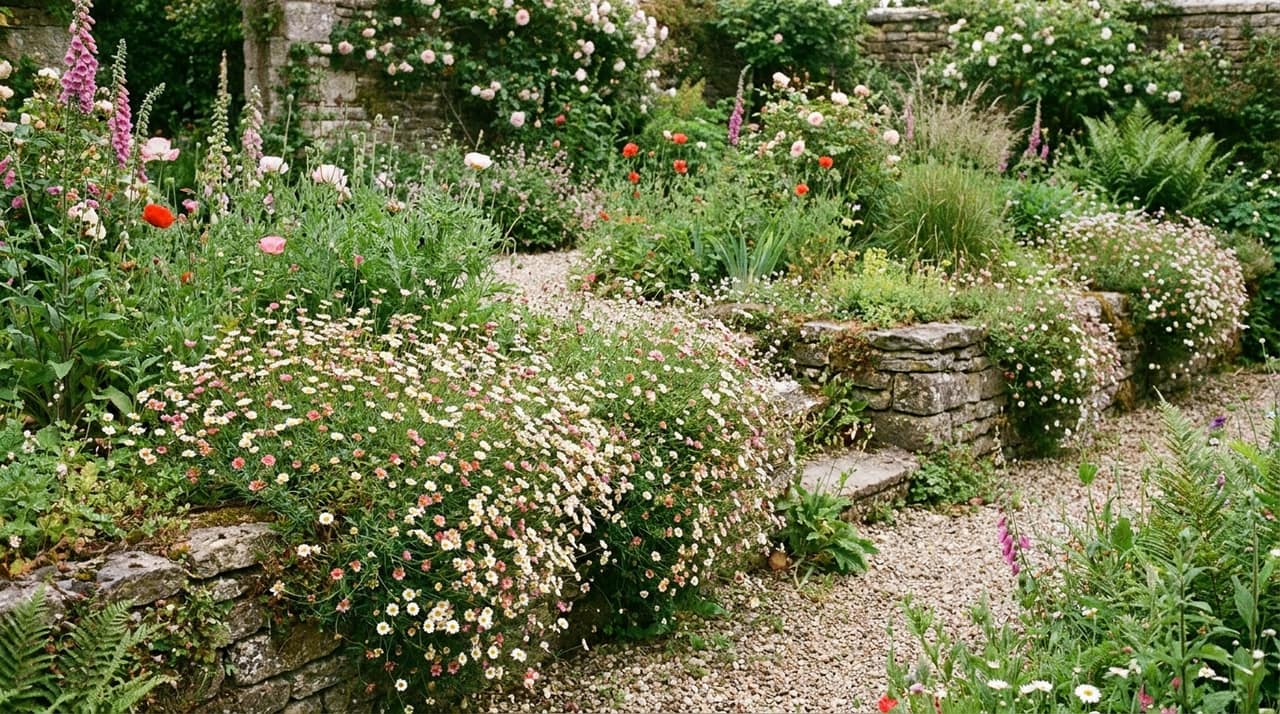
Erigeron karvinskianus, commonly called Santa Barbara daisy or wall daisy, is a charming perennial that produces an abundance of delicate, daisy-like flowers from late spring through autumn. Its fine, feathery foliage and cascading habit make it perfect for softening borders, brightening containers, and colonising awkward corners such as dry stone walls and gravel paths. This extremely floriferous plant flowers almost continuously when happy, with blooms that progress from pink buds to white petals with yellow centres.
| Latin name | Erigeron karvinskianus |
|---|---|
| Common names | Santa Barbara daisy, wall daisy, Karwinski’s fleabane |
| Family | Asteraceae |
| Type | Herbaceous perennial |
| Height | 30–60 cm |
| Spread | 60–90 cm |
| Flowering | Late spring to late autumn |
| Hardiness | Fully hardy to −10 °C; USDA zones 5–10 |
| Sun | Full sun to partial shade |
| Soil | Well-drained; tolerates poor, chalky and sandy soils |
Erigeron thrives in full sun, which encourages the most prolific flowering and helps develop a sturdy, compact form. Whilst it tolerates partial shade, plants grown in shadier spots may become leggy and flower less freely, particularly in cooler climates.
This adaptable plant is notably unfussy about soil and actually prefers poor to moderately fertile conditions. Well-drained, sandy, chalky, or gravelly soils suit it best; it dislikes heavy clay and waterlogged ground, which can lead to root rot. Neutral to slightly alkaline pH is ideal, though it tolerates a fairly wide range.
Hardy to approximately −10 °C, Erigeron karvinskianus thrives throughout the British Isles in well-drained positions. In wetter regions, ensure excellent drainage to protect it during cold, wet winters.
Plant in spring once the risk of hard frost has passed, or in early autumn to allow establishment before winter. This timing gives young plants time to develop a strong root system whilst avoiding competition from vigorous spring growth.
Almost everything this daisy asks of you falls into a handful of short jobs spread across the year. Use the table to see at a glance which season each one belongs to.
| Task | When | What to do |
|---|---|---|
| Planting | Mid-spring, or early autumn | Plant once hard frost risk has passed, or early enough in autumn to establish before winter |
| Spacing | At planting | Allow 45–60 cm between plants for their spreading habit |
| Dividing | Early to mid-spring, or early autumn | Tease the rootball apart and replant divisions at the same depth |
| Taking cuttings | Late spring | Root basal cuttings in a cold frame |
| Pinching back | Early summer | Shorten leggy stems to build a bushier plant |
| Deadheading | Through summer | Remove spent flowers to keep the blooms coming |
| Cutting back hard | Late autumn | Cut to about 10 cm so plants do not turn woody and sparse |
| Grit mulch | Early winter | In wet areas, spread a thin grit mulch around the crown |
Beyond these jobs, established plants in free-draining soil need very little attention.
Spring: Divide crowded plants in early spring before strong growth emerges. Remove any dead growth from winter damage. A light feed with balanced fertiliser is optional; avoid nitrogen-rich feeds, which promote leafy growth at the expense of flowers.
Summer: Deadhead spent flowers regularly to encourage continuous blooming throughout the season. Water during prolonged dry spells, but once established, Erigeron is remarkably drought-tolerant. Watch for any leggy stems and pinch back shoots in early summer to encourage a bushier habit.
Autumn: Allow some flowers to set seed if you wish self-sown seedlings to naturalise nearby. In late autumn, cut back hard (to about 10 cm) to prevent the plant becoming woody and sparse over winter. Tidy plants growing on walls by removing dead material.
Winter: Established plants require no special care in well-drained soil. In particularly wet areas, apply a thin mulch of grit around the crown to improve drainage and prevent rotting.
The species itself is the most commonly grown form, but several excellent cultivars offer subtle variations in colour and habit.
“`html
“`