Sedum spurium: growing guide, care tips and best varieties
·
0
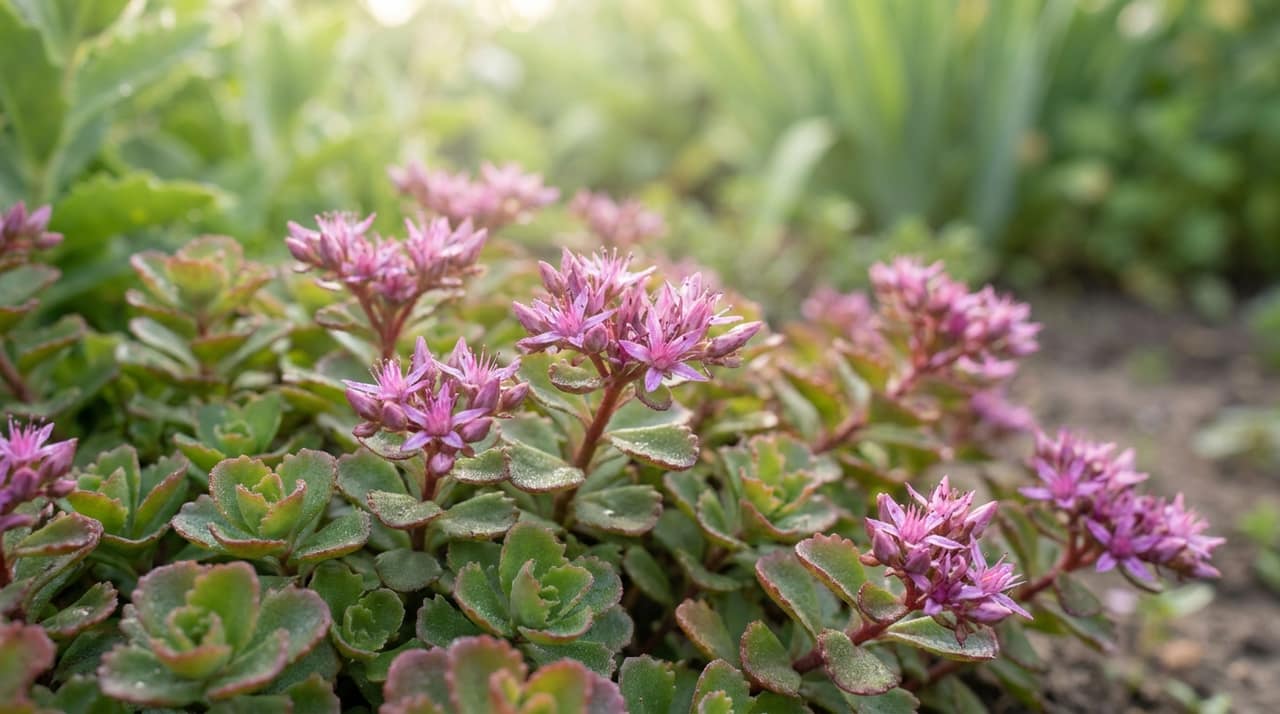
Sedum spurium, commonly known as Caucasian stonecrop or dragon’s blood, is a vibrant and delightfully low-maintenance succulent prized for its brilliant red and orange foliage, particularly in autumn and winter. This carpeting groundcover produces tiny pink or red flowers in summer and spreads rapidly to form dense, colourful mats across rockeries, borders and alpine troughs. Its exceptional hardiness and drought tolerance make it a favourite among gardeners seeking year-round colour with minimal fuss.
Growing conditions
Sedum spurium thrives in full sun, where it develops the most intense red and orange colouration, especially as temperatures cool in autumn. Whilst it will tolerate partial shade, growth becomes looser and foliage colour less vibrant in shadier spots.
This stonecrop demands excellent drainage and is happiest in poor, gritty soil enriched with perlite, coarse sand or gravel. Heavy clay and waterlogged conditions are fatal; it prefers neutral to slightly alkaline pH, though it adapts to a wide range provided drainage is assured.
Sedum spurium is exceptionally hardy throughout the British Isles and northern Europe, surviving severe frosts without protection. In milder regions it may remain semi-evergreen, whilst in colder areas foliage dies back but the plant reliably re-emerges in spring.
How to plant Sedum
Plant in spring or early autumn when soil is warm and moist, allowing the new growth to establish before winter or the heat of summer.
Space plants 30–45 cm apart to allow room for spreading without overcrowding neighbours.
Plant so the crown sits just at soil level; avoid burying the rosette, as this invites rot.
Prepare beds by mixing grit, coarse sand or broken terracotta into existing soil to improve drainage dramatically.
Water gently after planting to settle the soil, but avoid waterlogging; thereafter, water sparingly unless drought persists.
Propagate effortlessly from stem cuttings or single leaves left on sandy compost; they root in weeks and need minimal water.
Care through the seasons
Spring: Remove any dead or blackened foliage from winter frost. Once new growth is evident, apply a light balanced fertiliser if soil is particularly poor, though this is rarely necessary. Divide established clumps every three to four years to rejuvenate vigour.
Summer: Sedum is largely self-sufficient during summer months and rarely needs watering unless drought is severe or plants are in pots. Deadhead spent flowerheads if desired, though they persist attractively and offer late-season interest. Keep an eye on vigorous growth that may smother nearby alpines; trim back excess runners with secateurs to maintain order.
Autumn: As temperatures drop, foliage deepens to brilliant crimsons and oranges—this colour intensification is natural and part of the plant’s appeal. There is no need to cut back unless you wish to tidy the display; many gardeners leave dried seed heads for winter structure and wildlife value. In late autumn, dust the bed lightly with grit to prevent winter rain ponding around the crown.
Winter: This hardy succulent needs no protection or special care in the UK. Foliage may look bleached or blackened after hard frosts, but the plant is not harmed and will regrow vigorously once warmth returns in spring.
Best varieties to grow
Several named cultivars offer distinct colour and habit improvements over the species.
‘Dragon’s Blood’ — The most popular cultivar, with intense blood-red foliage in cool weather and showy pink flowers; truly outstanding year-round colour.
‘Schorbuser Blut’ — A German selection with deep crimson foliage and red flowers, prized for vigorous, dense spreading habit and exceptional winter colour.
‘Tricolor’ — A striking variegated form with cream, pink and green foliage, though less hardy and demanding better drainage than the species.
‘Bronze Carpet’ — A low-growing compact cultivar with bronze-red foliage; ideal for tight rock gardens and troughs where space is limited.
Pests, diseases and common problems
Powdery mildew: A white fungal coating may appear in humid conditions or poor air circulation. Remove affected foliage and improve ventilation; in persistent cases, spray with sulphur-based fungicide in early morning.
Root rot and stem rot: Blackened, soft stems indicate waterlogging or poor drainage, the leading killer of sedums. Improve drainage immediately, reduce watering, and remove rotted sections with a clean knife; repot or replant in gritty compost.
Slugs and snails: Young growth is occasionally browsed by gastropods in damp springs. Encourage ground beetles and hedgehogs by mulching with sharp grit; hand-pick pests at dusk or use copper tape barriers around pots.
Leaf discolouration: Yellowing foliage in winter is normal senescence, not disease. However, pale, weakly coloured growth in summer usually indicates insufficient light; relocate to sunnier position for richer pigmentation.