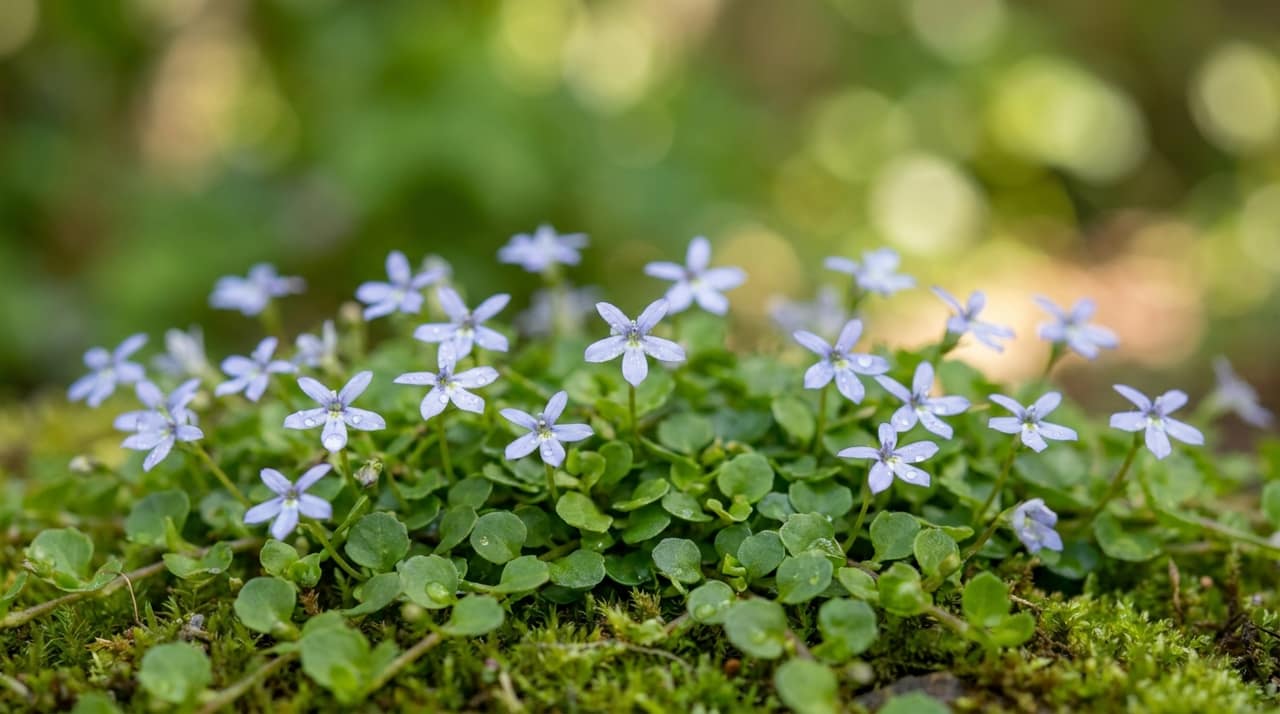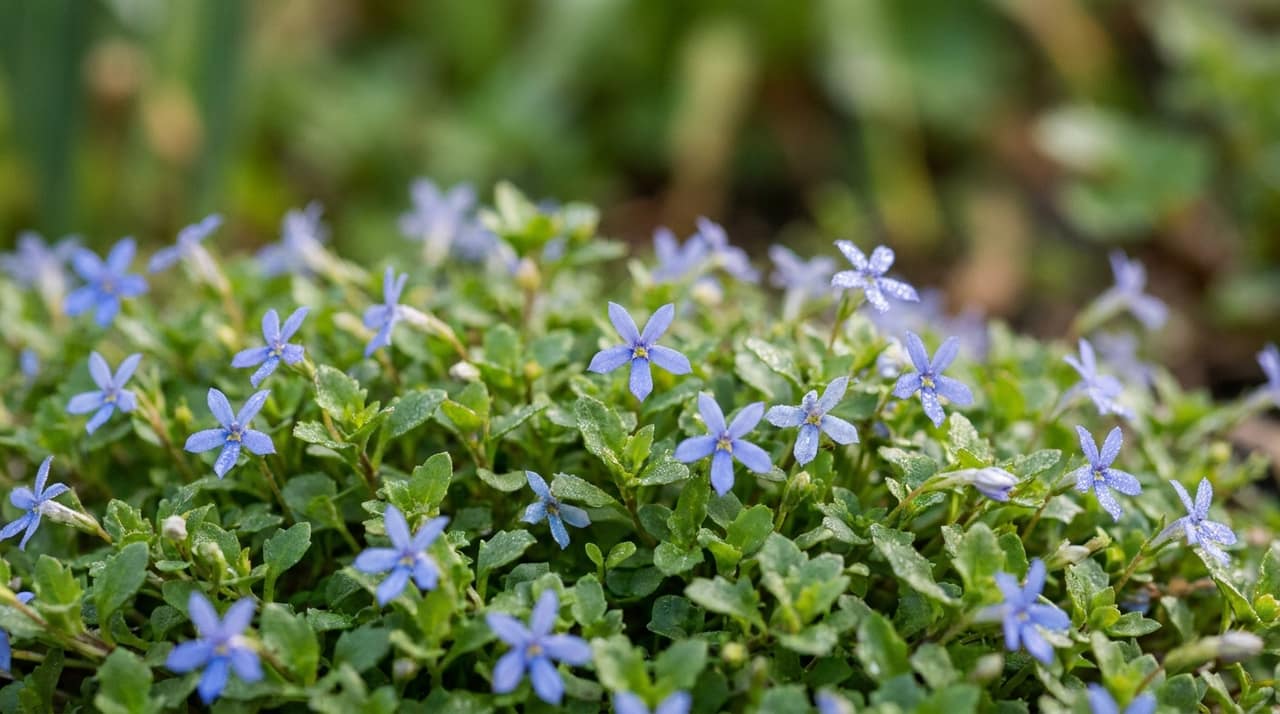
Isotoma fluviatilis, commonly known as Baby Blue Eyes or Swamp Isotome, is a charming moisture-loving groundcover prized for its delicate pale blue flowers and feathery foliage. Native to Australia, this creeping herbaceous plant excels in bog gardens, streamside settings, and damp borders where it creates an ethereal carpet of colour. Its greatest appeal lies in its ability to thrive in waterlogged conditions that many other garden plants find inhospitable.
Isotoma fluviatilis thrives in partial shade to full sun, though it flowers more prolifically when given at least three to four hours of daily sunlight. In hotter climates, afternoon shade helps prevent the foliage from scorching and keeps the soil cooler. Morning sun combined with afternoon dappled shade is ideal in many regions.
This plant has an absolute requirement for constantly moist to wet soil; it will languish in dry conditions and is genuinely at its best in marshy ground, boggy areas, or beside ponds and streams. It prefers fertile, organic-rich soil with excellent drainage (paradoxically, whilst wet, it still needs soil that drains freely rather than becoming stagnant and airless). A pH of 5.5–7.0 suits it well, though it is fairly adaptable to slightly alkaline soils.
Isotoma fluviatilis is hardy to around −5 °C and thrives in temperate climates (USDA zones 8–11). In colder regions, it may be grown as a tender annual or lifted and overwintered indoors, whilst in warmer zones it persists year-round as a perennial.
Plant Isotoma fluviatilis in spring after the last hard frost, when soil temperatures begin to rise and growth accelerates. Planting at this time allows the young plants to establish roots before summer heat arrives and maximises the flowering season.

Isotoma asks for different attention at each point in the year, from a spring feed to a protective winter mulch. The table below sets out the main job, the feeding needed and what the plant itself will be doing.
| Season | Main jobs | Feeding and mulching | What to expect |
|---|---|---|---|
| Early to mid-spring | Remove winter die-back; light trim if straggly | Balanced slow-release fertiliser or well-rotted compost mulch | New growth emerges and accelerates |
| Early to late summer | Deadhead regularly; cut back trailing stems that overwhelm neighbours | No feeding needed; water deeply instead | Peak flowering, provided the soil never dries out |
| Early to late autumn | Keep deadheading; cut back by half if leggy and divide overcrowded clumps | Thick mulch of leaf mould over the crown | Flowering tails off; divisions replanted now re-establish |
| Early winter to late winter | Leave the crown undisturbed | Mulch stays in place to protect the crown | Dies back to the roots where frost bites; evergreen in mild regions |
Whatever the season, the constant is moisture: the soil must never be allowed to dry out.
Spring: As new growth emerges, apply a balanced slow-release fertiliser or a generous mulch of well-rotted compost around (but not touching) the plant. Watch for any winter die-back and remove dead foliage. If plants became straggly over winter, a light trim will encourage bushier growth and more abundant flowering.
Summer: Water consistently and deeply, especially during dry spells—never allow the soil to dry out, as this will cause stress and reduce flowering. Deadhead spent flowers regularly to extend the flowering season. If the plant begins to overwhelm neighbouring species, simply cut back the trailing stems to keep it within bounds.
Autumn: Continue deadheading to promote flowers into September. In late autumn, cut the plant back by half if it has become leggy, and divide established clumps if overcrowded, replanting divisions immediately in freshly enriched soil. Apply a thick mulch of leaf mould in late October to protect the crown through winter and improve soil fertility.
Winter: In frost-prone areas, Isotoma fluviatilis may die back almost completely to the roots; this is normal and the plant will regenerate in spring. In mild regions, it often remains evergreen and may continue flowering sporadically.
The species itself is the most widely available and reliable form, though a few named selections are occasionally offered.
“`html
“`