Ajuga reptans: growing guide, care tips and best varieties
0
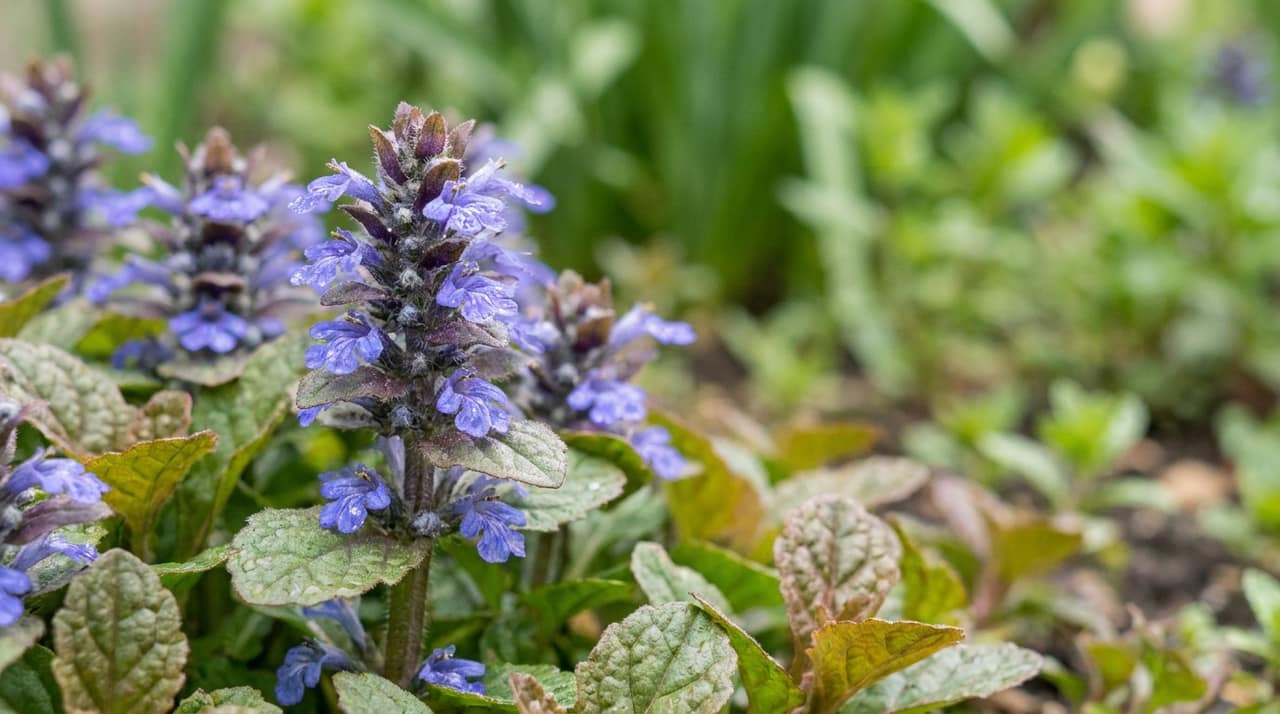
Ajuga reptans, commonly known as bugle or carpet bugle, is a vigorous ground-cover perennial prised for its dense mats of glossy foliage and striking spikes of violet-blue flowers. It is one of the most popular low-growing herbaceous plants for edging borders, filling gaps beneath shrubs, and suppressing weeds in shady corners. Its ability to thrive in challenging conditions whilst requiring minimal maintenance makes it an invaluable asset to the modern garden.
Growing conditions
Ajuga reptans performs best in partial shade but is remarkably adaptable, thriving equally well in full sun or damp shade. In warmer regions, afternoon shade prevents leaf scorch during hot summers. Morning sunlight encourages the most vibrant flower production.
This plant is unfussy about soil type and will establish in clay, chalk, and sandy ground with equal vigour. Moist, well-drained soil produces the densest growth, though Ajuga tolerates both waterlogged conditions and temporary drought once established. A neutral to slightly alkaline pH is preferred, but the plant adapts across a wide range.
Fully hardy throughout the United Kingdom and northern Europe, Ajuga reptans requires no winter protection. It will regrow vigorously after even severe frosts and performs well in exposed, windswept gardens.
How to plant Ajuga
Plant Ajuga reptans in spring (March to May) or autumn (September to October) when soil is moist and the plant can establish before extreme temperatures arrive. Container-grown specimens may be planted during the growing season provided they are watered regularly until established.
Space plants 30–45 cm apart to allow room for lateral spread; closer spacing accelerates ground coverage.
Position the crown level with the soil surface; planting too deeply invites rot in wet winters.
Enrich poor soils with leaf mould or compost before planting, though this is not essential.
Water thoroughly after planting and maintain consistent moisture for the first four to six weeks.
Divide established plants in autumn or spring by lifting clumps and separating rooted runners for quick propagation.
Care through the seasons
Spring: Tidy away winter debris and dead leaf material in March to encourage fresh growth. A light feed with a balanced fertiliser in April boosts flowering vigour, though Ajuga rarely requires feeding on fertile soils. Remove flower spikes once they fade to tidy the plant and redirect energy into foliage production.
Summer: Water during prolonged dry spells, particularly in the first year after planting; established plants are drought-tolerant. Check for excessive spread beyond intended boundaries and trim back runners with shears if necessary. Ajuga flowers fade by late June in most regions, leaving the foliage to provide ground-covering interest.
Autumn: Cut back overgrown patches hard in September to rejuvenate tired mats and encourage dense re-growth. Divide congested clumps now by lifting and separating runners, replanting immediately at the same depth. A thin mulch of compost in October protects the crown in areas with heavy winter rain.
Winter: Established plants require no care during winter months and will remain evergreen or semi-evergreen depending on the severity of the season. Remove any waterlogged debris in late winter if wet conditions have caused minor dieback.
Best varieties to grow
Several cultivars offer subtle variations in foliage colour and form whilst retaining the hardiness and vigour of the species.
Ajuga reptans ‘Atropurpurea’ — A vigorous form with deep purple-bronze foliage that intensifies in cool weather, paired with violet-blue flowers.
Ajuga reptans ‘Burgundy Glow’ — Outstanding tricoloured foliage combining burgundy, cream, and green; AGM-listed for garden merit.
Ajuga reptans ‘Rainbow’ (syn. ‘Multicolor’) — Compact variegated cultivar with cream, pink, and purple-tinged leaves; useful for containers.
Ajuga reptans ‘Alba’ — Pure white flowers with green foliage; a refined choice for shaded borders where colour contrast is valued.
Pests, diseases and common problems
Powdery mildew: A white, dusty coating appears on leaves in humid, poorly ventilated conditions. Improve air circulation by thinning dense patches and avoid overhead watering; apply sulphur dust if severe.
Leaf spot (fungal): Circular brown patches develop on foliage in wet weather, occasionally causing defoliation. Remove affected leaves promptly and reduce leaf wetness by watering at soil level only.
Excessive spreading: In ideal conditions, Ajuga spreads beyond its intended area; the runners are shallow-rooted and easily pulled or trimmed back with shears.
Poor flowering: Insufficient light or excess nitrogen fertiliser redirects energy into foliage growth. Move plants to brighter locations or avoid high-nitrogen feeds; older plants benefit from rejuvenation by hard cutting in autumn.
“`html
“`
🌿 Nature & Garden Newsletter
Gardening tips, recipes & seasonal advice, twice a week.