Nepeta faassenii: growing guide, care tips and best varieties
0
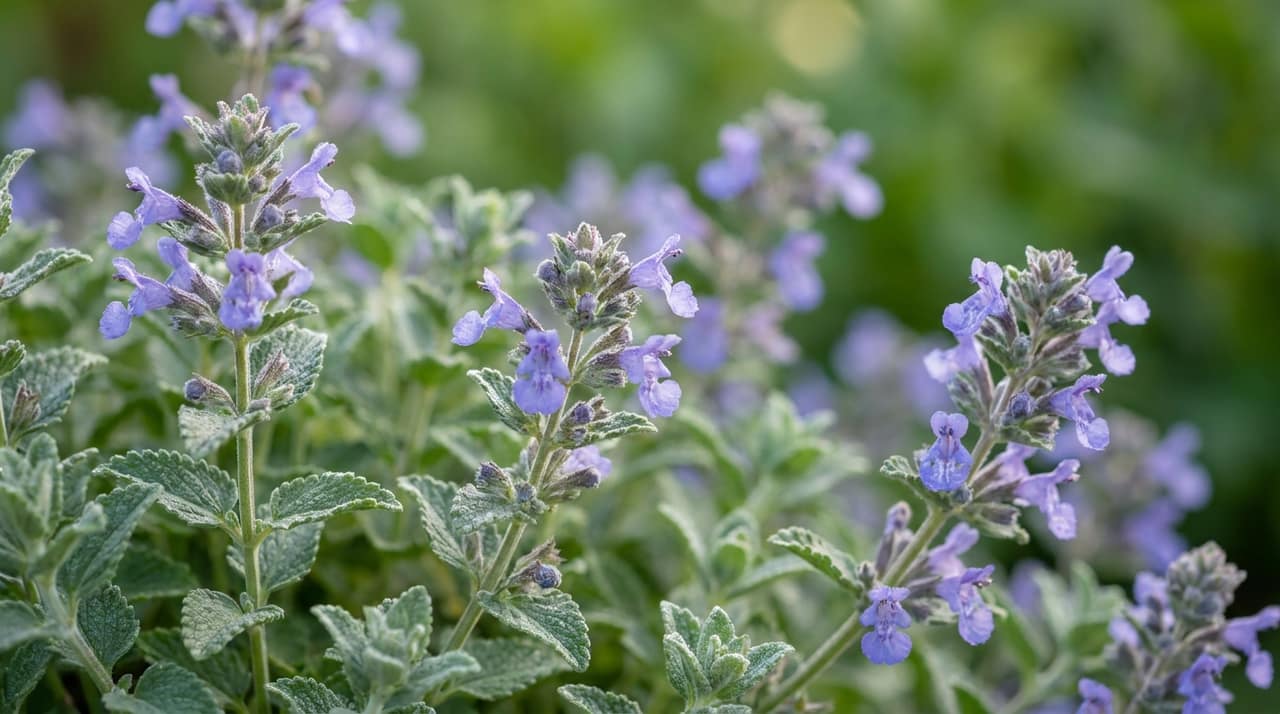
Nepeta faassenii, commonly known as catmint, is a delightful semi-evergreen perennial prized for its soft purple-blue flowers and aromatic, silvery-green foliage. It is an excellent choice for cottage gardens, borders, and edging, where it creates a hazy, romantic effect throughout the growing season. This reliable plant attracts bees and butterflies whilst being virtually pest-free, making it a favourite of gardeners seeking low-maintenance colour.
Growing conditions
Nepeta faassenii thrives in full sun, where it produces the most abundant flowers and maintains compact growth. It will tolerate partial shade, though flowering may be reduced and growth becomes leggy. For best results, ensure the plant receives at least six hours of direct sunlight daily.
This catmint is remarkably unfussy about soil type, growing well in poor, freely draining conditions where many ornamentals struggle. It prefers slightly alkaline to neutral soil but adapts to chalk and sandy soils with ease; avoid heavy clay or waterlogged ground, as this promotes root rot. No feeding is necessary for established plants, as rich soil often leads to weak, straggly growth.
Nepeta faassenii is fully hardy across the British Isles and northern Europe, tolerating winter temperatures well below −15 °C. In warmer regions, it remains semi-evergreen through winter, whilst in colder zones the foliage may die back completely before regenerating in spring.
How to plant Nepeta
Plant Nepeta in spring (March to May) or early autumn (September to October), when the soil is warm and moist, allowing roots to establish before winter or the growing season. Avoid planting during hot, dry spells or waterlogged periods.
Space plants 45–60 cm apart to allow for mature spread and air circulation, reducing disease risk.
Plant with the crown at soil level; avoid burying the stem, which may cause rot in winter.
Improve poor soils with coarse grit or sand if drainage is questionable; catmint does not need compost or manure.
Water well after planting to settle the soil, then allow the plant to dry slightly between waterings.
Divide established clumps in spring or autumn every three to four years to rejuvenate vigour and maintain shape.
Care through the seasons
Spring: In early spring, cut back dead or damaged growth to 10–15 cm above ground to encourage bushy, compact plants. New shoots will emerge from the base within weeks. No fertiliser is needed; simply clear winter debris and tidy the planting area.
Summer: Deadhead spent flower spikes regularly to encourage continuous blooming from May through September. During hot, dry spells, water moderately at the base (not overhead) to prevent leaf scorch; established plants are quite drought-tolerant. If growth becomes unruly, shear back lightly in midsummer to promote bushier habit and a second flush of flowers.
Autumn: In September or October, divide congested clumps if rejuvenation is needed, replanting vigorous pieces and discarding woody centres. Cut back to about 15 cm as foliage fades, leaving just enough stem to protect the crown from frost. A light mulch of grit (not compost) around the base aids winter drainage in heavier soils.
Winter: Nepeta faassenii requires no winter protection in most British gardens, remaining semi-evergreen or dormant depending on severity. In exceptionally cold, exposed sites or poorly drained soils, ensure good air circulation and drainage to prevent frost damage to the crown.
Best varieties to grow
Several cultivars of Nepeta faassenii offer subtle differences in colour, habit, and season:
Nepeta faassenii ‘Six Hills Giant’ — A taller, more vigorous selection reaching 60 cm or more, with deeper lavender flowers and extended blooming; ideal for larger borders and excellent for cutting.
Nepeta faassenii ‘Snowflake’ — A compact white-flowering form, reaching 30–40 cm, perfect for contrast planting and shaded corners where its pale blooms are especially luminous.
Nepeta faassenii ‘Blue Wonder’ — A dense, mounding cultivar with rich blue-violet flowers from late May onwards, highly attractive to pollinators and award-winning for its reliability.
Nepeta faassenii ‘Walker’s Low’ — A sprawling, low-growing form ideal for ground cover, with purple-blue flowers and soft foliage, reaching only 20–30 cm tall and spreading generously.
Pests, diseases and common problems
Powdery mildew: A white coating on leaves occurs in humid, poorly ventilated sites, particularly on stressed plants. Improve air circulation by spacing plants well, removing lower leaves, and avoiding overhead watering; treat early infestations with sulphur dust or neem oil.
Rust: Rusty orange pustules appear on leaf undersides in persistent damp conditions, especially autumn and winter. Remove affected foliage promptly, improve drainage and air flow, and avoid wetting the leaves when watering.
Root rot: Heavy, waterlogged soil or poor drainage causes the crown and roots to decay, leading to sudden wilting and plant death. Ensure soil is freely draining and plant on a slight mound if necessary; do not mulch heavily over the crown.
Legginess and poor flowering: Insufficient light, over-rich soil, or lack of deadheading results in weak, straggly growth with few flowers. Increase sunlight exposure, cut back hard in spring, and deadhead regularly throughout summer.