Dianthus deltoides: growing guide, care tips and best varieties
·
0
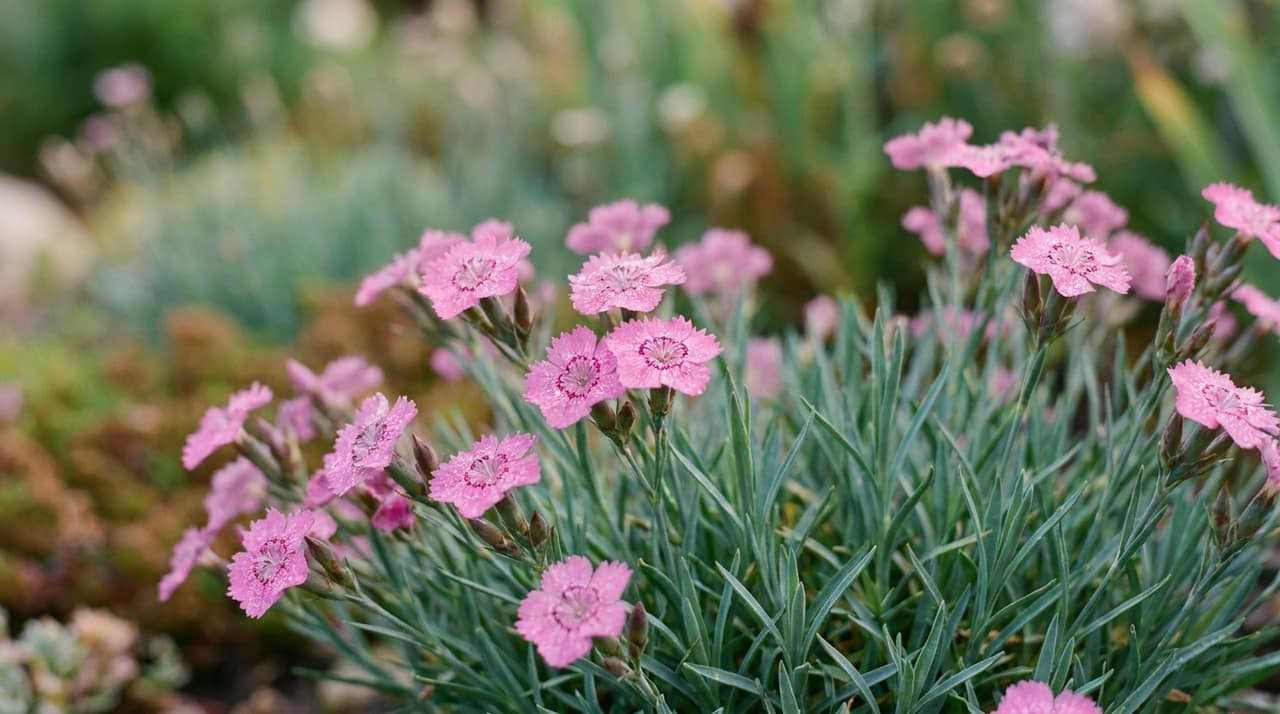
Dianthus deltoides, commonly known as Maiden Pink, is a charming, low-growing perennial treasured for its delicate, fringed flowers in shades of pink, red and white. It forms attractive evergreen mats of fine foliage and flowers prolifically from late spring through summer, making it perfect for rock gardens, edging and alpine troughs. This hardy, drought-tolerant alpine gem thrives with minimal fuss in well-drained soils.
Growing conditions
Maiden Pink demands full sun for the finest flowering display, though it will tolerate partial shade in hotter regions. At least six hours of direct sunlight daily produces compact, floriferous plants with rich flower colour.
Soil must be well-drained, ideally sandy, gritty or gravelly; this alpine plant abhors waterlogged conditions. Neutral to slightly alkaline soil is preferred, though it adapts to poor soils and tolerates chalk. Avoid heavy clay unless amended with grit and coarse sand.
This hardy perennial survives temperatures well below −15 °C and thrives across most of the UK and northern Europe. In warmer climates, afternoon shade helps prevent stress during extreme heat.
How to plant Dianthus
Plant Maiden Pink in spring or early autumn when soil is workable and moisture is reliable without waterlogging. Autumn planting allows roots to establish over winter, giving plants a head start.
Space plants 30 cm apart to allow room for spread without crowding, which can encourage fungal issues
Position the crown level with the soil surface; planting too deep invites rot
Amend soil generously with coarse sand, grit or perlite to ensure excellent drainage
Water in gently after planting, then reduce watering to natural rainfall unless drought conditions persist
Propagate by softwood cuttings in early summer or divide established clumps in spring
Dense evergreen mats suit rock gardens, edging and troughs
The gardening year for Maiden Pink
Maiden Pink asks for very little, but the little it asks changes with the season. This table sets out the one job that matters at each stage, and how much water or feed goes with it.
The gardening year for Maiden Pink
Season
Main task
Feeding and watering
Early to mid-spring
Tease out dead growth and divide overgrown clumps
Light feed of balanced fertiliser or blood, fish and bone
Early to late summer
Deadhead regularly to prolong flowering and limit self-seeding
Water only during prolonged dry spells
Early to mid-autumn
Tidy the foliage without cutting back hard; divide congested clumps
Stop overwatering; replant divisions immediately
Late autumn to late winter
Nothing to do; the evergreen mat stays ornamental
Keep drainage sharp to prevent crown rot
Read across the year and one theme repeats: dry roots matter more than any feeding or pruning.
Care through the seasons
Spring: Remove any winter-damaged foliage and tease out dead growth with your fingers. Divide overgrown clumps if needed, and apply a light feed of balanced fertiliser or a sprinkle of blood, fish and bone around the base.
Summer: Deadhead spent flowers regularly to prolong blooming and prevent self-seeding; this plant can spread vigorously if left to set seed. Water only during prolonged dry spells—Maiden Pink is drought-tolerant once established and resents excessive moisture. In humid climates, ensure air circulation to prevent fungal issues.
Autumn: Tidy the foliage but avoid cutting back hard, as the evergreen leaves provide winter protection. Divide congested clumps in early autumn if desired, replanting divisions immediately.
Winter: This plant requires no special protection and remains ornamental through cold months. In very wet winters, ensure drainage is perfect to prevent crown rot.
Best varieties to grow
Several cultivars offer distinct colours and growth habits, all equally hardy and low-maintenance.
Dianthus deltoides ‘Brilliant’ — Produces vivid crimson-red flowers with darker eyes on compact plants; outstanding garden impact.
Dianthus deltoides ‘Flashing Light’ — Striking ruby-red blooms with white-eyed centres over grey-green foliage, award-winning AGM variety.
Dianthus deltoides ‘Microchip’ — Compact dwarf form with white flowers marked with distinct burgundy eyes, ideal for troughs and tight spaces.
Dianthus deltoides ‘Leuchtfeuer’ (also sold as ‘Wisley Variety’) — Glowing salmon-pink blooms with red centres and blue-green foliage, very reliable and long-flowering.
Pests, diseases and common problems
Rust: Orange-brown pustules appear on leaf undersides, particularly in damp conditions. Remove affected leaves immediately and improve air circulation; avoid overhead watering.
Dianthus spider mite: Fine webbing and yellowed, stippled leaves indicate infestation. Spray with water to dislodge mites or apply organic miticide; reduce humidity and avoid excessive feeding which promotes pest outbreaks.
Crown rot: The plant collapses at the base in waterlogged soil. This is usually fatal; prevent by ensuring sharp drainage and not overwatering in autumn and winter.
Slugs and snails: Young growth is occasionally eaten; hand-pick pests at dusk or use copper tape around pots. Beer traps or hedgehog-friendly barriers are organic alternatives.
Powdery mildew: White coating on leaves occurs in humid, poorly ventilated spots. Improve air flow, remove affected foliage and avoid wetting foliage during watering.