Phlox subulata: growing guide, care tips and best varieties
0
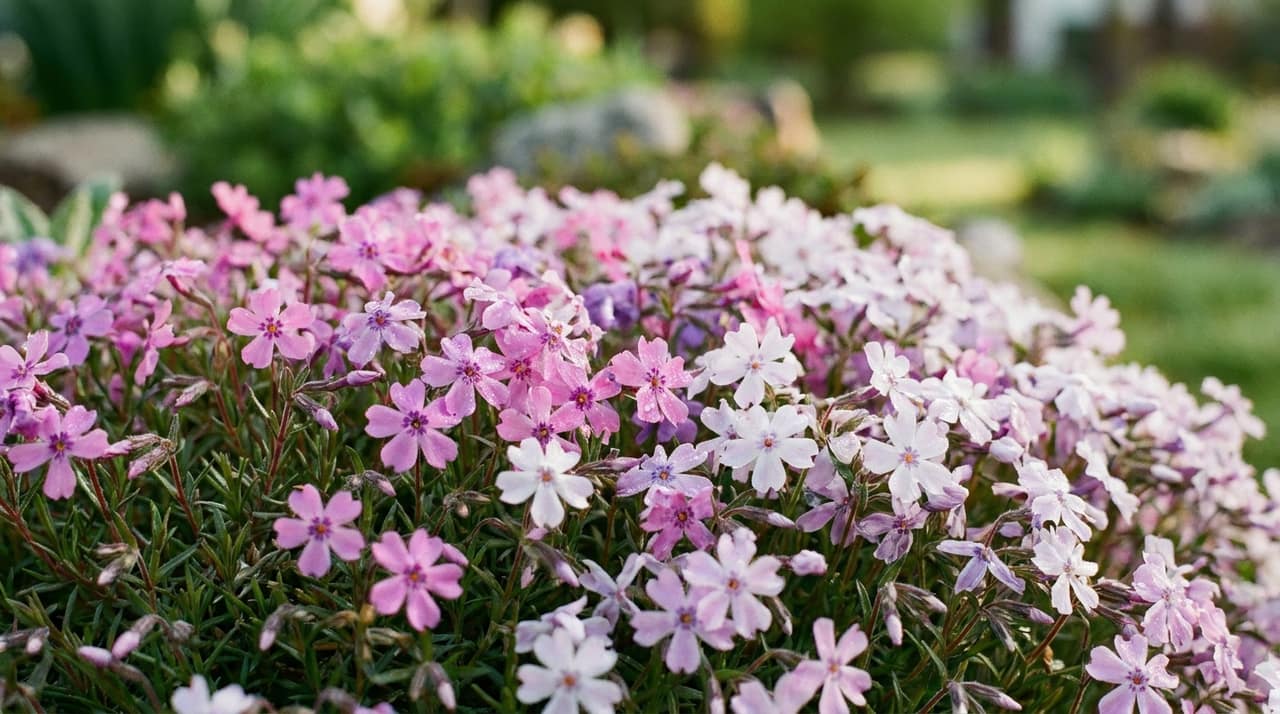
Phlox subulata, commonly known as creeping phlox or moss phlox, is a low-growing groundcover that bursts into a cloud of vibrant flowers in spring and early summer. Its needle-like, moss-like foliage provides year-round interest, whilst its prolific blooms in pink, magenta, purple, white and bi-colours make it an irresistible choice for rock gardens, borders and alpine troughs. This hardy perennial spreads steadily to form dense mats and rarely requires fussing, making it ideal for both experienced gardeners and beginners.
Growing conditions
Phlox subulata thrives in full sun, requiring at least six hours of direct sunlight daily for dense growth and prolific flowering. In partial shade, the plant becomes leggy and sparse, with fewer blooms and a tendency to suffer from mildew. Choose an open site away from overhanging trees and tall neighbours for best results.
This plant strongly prefers well-drained, sandy or gritty soil and will not tolerate waterlogging or heavy clay. A neutral to slightly alkaline pH (6.5–7.5) suits it best, though it is fairly tolerant of poor soil fertility. Before planting, incorporate grit, coarse sand or perlite into heavy soils to improve drainage dramatically.
Phlox subulata is fully hardy across the British Isles and will survive severe winters without protection. It thrives in cool, temperate climates and is particularly valuable in rock gardens, alpine sinks and gravel beds where drainage is naturally sharp.
How to plant Phlox subulata
Plant Phlox subulata in early spring or autumn, when soil is moist but not waterlogged. Autumn planting gives the roots longer to establish before winter dormancy, whilst spring planting allows new plants to settle through the growing season.
Space plants 30–45 cm apart to allow room for spreading; they will knit together within two growing seasons
Plant at the same depth as they were in their pots — the crown should sit just at soil level, not buried
Work grit or coarse sand into the planting hole and surrounding soil to ensure sharp drainage
Water in gently after planting, then allow the soil surface to dry between waterings
Divide established clumps in early spring or immediately after flowering to rejuvenate old plants or propagate stock
Care through the seasons
Spring: As new growth emerges, feed with a balanced, slow-release fertiliser to support flowering. Tidy any dead or damaged foliage from winter. Deadhead spent flowers regularly to encourage a second flush of blooms in early summer.
Summer: Water moderately during prolonged dry spells, but allow the soil to dry between waterings to discourage root rot. Once flowering finishes in June, the plant requires minimal intervention. Pinch back wayward shoots lightly if spread is becoming excessive, and watch for signs of powdery mildew in humid conditions.
Autumn: Cut back dead flowerheads in late summer if desired, though many gardeners leave them for winter structure. Avoid heavy mulching, which traps moisture around the basal crown. This is an excellent time to divide overcrowded plants or take basal cuttings to increase stock.
Winter:Phlox subulata is fully dormant and requires no care. The fine foliage may brown slightly in hard frosts, but this is normal and poses no threat to the plant’s survival.
Best varieties to grow
Several excellent cultivars offer a range of colours and flowering habits suited to different garden schemes.
Phlox subulata ‘Candy Stripes’ — Striped pink-and-white blooms on a tight, compact mound; excellent for containers and small spaces. RHS AGM.
Phlox subulata ‘Emerald Blue’ — Bright blue-purple flowers with darker eyes, reaching 15 cm tall and spreading reliably.
Phlox subulata ‘McDaniel’s Cushion’ — Deep crimson-magenta blooms in profusion; one of the most floriferous and colour-fast varieties.
Phlox subulata ‘White Delight’ — Pure white flowers with a neat, compact habit; striking when massed in rock gardens or containers.
Phlox subulata ‘Temiskaming’ — Deep magenta flowers with an excellent compact form; a long-time favourite for edging and alpine troughs.
Pests, diseases and common problems
Powdery mildew: White, flour-like coating appears on foliage in humid conditions or when air circulation is poor. Improve ventilation, avoid wetting the foliage, and spray with sulphur or neem oil if needed.
Root rot: Wilting and blackening stems indicate waterlogging or excessively rich, moisture-retentive soil. Replant in sharp, well-drained soil and reduce watering frequency; prevention through good drainage is far more effective than treatment.
Sparse flowering: Insufficient light or overly fertile soil causes lush foliage at the expense of blooms. Ensure the plant receives at least six hours of direct sun daily and avoid high-nitrogen fertilisers.
Leggy growth: Tall, open growth with gaps suggests shading or overcrowding. Increase light exposure, increase spacing, and prune back lightly after flowering to promote bushiness.