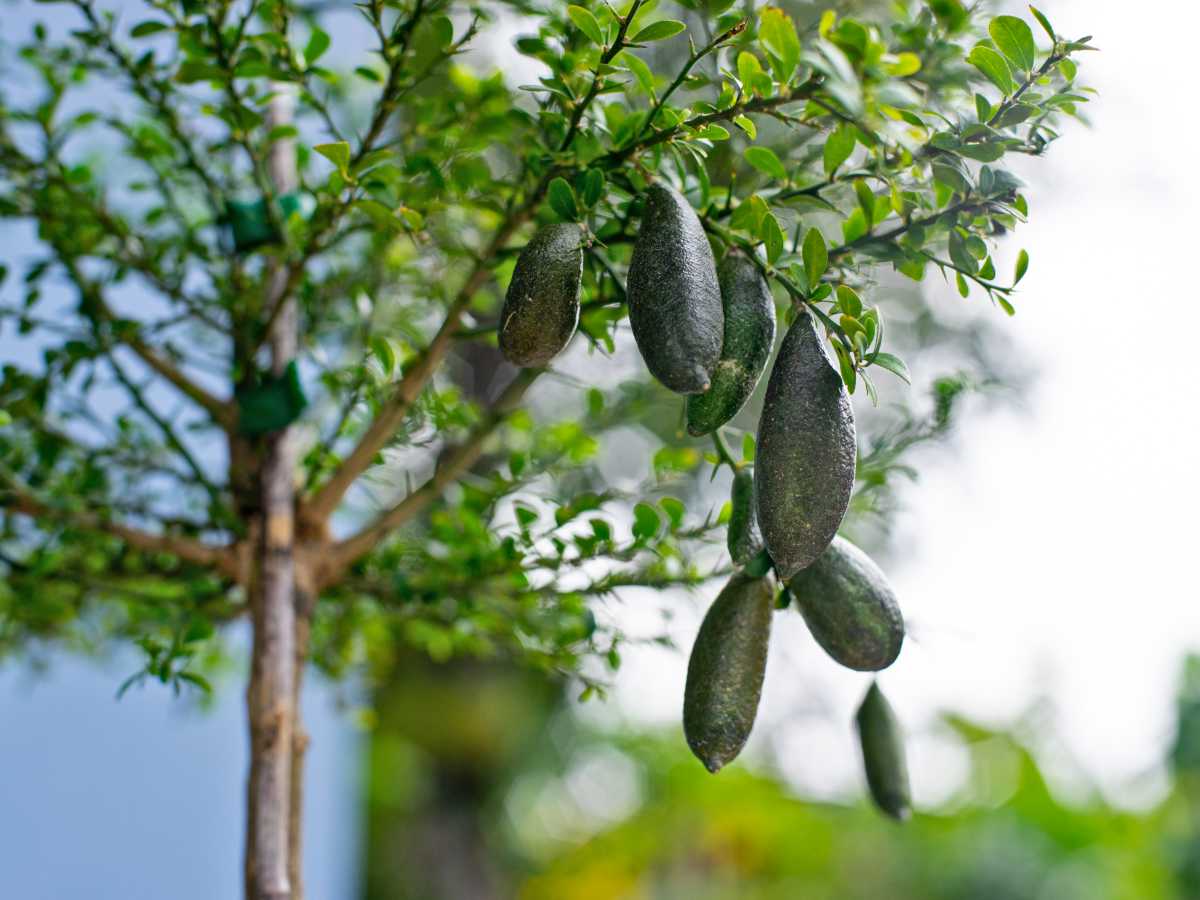
Slice one open and hundreds of pearl-like beads spill out, bursting in the mouth with lemon and grapefruit flavours — the “lime caviar” that great chefs crave. Australian finger lime (Microcitrus australasica) is a thorny rainforest shrub that needs full sun in temperate climates, and frost-free winters, to fruit well.
| Name | Microcitrus australasica |
|---|---|
| Hardiness | 25°F (-4°C) |
| Exposure | Full sun |
| Soil | Well-drained |
| Height | 3 to 10 feet (1 to 3 m), if pruned |
| Foliage | Evergreen |
| Flowering | Spring |
| Harvest | Late autumn to spring |
Its yummy fruits are much sought after by great culinary chefs.
It is only possible to plant Australian finger lime in the ground in mild-wintered areas because they can’t survive freezing temperatures. Strong frost spells can kill them.
In colder areas, plant your Australian finger lime in pots.
Finger lime isn’t a very hardy citrus.
Remove dead wood regularly and clear the inside branches of your Australian finger lime to let light penetrate to the center.
Do the heaviest pruning right after the harvest. Productive shoots should be pruned off every year, so the tree can replace them. Wear gloves: thorns are very prickly.
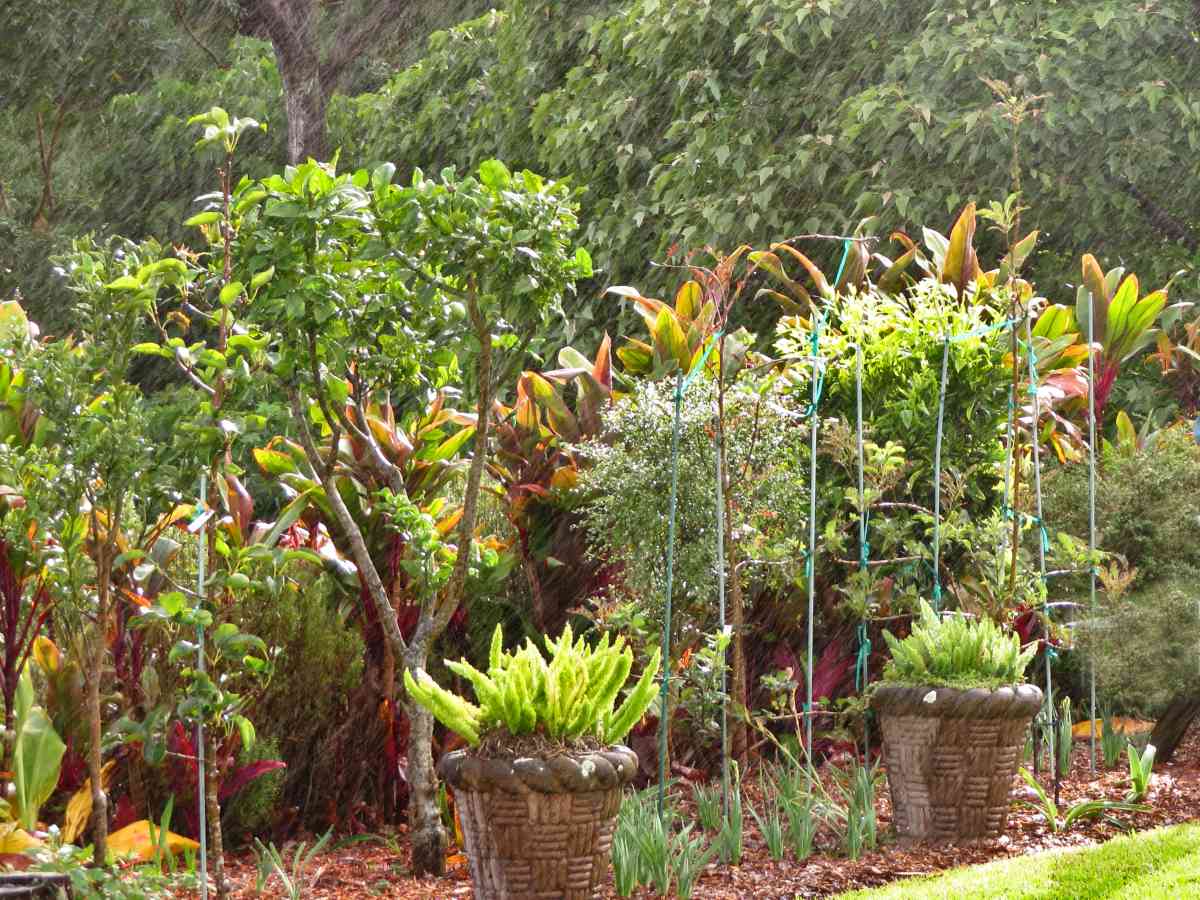
In summer, frequent watering is required, whereas watering can be reduced in winter. Picture below/right: rain doing its part!
Every two weeks, during the growth phase, add citrus-specific fertilizer to boost fruit-bearing.
It takes a couple years for flowers to appear, and then again two more seasons for fruits to set in earnest.
Along the way, you’ll have lots of questions about fruit set and fruit drop – Find the answers here: finger lime fruit set, drop and harvest.
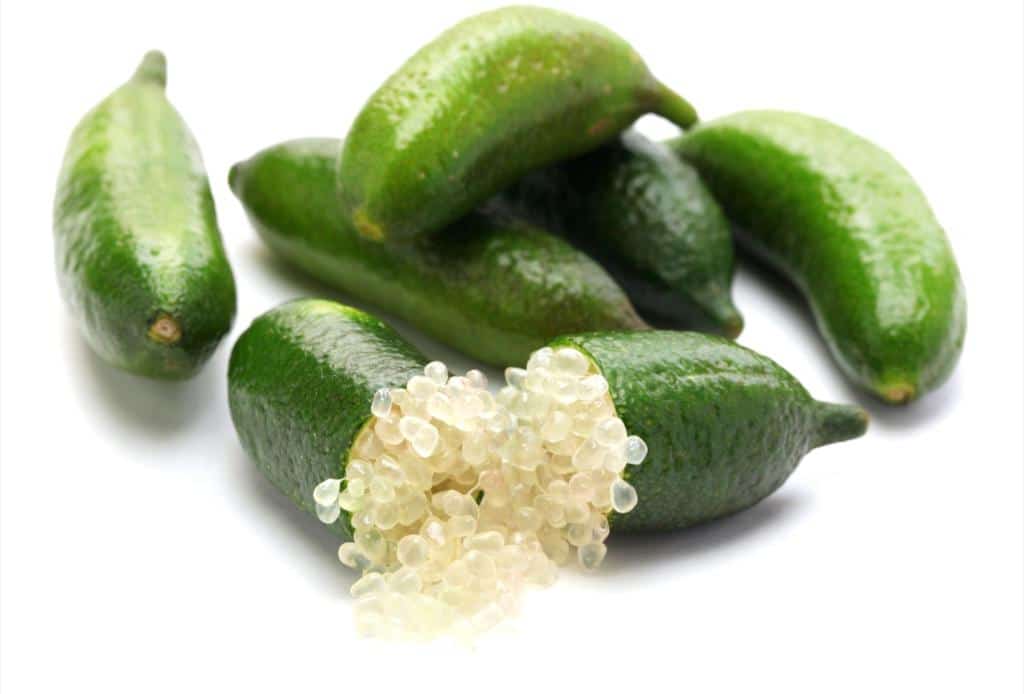
Finger lime fruits come in many colors, sometimes even different colors on the same tree!
From wasabi-like green to ruby red to pearl white and purple, it’s a wonder this fruit is only mostly known in restricted circles!
Of all the citrus varieties, the finger lime family has the most colorful and varied fruits.
Australian finger lime trees are more or less vulnerable to the same diseases and parasites as all the other citrus plants.
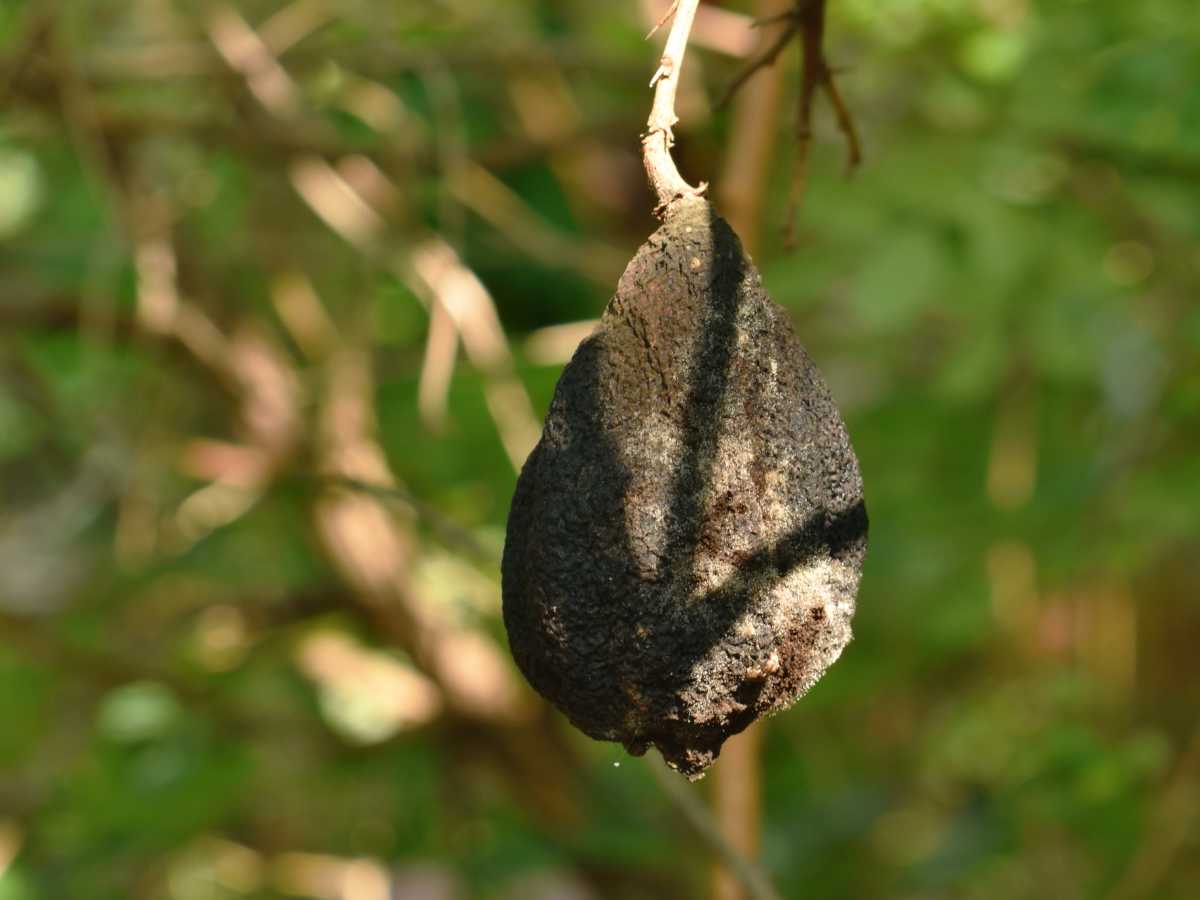
Great news – finger lime is particularly resistant to citrus greening! However, it still suffers from other diseases:
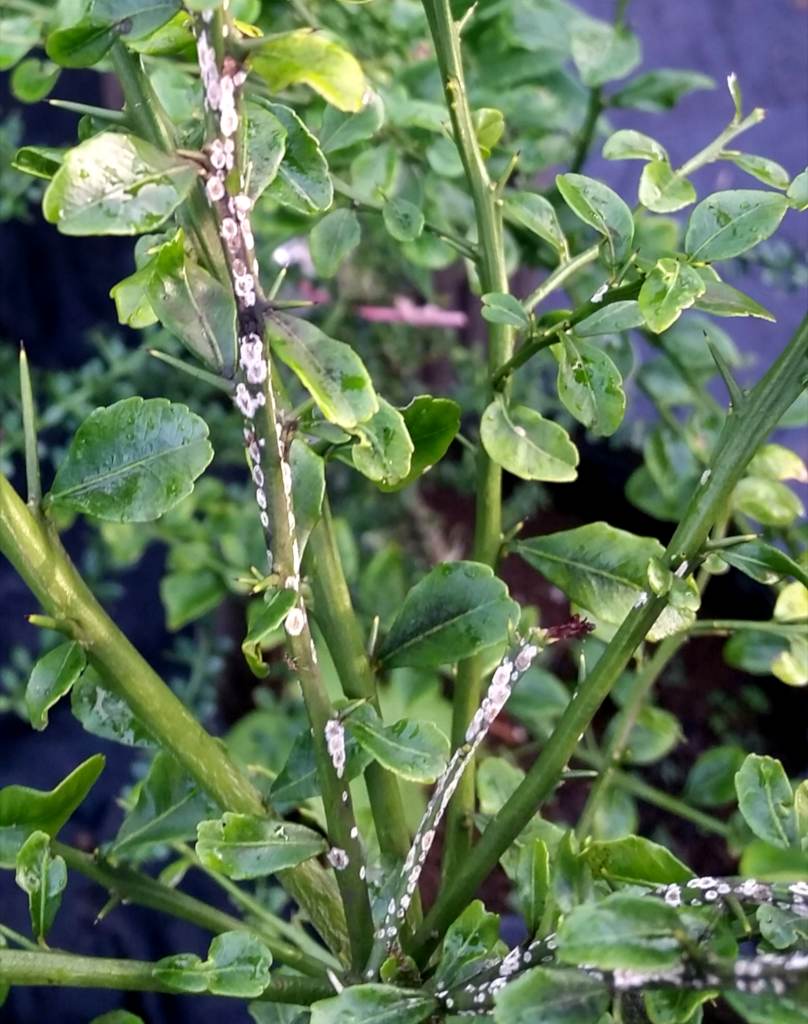
This tiny wasp only a few millimeters long lays eggs in fresh shoots. It commandeers plant growth to form a gall and then hatch. This pest is currently only in Australia, but sightings in New Zealand show it is spreading. The best way to deal with it is to prune out gall-infected branches before any adult citrus wasp hatches.
→ Did you know? Australian finger lime is the original host for citrus gall wasp. However, when planted with other non-native citrus, it will prefer laying on lemon, grapefruit, and mandarin citrus trees instead. Having been exposed to the parasite for longer, the native tree has developed a somewhat higher defense mechanism. Indeed, not all eggs and larvae on an Australian finger lime are able to reach maturity.
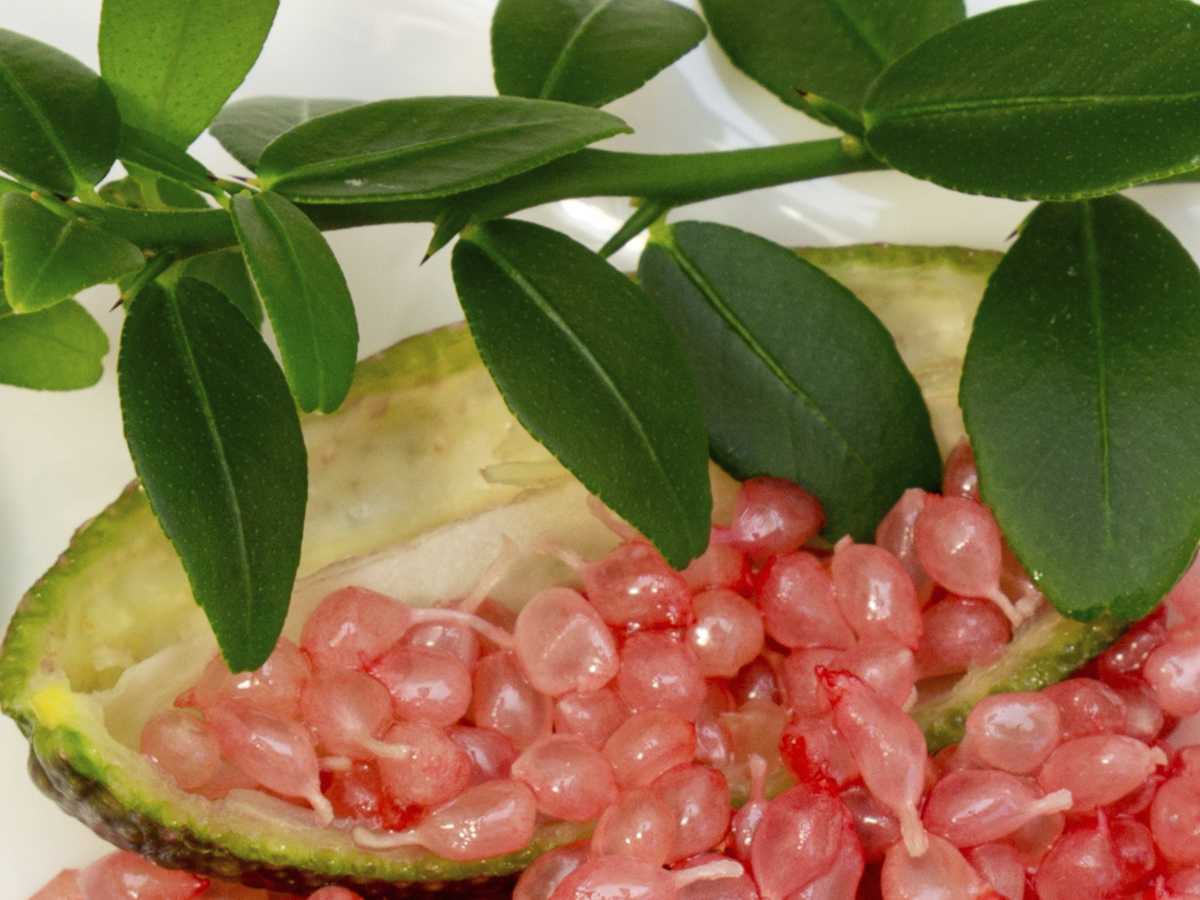
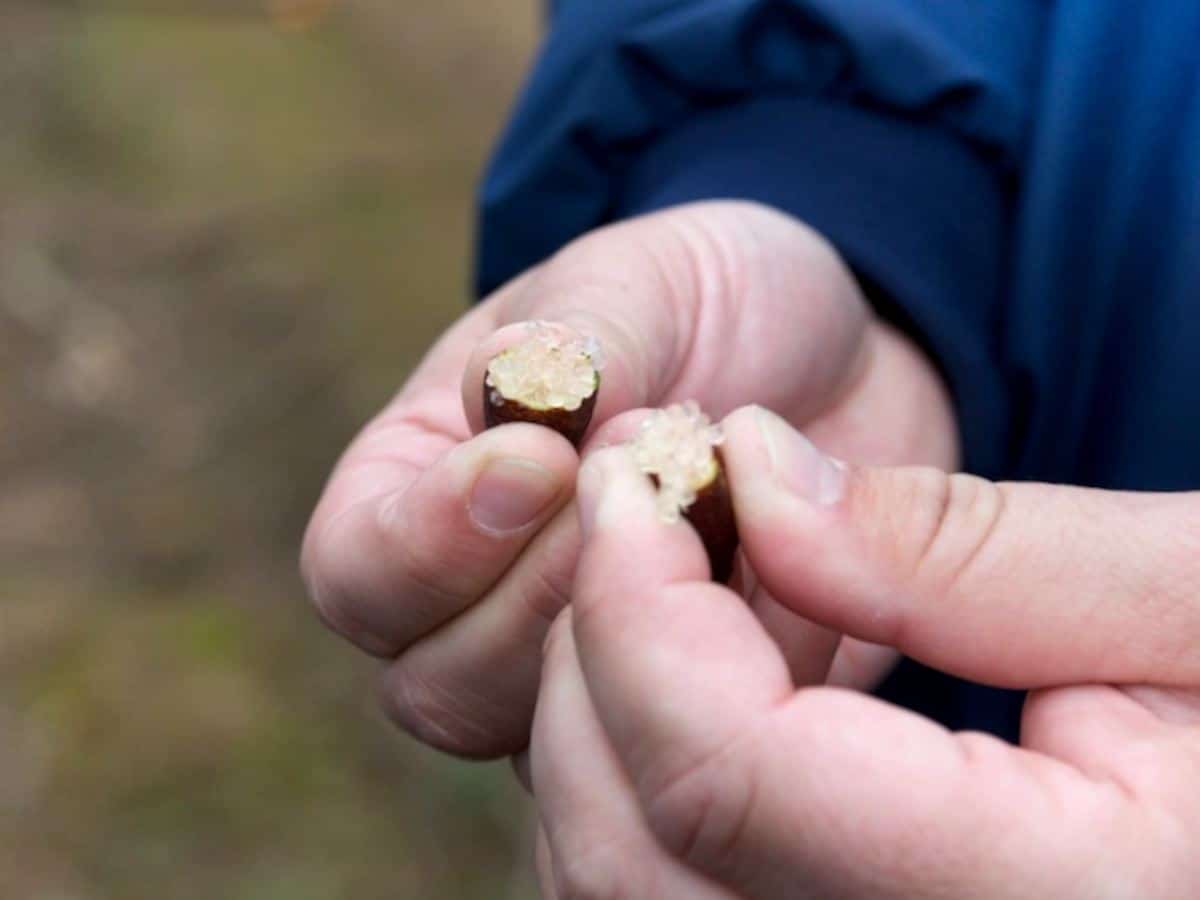
When ripe, each finger lime fruit contains hundreds of kernel-sized crystals under pressure under the skin. Upon slicing the fruit, these juicy beads burst out and are ready to nibble or eat directly!
Just like real caviar, each bead will wait until you bite it to release the juice inside. You can sprinkle a little sugar on it to reduce the tartness if need be.
It is perfect as a wonderful decoration to many dishes, topping for salads, or added on Tex Mex foods, too!
They’re also excellent paired with seafood, to replace the usual sliced lemon on oysters and seashells. Amateurs of sushi will love adding it as a delicious variation. Spread them across grilled fish to hydrate with a delicious touch. Also great with poultry and white meats.
You can pickle the entire fruit, especially for smaller varieties.
Cocktails with finger lime are also a real treat.
Finally, when blended or pressed, the juice works wonders in tarts, ice cream, and flans of all types.
The peel is also edible, like that of kumquat, though not as soft. Use it to replace lemon zests in many recipes for a new delicious experience.
Fruits will keep for up to a month if kept in the refrigerator.
It’s also possible to freeze them whole, but you won’t get the same texture as fresh ones. Incorporate them in Asian soups or noodles, jams, and other recipes where taste is more relevant.
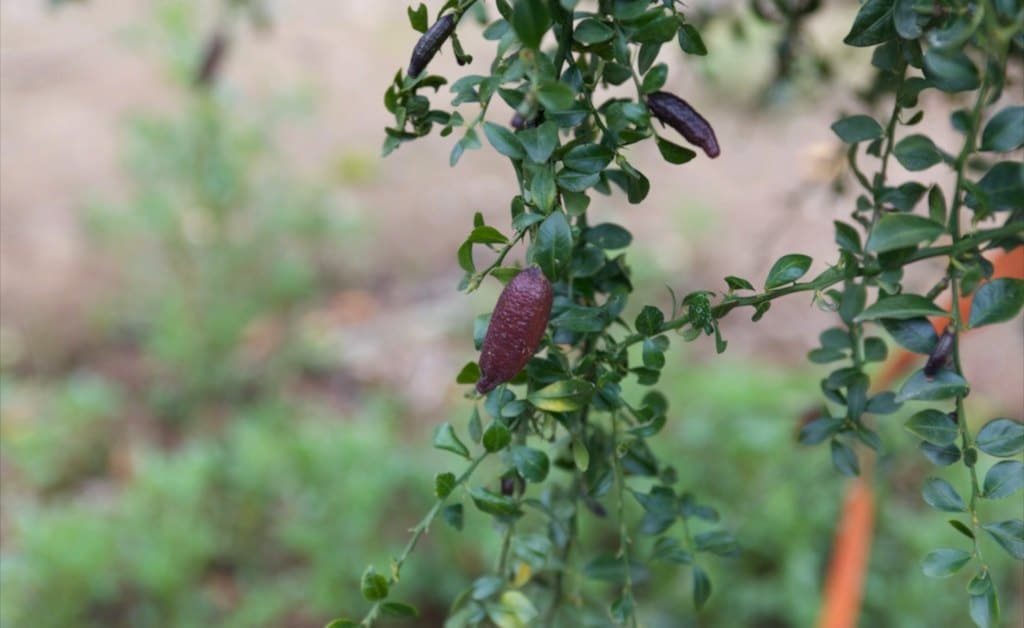
Australian finger lime trees are exceptional – and expensive – fruits, because their price can fetch upwards of 150 dollars a pound (300€ per kilo).
Their juice is trapped in tiny capsules that look like pearls, and burst in the mouth, releasing an explosion of flavors like lemon, citrus and grapefruit: this is the “lime caviar” that great chefs crave!
This special citrus evolved as a shrub in Australian rain forests (Queensland and New South Wales to be exact). Though part shade is the natural tropical habitat, in temperate climates full sun is needed or it won’t bear fruit well.
Thanks to cross-pollination and diverse growing conditions, a great many varieties exist. Most of them are still awaiting discovery. Wild finger lime trees are often genetically quite different from each other.
Pick the finger limes when they easily break off from their branch. Before that, they’re very bitter.