Summer is the single best moment to dry herbs — and also the easiest moment to ruin them. Herbs hit their absolute peak oil content just before flowering, which means the window is narrow, and the stakes are non-negotiable.
Get the timing and technique right, and you will have intensely fragrant dried herbs that hold their flavor for up to 12 months. Get it wrong, and you will spend winter shaking a jar of scented dust over your food.
The thing is, the issue is heat, light, and impatience — usually all three at once. The aromatic compounds that give herbs their flavor and fragrance are volatile oils, and “volatile” is the key word: they evaporate rapidly when exposed to temperatures above 35°C (95°F), direct sunlight, or prolonged humidity. The UK’s record-breaking summer heat right now does not do wonders for anything; a hot, sunny windowsill feels like the obvious drying spot, but it is actively destroying what you are trying to preserve.
Most gardeners also pick at the wrong time of day. Harvesting in late afternoon, after hours of heat stress, gives you herbs that have already lost a sizable chunk of their oils.
Harvest instead in the morning, after dew has dried but before the midday sun peaks — typically between 9am and 11am.
And the biggest mistake? Waiting until herbs have already started to bolt. Once your thyme is flowering right now — that is actually an issue, the plant has shifted energy away from leaf production. The oils are still there but dropping fast. Cut before the buds fully open.
Flavor is not the only casualty. Badly dried herbs also lose color — that grey-green, almost dusty look is a sign that chlorophyll and oil content have both degraded.
Herbs dried in full sun go from vibrant green to khaki within 48 hours.
There is also a mould risk. Bunches tied too tightly, or dried in a humid kitchen with poor airflow, can harbour invisible moisture at the centre of the bundle.
The outside looks dry. The inside rots.
You will not smell it until you crumble the leaves into your food in December.
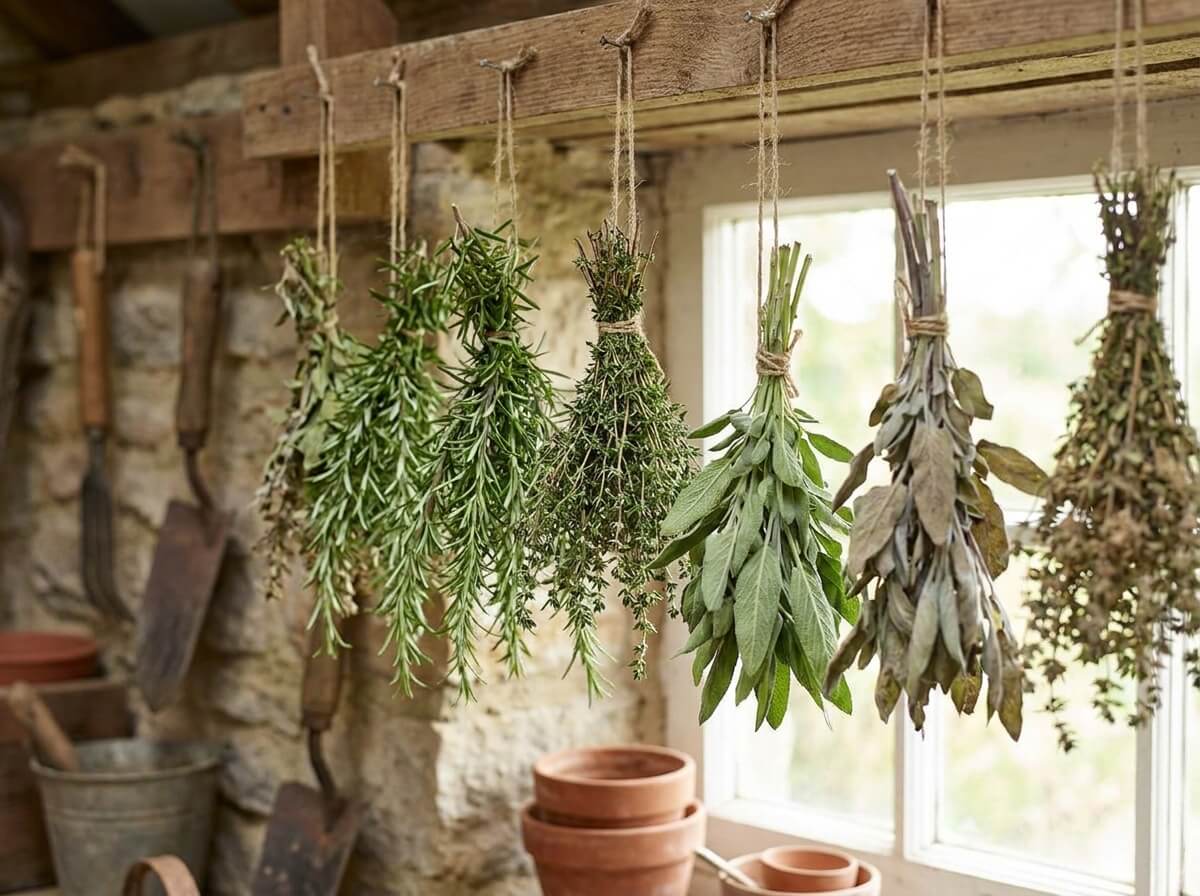
The method that consistently delivers the bang-on results is small-bundle air drying in a shaded, well-ventilated spot. Not the kitchen. Not a sunny shed. A dry room with good airflow — a hallway, an airy utility room, or a spot under a covered outdoor structure that gets shade all day.
For soft-leaved herbs — basil especially — air drying is tricky because the leaves blacken easily. A better option is drying basil on a clean mesh rack in a single layer, out of direct light, or using a dehydrator set to 35°C (95°F) maximum. Yes, it is fiddly. Do it anyway — the difference in final flavor is night and day.
Microwave drying works surprisingly well for small batches. Place a single layer of leaves between two sheets of kitchen paper and microwave on low power (300W) in 30-second bursts, checking between each. Total time is usually 90–120 seconds. The RHS recommends this method for preserving color and potency in soft herbs.
Dried herbs stored in clear glass jars on a bright spice rack lose up to 60% of their potency within 3 months. UV light is merciless.
But use dark glass jars, opaque tins, or at minimum store clear jars inside a cupboard away from any heat source.
So, label every jar with the herb name and the harvest date. Dried herbs older than 12 months are worth composting and replacing — they will not make you ill, but they genuinely will not flavor your food either. The Penn State Extension puts maximum viable storage at 1–2 years for whole dried leaves, less for crumbled or powdered herbs.
If you are harvesting mint right now, the right harvesting technique for mint makes a real difference to what you have to work with before it even reaches the drying stage.
Southern Hemisphere gardeners: this applies to your December–January summer harvest window.
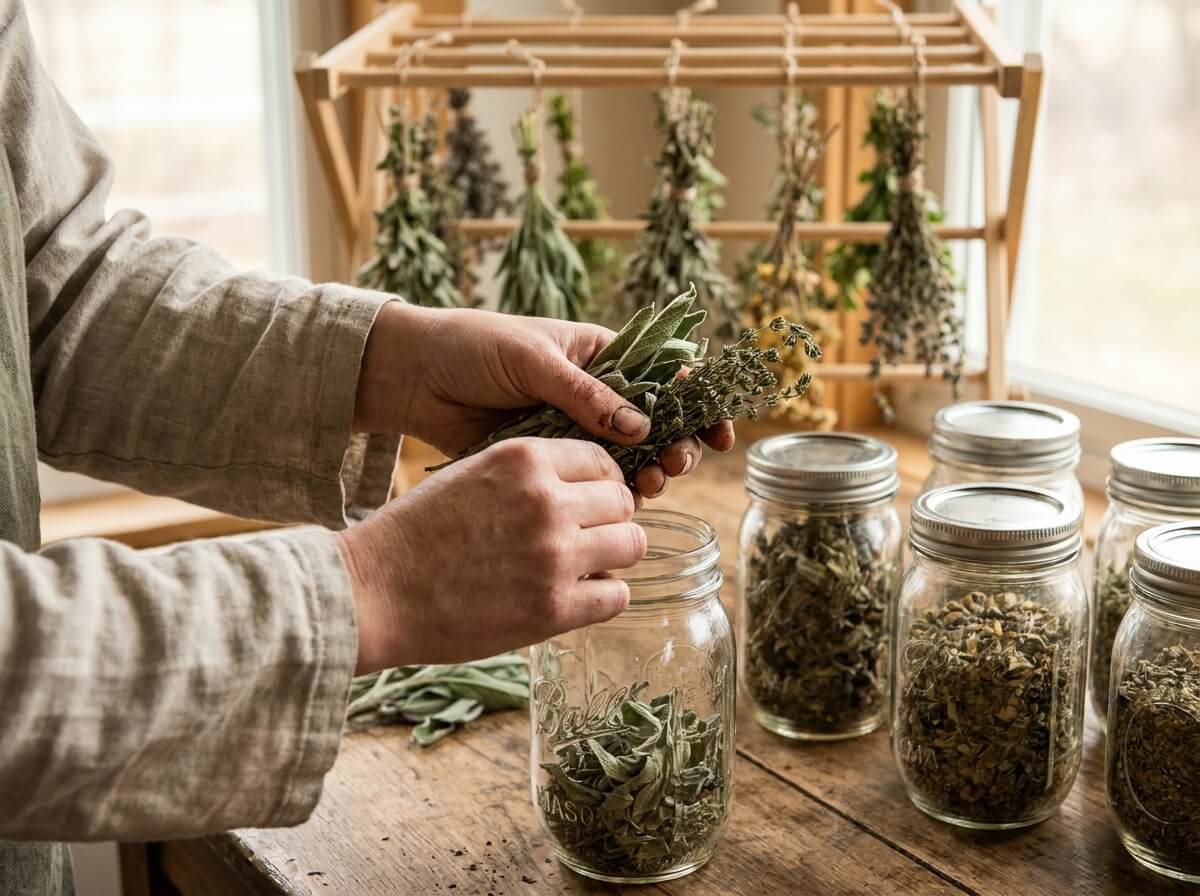
Smart tip: Harvest herbs in the morning, dry in shade below 35°C, and store in dark jars — three rules that protect flavor at every stage.
Yes, but only at the lowest possible setting — 40°C (100°F) maximum, with the door slightly ajar for airflow. Higher temperatures cook out the volatile oils entirely and leave you with flavorless powder.
Rub a leaf between your fingers — it should crumble cleanly and release a strong scent. If it bends rather than crumbles, or smells faint, it needs more drying time.
Woody herbs — rosemary, thyme, sage, oregano, bay — dry beautifully and hold flavor well. Soft herbs like basil, chives, and parsley are better frozen (blanched, then blitzed into ice cube trays with a little oil) because drying destroys their delicate character.
Chamomile flowers need slightly different handling — spread them in a single layer on a mesh rack rather than bundling, and dry for 1–2 weeks in the same shaded, ventilated conditions. More detail on growing and harvesting chamomile explains the full process.