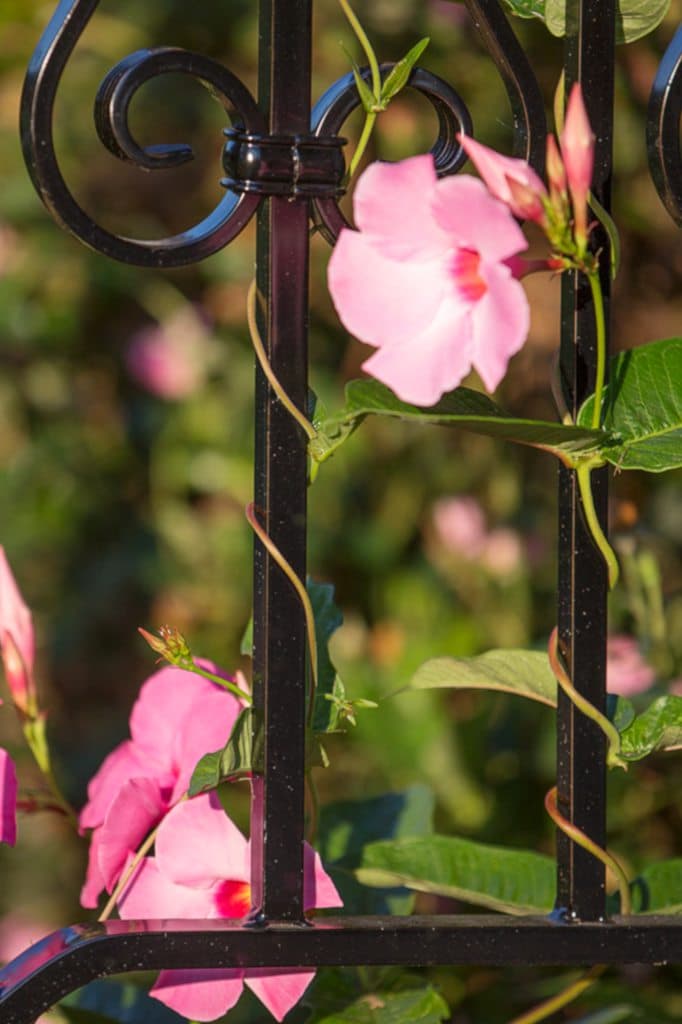
Trumpet-shaped blooms in pink or in scented white open through the warm months on evergreen stems that climb to 10 feet up walls, lattices, trees and poles. Mandevilla, a dogbane relative from the tropical Americas, is grown for that long, generous flowering; keep it warm, from 68 to 70°F, and it blooms abundantly.
| Name | Mandevilla species |
|---|---|
| Family | Apocynceae or dogbane |
| Type | Shrub, climbing vine |
| Height | 10 feet (3 meters) |
| Exposure | Well-lit |
| Soil | Well-drained |
| Foliage | Evergreen |
| Flowering | early summer to mid-autumn |
Caring for this plant, from planting to pruning and including watering, should give you magnificent flowers in summer. Follow our advice to get nice mandevilla blooms.
Read also:
Mandevillas are usually grown indoors in our temperate climates, even if they do well outdoors in summer, both in in pots and directly in the ground.
If potted, it is advised to re-pot every 1 or 2 years, preferably in spring.
Pots provided upon purchase quickly become too small: re-pot your mandevillas as soon as their blooming is over.
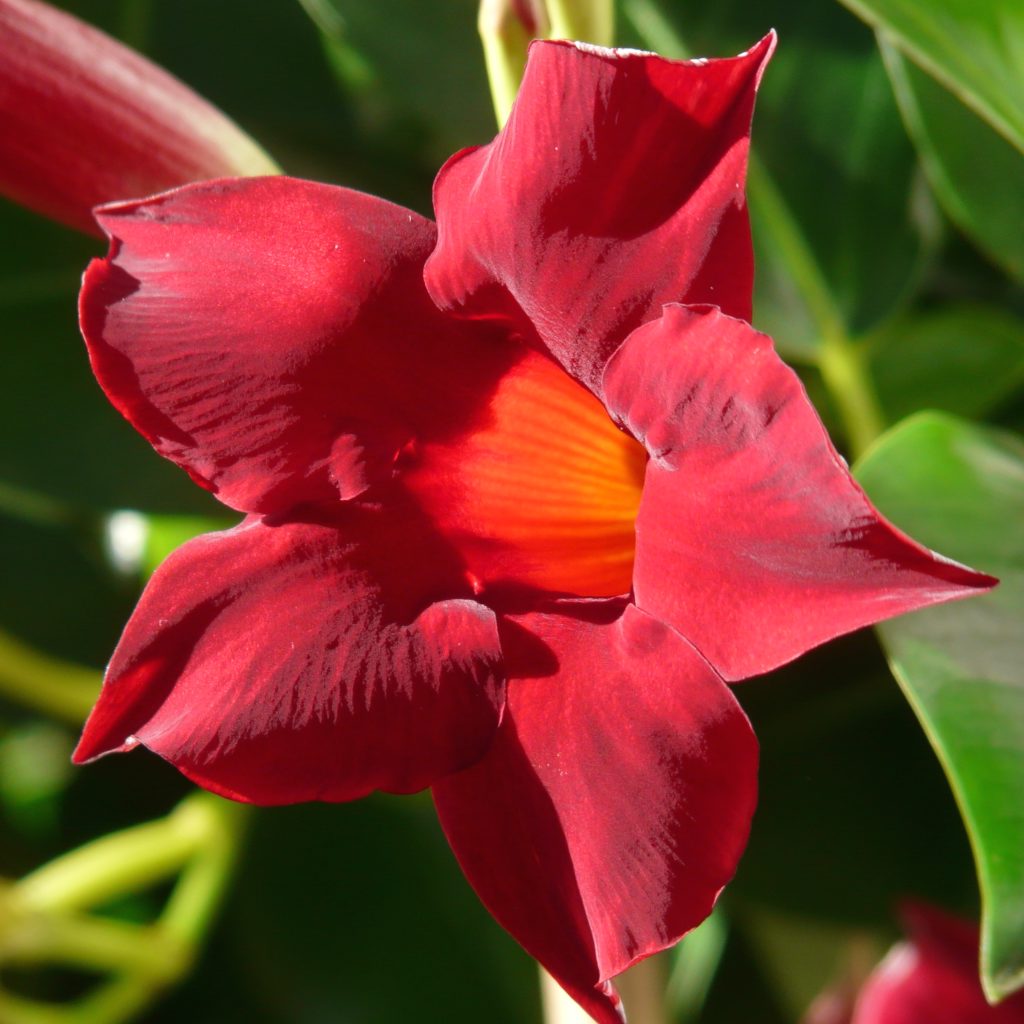
Mandevillas are native to South America and therefore require temperatures of at least 68°F (20°C) to thrive.
When growing directly in the ground, temperatures must be high in both summer and winter and planting is done in spring.
To boost flower-bearing, remove mandevilla wilted flowers regularly (deadheading).
Spring is the best season for pruning mandevilla. It keeps producing new stems and flower buds during the growing season. Unlike other shrubs, this vine doesn’t create flower buds that need to go through winter to bloom, so you won’t be pruning flower buds away.
If you need to reduce the shrub over the Summer or Fall, it’s also fine – just remember to water so it has enough means to recover from the pruning. Avoid Winter since wounds take long to heal; these let diseases in.
Choose a very well-lit space for your mandevilla, but not in direct sunlight behind a window.
Bring your shrub outdoors from late spring to mid-autumn to give it fresh air.
Water regularly but not too much, to avoid suffocating roots.
When potted, mandevilla needs a lot of moisture and likes being placed on a bed of constantly moist gravel or clay pebbles, since this recreates its natural environment.
The usual blooming season for mandevillas is from early spring to late autumn.
After blooming, its is best to winterize your plant: place it in a cooler but well-lit room.
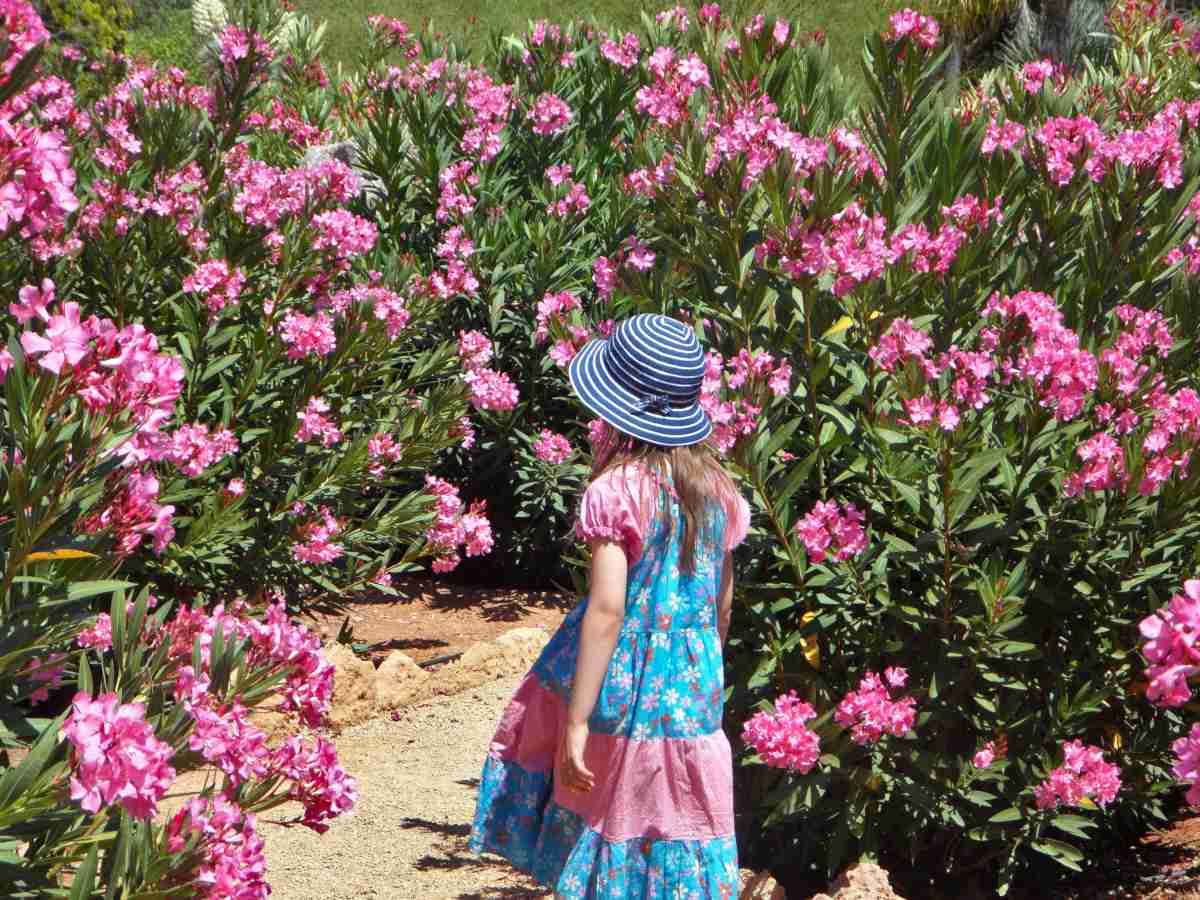
Native to the tropical Americas and part of the same family as oleander, this shrub blooms abundantly over a long span of time with beautiful flowers.
Outdoors, mandevilla does great near walls, lattices, trees or poles where their climbing abilities are highlighted.
Mandevilla does well in greenhouses where moisture levels are high, so if you wish to grow in an apartment or indoors, spray its leaves often with soft water.
The name “Mandevilla” was given to the plant in honor of a British envoy to Argentina, Henry John Mandeville, at the end of the 18th and beginning of the 19th century. Mandeville also introduced Ipomoea indica, another beautiful vine with trumpet-like flowers in hues of blue.
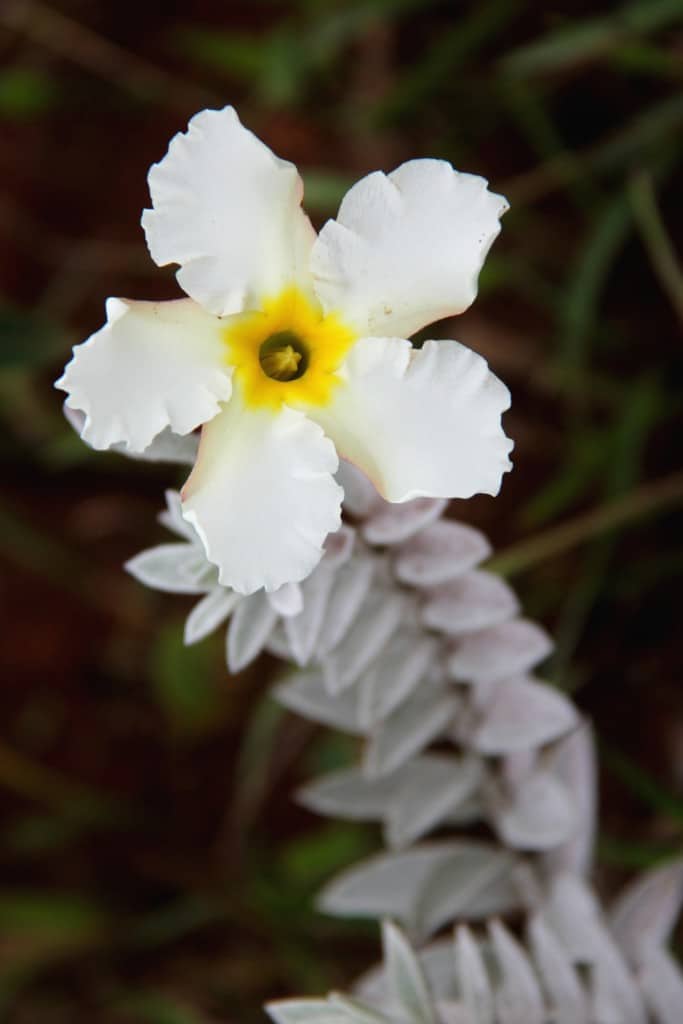
Another famous houseplant, Dipladenia, is actually a special type of mandevilla. It grows into bushy shrubs that tend to hang over instead of climbing up like regular mandevilla vines.
Special varieties of Mandevilla –
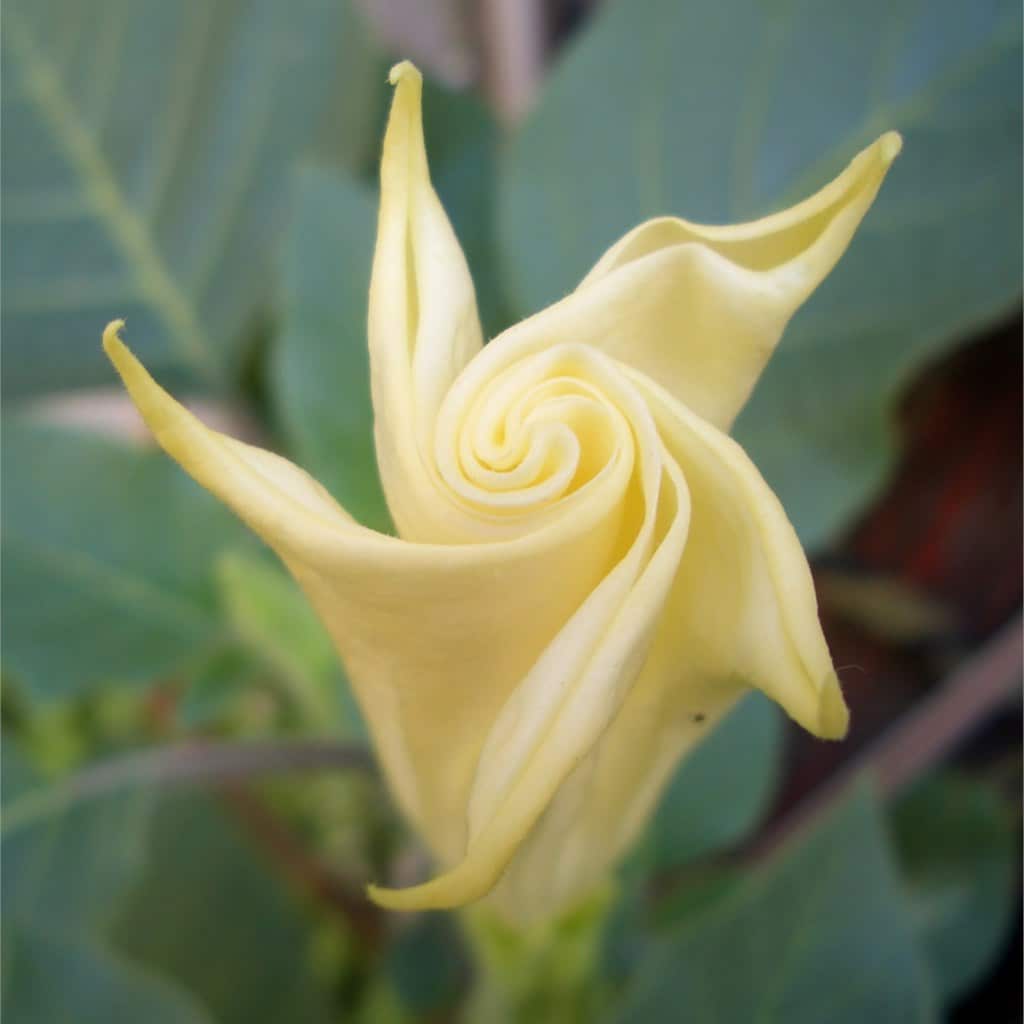
Other vines that bear beautiful trumpet-like flowers can be planted together with mandevilla: allamanda, ipomoea, chalice vine, datura…
The mandevillas described above differ in flower colour, in habit and in how readily you will find them for sale. Use the table to pick the one that suits your wall, lattice or windowsill.
| Variety | Type | Flowers | Notes |
|---|---|---|---|
| Mandevilla splendens x amabilis ‘Alice Du Pont’ | Hybrid climbing vine | Light pink with a darker pink centre | Easiest variety to find in garden stores |
| Mandevilla laxa (formerly M. suaveolens) | Climbing vine | White and fragrant | Also called Chilean Jasmine |
| Mandevilla velame | Species | Beautiful, but the species is seldom offered | Rare; native to Brazil |
| Dipladenia | Bushy shrub that hangs over | Free-flowering houseplant | A special type of mandevilla, not a climber |
Whichever you choose, the same warmth and moisture requirements apply.
Mandevilla leaves turn yellow most often when they were exposed to the cold or to lack of water.
If a cottony white substance starts covering leaves, a scale insect colony has appeared..
Mandevilla can also be colonized by mites and ticks such as red spider mites.
Read more
Adding flower plant organic fertilizer will enhance its bloom.
Twirling mandevilla – observe how the vine twirls when you first install it on a lattice, and ensure you wrap it around in the right direction!