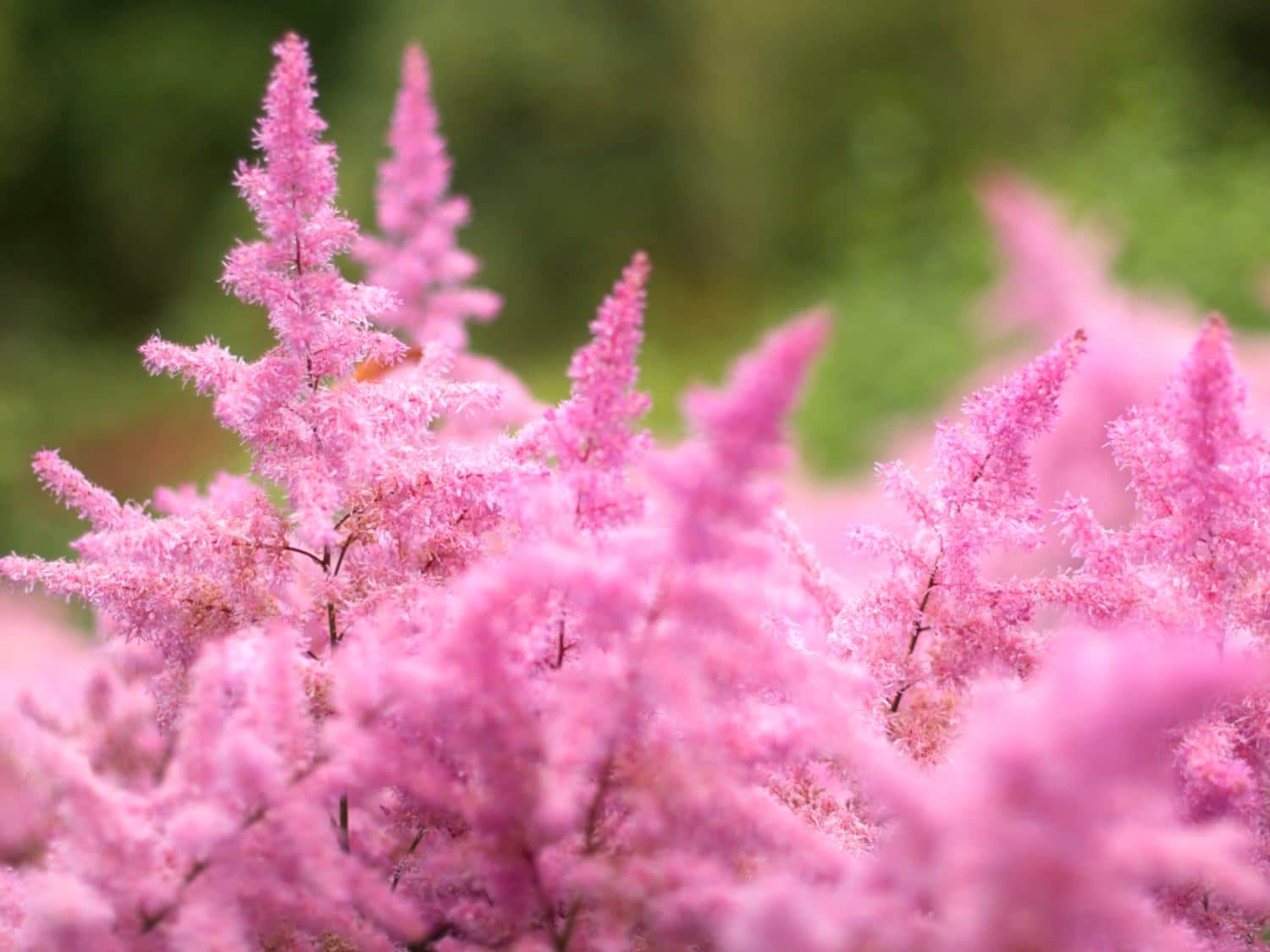
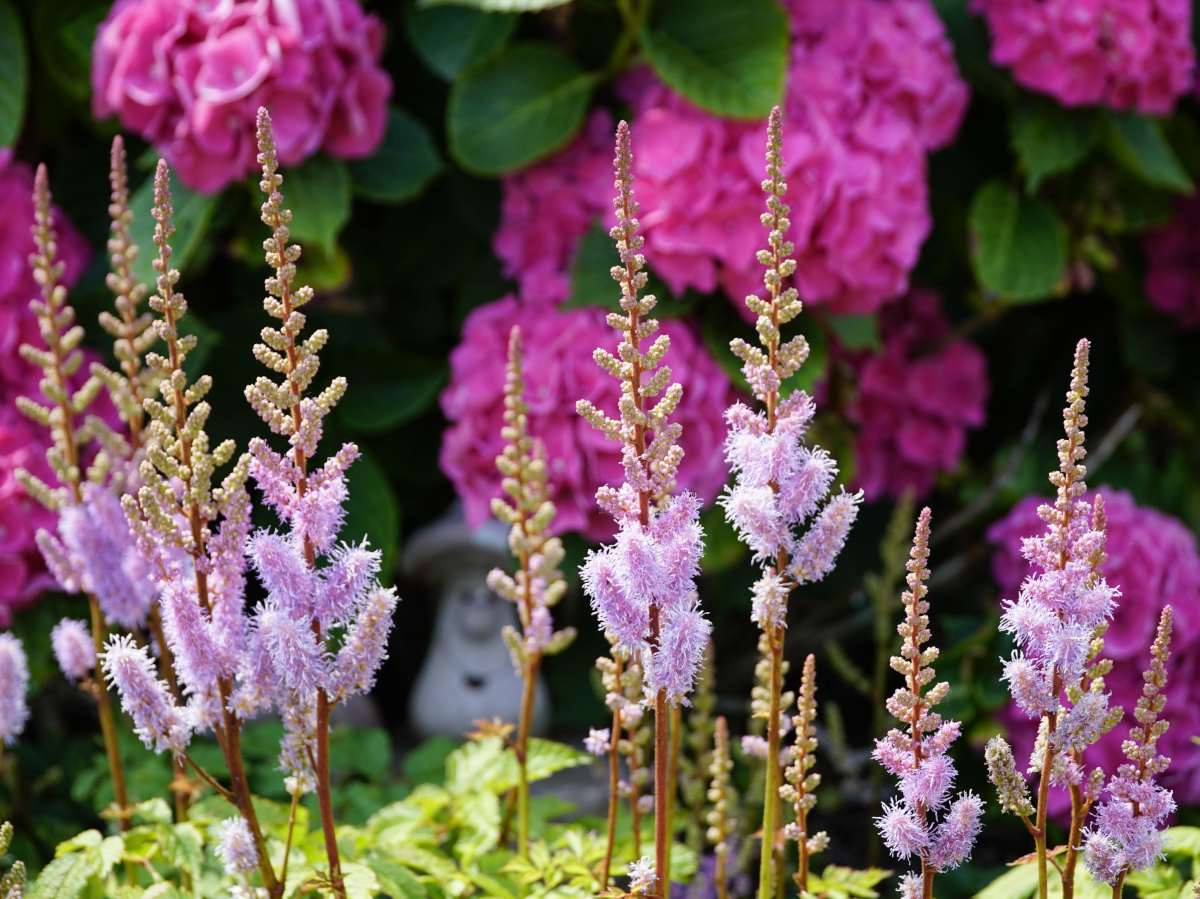
Astilbe is a perennial plant that calls mountain terrain, ravines, and forests of Asia and North America home. There are a great many different species for us to use in landscaping, resulting from patient crossbreeding giving rise to hundreds of hybrids.
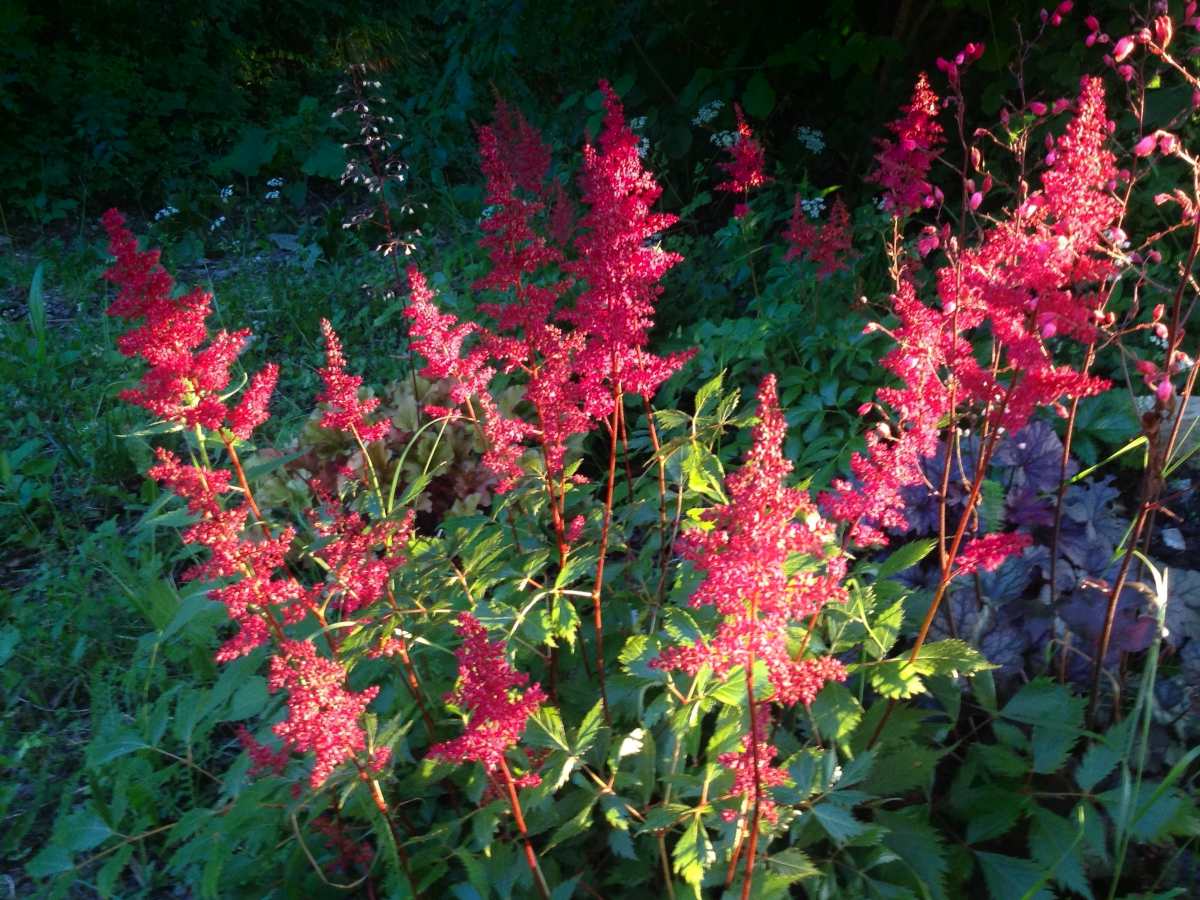
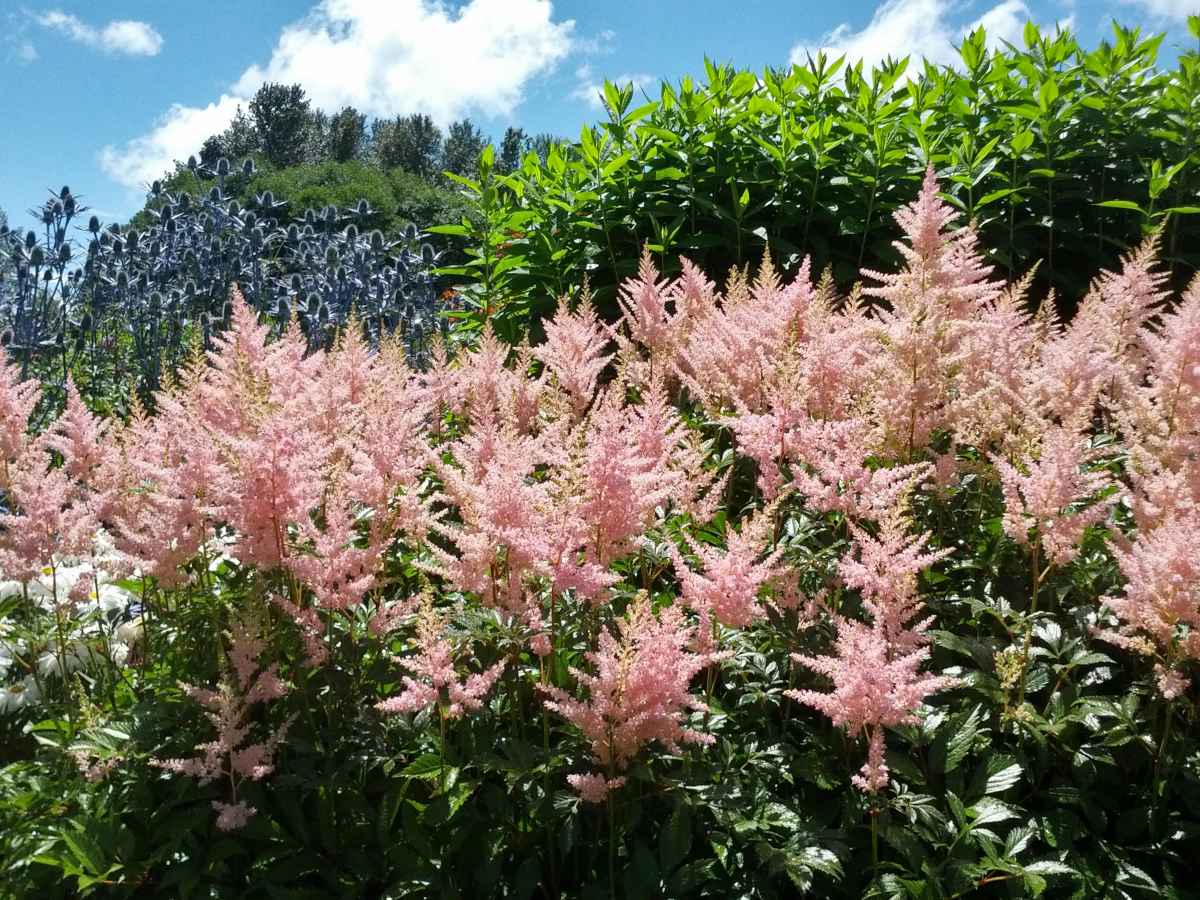
Different hybrids show off their bloom at various times, usually from early summer through late summer. They’re undeniably a beautiful sight with their fluffy flower plumes. Colors are usually in shades of red, white, pink, and cream.
They come in a variety of sizes, ranging from 6 inches (15 cm) to 6.5 feet (2 meters). On top of that, hybrids now show off a diverse range of leaf forms in shades of green and copper.
Planting spot and use in water gardens
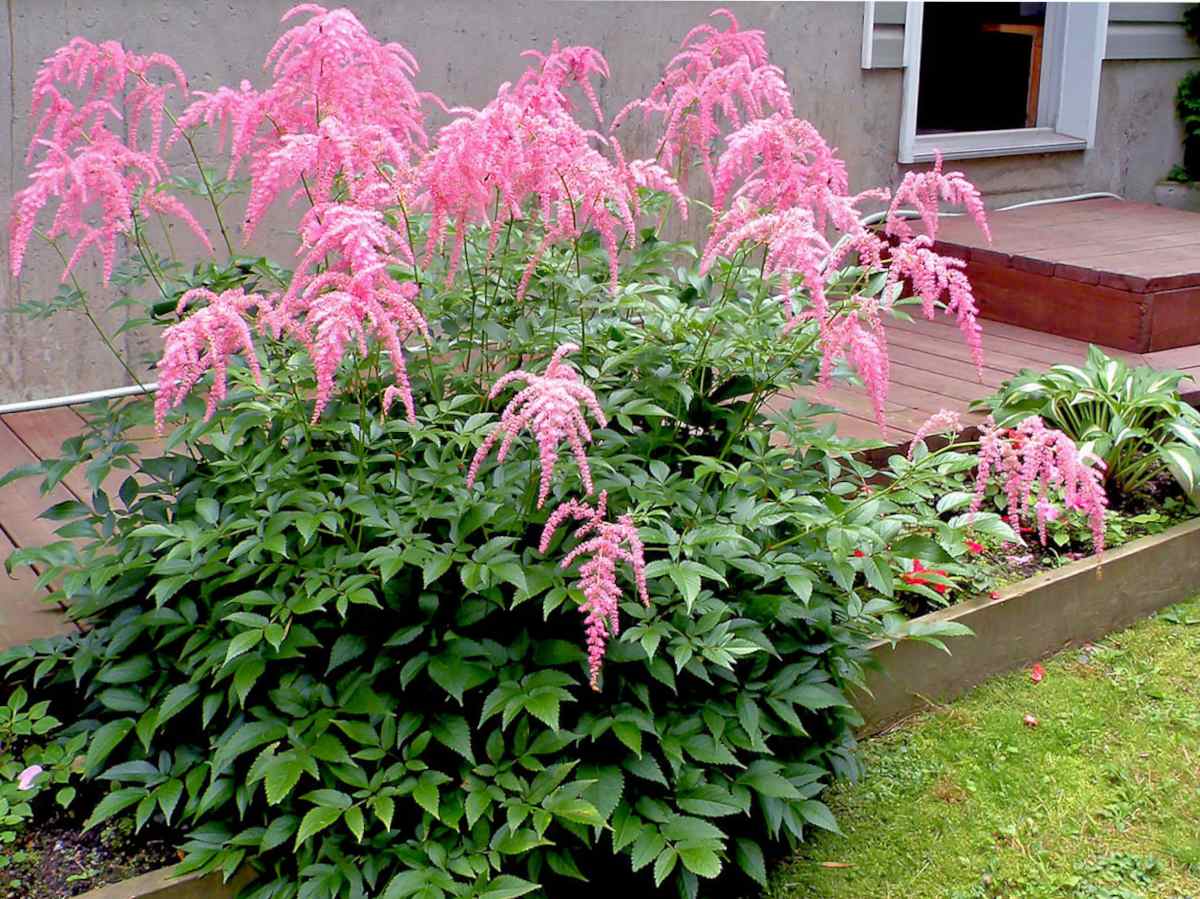
Pond-side planting suits astilbe, provided it is never submerged
Astilbe thrives in direct sunlight. However, leaves might get a little sunburned and crinkly in intense heat. Thus, it’s best to find spots with dappled sunlight, or garden areas that only get about three to four hours of sun a day. Part shade and shade is more to their liking.
Some mistakenly market Astilbe as water plants.
Choose a planting spot that stays constantly moist but isn’t submerged.
But astilbe is nonetheless an excellent pond-side plant: it can withstand both prolonged floods and dry spells as water levels ebb and flow in natural ponds. So, in short, they’re great for thriving along moist borders, well-drained bog gardens, and wet gardens.
Best soil type for astilbe
Prepare rich soil 15 to 30 cm deep before planting
These plants need a planting mix that’s 6 inches (15 cm) to a foot (30 cm) deep, with ample space to the side to spread out in large clumps.
Plant each one about 16 inches from the next (40 cm).
They also love good mulch. Helps keep the soil nice and wet.
Widely grown astilbe varieties to look for
The hundreds of hybrids available differ mostly in height, plume colour and the moment they flower. The cultivars below are the ones most often stocked by garden centres and mail-order nurseries, and they cover the whole early summer-to-late summer season.
Widely grown astilbe varieties to look for
Variety
Height
Plume colour
Flowering time
‘Purpurlanze’
40–48 in (100–120 cm)
Purple-pink, stiffly upright spires
Late summer
‘Pumila’
10–12 in (25–30 cm)
Mauve-pink
Late summer
‘Sprite’
12–16 in (30–40 cm)
Shell pink, arching plumes
Mid to late summer
‘Fanal’
20–24 in (50–60 cm)
Deep crimson red, over bronze-tinted young foliage
Early to mid summer
‘Deutschland’
20 in (50 cm)
Pure white
Early summer
‘Rheinland’
24 in (60 cm)
Bright clear pink
Early summer
Pairing astilbe with other plants
Group astilbe in threes, fives or sevens for effect
Consider planting clusters of astilbe together with some of the plants listed below. Odd-numbered groups like three, five, or seven, of astilbe combined with a mix of species and hybrids will look wonderful!
These plants in particular were handpicked for their height differences, flower colors, and foliage.
Here’s a tip: position the plants where you plan to plant them, move them around, swap them out, and once everything looks just right, dig in!
Plants that match very well with astilbe
Companions chosen for height, flower colour and foliage contrast
Written by Jean-François Fortier | Jean-François is a professional working in the world of plants and pets. He demonstrates considerable expertise in the field of biology.