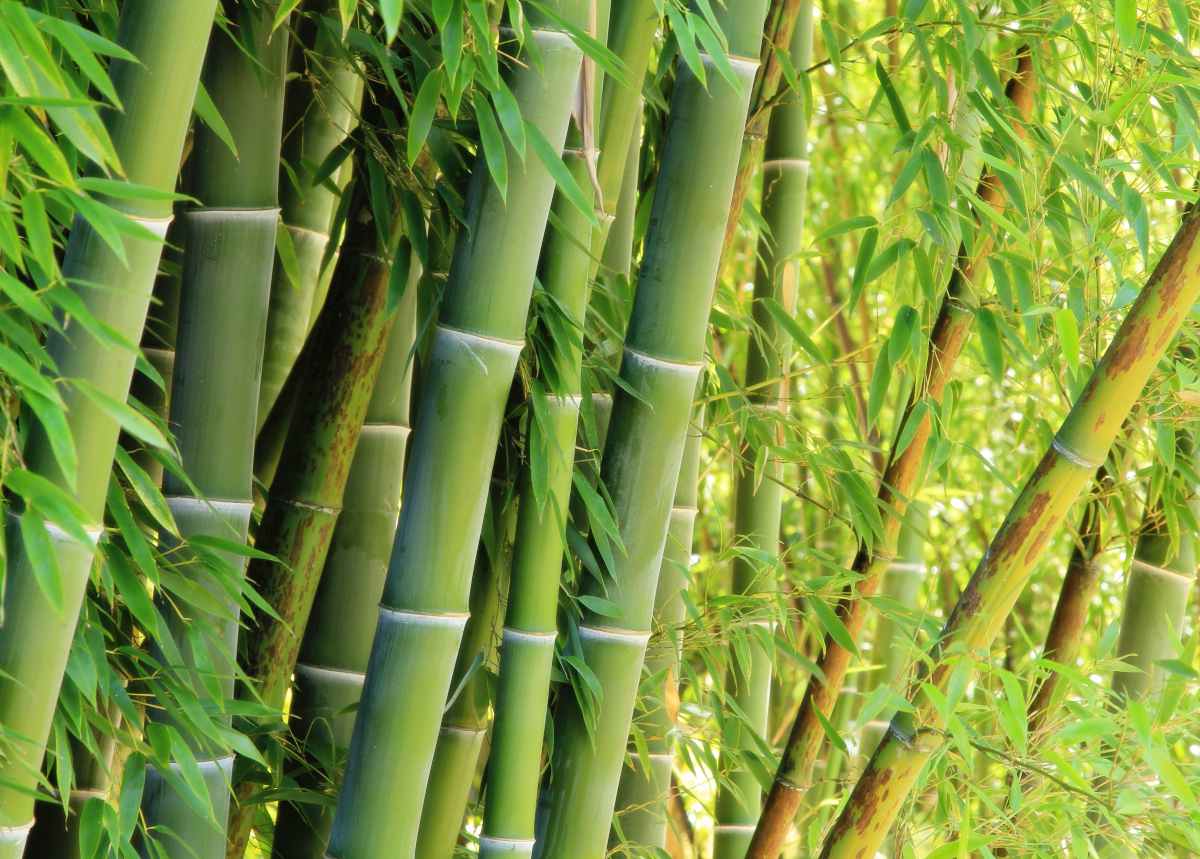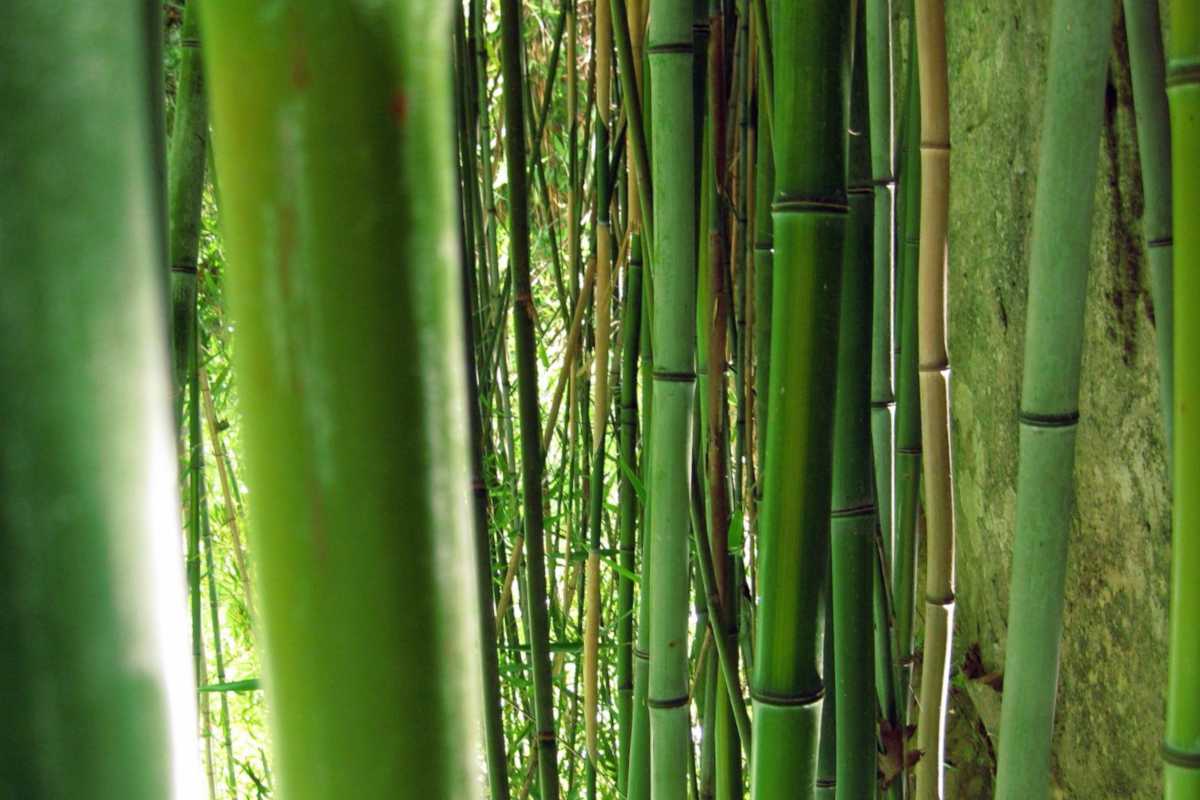
Golden, black, green or purple canes rise from dense, compact clumps, the only woody member of the grass family sending up fresh shoots each season. Bamboo makes a fast-growing hedge that stays green all year, but pick a non-running type, or sink a rhizome barrier 2 to 3 feet deep, and it will stay exactly where you put it.
In the grasses family, bamboo is the only woody plant. It continuously sends new shoots out, just like grass. Running bamboo types (Arundinaria, Chimonobambusa, Phyllostachys, Pseudosasa…), after a few years, can colonize entire plots and gobble up space.
Much easier, though, are non-running bamboo varieties. These stay put in the garden, produce dense, compact bunches and won’t spread invasively. Some examples of such bamboos are Fargesia, Bambusa (for milder climates), Thamocalamus, Chusquea, certain types of Yushamia… Still others, like Shibataea, are easily controlled with a simple spade.
Bamboo will always expand outwards every growing season, and in the end can easily reach to over six feet (two meters) across. The Phyllostachys family produces tall bamboo clumps, some of which will quickly feel tight growing in a small garden. But if one thing is certain, it’s that there’s guaranteed to be a species that is perfect for your own plot of land because there are so many of them!
Bamboo behaviour matters far more than looks when you choose one. The article sorts the genera it mentions into three broad groups, from the plot-swallowing runners to the tidy clumps that stay where you put them.
| Bamboo group | Spreading habit | Containment needed | Where it suits |
|---|---|---|---|
| Running types (Arundinaria, Chimonobambusa, Phyllostachys, Pseudosasa) | Colonises whole plots after a few years | Rhizome barrier 2 to 3 ft (65–95 cm) deep | Large plots where spread is welcome or fully boxed in |
| Non-running types (Fargesia, Thamocalamus, Chusquea, some Yushamia) | Stays put, dense compact bunches | None | Most gardens, hedges, boxes |
| Bambusa | Non-running clump | None | Milder climates only |
| Shibataea | Spreads, but slowly and shallowly | A simple spade round the clump | Gardeners happy to edge once a season |
| Phyllostachys | Running, tall clumps | Rhizome barrier tilted outwards like a funnel | Big gardens; quickly feels tight in a small one |
Whatever the size of your plot, the sheer number of species means one of them will fit it.
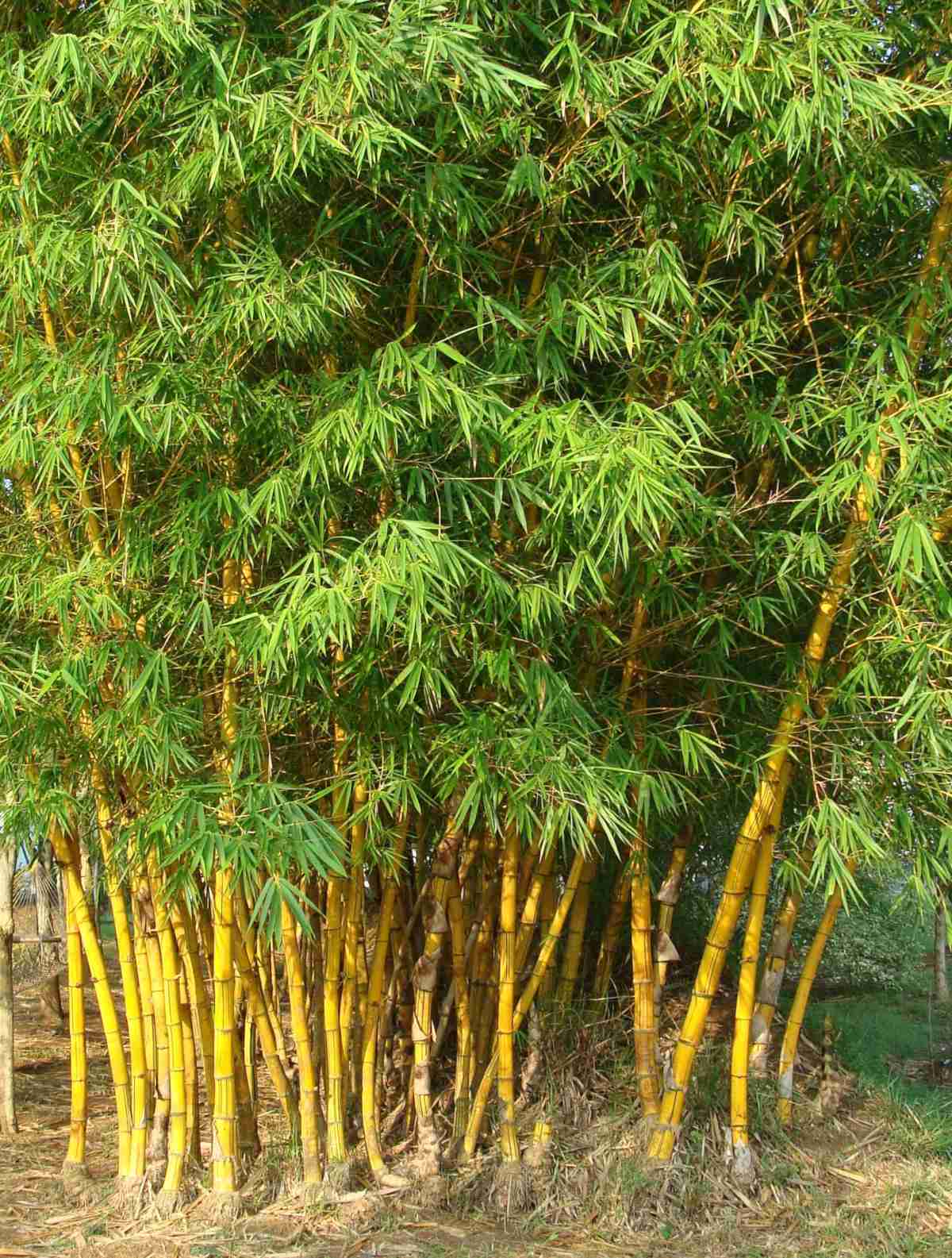
Non-running kinds form dense, compact clumps that stay put
Once you’ve made your decision, you can transplant your bamboo to the ground in any season, but if you want optimal root development, favor fall.
Before setting your plant in the ground, sprinkle manure in the hole to enhance regrowth. Rake up a small ridge around the plant to keep water in when watering.
If you’ve chosen a variety that spreads fast, or if you’re not exactly sure what type of bamboo you’re plant, then set a rhizome barrier up right from the start, at least 2 to 3 feet deep (65 to 95 cm). This will mark out the space it’s allowed to colonize.

It’s important to tilt these barriers outwards somewhat, like a funnel, so that when tracing rhizomes encounter them, they’ll be directed towards the surface instead of downwards.
That way, it’s guaranteed they won’t break free!
Regularly chop off these rhizomes that reach the barrier to keep them from going around in circles and suffocating the plant.
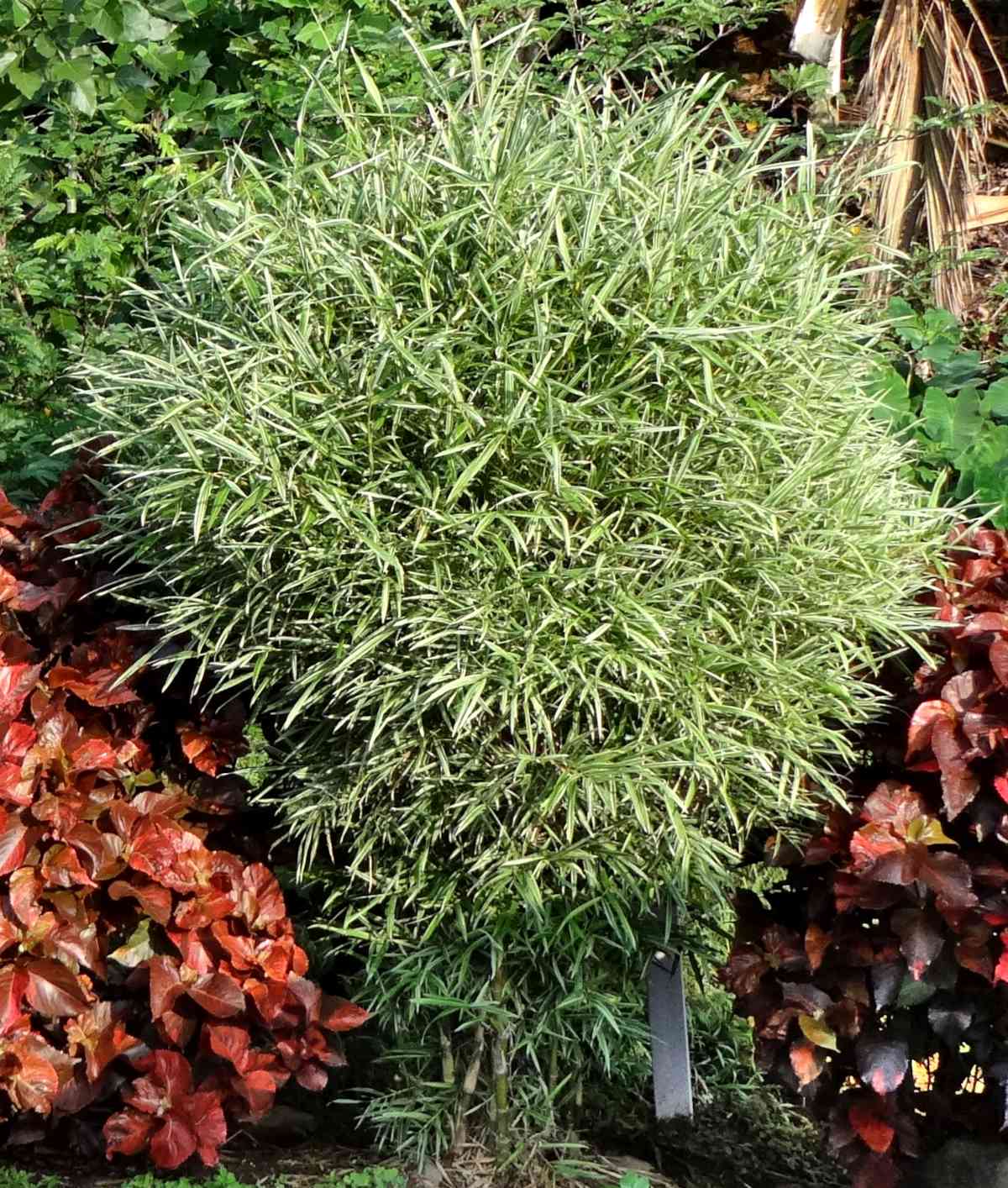
Bamboo loves moist, well drained soil types, whether neutral, slightly acidic or chalky, and they love both full sun and part shade.
You can also grow them in garden boxes as long as you water them abundantly in summer.
It’s fast growing pace makes it an excellent option to set up a hedge that will remain green all year round.
M.-C. H.