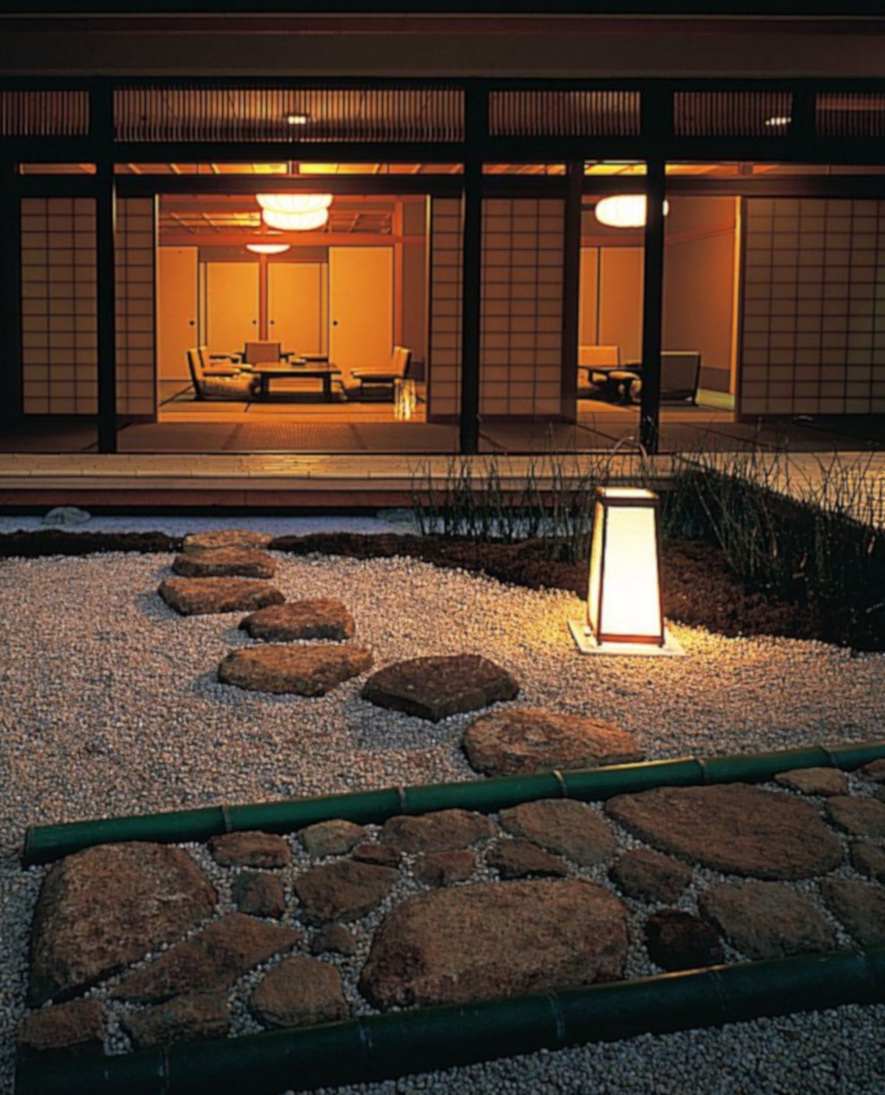
If a certain corner of the garden is rebellious and resists all the plants you’ve tried growing in it, don’t give up! No need to let weeds take over – turn the area into a relaxing Zen rock garden.
Read also:
Raw mineral power will boost the mind and free your spirit like nothing else!
Those among us lucky to have visited Japan have surely heard of the Ryoanji gardens.
This famous Zen garden features only sand, gravel, river stones and rocks.
No need to travel to Japan to see this mind-soothing Zen rock garden, though! Indeed, there are even a few replicas in Europe and America, too.
The original Ryoanji zen stone garden is too large to rebuild at home. Much better is to compose a miniature “karenasui” (dry garden, in Japanese) of your very own.
Mark out a rectangle of about a dozen square feet (a few square meters).
Your Zen garden is ready! The only maintenance you’ll have is the meditative raking of the sand after it rains. Rake new wave patterns on the spattered sand.
A dry garden is built from a very short list of materials, each with one job to do. Use this table to work out what to buy and where each element belongs before you start marking out the rectangle.
| Element | Where it goes | What it does |
|---|---|---|
| Plastic film weed barrier | Directly on tilled, de-stoned soil, pulled tight and staked with wire hooks or tent-pegs | Stops weeds pushing through; avoid woven or fabric-like films |
| Fine sand | Spread over the whole surface, on top of the film | The raked canvas of the garden, and the sea in the composition |
| Gravel, polished river stones or slate mulch | Winding across the sand | Forms the small-scale “dry river” |
| Larger rocks and boulders | Set in groups of three, in a harmonious pattern | Carry the silhouette — a mast, a hull, a ship in the fog |
| Wooden rake with triangular teeth, plus optional ornaments | Kept to hand; ornaments placed sparingly | Draws the wave patterns; a temple, bridge or bamboo fountain adds focus |
Everything on this list is sold in garden stores, and the rocks themselves can often be picked up for nothing.
for maximum meditative impact
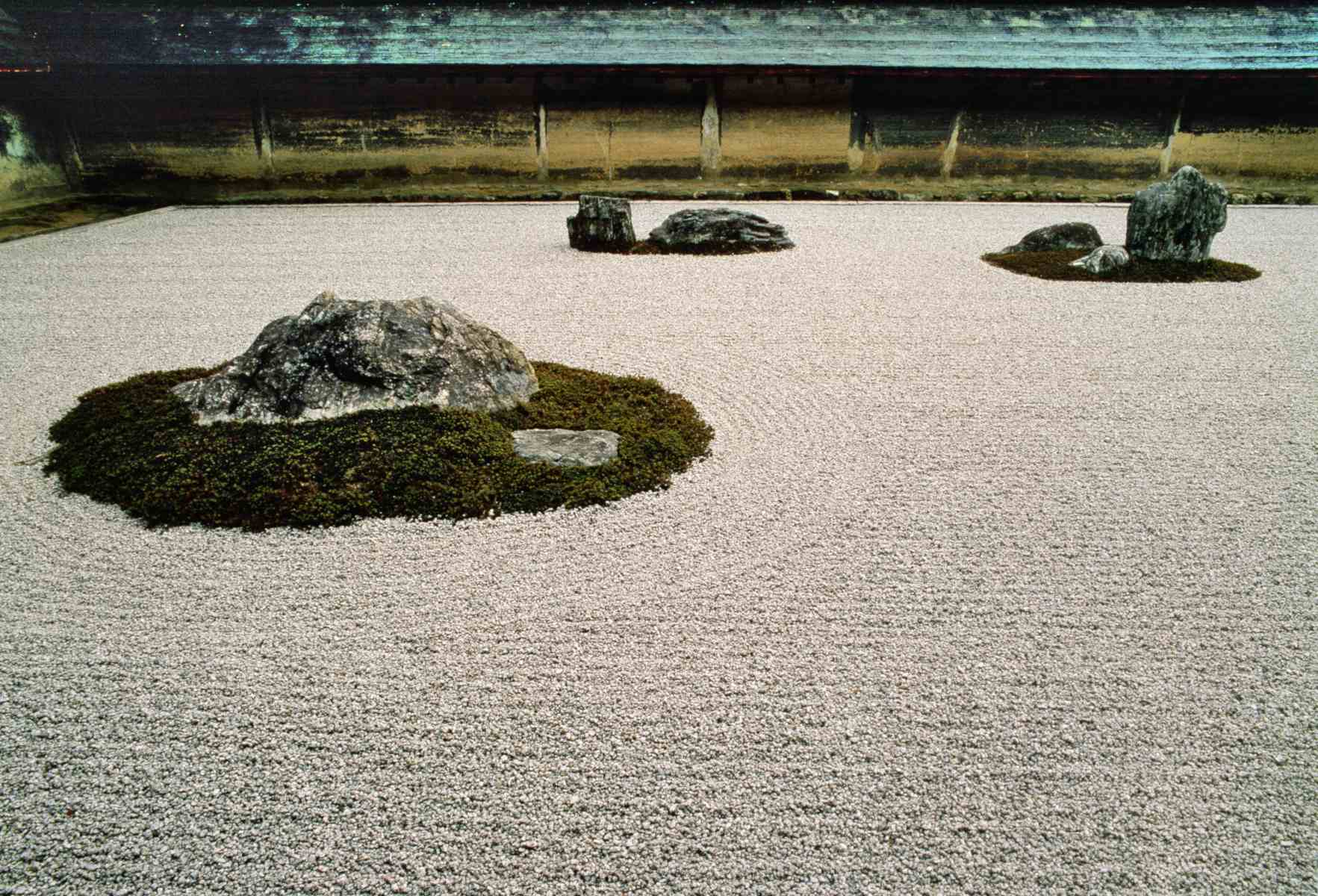
In the original Ryoanji garden, the 15 boulders are artfully placed so that not all are visible at the same time.
Group your own rock-boulders by threes. Try alternating shapes so that the silhouette they form looks like something special.
Sitting cross-legged in front of such a minimalist space will do wonders to clear your mind. Over time, you’ll accumulate hours of restful meditation.
Pierrick Le Jardinier
Creating one of these in your own home will give you an extra place to use to get away from other people. Perfect to get a breather from a crowded house!
Even you don’t have an outdoor garden you can still have the benefits of zen meditation with an indoor rock garden.
Some kits are for sale, but you can easily build your own with a handful of sand and a few nice pebbles.
Credits for images shared to Nature & Garden (all edits by Gaspard Lorthiois):
The garden of Sansuiro Ryokan by © Japan Ryokan Association / © Japan National Tourism Organization
Zen Garden by Ryoanji Garden / © Japan National Tourism Organization
Choose a shallow tray with a raised rim so the sand stays put instead of drifting onto the furniture.
Spread the sand deep enough that the rake teeth trace furrows without scraping the tray bottom.
A kitchen fork is a commonly suggested improvised rake for miniature tabletop sand gardens, though it is no substitute for the full-size wooden rake used in a traditional Zen garden.
Set the indoor tray on a stable surface away from strong airflow, such as a fan or an open window, since forceful gusts can scatter fine sand and disturb freshly raked patterns.