Home » Health » Artichoke: traditional uses, how to prepare the leaf, and what to watch for
Artichoke: traditional uses, how to prepare the leaf, and what to watch for
·
0
Artichoke is two plants in one kitchen. There is the head you steam and eat leaf by leaf, and there is the big grey-green foliage on the stalk, intensely bitter, which is what herbalists actually reach for. This page explains which part does what, how to make a leaf decoction, how to eat the heads safely, and who should leave it alone.
Artichoke at a glance
Item
Detail
Botanical name
Cynara scolymus
Family
Asteraceae
Parts used
Stalk leaves (herbal use); flower bud or “head” (culinary)
Forms of use
Decoction of dried or fresh leaves, tincture, capsules of leaf extract, cooked or raw heads
Harvest season
Leaves late spring to midsummer, before the buds open; heads late spring to late summer
Traditional European herbalism classes artichoke leaf as a bitter tonic, taken before meals for its reputation as an appetite-opener.
Naturopathy credits the leaf with choleretic and cholagogue reputations — that is, a long-standing use around bile production and bile flow from the gall bladder to the intestine.
Country remedies of the past used the leaf preparation where the liver was felt to be sluggish; in traditional herbalism it was also given in cases described at the time as jaundice, gallstone complaints and generalised edema.
Herbalists have historically used it for liver-related complaints, including those following intestinal food poisoning — a traditional use, not a treatment.
The leaf also has a diuretic reputation, and in folk practice artichoke was associated with the whole urinary evacuation function (including states described as infectious or as food poisoning) and with the intestinal process (digestive discomfort and intestinal pain).
Naturopathy speaks of artichoke as a “drainage” plant, part of the old repertoire of spring bitters taken to feel less heavy after rich eating.
Nutritionally, the head is valued as a source of dietary fibre, which contributes to a feeling of fullness at the end of a meal.
Its density in potassium, magnesium, calcium and iron gives it a reputation as a remineralising vegetable.
Folk use also attributes purgative and general stimulating qualities to strong leaf preparations.
The point most people get wrong: eating the steamed head is a pleasure, not a herbal act. The bitter principles sit in the leaves of the stalk. If you are after the traditional bitter tonic, you have to make a leaf decoction.
How to use it
The classic leaf decoction
Use about 1 oz (30 g) of leaves per 1 quart (1 litre) of boiling water.
Bring the water to the boil, add the chopped leaves, simmer gently for 10 minutes, then leave to steep off the heat for 10 more.
Strain well and drink one small cup before each meal.
Warning: this is very bitter. Genuinely, mouth-puckering bitter — that bitterness is the whole point of the preparation, so do not judge it by the first sip.
Traditional practice keeps it to short courses of a week or two, followed by a break, rather than continuous daily use.
Make it fresh each day and keep any surplus in the fridge for no more than 24 hours.
Making it drinkable
A slice of lemon, a sprig of mint or a spoon of honey softens the edge without cancelling the bitterness.
Serve it warm rather than piping hot — heat makes bitterness sharper.
Some people prefer a smaller, stronger cup swallowed quickly to a large mild one sipped slowly.
Eating the heads
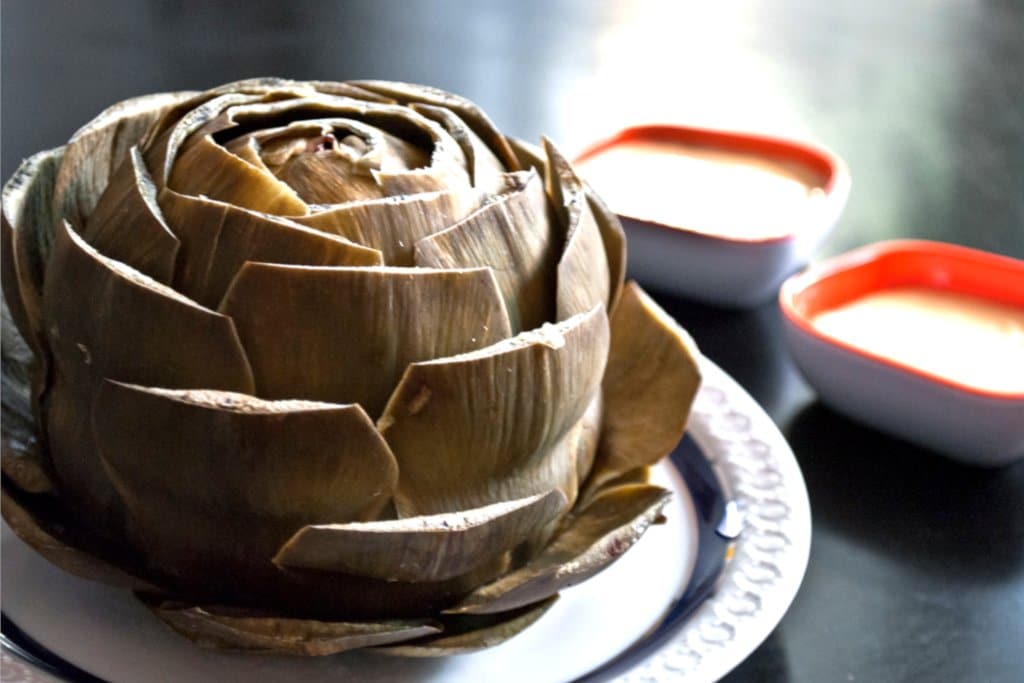
Cook them in salted water or steam them until an outer bract pulls away cleanly.
Eat them hot or cold, with a vinaigrette, a mustard dressing or melted butter.
Small very young violet artichokes have not yet formed the hairy choke: slice them thin and eat them raw with a peppery dressing and lemon.
Rub or drop cut surfaces in lemon water — they brown within minutes.
Eat cooked artichoke within 24 hours (see the cautions below).
Which form of artichoke for which purpose
Form
How it is prepared
What it is used for
Leaf decoction
1 oz (30 g) leaves per quart (litre), simmered 10 min, steeped 10 min
The traditional bitter tonic, taken before meals
Leaf tincture
Bought ready-made; a few drops in water before meals, per the maker’s label
Same traditional bitter use, easier to dose and to carry
Leaf extract capsules
Commercial standardised preparations
For those who cannot face the taste; follow the label only
Cooked or raw heads
Steamed, boiled, or sliced raw when very young
Food: fibre, minerals, a filling low-calorie vegetable
Growing it for the leaf
Artichoke wants full sun, a mild climate and soft, humus-rich, well-drained soil.
Add manure at planting time, and plant it alongside rows of radish, lettuce and carrot.
It is vulnerable to frost spells — mulch and protect the crown as temperatures fall.
In a container at least 16 inches (40 cm) deep, expect about three good years.
Watch for aphids, caterpillars and other pests, which go for the leaves and stems.
Frequently Asked Questions
The one thing to remember: the head is dinner, the stalk leaf is the herbal preparation — a bitter decoction of about 1 oz (30 g) of leaves per quart (litre) of water, taken as a small cup before meals.
Does eating artichoke hearts do the same thing as the leaf tea?
No. The bitter principles that herbalism is interested in sit in the leaves of the stalk, not in the fleshy part of the bud you eat at table. Eating steamed heads gives you fibre and minerals, which is worthwhile in itself. For the traditional bitter tonic, you need a leaf decoction.
When should I harvest the leaves?
From late spring to midsummer, before the flower buds open. Take the large leaves from the stalk, leaving enough foliage for the plant to keep going. Dry them flat in the shade and store them airtight, out of the light.
How bitter is the decoction, really?
Very. It is one of the most bitter kitchen preparations you can make, and that bitterness is the reason it was used. A slice of lemon, a mint leaf or a little honey makes it manageable, and drinking it warm rather than hot helps too.
Why must cooked artichoke be eaten within 24 hours?
Cooked artichoke oxidises unusually fast, and undesirable compounds can build up if it is kept too long — refrigeration slows this but does not stop it. Cook what you will eat, keep leftovers cold and finish them the next day at the latest.
Can I take artichoke leaf every day for months?
Traditional practice favours short courses of a week or two with a break afterwards, rather than continuous use. If you are pregnant, breastfeeding, on medication, or have any gall bladder or liver condition, do not start at all without speaking to a healthcare professional first.
This information is provided for general interest and reflects the traditional use of plants. It is not a substitute for medical advice. If you are on medication, pregnant, or in any doubt, ask a healthcare professional.
Image credits (edits Gaspard Lorthiois): CC BY-NC 2.0: Martin Kleppe
Written by Gaspard Lorthiois | Loves helping out, especially when it comes to growing things. Worked in herbal medicine, runs a farm, and dabbles in tech. Master's degree and engineer.