The peach is one of the easiest fruits to digest, and one of the easiest to enjoy: bite it, bake it, poach it, or steep its leaves and flowers. This page sets out what the fruit actually contains, what herbalists and old kitchen traditions make of it, how to prepare each part at home, and who should be careful.
Eat the skin: that is where the fibre sits
Peach at a glance
Item
Detail
Botanical name
Prunus persica
Family
Rosaceae
Parts used
Ripe fruit with its skin; leaves and flowers in traditional preparations
Forms of use
Fresh, baked or poached, puréed, frozen, infusion of leaves or flowers, fruit macerated in spirits
Harvest season
Fruit from midsummer to late summer; flowers at bloom in late winter to early spring; leaves through late spring and summer
Taste
Sweet, juicy, floral, faintly acid at the stone; velvety skin
What it is credited with
Tradition places the peach among the most easily digested fruits, and cooks have long served it baked or poached so that delicate stomachs tolerate it better still.
Old household herbals describe fresh and canned peach as gently diuretic and laxative, which is why it was eaten first thing, on an empty stomach, at the start of breakfast.
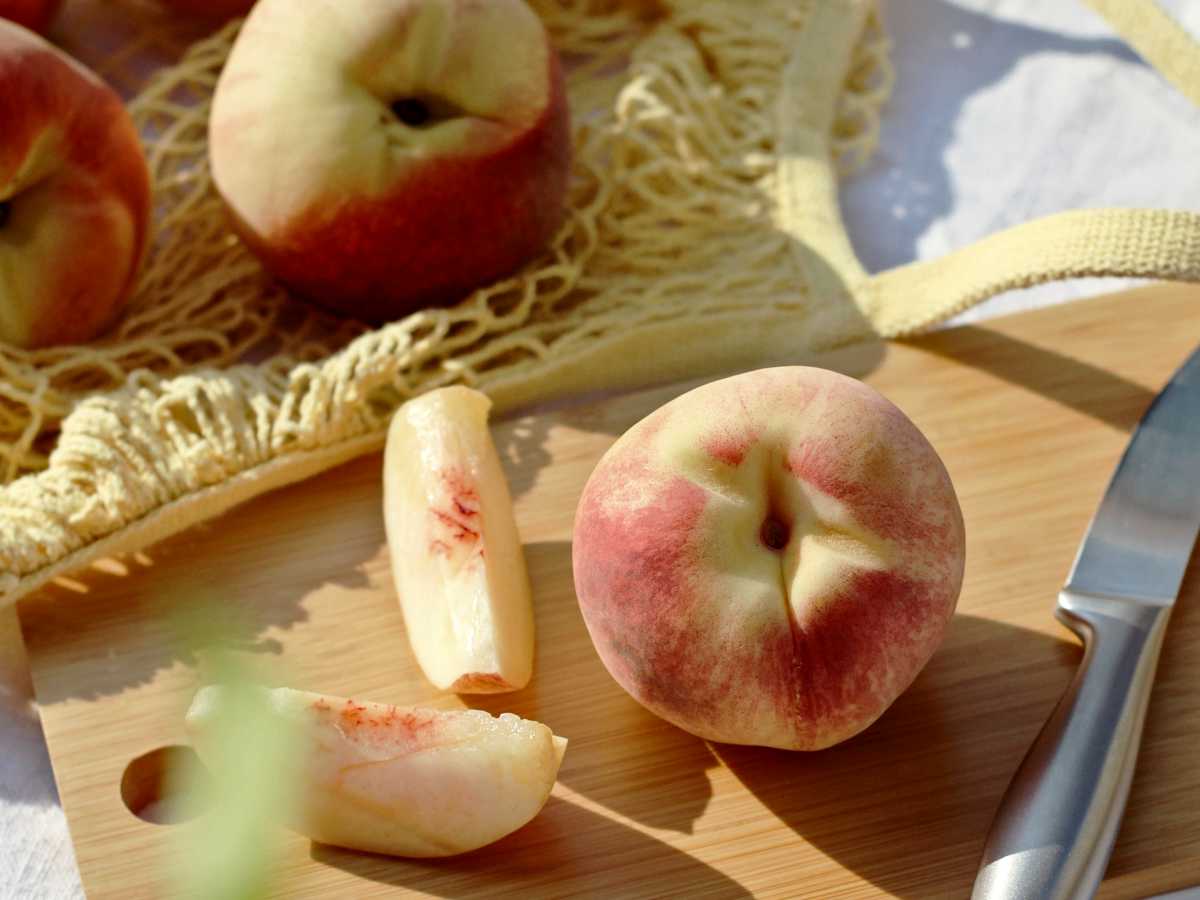
Because the fibre sits in the skin, herbalism traditionally recommends eating the peach unpeeled where sluggish, irregular digestion is the complaint.
Naturopathy credits its vitamin C, B vitamins and carotene content with a supporting role in skin condition and tone.
Peach tree leaves and flowers have a long-standing reputation as sedative preparations, taken as a mild evening infusion in country herbalism.
In hot weather it has always been used simply as a thirst-quencher — a fruit that refreshes because it is mostly water.
Vitamin C and carotene, the pairing naturopathy links to skin
How to use it
Fresh, as it comes
Rinse under cool water and rub the fuzz off with a cloth; keep the skin on.
One or two ripe peaches at the start of breakfast is the traditional way to use it for its gentle laxative and diuretic reputation.
Peaches are usually picked slightly firm. Leave them two to four days at room temperature, stem-side down, before eating — flavour and scent improve enormously.
Diced into a fruit salad with mint and a squeeze of lemon keeps the flesh from browning.
Cooked, for easier digestion
Halve, remove the stone, and bake cut-side up for 20 to 25 minutes in a moderate oven.
Or poach whole for 10 to 15 minutes in light sugar syrup or red wine with a vanilla pod, then slip off the skins.
Blend the poached flesh into a sauce, fold it into frozen yoghurt or ice cream, or spread it over a pie or cake batter.
Cooked peach is the form traditionally offered to anyone whose stomach finds raw fruit heavy.
Infusion of leaves or flowers
Use about a teaspoon of dried leaves or flowers per cup.
Pour water just off the boil, cover, and steep 5 to 8 minutes; strain well.
Traditionally taken as a single cup in the evening rather than through the day, and only occasionally — not as a daily habit over weeks.
Read the cautions box below before trying it: this is the part of the tree that calls for restraint.
Macerated in spirits
Fill a jar with stoned, sliced ripe peaches, cover with a neutral spirit, add sugar to taste.
Seal and leave in a dark cupboard for four to six weeks, shaking now and then.
Strain into bottles; the result is an excellent peach liqueur, a pleasure rather than a remedy.
Forms of use compared
Form
Preparation
Traditionally used for
Fresh fruit, skin on
Washed and eaten raw, ideally on an empty stomach
Its reputation as a mild laxative and diuretic; fibre from the skin
Baked or poached fruit
20–25 min in the oven, or 10–15 min in syrup or wine
The gentlest form for easily upset stomachs
Leaf or flower infusion
1 tsp dried per cup, steeped 5–8 min, covered
Its old sedative reputation, taken in the evening
Fruit macerate in spirits
4–6 weeks in a sealed jar, then strained
Flavour and keeping; a liqueur, not a remedy
Growing your own
The peach tree prefers latitudes closer to the equator: it fears cold, and its blossom dies in frost.
At bloom, in late winter to early spring, damage starts at 28°F (-2°C) and every flower is lost by 23°F (-5°C).
Where it freezes, train the tree flat along a lattice against a sunlit house wall.
Plant in autumn or early winter in light, deep, free-draining soil, with a bed of gravel at the bottom of the hole.
Only dwarf varieties are happy in a pot.
Well cared for, a peach tree can crop for up to 40 years.
Blossom at risk: frost at bloom costs the whole cropPoached or baked, the form gentlest on the stomach
Frequently Asked Questions
The one thing to remember: eat the peach ripe and unpeeled, and keep leaf or flower infusions weak and occasional.
Should I really eat the skin?
Yes, if you want the fibre — it is concentrated in the skin rather than the flesh. Rinse the fruit well and rub off the fuzz with a cloth. If the fuzz irritates your mouth or you react to stone fruit, peel it or leave it alone.
When is the best time of day to eat a peach?
Tradition puts it at the start of breakfast, on an empty stomach, which is when its old reputation as a gentle laxative and diuretic was thought to work best. One peach is plenty to begin with. Eaten in quantity that way, it can loosen the bowels more than you bargained for.
Can I make tea from peach tree leaves?
Country herbalism used a light infusion of leaves or flowers in the evening for its sedative reputation — about a teaspoon of dried material per cup, steeped 5 to 8 minutes. Because these parts contain cyanogenic compounds, keep it weak and occasional. Avoid it entirely in pregnancy, while breastfeeding, for children, and if you take sedatives or sleeping tablets.
My peaches are hard and tasteless. What now?
They were picked firm, as peaches usually are. Stand them stem-side down on the counter, in a single layer, for two to four days at room temperature. Judge ripeness by scent and by a gentle press near the stem, not by colour.
Is cooked peach as good as fresh?
Cooking is the traditional answer for anyone whose stomach finds raw fruit heavy — baked, poached in syrup or wine, or blended into a sauce. You lose some vitamin C to the heat, and the skin usually slips off. For fibre, fresh and unpeeled remains the better choice.
Images: Unsplash: Aneta Pawlik, Nati Melnychuk, Jason Leung, Sara Cervera
This information is provided for general interest and reflects the traditional use of plants. It is not a substitute for medical advice. If you are on medication, pregnant, or in any doubt, ask a healthcare professional.
Written by Gaspard Lorthiois | Loves helping out, especially when it comes to growing things. Worked in herbal medicine, runs a farm, and dabbles in tech. Master's degree and engineer.