Your lawn does not need more water this summer. Not really. It requires better water delivery and absorption. The thing is, proper strategy is everything.
The single most detrimental habit in hot weather is not forgetting to water. No, it is watering at the wrong time, in the wrong way. Witness most of it vanishing into thin air before reaching a root. You must fix the method. Your water use could halve, and you will end up with greener, tougher grass.
When temperatures climb above 25°C (77°F), water applied to a lawn between late morning and late afternoon evaporates at speed. Proper loss often reaches 40–60% before it even penetrates the soil surface. You are essentially just watering the air.
But there is a second issue. It operates slower, much quieter. Daily shallow watering — 5 to 10 minutes each morning, for instance — trains your grass roots to linger near the surface. It happens. This method is dodgy. Skip it.
Shallow roots are the first to struggle the moment a heatwave arrives. Or when you miss a day. The grass appears fine. Then it suddenly does not. The damage is already done, irreversible in the short term.
Research backs this up. Scientists at Utah State University Extension confirm that infrequent, deep irrigation consistently outperforms daily light watering. Even in high summer heat.
Stress accumulates invisibly. You do not see it until it is too late. Grass under chronic shallow watering develops a dense mat of surface roots. It dries out within hours of any missed session. That is the lawn which goes brown in summer after only four hot days. It is not because it is dead. No. It was never trained to cope. That setup is simply not quite right.
Compounding this is a serious factor. Afternoon watering leaves moisture sitting on leaf blades overnight. These create the exact humid conditions which fungal issues require to take hold. Brown patch and dollar spot both thrive in that specific scenario. And it is entirely avoidable.
Waste. Weak roots. Disease risk. These are three separate issues, all stemming from one bad habit.
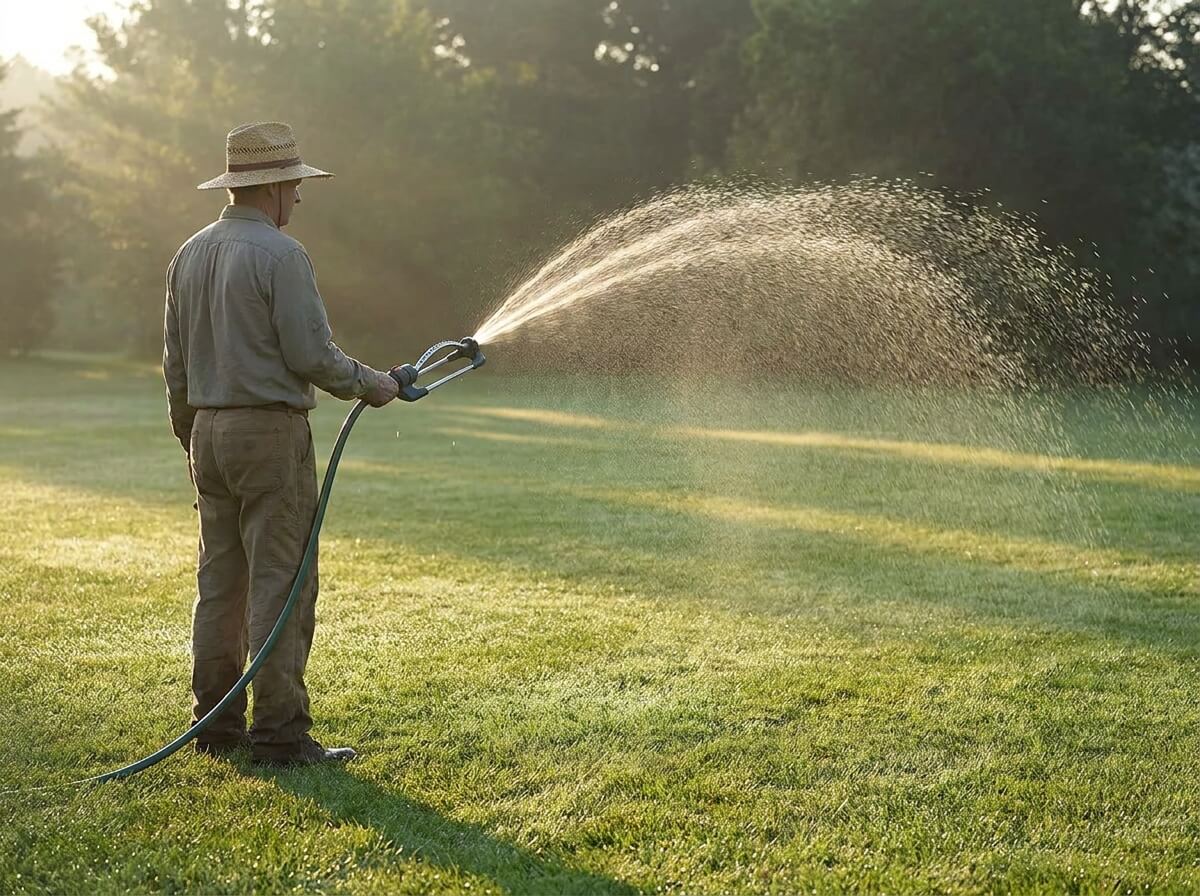
Shift your watering window. Get it before 8am. That is the non-negotiable change. Absolute fact.
Early morning air is cooler, much calmer. Evaporation is minimal. So the soil has the full day to absorb moisture before heat peaks. It takes smelling the damp grass while the rest of the street is still quiet; that specific cool, earthy scent is a bang-on sign your timing is precise.
Then change the frequency:
Yes, it feels counterintuitive. Water less often? That is a bit much to ask for some. But do it anyway. Roots will chase the moisture downward. They will reach 15–20cm into soil that remains cool and damp even in a heatwave. That is a lawn which survives. Also, reviewing how you are mowing right now matters just as much. Cutting too short in heat strips the proper shade cover. That cover slows evaporation at soil level.
Footprints which stay visible for more than 30 seconds signal a lack of turgor in the grass. This is a reliable sign of moisture stress. This happens regardless of how often you have watered. Watch for it especially in the early evening. Observe closely.
The RHS advises allowing established lawns to go slightly dry between waterings. This tiny bit of stress actually encourages deeper rooting. Established grass is far more resilient than most gardeners give it credit for. Yes, it truly is.
Smart tip: Place an empty tuna tin on your lawn while watering — when it is full, you have applied roughly 2.5cm (1 inch).
Twice a week is the ideal maximum for most lawns in summer. Deep and infrequent beats shallow and daily every time.
Avoid it. Night watering leaves moisture on grass blades for hours, creating ideal conditions for fungal disease.
Early morning is always the better window.
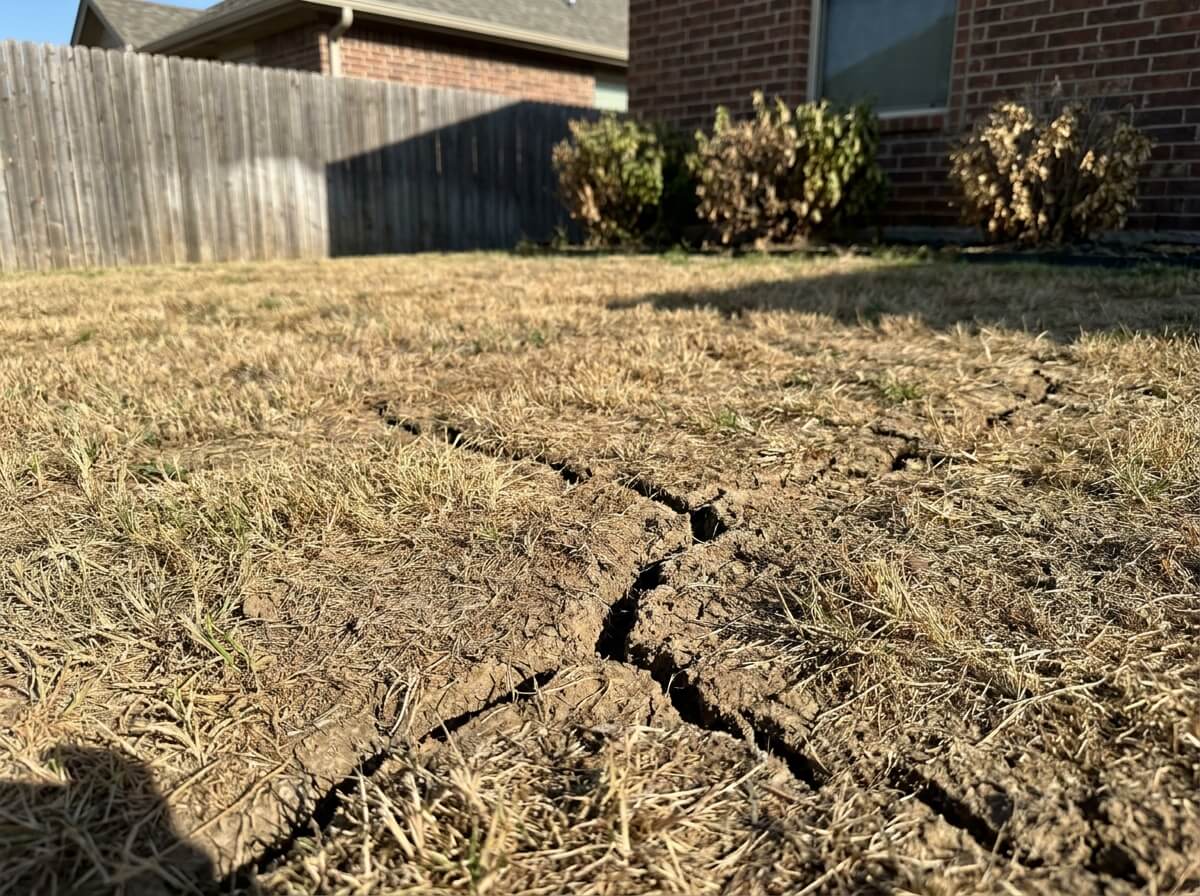
If temperatures have been extreme, your lawn may simply be dormant rather than dead — most grass species can survive 4–6 weeks without water. Read more in Your Lawn Has Gone Brown in Summer — But It is Probably Not Dead.
Yes — leaving short clippings on the surface acts as a light mulch and does wonders for retaining moisture slightly. For more on this, see Mulching with lawn clippings, a good idea?