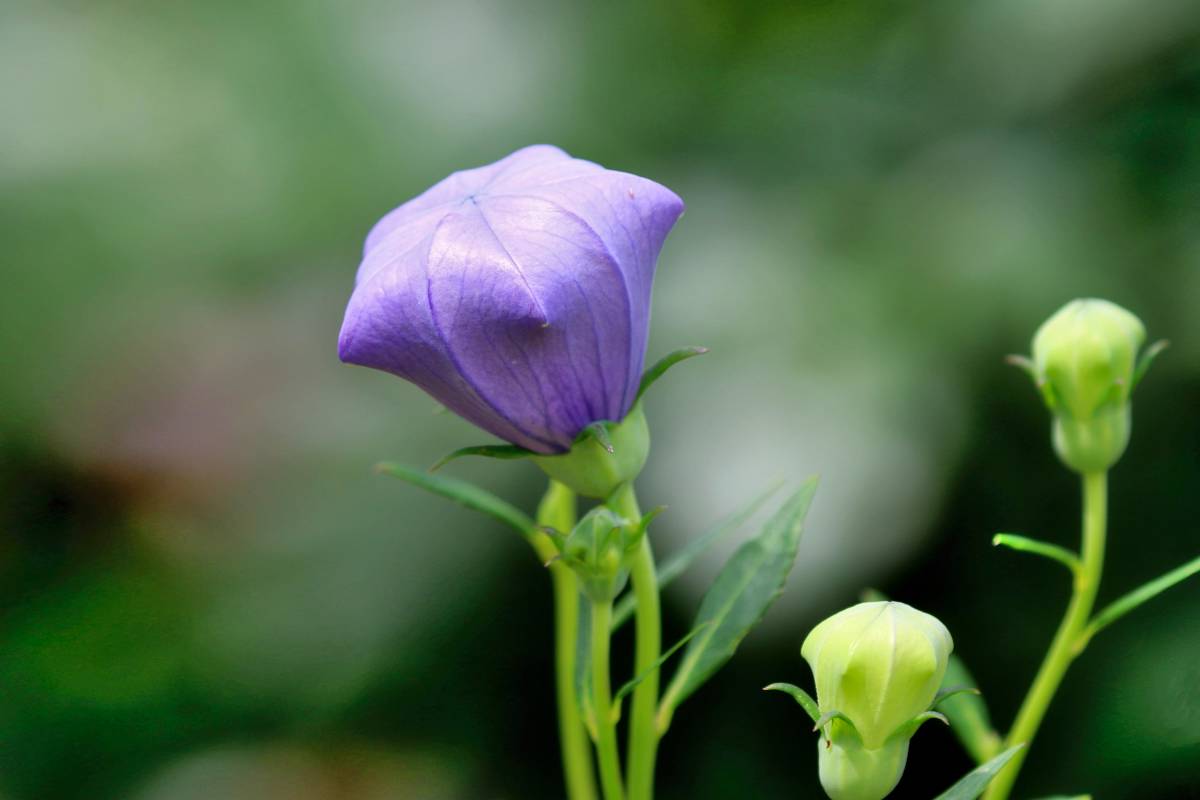
Inflated, balloon-like buds swell at the tips of stems 8 to 24 inches tall before bursting open into broad bells: this is platycodon (Platycodon grandiflorus), an Asian perennial grown for its long-lasting, abundant bloom. Give it sun and well-drained soil and it shrugs off cold weather and heatwaves alike, flowering generously with almost no attention.
| Name | Platycodon grandiflorus |
|---|---|
| Family | Campanulaceae |
| Type | perennial |
| Height | 8 to 24 inches (20 to 60 cm) |
| Exposure | full sun or part shade |
| Soil | rather rich and light |
| Flowering | early summer to early autumn |
Platycodon should be planted in spring in a spot that gets quite a lot of sun, though part sun is also enough if you live in warmer areas in the South.
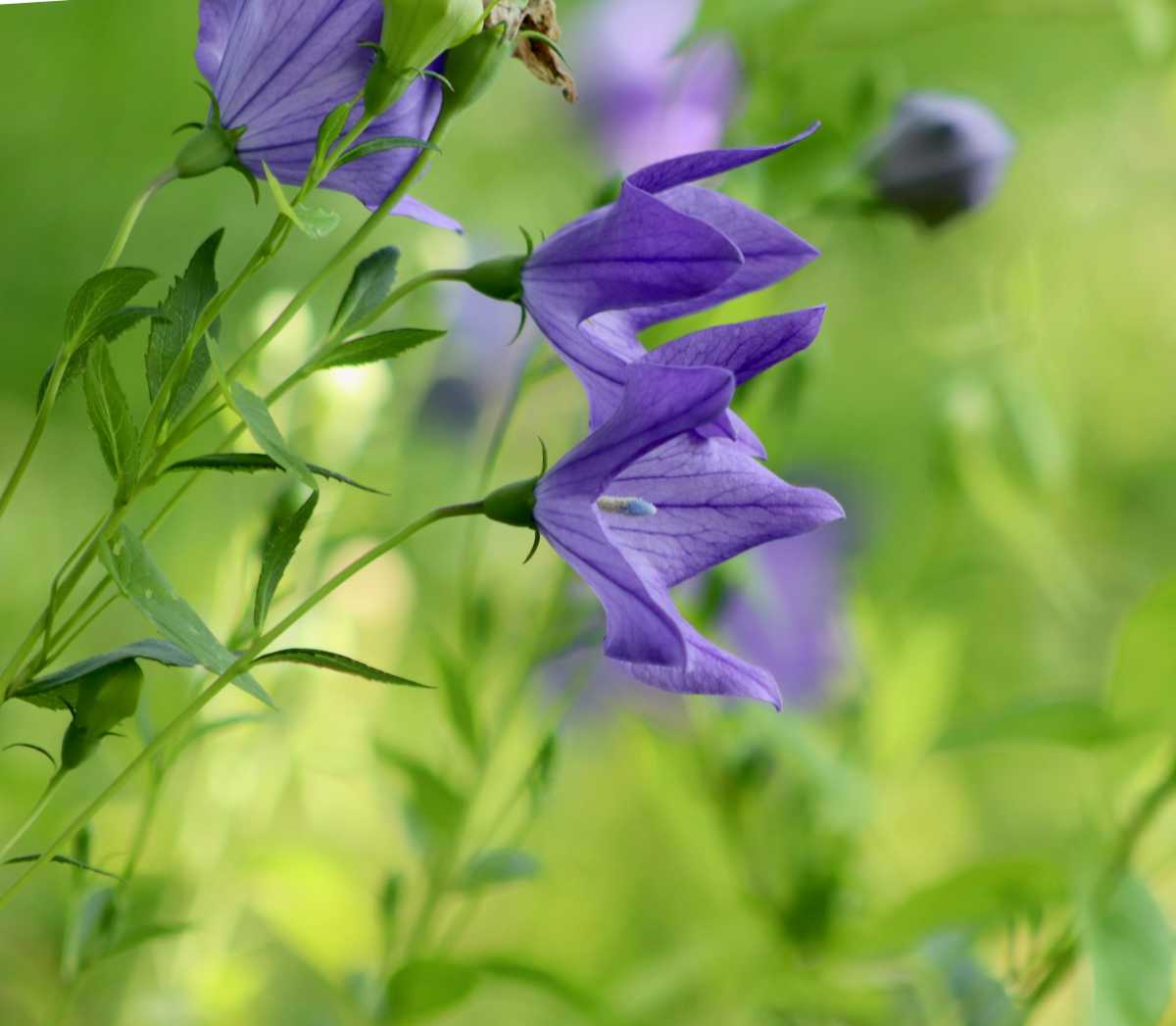
Propagation is through clump division in spring, and you can also sow seeds at the same time.
Balloon flowers are sold in a handful of reliable named forms, ranging from knee-high plants for the middle of a border to compact selections for pots and edging. Height is the main thing to settle first, since tall stems are the ones that need staking.
| Variety | Height | Flower colour | Best use |
|---|---|---|---|
| ‘Fuji White’ | About 24 in (60 cm) | White | Pale borders and cutting |
| ‘Fuji Blue’ | About 24 in (60 cm) | Violet-blue | Border and cutting; stake in exposed spots |
| ‘Sentimental Blue’ | 6–8 in (15–20 cm) | Blue | Containers, troughs, rock gardens |
| ‘Fuji Pink’ | About 24 in (60 cm) | Soft pink | Borders; softer colour schemes |
| Astra Blue / White / Pink | 8–10 in (20–25 cm) | Blue, white or pink | Pots and edging; flowers in its first year from seed |
| ‘Mariesii’ | 12–18 in (30–45 cm) | Deep blue-violet | Front of border, sturdy without staking |
| ‘Apoyama’ | 6–8 in (15–20 cm) | Violet-blue | Rock gardens and pot culture |
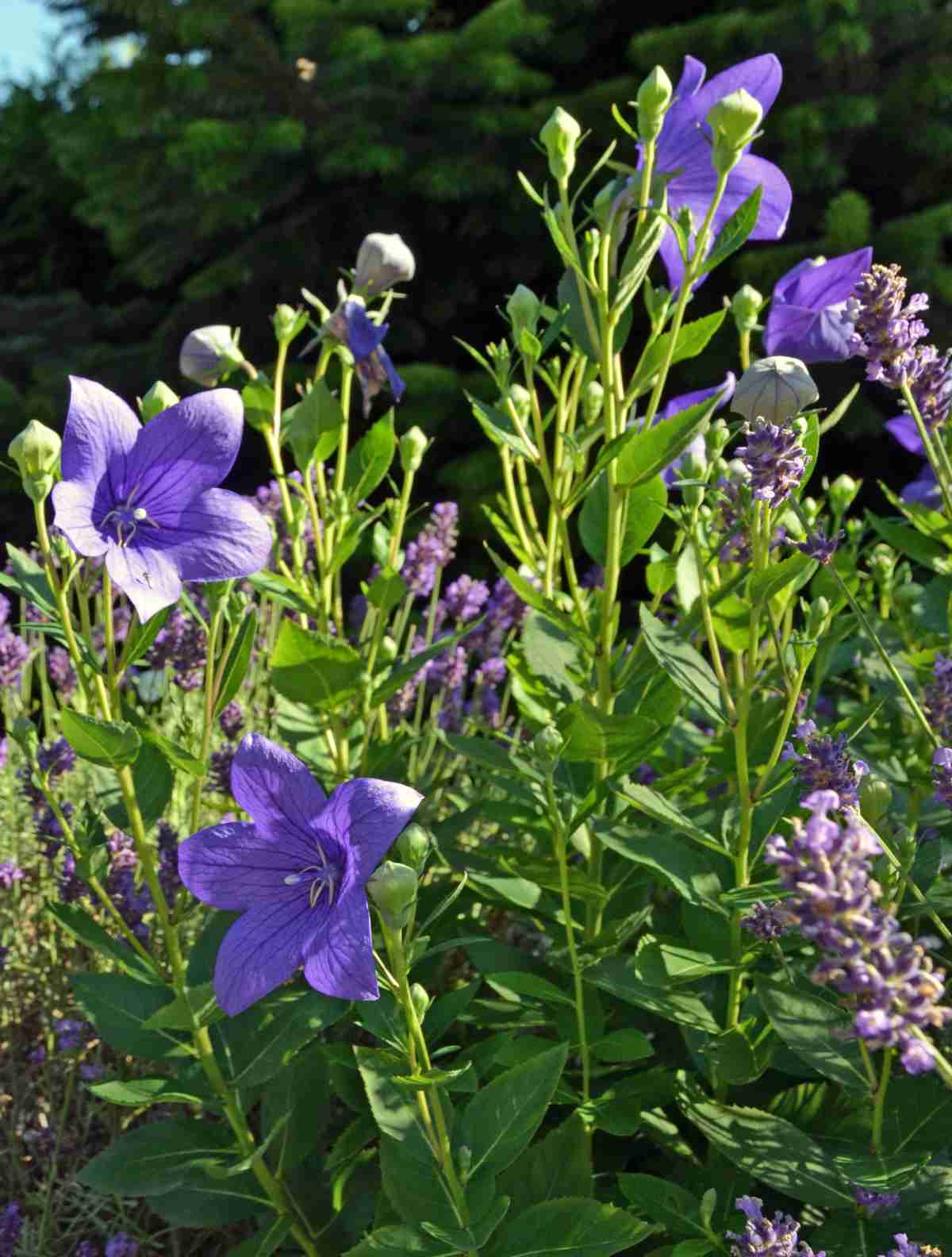
To boost flower-bearing, if you wish, eliminate wilted flowers regularly.
Platycodon is very easy to care for: it doesn’t require any other care than that!
In a pot, it’s important to water often, because the soil around your potted platycodon always dries out faster than if it were planted in the ground.
If in the ground, regular watering after the planting will help the plant grow, but as time passes this chore will become less and less necessary.
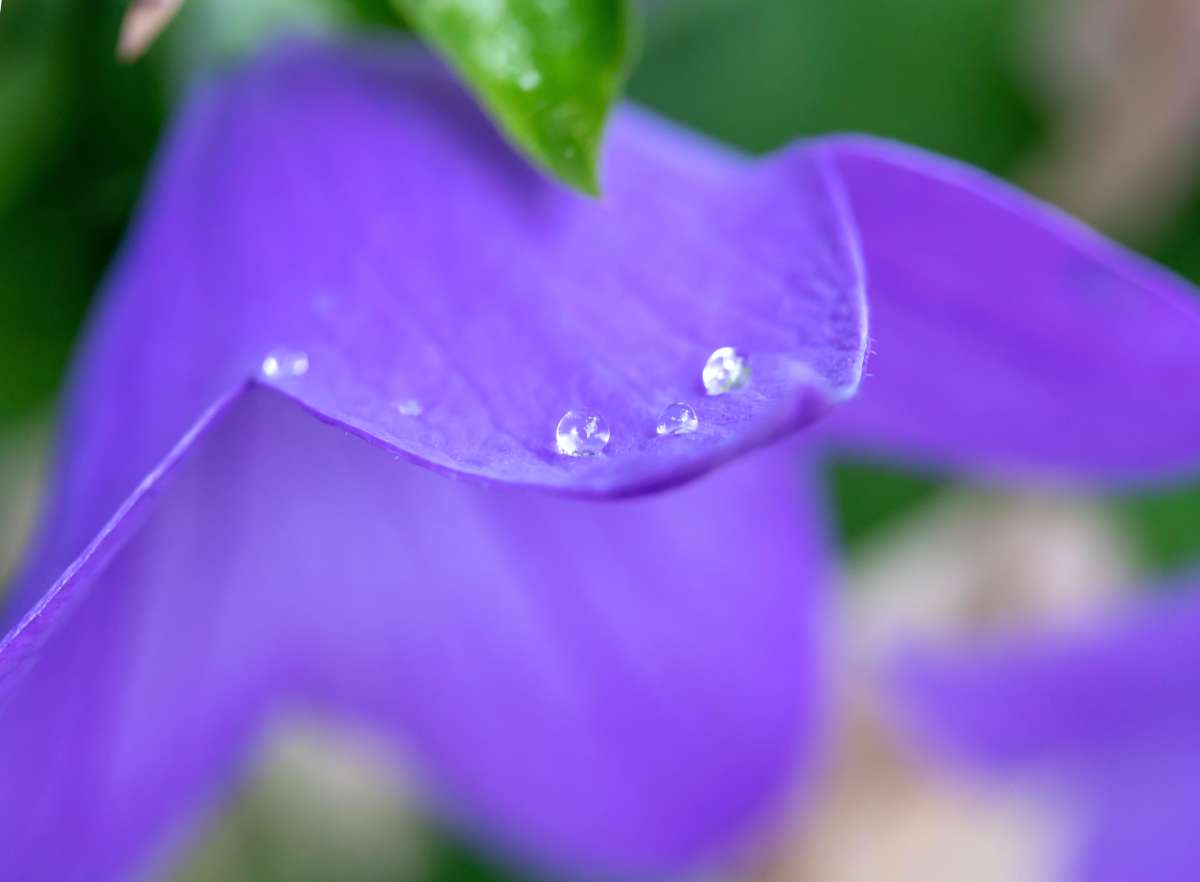
A very beautiful perennial plant native to Asia, Platycodon offers its most stunning blooms in July and August.
This easy-to-grow plant also has the advantage of resisting both cold weather and intense heat waves.
A very hardy grower, it resists most diseases very well: this increases the appeal for gardeners who prefer easy plants.
Stake varieties that have longs stems, otherwise your platycodon will fall over in foul weather if it’s windy and there’s lots of rain.