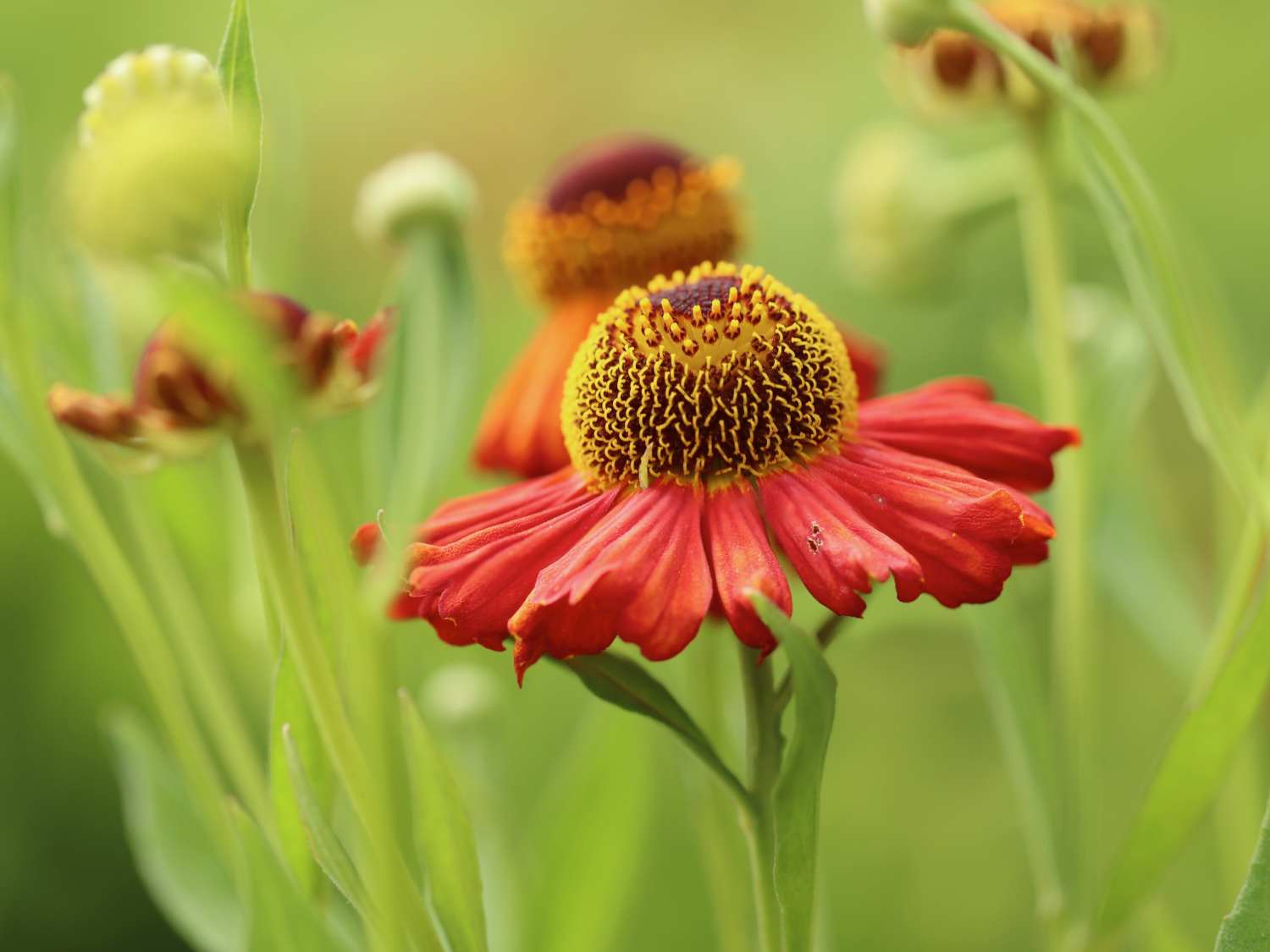
Blooms in pink, red, orange and yellow keep coming through summer and into late autumn, enlivening the garden when other flowers start to wane. Sneezeweed (Helenium) is a low-care perennial for beds, pots and balconies; give it a sunny spot in amended, well-draining soil and it will flower on until the first frosts.
Helenium at a glance
Name
Helenium
Common name
Sneezeweed
Family
Asteraceae
Type
Perennial
Height
16 inches to 28 inches (40 to 70 cm)
Exposure
Sunny
Soil
Regular
Blooming
early summer to late autumn
To know about planting and care, read on: you’ll happily nurture beautiful heleniums!
Helenium planting
It’s best to plant helenium in the spring. Even though blooms come in summer, spring planting means strong roots to withstand autumn and winter’s challenges.
Set young plants in spring.
Opt for amended, well-draining soil.
Pick a sunny spot for better blooms.
Water well after planting.
Space helenium plants roughly 18 to 24 inches (45 to 60 cm) apart, depending on the cultivar’s mature size; good air circulation around the clumps can help limit foliar diseases such as powdery mildew and rust.
Because sneezeweed grows wild in damp North American ground, work plenty of compost into light, sandy beds before planting so the soil drains yet never bakes completely dry.
Insert a stake or ring support at planting time for tall heleniums such as ‘Butterpat’, listed variously at about 90 cm to 1.5 m (3-5 ft), since tall stems can flop in wind and heavy rain.
Size, care, and watering of Helenium:
Helenium asks for little care, just regular watering if it doesn’t rain.
As flowers fade, remove them; this encourages new blooms.
Water when soil is dry, especially for potted use. Remember, Chrysanthemums thrive in moist soil.
Don’t wet the foliage. It keeps diseases like rust and powdery mildew at bay.
After first frosts, when flowers start to darken, snip stems down to ground level.
Every 2 to 3 years, consider splitting the clump in spring or fall. It refreshes the plant and boosts its energy.
Tall heleniums such as ‘Moerheim Beauty’, around 90 cm, and ‘Butterpat’, often 1–1.5 m, can flop after heavy rain or wind, so push in link stakes or twiggy supports while the stems are still short.
Shortening helenium stems by about a third before the flower buds form produces shorter, bushier clumps that stand without staking, in exchange for flowering starting a little later.
Garden heleniums, mostly Helenium autumnale types, come from moist North American meadows and flower poorly in soil that dries out, so mulching the root zone with compost or bark helps retain moisture between waterings.
Avoid high-nitrogen fertiliser on heleniums, since excess nitrogen generally encourages soft, leafy growth that flops under the weight of the flowers; a mulch of well-rotted compost around the clump is a gentler alternative.
Common Helenium diseases
While Helenium stands strong, it sometimes faces a few pests and diseases. Yet, you can avoid these. Keeping foliage dry and giving each plant space goes a long way towards eliminating problems.
Pick off leaves showing rust pustules as soon as you spot them and bin them rather than composting, and clear away the cut stems and fallen foliage so spores do not overwinter at the base of the clump.
Slugs and snails graze the soft new shoots of helenium as the clump emerges from the ground, so check the crown regularly at that stage and protect it before the shoots are shredded.
Helenium pests and diseases at a glance
Helenium is a robust plant, but three problems turn up now and again. Use the symptom you can see to identify which one you are dealing with, and how to keep it away.
Helenium pests and diseases at a glance
Problem
What you see
Where it shows
How to avoid it
Powdery mildew
A white film
Leaves and stems
Keep the foliage dry when watering
Rust
Pustules
Leaf undersides
Keep the foliage dry when watering
Aphids
Leaves curl and eventually drop
Leaves
Give each plant space
Keeping foliage dry and giving each plant space goes a long way towards eliminating problems.
Helenium varieties to choose from
Heleniums vary widely in height and flower colour, so the right one depends on where you want it in the border. This table compares widely available varieties on the points that matter when planting.
Helenium varieties to choose from
Variety
Flower colour
Height
Flowering period
Best use
Moerheim Beauty
Coppery red, bronze centre
36 in (90 cm)
midsummer to early autumn
Mid to back of border
Waltraut
Golden brown to copper
36 in (90 cm)
midsummer to early autumn
Prairie-style planting
Rubinzwerg
Deep ruby red
32 in (80 cm)
midsummer to early autumn
Mid-border, cutting
Butterpat
Clear yellow
40 in (100 cm)
late summer to mid-autumn
Late colour at the back
Mardi Gras
Orange streaked with yellow
30 in (75 cm)
midsummer to early autumn
Mid-border, pollinators
Learn more about helenium
Helenium hails from North America, often found near swamps.
Flowering into late autumn when other plants fade
Known for their pink, red, orange, and yellow hues, they bring vibrancy to any space.
Helenium blooms from summer through late, even into late autumn or early winter. Their appearance enlivens gardens when other flowers start to wane.
Many love planting them in pots to brighten up balconies and patios.
For this purpose, pick a quality flowering plant soil mix. It retains moisture, something this plant craves (another option is to add hydrogel to the potting mix).
Chrysanthemums adapt well. They look great in garden beds, pots, or planters, and also beautify a flowerbed.
Smart tip about helenium
Want to pick your color? Buy them in nursery pots when they start to bloom and then plant them in your garden.
Images: Pixabay: Marjatta Caján, Annette Meyer, Gary Stearman