
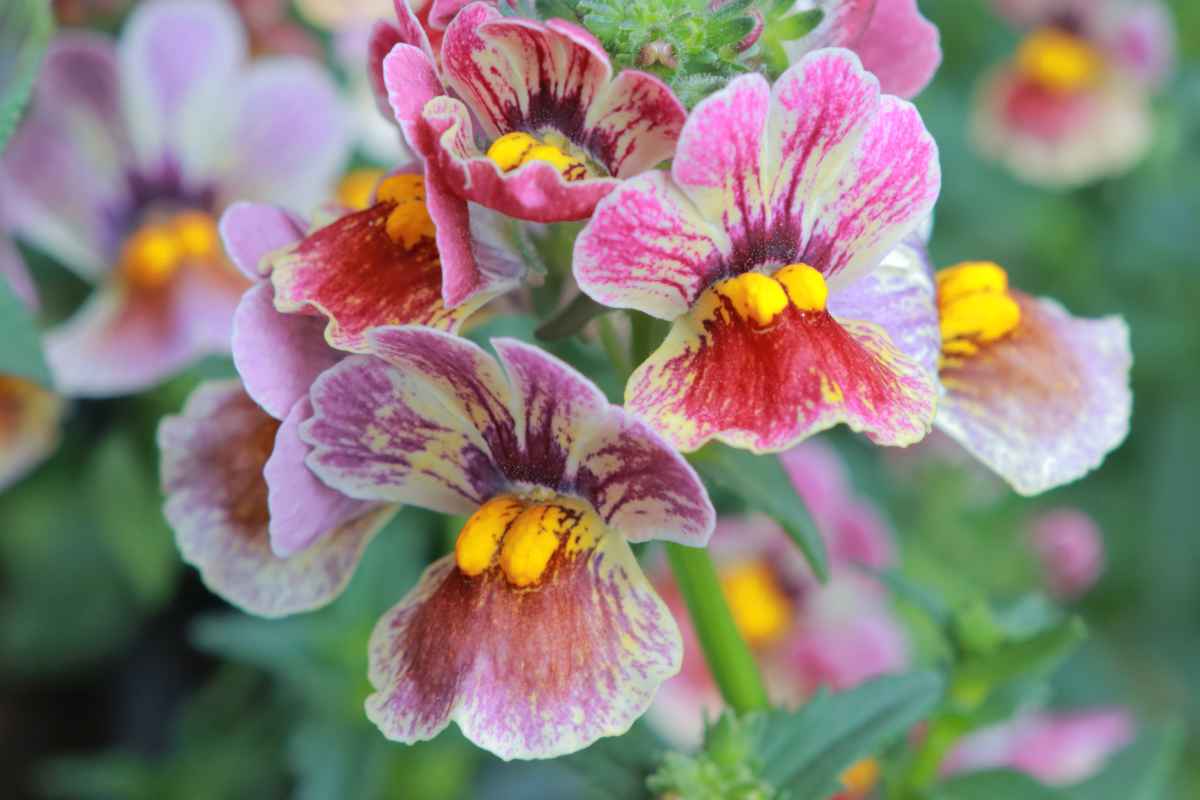
Nemesia is a cute little flower that many find appealing for the beauty and abundance of its warm-colored blooms.
Summary of Nemesia facts
Name – Nemesia
Family –Scrophulariaceae
Type – annual or perennial depending on the variety
Height – 12 to 20 inches (30 to 50 cm) depending on the variety
Exposure – full sun, part sun
Soil – rather rich
Flowering – June to September
In flower beds, along edges, in garden boxes or hanging pots, it is extremely ornamental and growing it is very easy.
Sowing nemesia
Most appropriate is to sow in a sheltered spot starting from the month of March and put in place during the month of May.
If you’re looking to sow your nemesia directly in the bed, wait for the end of April. Blooming, in this case, should occur in August or September.
How to plant nemesia
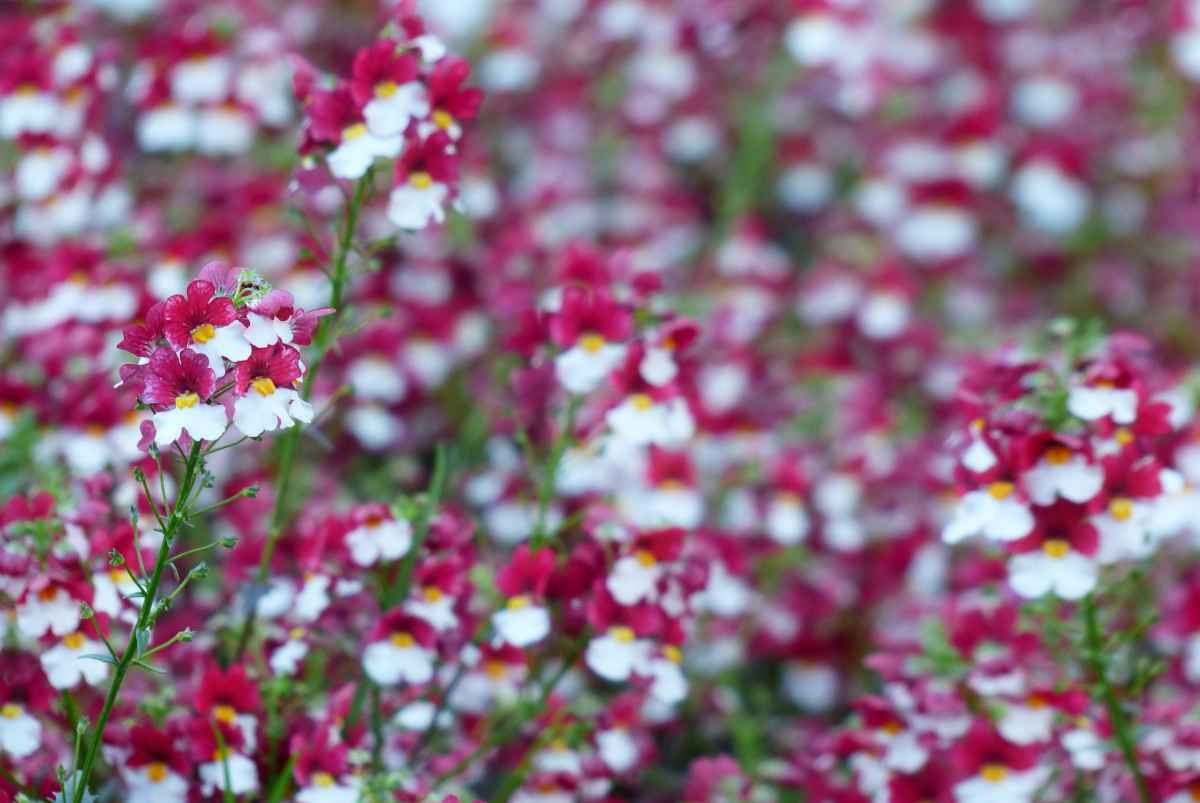 For abundant flower-bearing, prefer a spot that is in part shade and never gets too hot.
Also, best wait for April to transplant specimens purchased in nursery pots to the ground.
Growing nemesia in pots
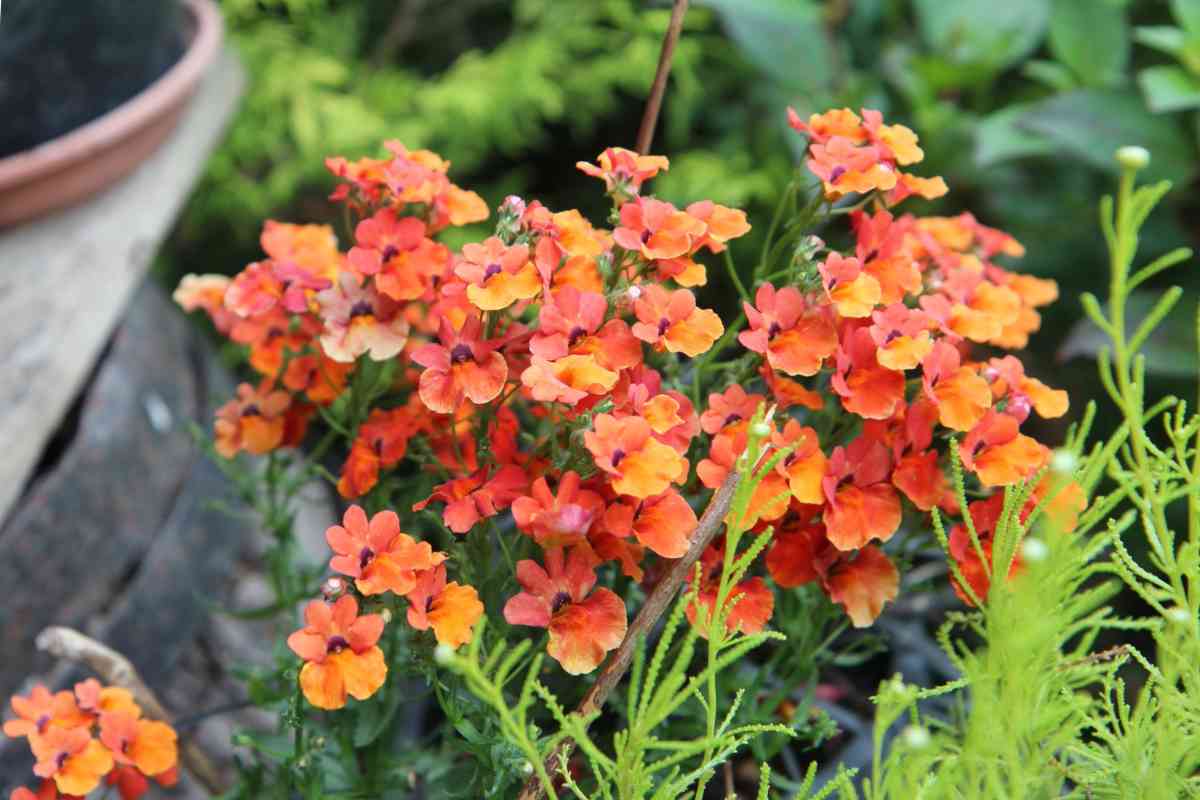 Nemesia is a flower that is perfectly suited to growing potted for your garden boxes and deck pots.
Cut wilted flowers off your nemesis as soon as they wilt, so that the plant won’t waste energy. This step isn’t mandatory but performing it will stimulate the plant to produce new flowers.
Apart from that, provide for regular watering for nemesia grown in in pots.
At the end of the blooming, once the leaves have withered away, cut back as short as you can.
Nemesia is vulnerable to powdery mildew.
As regards parasites, aphids is the most common predator, and it can wreck havoc among your plants.
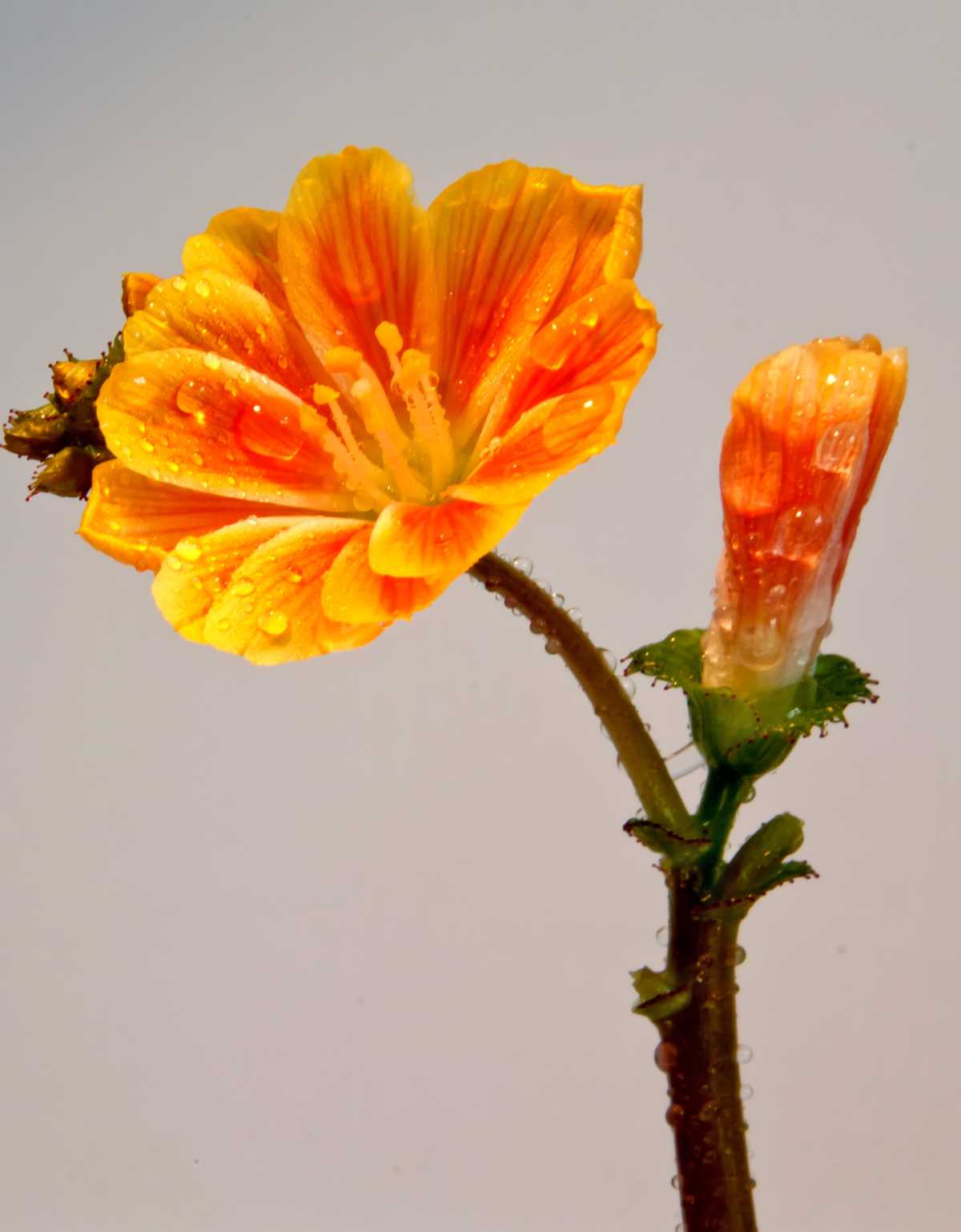 Native to South Africa, Nemesia is a very cute little flower that offers abundant blooming all summer long in a range of colors.
Nemesia is quite distinctive thanks to the wide range of colors, from white to red, including yellow. It is also found appealing for its delicate fragrance and its abundant flowering.
Nemesia actually bears so many flowers that at times the tiny colored flowers overtake and cover its leaves.
They’ll be perfect in flower beds, rocky settings or to mark edges, and they’ll also look amazing in pots and garden boxes on your deck or terrace.
Nemesia comes from the Greek root word nemesis, which stood for righteous anger. It was sometimes tied to the spirit of equilibrium, and also vengeance.
Here are the tips on how to grow this plant that expert Nemesia producer Stéphane Etienne prepared for us on the topic of Nemesia denticulata, the tooth-shaped nemesis:
In summer, always favor watering in the evening to keep water from evaporating.
Nemesia is appreciated for its delicate fragrance along with its abundant flowering. The flowers produce a subtle scent that adds to their appeal as ornamental plants.
For potted nemesia, water when the surface of the substrate has dried up. For ground-planted nemesia, water regularly but not too much after planting, and in summer, favor watering in the evening to prevent evaporation.
Nemesia prefers part sun to part shade and does best in spots that never get too hot. However, nemesia still flowers well even in shade, making it a flexible option for various light conditions.
Nemesia is vulnerable to powdery mildew, which can be prevented by avoiding wetting the foliage when watering. Aphids are the most common pest predator and can cause significant damage to plants.
Cut off wilted flowers as soon as they wilt to prevent the plant from wasting energy, which stimulates production of new flowers. At the end of the blooming season once leaves have withered, cut the plant back as short as possible.
Hi and good after-noon, can you please tell me if Nemesia are toxic to dogs or can they cause any skin irritation. MANY THANKS in advance.
Hi, it’s neither particularly toxic nor irritating. For dogs it won’t be a threat. It’s only slightly discouraged to plant if you have rabbits, since it doesn’t make good fodder for rabbits.
MANY THANKS for the fast and helpful answer. Sincere appreciation.