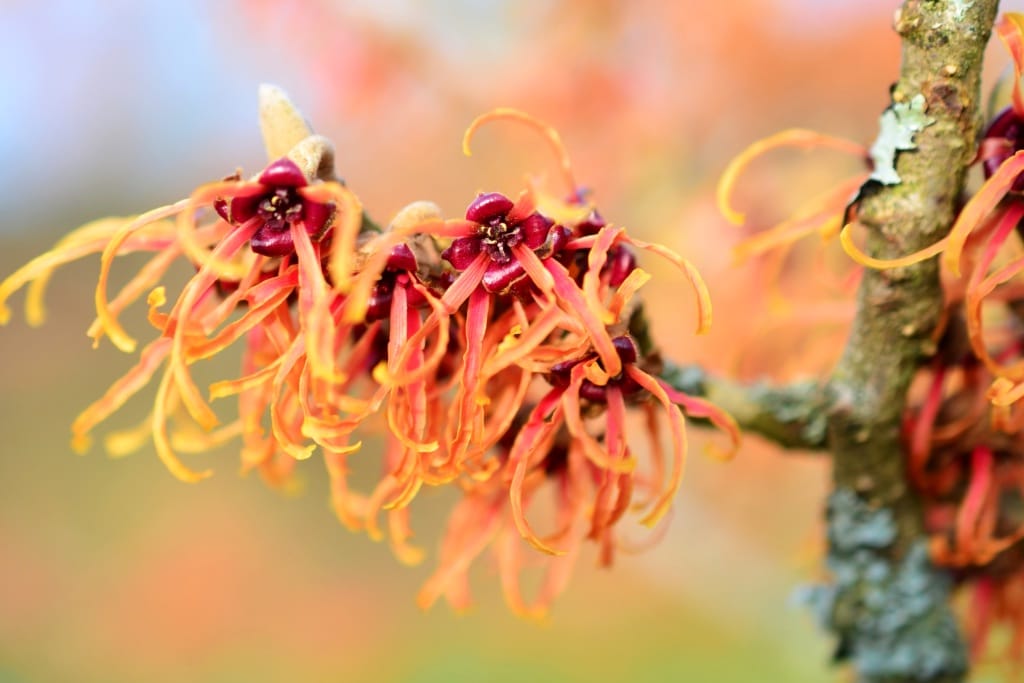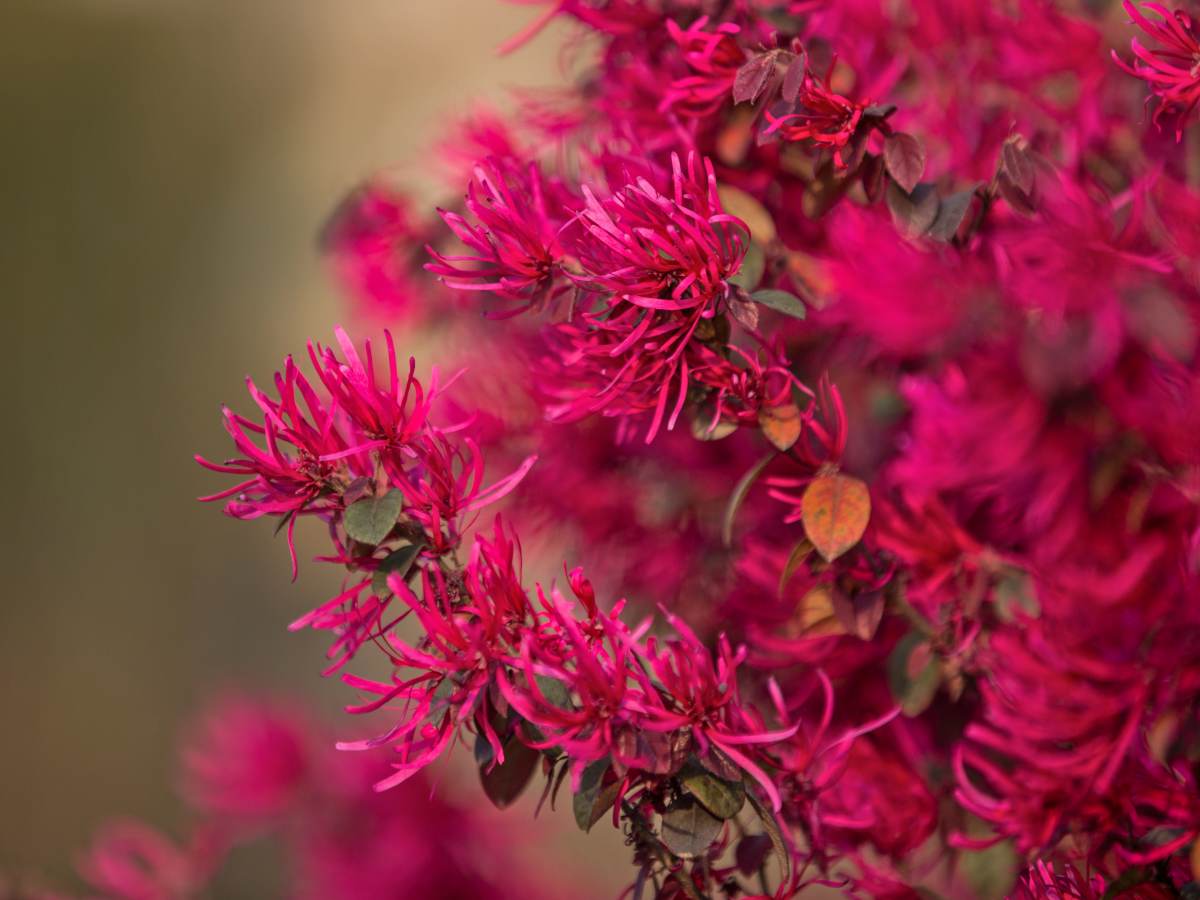
Fragrant, strangely fringed flowers open right in the middle of winter on a slow-growing shrub of 5 to 6½ feet (1.5 to 2 metres), handsome on its own and just as good in a mixed hedge or a large pot. Give it winter sun and shelter from cold wind, and the flowering runs on and on.
| Name | Loropetalum chinense |
|---|---|
| Family | Hamamelidaceae |
| Type | shrub |
| Height | 5 to 6 ½ feet (1.5 to 2 meters) |
| Exposure | full sun, part sun |
| Soil | rather rich |
| Foliage | deciduous |
| Blooming | end of winter → early spring |
Here are our tips on caring for it to embellish its blooming and growth.
The planting of Loropetalum chinense is usually in fall, but if purchased in a pot or container, you can plant in spring or summer while avoiding frost spells and days of intense heat.
Potted Loropetalum chinense
Loropetalum chinense is a shrub perfectly suited to growing in pots.

If you’re lucky to have a terrace that can welcome a large pot, you’ll be able to grow Loropetalum chinense in a container, because its growth is slow and its “adult” size is quite small.
Note also that Loropetalum chinense is particularly hardy to the cold, so growing it in pots is all the more possible.

Caring for Loropetalum chinense is easy and its hardiness makes it almost invulnerable to most diseases as it does to insect attacks or parasites.
Watering is needed on a regular basis for Loropetalum chinense when it’s hot and during the 2 first years after planting.
In winter, if it really doesn’t rain and the ground is dry, water when it isn’t freezing to ensure you’ll have proper blooming.
Almost everything this shrub asks for is a question of timing rather than effort. The table below gathers each job and the moment it is best done.
| Task | When | How |
|---|---|---|
| Planting | Autumn as a rule | Pot-grown plants can also go in during spring or summer, away from frost and heat |
| Summer watering | Hot spells, and the first two years after planting | Water in the evening so the water does not evaporate |
| Winter watering | Only if it doesn’t rain and the ground is dry | Water during the daytime, never in the evening, and never when freezing |
| Removing dead wood | Regularly, especially at the end of summer | Cut out dead and dry branches |
| Reshaping the branches | Once flowering has finished | Only if the shrub needs balancing or reducing |
| Watering pots | Heat waves and prolonged dry spells | More often than in open ground, over proper drainage |
Beyond these few moments in the year, the shrub is left largely to itself.
Nurseries now offer far more than the plain species: flowers range from white through pink to true red, and the foliage from fresh green to almost black. The table sets out the varieties most often met on sale, so you can match flower, leaf and habit to the spot you have in mind.
| Variety | Flower colour | Foliage | Habit | Best use |
|---|---|---|---|---|
| ‘Plum Delight’ | Hot pink | Plum-purple | Medium, arching | Standalone shrub |
| ‘Sizzling Pink’ | Vivid pink | Bronze-purple | Medium | Border, container |
| ‘Fire Dance’ | Deep pink | Bronze-purple | Medium, spreading | Specimen shrub, mixed hedge |
| ‘Purple Pixie’ | Pink | Purple | Dwarf, weeping | Ground cover, pot edges |
| ‘Purple Diamond’ | Pink | Purple | Compact, rounded | Low hedge, containers |
| ‘Purple Daydream’ | Pink | Purple | Dwarf, mounding | Front of border, pots |
| ‘Ruby’ | Bright pink | Ruby-red new growth | Medium | Mixed hedge |
| ‘Burgundy’ | Rose pink | Deep burgundy | Tall, upright | Back of a border, screening |
| ‘Jazz Hands Bold’ | Pink | Purple | Tall, upright | Screening, large borders |
Loropetalum chinense flowers are remarkable thanks to their uniqueness and their fragrance especially because they appear right in the middle of winter.
Loropetalum chinense doesn’t always lose its leaves, it depends on where it’s growing.
Easy to care for and simple to grow, this shrub is particularly appealing when planted as a standalone, but it can also become part of a mixed hedge.
Loropetalum chinense is perfectly suited to growing in a small garden because of two things. First, its growth is very slow, and second, even when it has become a mature tree it is still quite small.
Lastly, let us note that it is quite invulnerable to diseases and parasites which makes it an easy tree to care for.
Mulch prepared from pine bark is a good idea.
The natural acidity of bark favors the growth of this loropetalum and retains moisture.