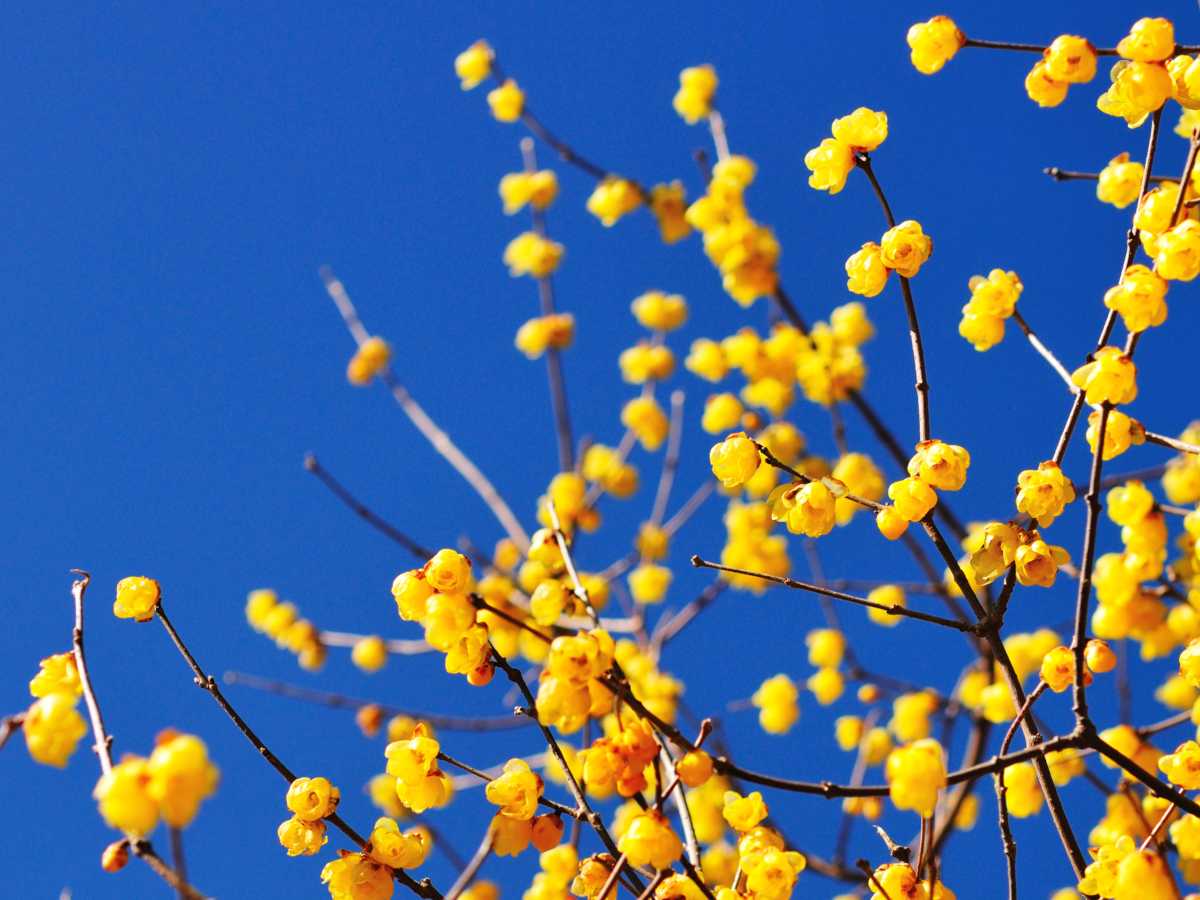
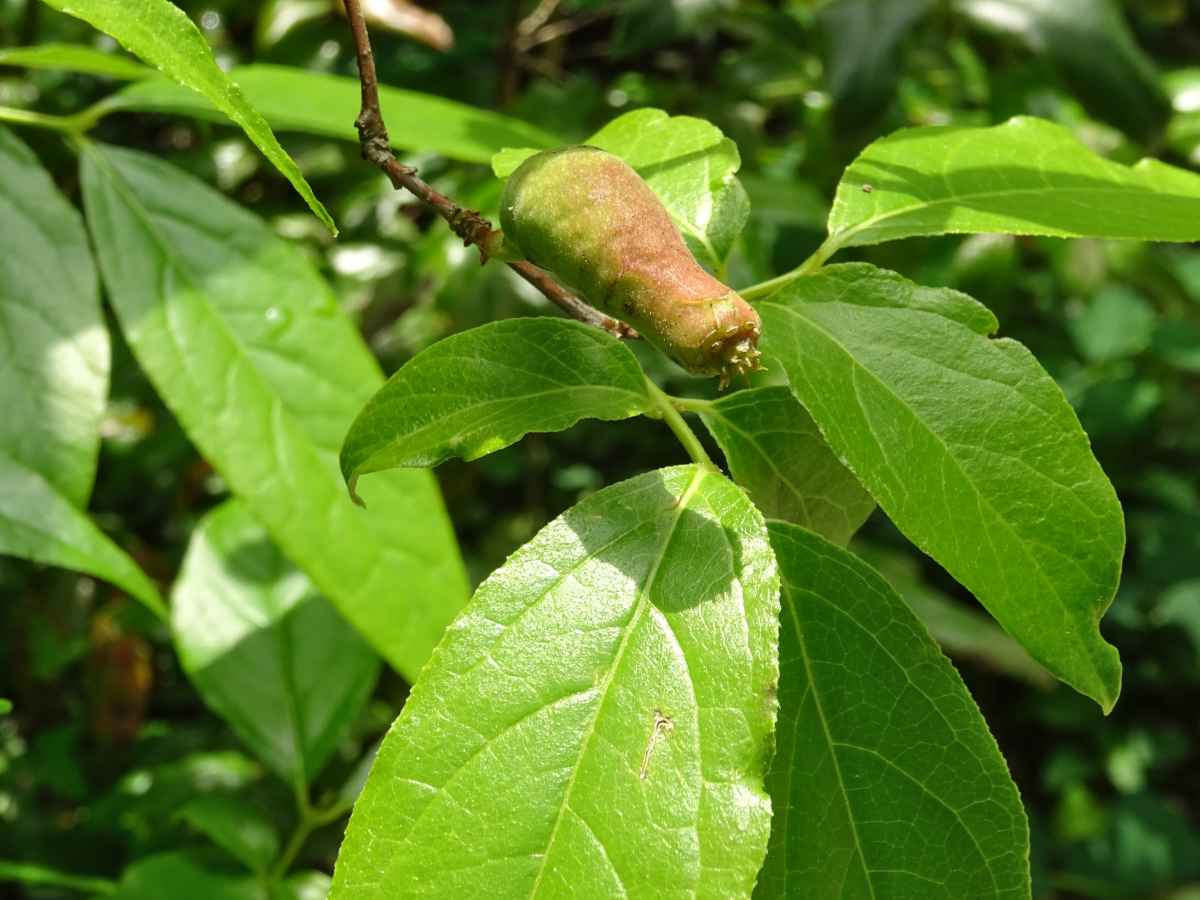
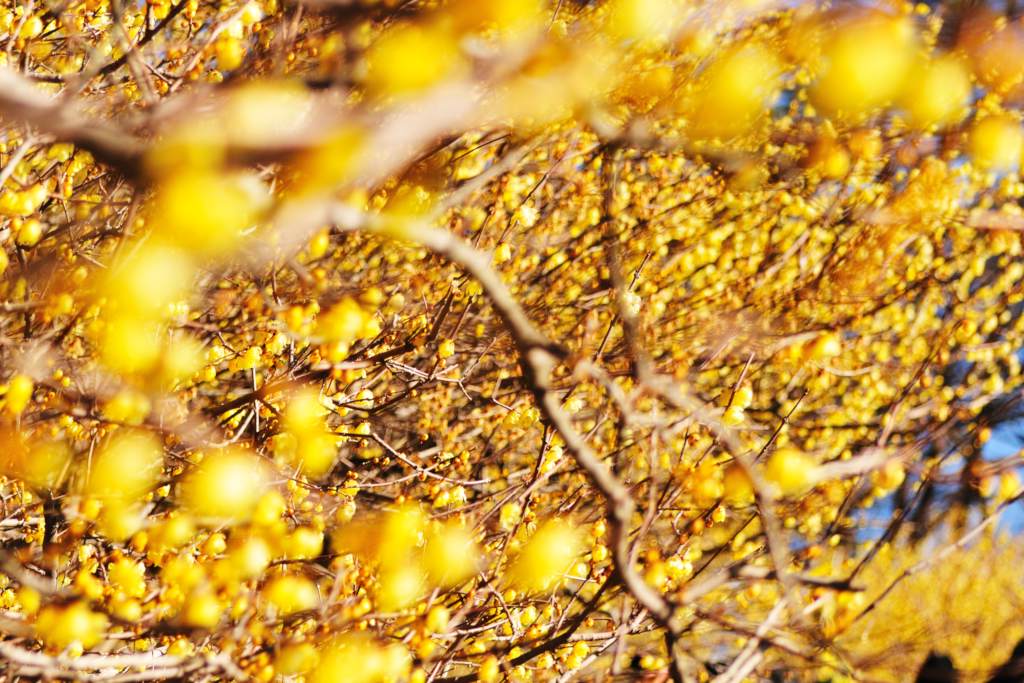
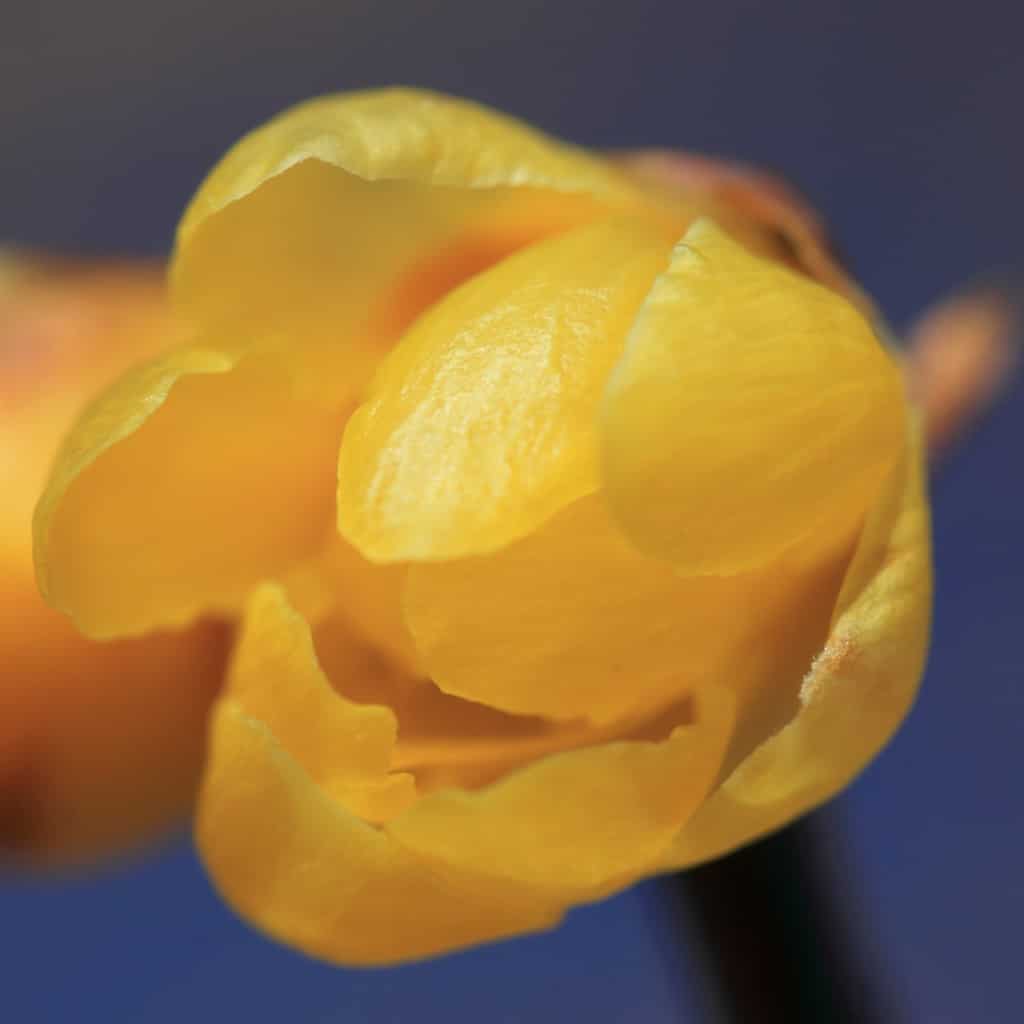
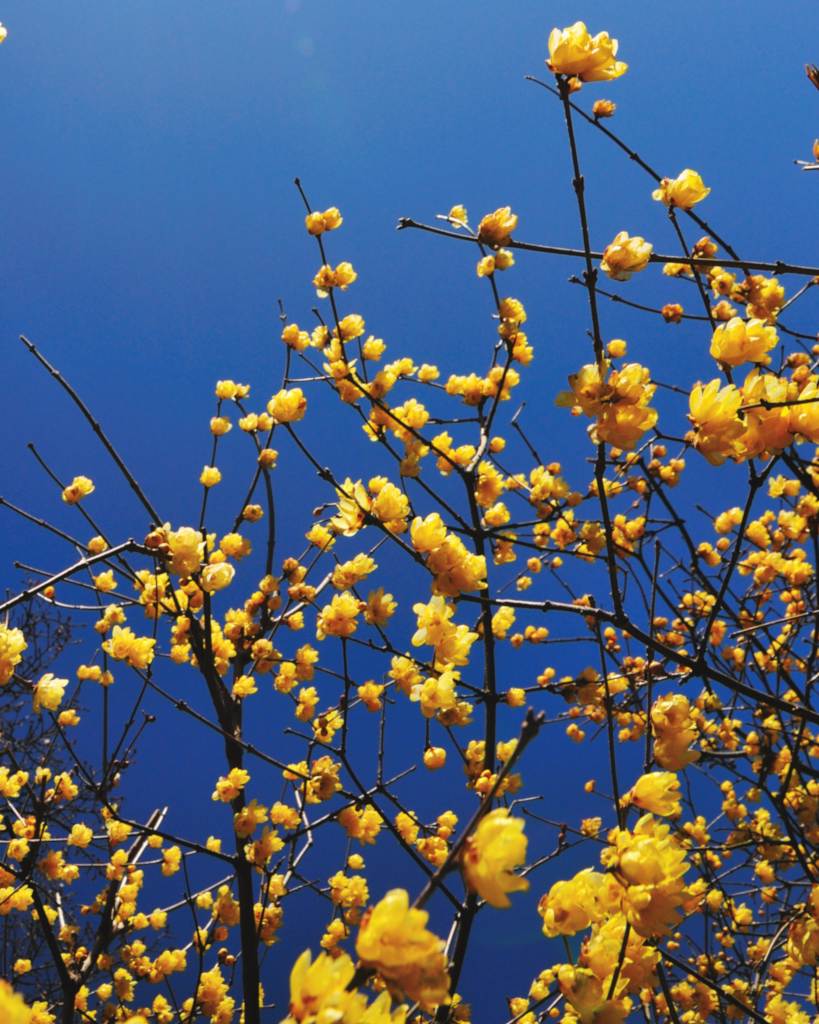
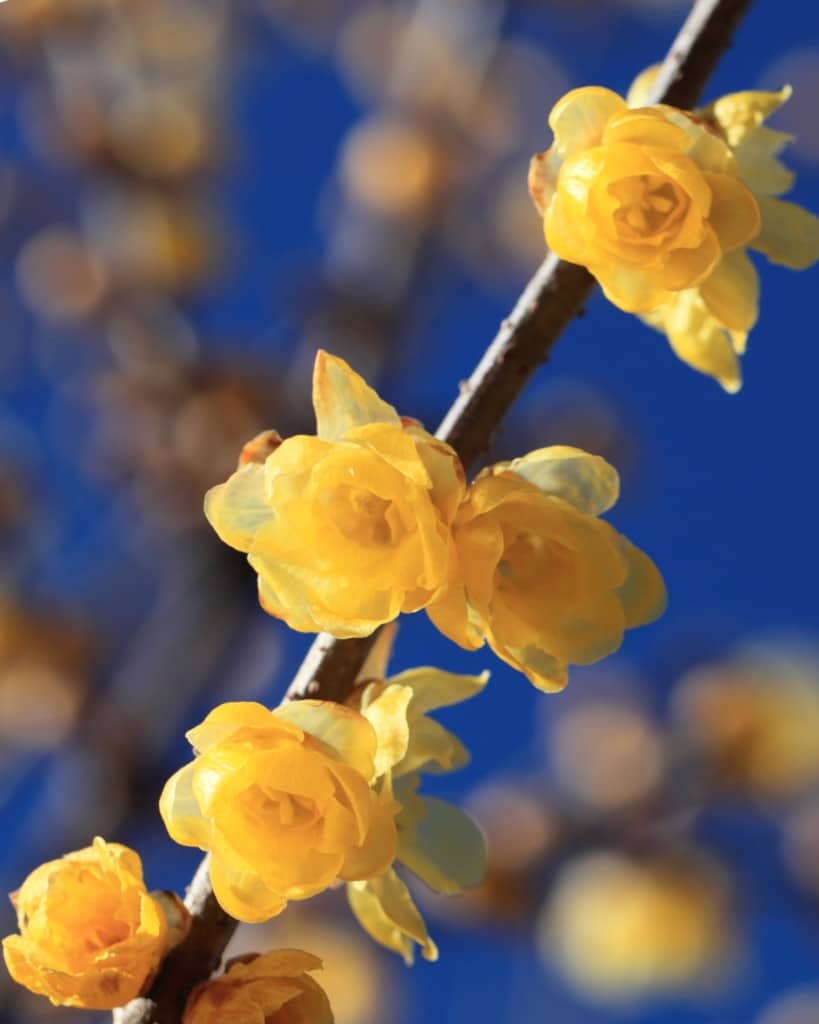
Bare stems hung with fragrant, luminous tepals that brighten the coldest days: wintersweet (Chimonanthus praecox) is a shrub prized above all for its winter blooming and delicate fragrance. Give it a spot in light sun without scorching heat, sheltered from wind, and it repays you with the most abundant flowering.
Chimonanthus at a glance
Name
Chimonanthus praecox
Family
Calycanthaceae
Type
shrub
Height
10 to 16 feet (3 to 5 meters)
Exposure
full sun
Soil
ordinary
Foliage
deciduous or evergreen
Flowering
January to March
Planting, pruning and care are all good practices to increase the growth of your Chimonanthus.
Planting Chimonanthus
It’s all the same whether this shrub is planted in spring or fall.
It is indifferent to the type of soil.
Most important is to identify a spot that is in light sun without any scorching heat to produce the most abundant blooming.
Mulch will keep your Chimonanthus from stressing out in summer. The growing of Chimonanthus is easy and it will relish being planted in light shade.
Site chimonanthus beside a path, doorway or window you use in winter, so its powerful perfume and small, easily overlooked flowers are enjoyed close up at a season when little else is blooming.
Chimonanthus tolerates a wide range of soils, including chalk and clay, provided they are well drained, but it dislikes ground that stays waterlogged, so add grit or plant on a slight mound where water sits after rain.
Water a newly planted chimonanthus during dry spells until it is well established, and keep the mulch pulled back a hand’s width from the trunk so the collar does not rot.
Pruning and caring for Chimonanthus
No pruning is formally required, all the more so because chimonanthus flowers on stems grown during the previous year.
Remove dead wood and broken branches as you notice them.
If you wish to reshape or reduce live branches somewhat, then wait for blooming to be over.
Good to know: Save Chimonathus twigs and prunings and dry them out. Tie them into small bundles and slide them in your linens.
Like cedar wood and lavender wands, they’ll keep bugs out and give cloth a pleasant scent.
Cut a few wintersweet stems while the buds are still tight and bring them indoors, where they open in the warmth and perfume a whole room for days.
Feed chimonanthus sparingly and keep nitrogen-rich lawn fertiliser away from it, since excess nitrogen encourages soft leafy shoots rather than the well-ripened previous season’s wood on which the following winter’s flower buds are borne.
Against a wall, tie the main stems of chimonanthus to horizontal wires and shorten the sideshoots once flowering ends, which builds short flowering spurs close to the framework.
Known varieties of chimonanthus
The most common variety found in gardens is usually Chimonanthus praecox, which looses its leaves in winter.
The following boast evergreen leafage:
Chimonanthus campanulatus,
Chimonanthus grammatus,
and Chimonanthus nitens.
Chimonanthus is native to China, and appeared in gardens in Europe and the Americas in the 1800s.
Among named forms of Chimonanthus praecox, Grandiflorus bears larger, deeper yellow flowers with strongly marked red-brown inner tepals, though its scent is often judged weaker than that of the plain species.
The cultivar Chimonanthus praecox Luteus is worth seeking out for flowers of a clear waxy yellow throughout, lacking the purple-brown staining in the centre of the ordinary species, and it usually opens a little later.
Wintersweet raised from seed can take many years to produce its first flowers, so buy a grafted or layered plant of a named cultivar if you want blooms while the shrub is still young.
Which chimonanthus to choose?
The species grown in gardens differ mainly in whether they hold their leaves through the winter. Here is how the ones named in this article compare.
Which chimonanthus to choose?
Species
Foliage
Presence in gardens
Chimonanthus praecox
Deciduous – loses its leaves in winter
The most common variety found in gardens
Chimonanthus campanulatus
Evergreen leafage
Less common alternative to praecox
Chimonanthus grammatus
Evergreen leafage
Less common alternative to praecox
Chimonanthus nitens
Evergreen leafage
Less common alternative to praecox
Whichever you choose, the winter blooming and its fragrance remain the main attraction.
Learn more about chimonanthus
Blooming starts in January and lasts until fair days
This shrub, pronounced “KEE-moh-NAN-tus” will offer you a magnificent blooming as early as January. It will last until fair days arrive.
Both fragrant and luminous, its flowers will appeal to you and bring you joy, a far cry from the winter cold.
Chimonanthus is a very ornamental shrub, very much appreciated for its winter blooming and delicate fragrance.
It only requires little care, at most just a bit of water in case of high temperatures.