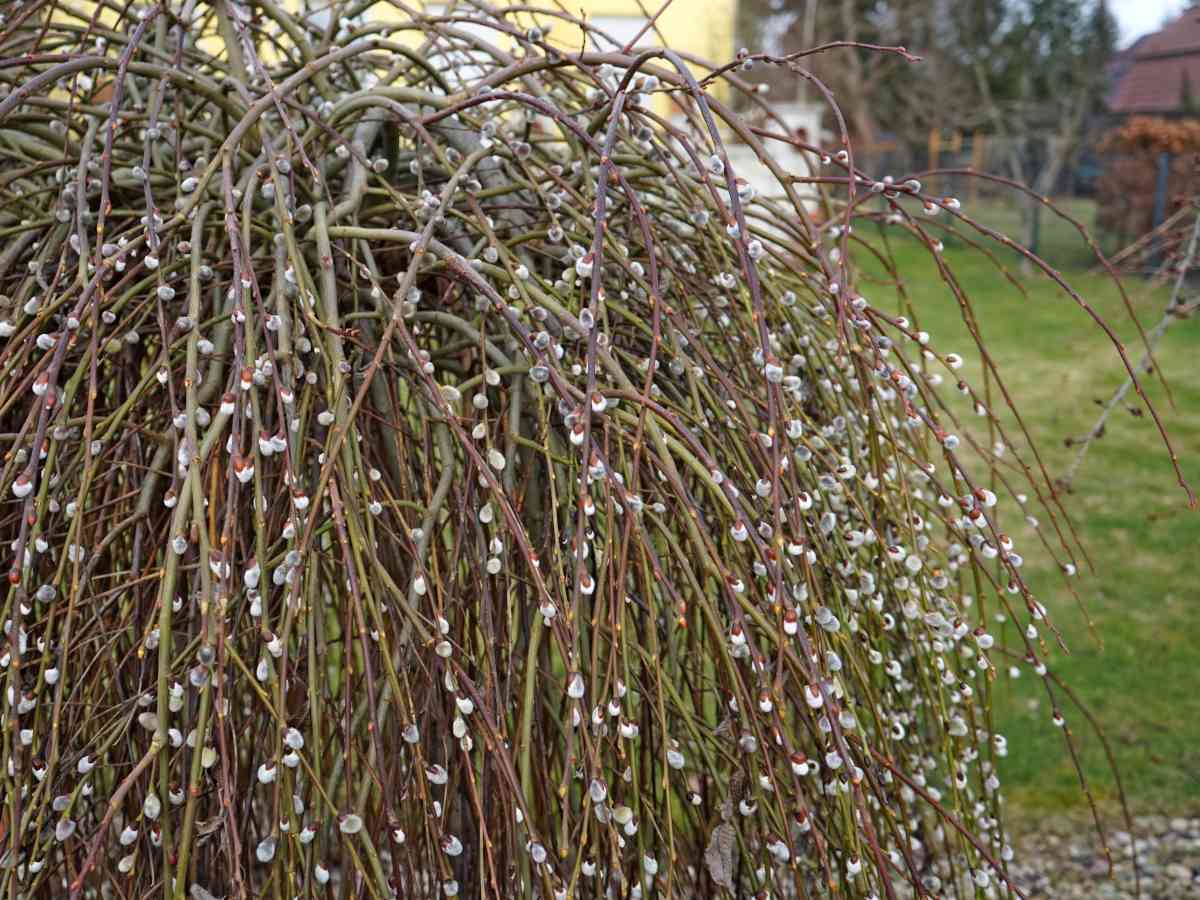
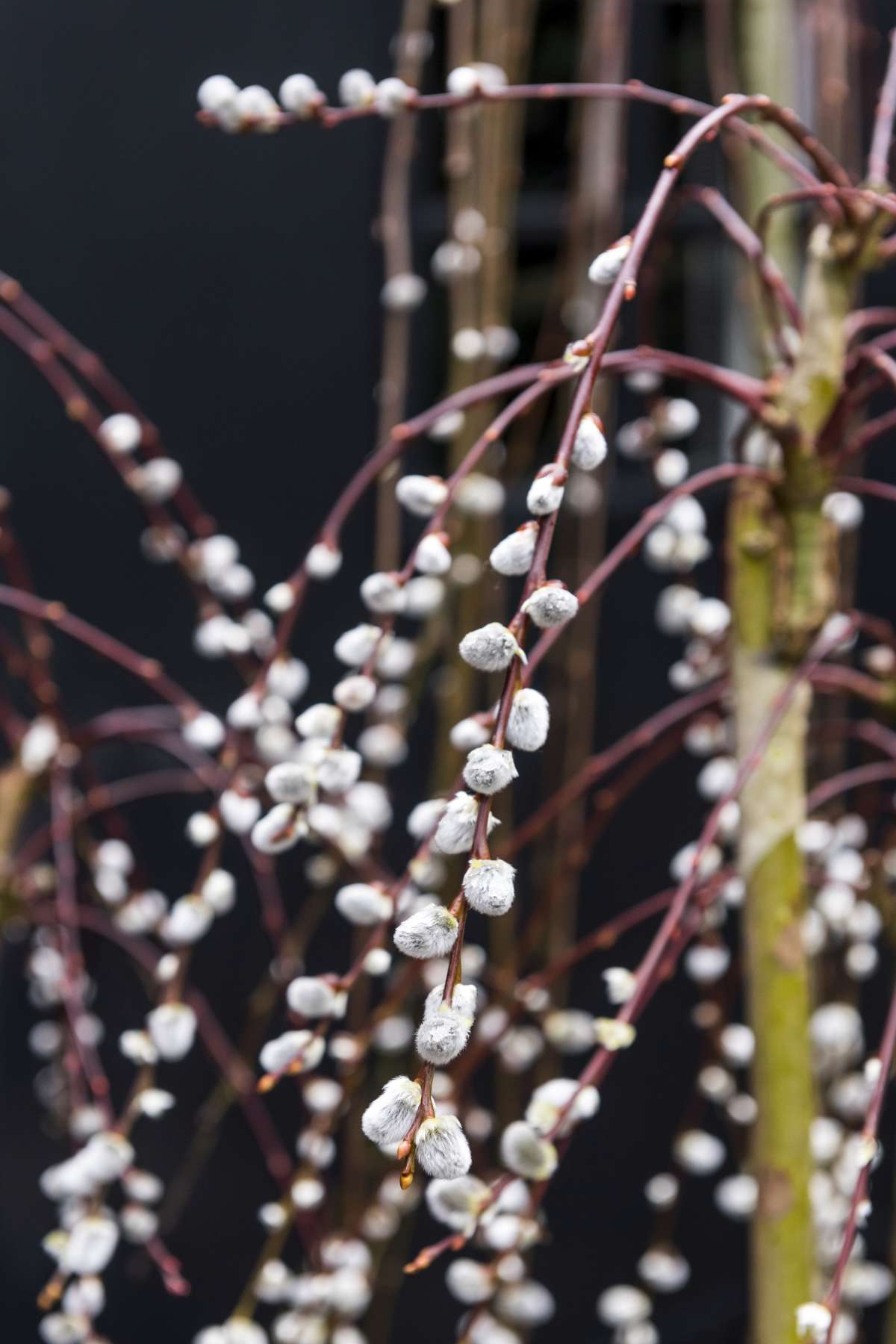
You are certainly familiar with its branches that are covered with velvety catkins in spring… With its tight-bound shape, the ‘Kilmarnock’ goat willow (Salix caprea) is perfect for small gardens and balconies.
The weeping variety of the goat willow species, bred in England in the XIXth century, Salix caprea ‘Kilmarnock’ (previously called ‘Pendula’) is a tree shaped like a short parasol that is particularly ornamental.
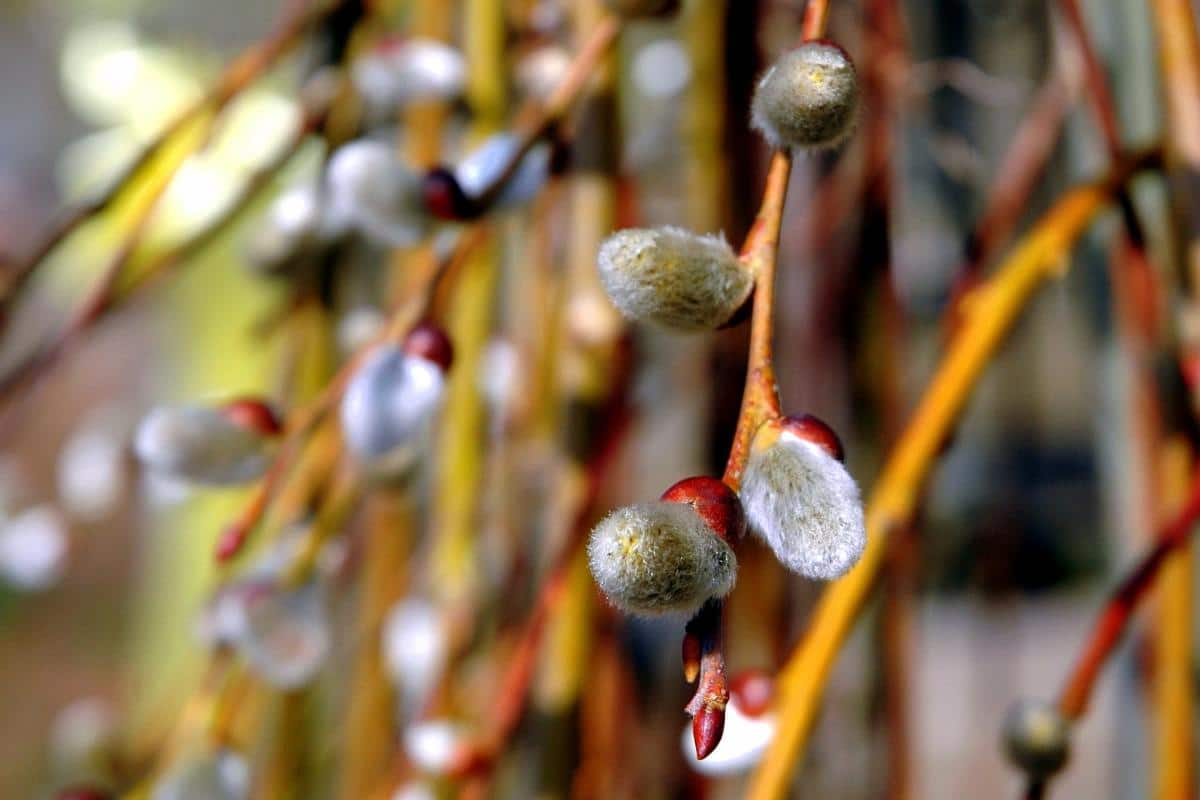
At the end of winter, its naked branches bear silver white pompoms that open up in spring to reveal golden stamen bouquets. In fall, its long leaves turn to beautiful copper hues.
Thanks to its tight-bound shape and its compact size (its trunk can’t grow any higher than 10 feet (3 meters) tall), this little willow is the perfect choice to add a touch of originality in smaller gardens and in beds, too.

Less vulnerable to diseases than its tall weeping willow cousins, ‘Kilmarnock’ tolerates any type of soil as long as it is very moist. It will be perfectly happy near a body of water, although not having any nearby isn’t a problem.
Set it up preferably in spring, in the sun and sheltered from strong wind. Remember to stake it for the first two years, because its roots don’t run very deep. After that, remove the stake. Pair it with tall grasses to play on textures, and with early spring bulbs to highlight its spring catkins.
In garden boxes, plant it in a mix of clay soil and soil mix (one part each). Remember to water it regularly.
The interest of this little willow shifts from one season to the next, and so does the work it asks of you. This table gathers what the article says happens at each point of the year.
| Period | What the tree does | What to do |
|---|---|---|
| End of winter | Naked branches carry silver-white pompoms | Nothing — simply enjoy the display |
| Spring | Catkins open to reveal golden stamen bouquets | Plant out in sun, sheltered from strong wind |
| Spring, after flowering | New shoots start from the previous year’s wood | Cut branches back to 2 inches (5 cm) and apply pruning paste |
| mid-spring to early autumn | Active growth, especially in containers | Feed with tomato or strawberry plant fertiliser |
| Autumn | Long leaves turn to copper hues | Optional preventive spray of Bordeaux mixture |
The two fixed points are the spring prune and steady moisture; everything else is a bonus.
It is quite easy.
If you’re growing it in garden boxes, add tomato or strawberry plant fertilizer from mid-spring to early autumn.
Laure Hamann
When it’s well cared for, branches tend to grow all the way to the ground. If you find this messy, snip them about 6 inches (15 cm) above ground level when this happens with a secateur or sturdy scissors. That way the tree can keep swaying freely. After the blooming in Spring, though, cut all the branches back to the top to get a new set of branches for the year after.