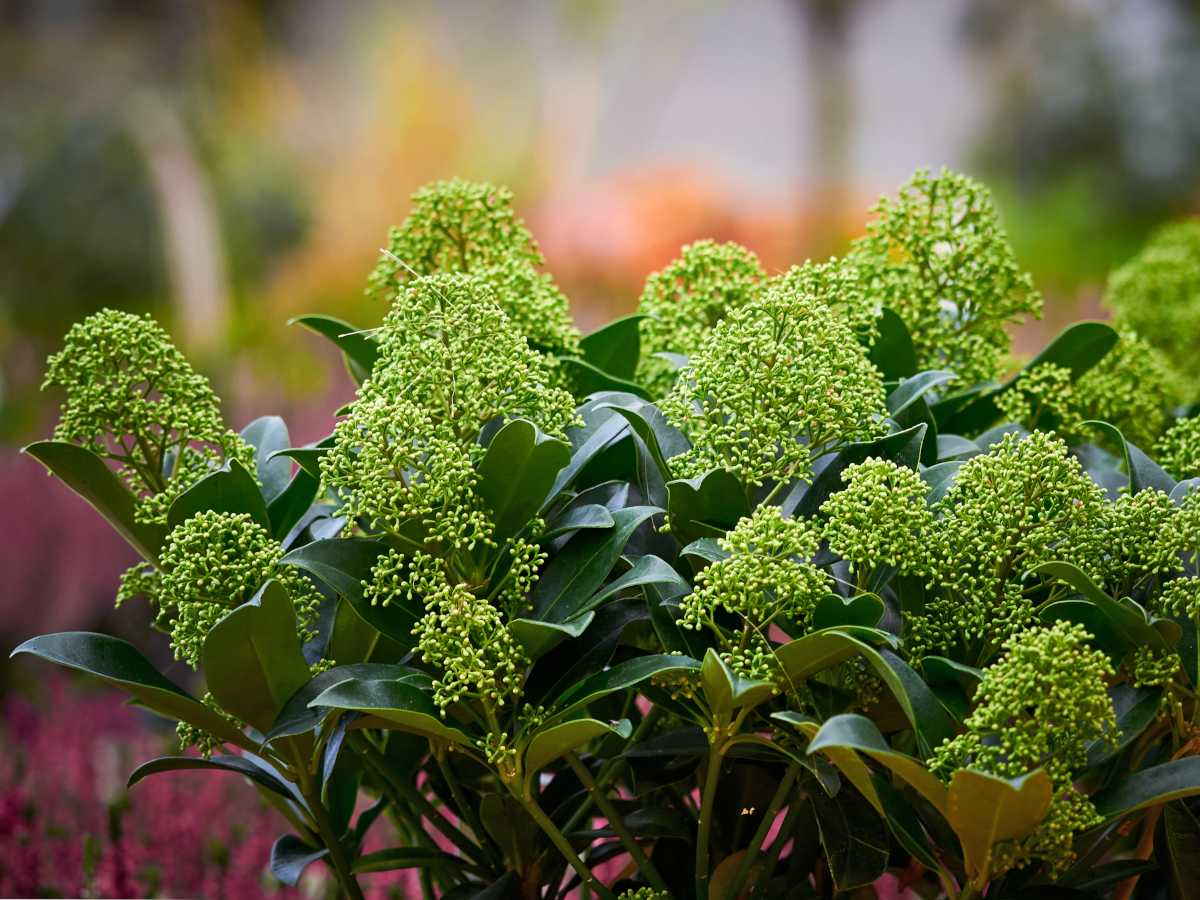
Spring brings clusters of flowers scented like orange blossom, followed by red berries that stay on the branches all winter above evergreen leaves that release their own perfume when rubbed. Skimmia (Skimmia japonica) is a slow-growing shrub for pots, terraces and heath beds; give it acidic, well-drained soil and midday shade, and it stays colourful year round.
| Name | Skimmia japonica |
|---|---|
| Family | Rutaceae (Rue family) |
| Type | shrub |
| Height | 40 inches (1 m) |
| Exposure | full sun, part sun |
| Soil | heath soil |
| Foliage | evergreen |
| Flowering | mid-spring → early summer |
Caring for them, from planting to pruning, here are the practices that will help you grow beautiful Skimmia.
Skimmia is best planted in fall, but it is still perfectly possible to plant it in spring.
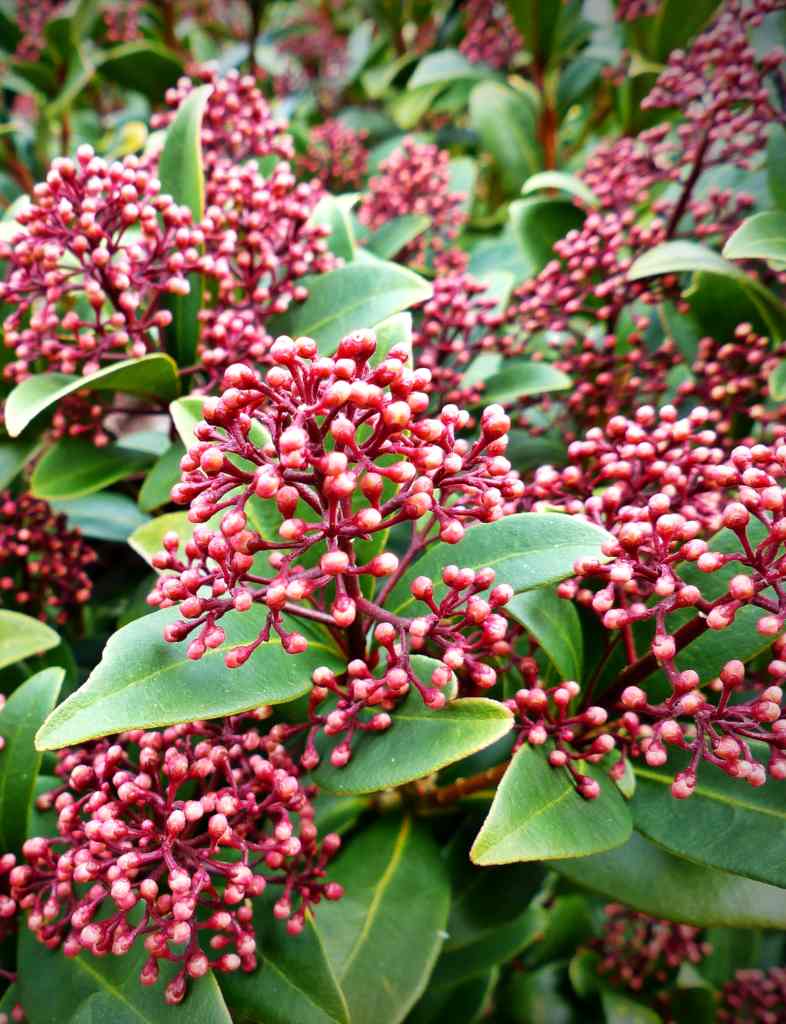
Know that Skimmia particularly appreciate acidic soil and will love heath soil.
This shrub is perfectly suited to being grown in pots for your terraces and balconies. It is also fine for heath soil shrub beds or as a stand-alone.
Be careful! To produce red berries in the winter, you must have both a female and a male plant.
Making Skimmia japonica cuttings is the easiest and fastest technique to propagate the plant.
Skimmia plants don’t require any particular care or maintenance.
Water regularly during extended dry spells, especially potted Skimmia.
Skimmia asks for very little, but the few jobs it does need each have their moment. Here is the whole cycle at a glance.
| Task | When | What to do |
|---|---|---|
| Planting | Fall, or spring | Autumn is best, but spring planting works perfectly well too |
| Taking cuttings | End of summer | Use soft-wood growth that has not hardened yet |
| Pruning | Once flowering is over | Only to balance the shape or reduce the size; not essential |
| Removing dead wood | All year, as needed | Take out weak or broken branches regularly |
| Watering | Extended dry spells | Water regularly, and keep a closer eye on potted plants |
Apart from these few moments, skimmia simply gets on with growing.
Because skimmias are male or female, the variety you pick decides whether you get berries, scent or simply handsome foliage. The table below sets out the forms you are most likely to find on a garden centre bench, so you can pair a fruiting female with a suitable male pollinator.
| Variety | Sex | Buds and flowers | Berries | Habit and foliage |
|---|---|---|---|---|
| Rubella | Male | Dark red buds, white flowers | None | Compact, rounded; dark green leaves |
| Nymans | Female | White, lightly scented | Abundant bright red | Compact; narrow leaves |
| Bowles’ Dwarf | Male and female forms sold | White, scented | Red on female form | Dwarf, under 1 m; pots and edging |
| Kew Green | Male | Greenish-white, fragrant | None | Low, dome-shaped |
| Veitchii | Female | White | Large red clusters | Vigorous, broad; leathery leaves |
| Fructu Albo | Female | White | Ivory-white | Compact; for a paler winter scheme |
Learn more about Skimmia japonica
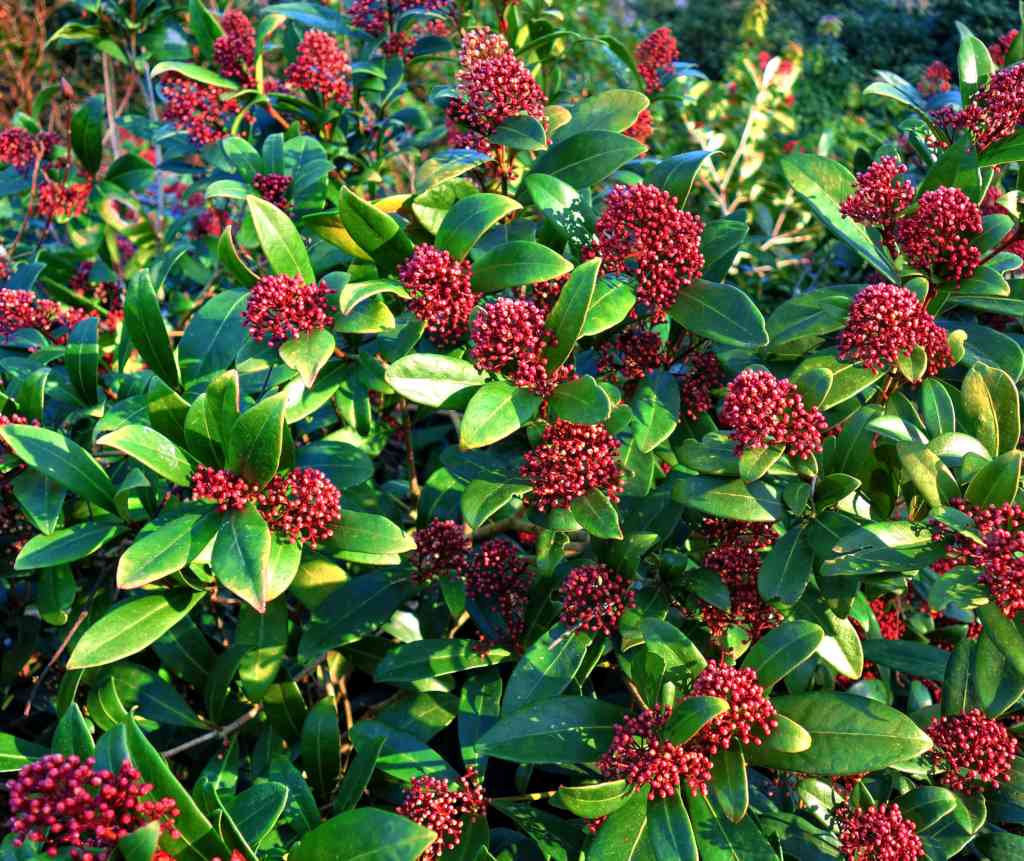
This slow-growing round-shaped shrub bears beautiful spring blooms that are particularly fragrant and reminisce of orange flowers.
But it is mostly known for its berries that are produced in fall and stay on the shrub all winter long.
Indeed, the blooming is followed by cute red fruits that keep Skimmia brightly colored from spring to winter.
Additionally, the fragrant evergreen leafage will let you appreciate it even more on your terrace or balcony.
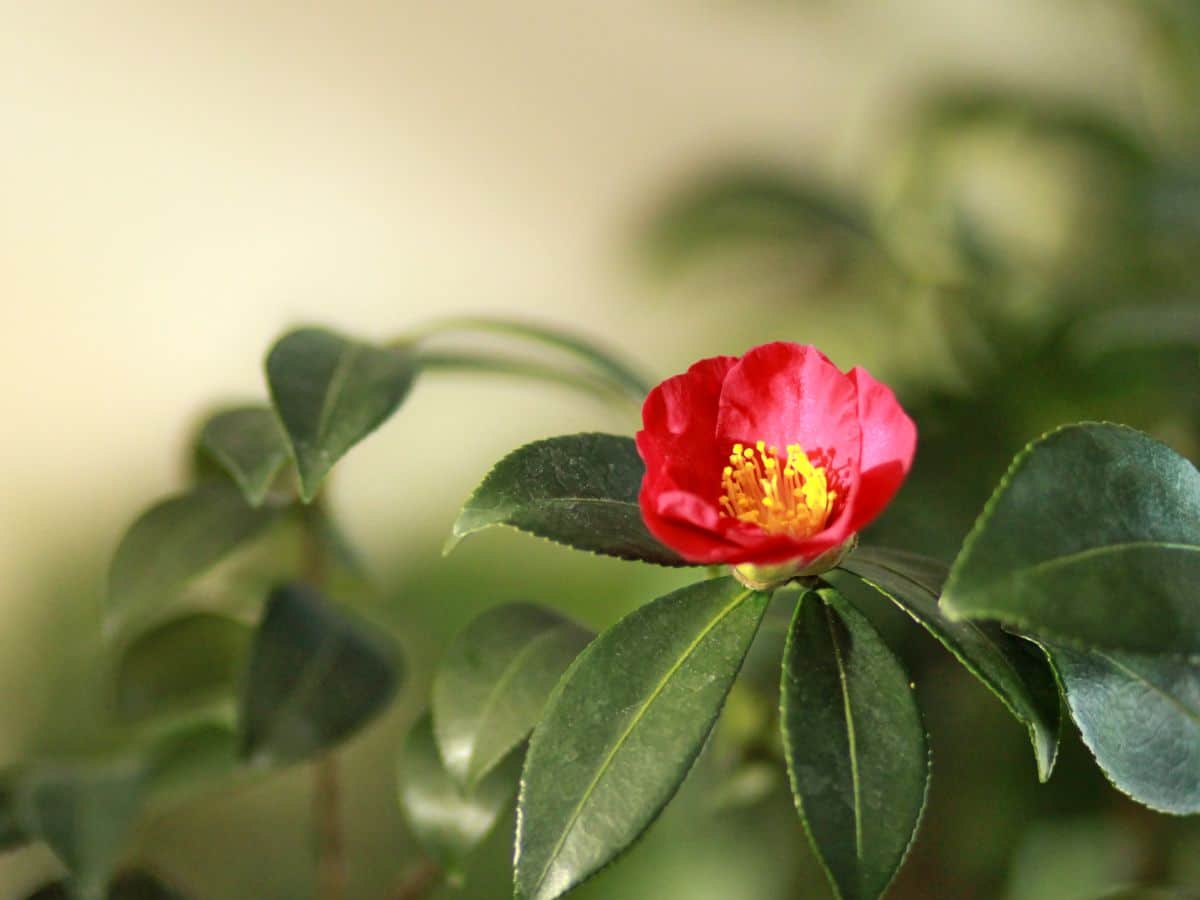
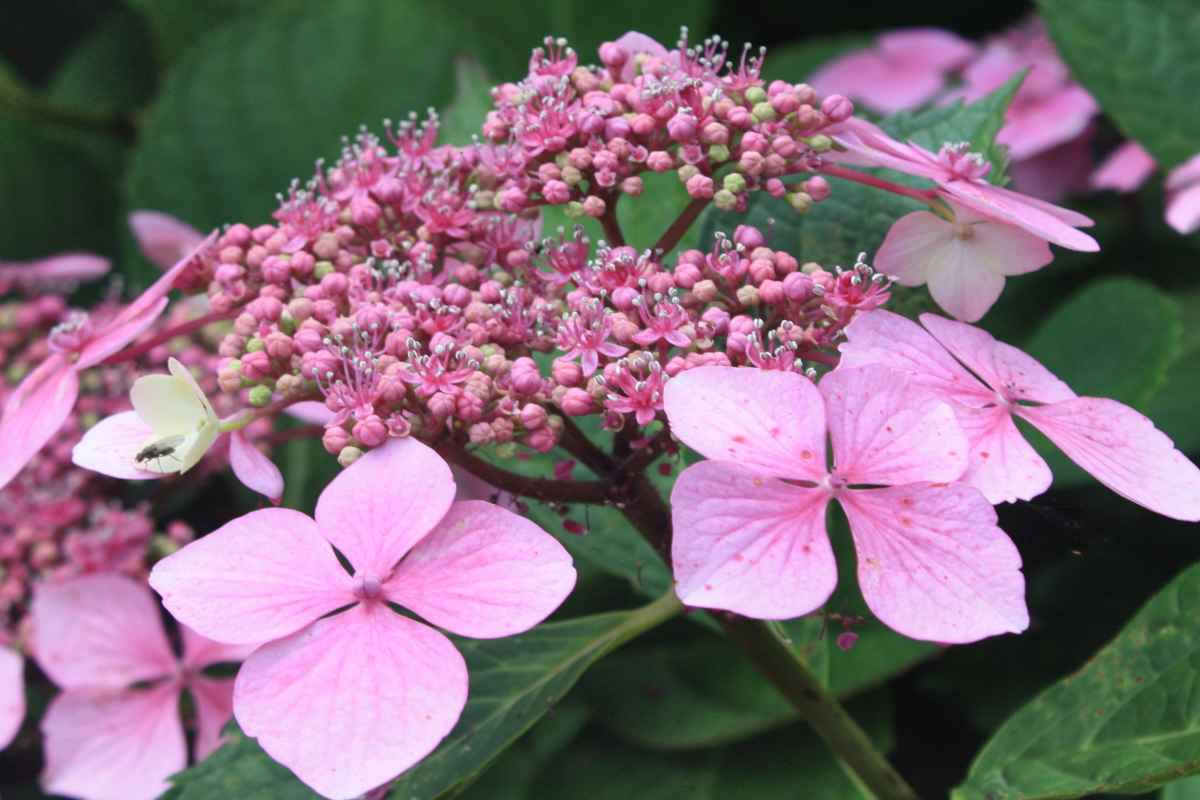
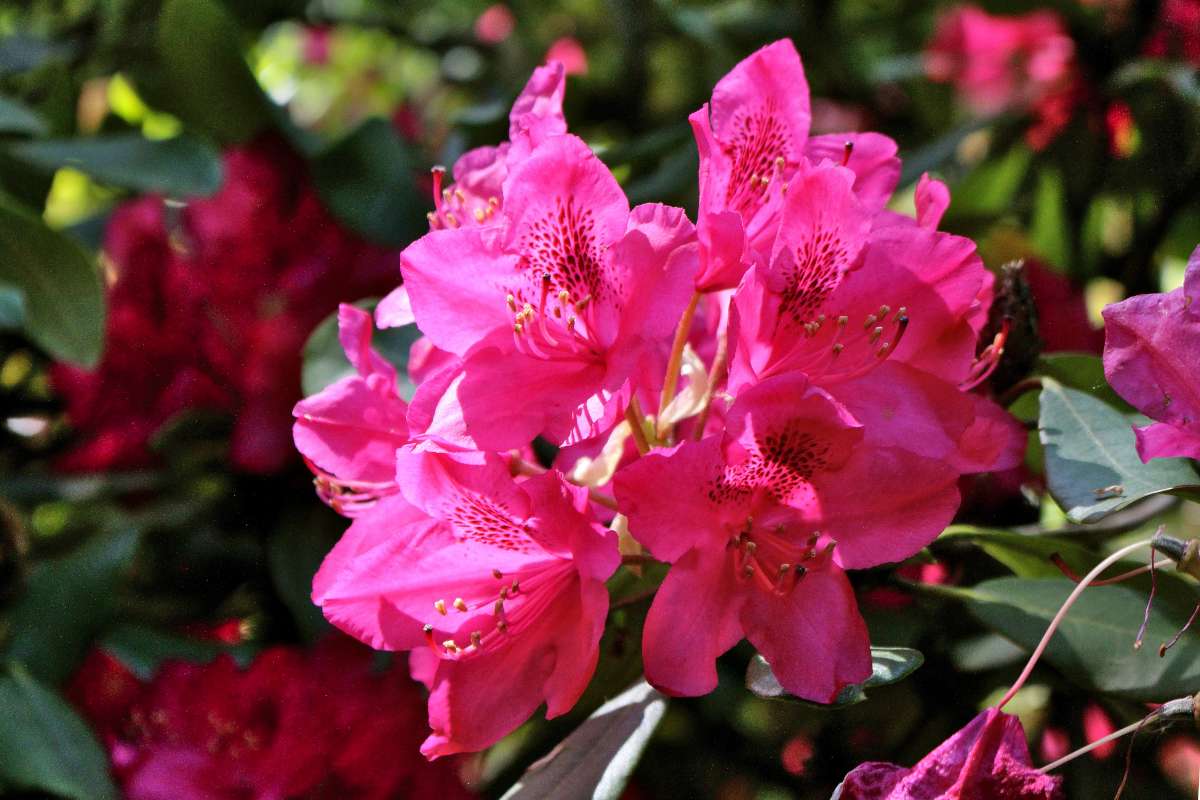
Skimmia does great together with other heath plants such as hydrangea, camellia, azalea, heather and rhododendron.
Avoid planting them in flood-prone areas because they like well-drained soil.