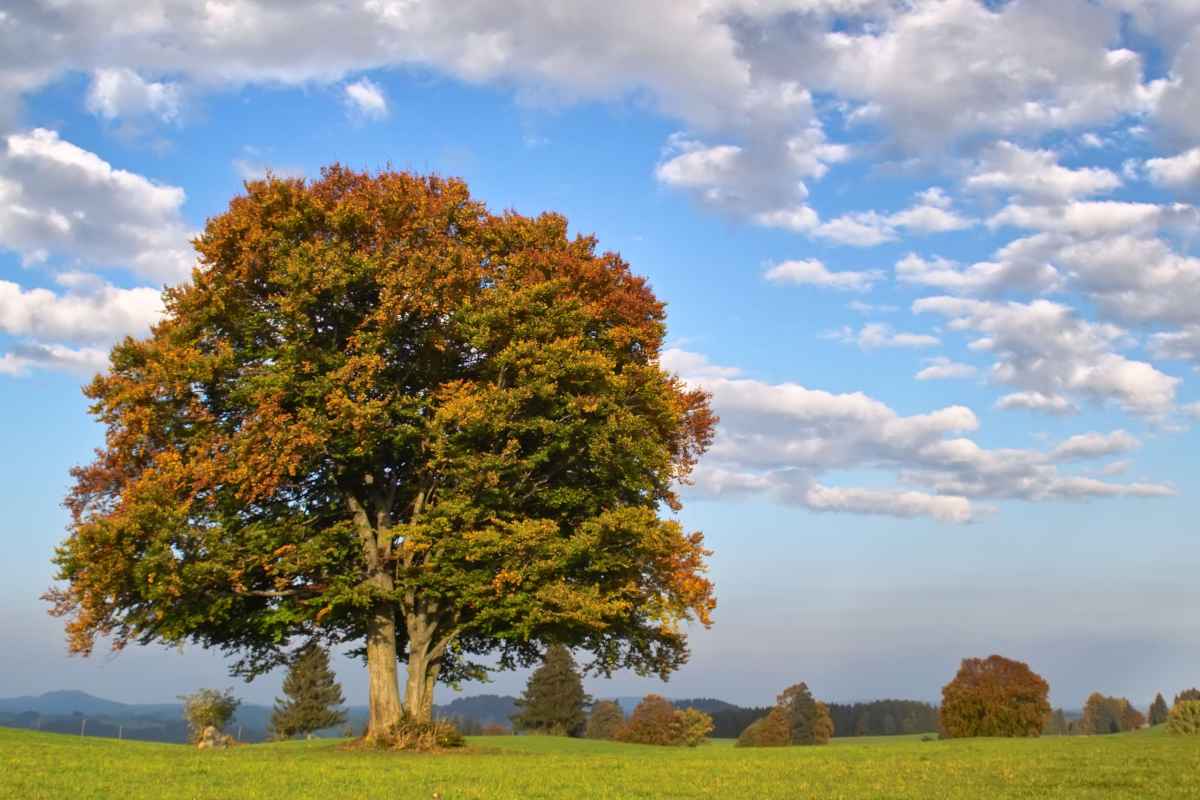
Young beech leaves unfurl a shy orange that softens to green, turn deep yellow and orange-brown in autumn, then cling to the branches all winter, dried and wilted. Common beech (Fagus sylvatica) makes a majestic specimen for a large garden or a tightly trimmed hedge; give it well-drained soil and it grows fast and proves very hardy.
Fagus sylvatica key facts:
| Botanical name | Fagus sylvatica |
|---|---|
| Common names | common beech |
| Family | Fagaceae |
| Type | Tree |
| Foliage | deciduous and marcescent |
| Bearing | round |
| Height | up to 75 feet (25 meters) |
| Breadth | up to 60 feet (20 m) |
| Exposure | full sun to part sun |
| Soil | any type, well drained |
| Hardiness | very hardy |
| Growth | fast |
| Flowers | late spring (small) |
As seasons roll in and out, the fabulous size of its crown, the vast diversity of its shapes, and the many appealing charms it offers make Fagus sylvatica a favorite.
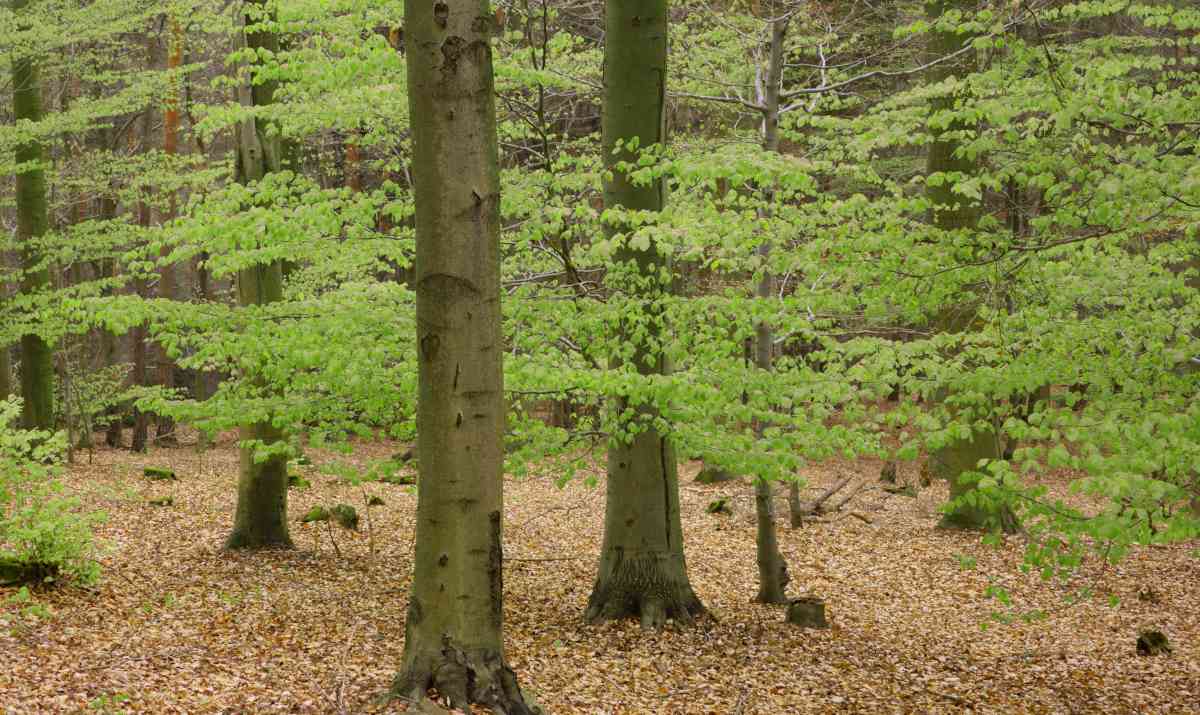
Common beech is, together with the oak tree, hornbeam and elm, one of the most common trees in European forests. Thanks to its size and majestic bearing, it clearly represents one of the most elegant trees of all.
Whatever the time of year, Fagus sylvatica contributes to the beauty of every garden:
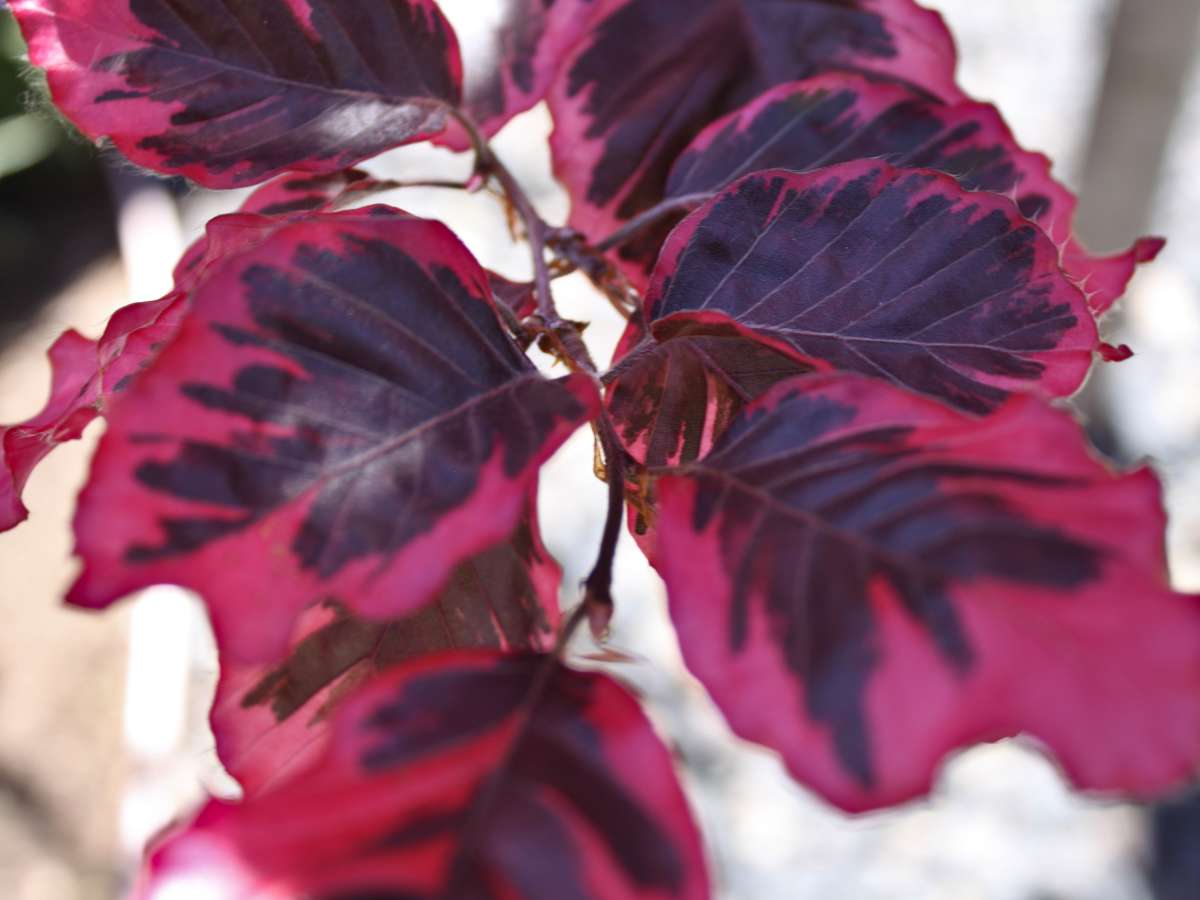
Another advantage of common beech is the great many varieties with different bearings and colors: ‘Pendula’, ‘Purpurea’, ‘Pupurea pendula’, ‘Dawyck Gold’, ‘Fastigiata’, etc.
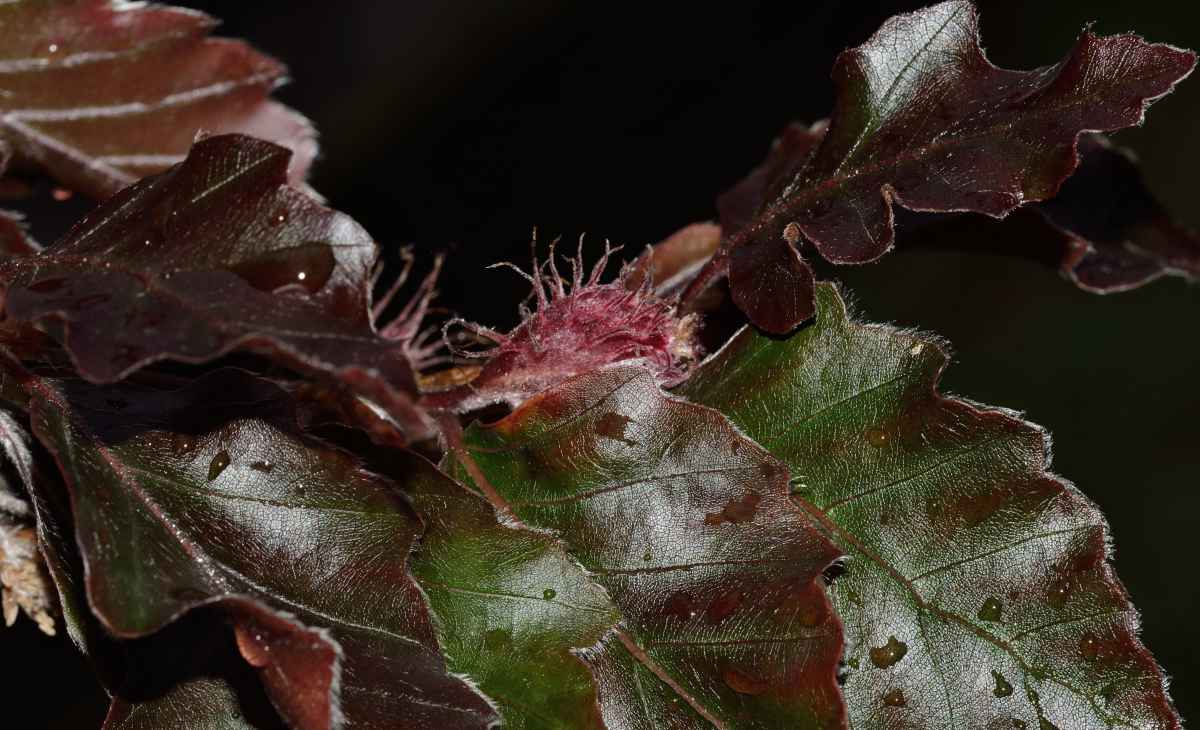
Good to know for forest lovers: the leaves of the beech tree are often confused with those of hornbeam. Luckily, there is a clear difference between the two if you look closely: beech leaves have tiny, wispy strands along the edges, while those of hornbeam are slightly serrated.
Common beech earns its place in a garden all year round, and each season brings a different reason to plant it. Here is what the tree offers as the year turns.
| Season | Leaves | Flowers and fruit |
|---|---|---|
| Early to late spring | Young leaves open a shy orange that slowly turns soft green | Flowers appear in late spring, so small they are hardly worth looking for |
| Early to late summer | Smooth leafage with a soft fuzzy fringe, an ever stronger green | None |
| Early to late autumn | Deep yellow to orange-brown across all leaves | The first beechnuts appear |
| Early winter to late winter | Marcescent: dried, wilted leaves stay on the tree | None |
The marcescent winter foliage is exactly what makes beech such a good screening hedge.
Not a difficult tree to satisfy regarding its growth environment, the only requirement of Fagus sylvatica is to be planted in well drained soil to avoid any risk of roots wallowing in water. Apart from this constraint, it can grow in nearly all types of soil, with a rather sunny exposure.
→ Note: when young, Fagus saplings are vulnerable to too much sun. Ideal for them is to grow under other trees like birch which are then cut away when the beech tree is already 5-7 years old.
Favor the beginning of fall to plant your beech. It can thus make use of the entire winter and subsequent spring to settle in and create a root system that will help it cope with lack of water.
Upon purchase, your beech sapling is in either of two forms: in a container or bare-root. This difference in packaging will change how you plant it:
Apart from these two specific difference, planting Fagus sylvatica is pretty straightforward. Just dig a hole that is large and deep enough, add clay pebbles or gravel to increase drainage, and soil mix or very ripe compost to help the tree grow better. Backfill the hole, pressing the soil down as you go, and water abundantly.
If your tree is trained like a lollipop, help this top-heavy sapling stay upright with a stake.
Lastly, when planting it as part of a hedge, each specimen must be about 1 foot from the next (30 cm).
To ensure your tree settles in well, diligently water during the first few years after planting, especially during dry spells.
If you’ve created a hedge with your Fagus sylvatica, prune it once or twice a year, in summer. Note, however, that there are regulations regarding hedge trimming. Indeed, in order to protect birds and animals, it’s illegal to trim or prune hedges and trees from April to July included (dates vary depending on where you live, check for regulations).
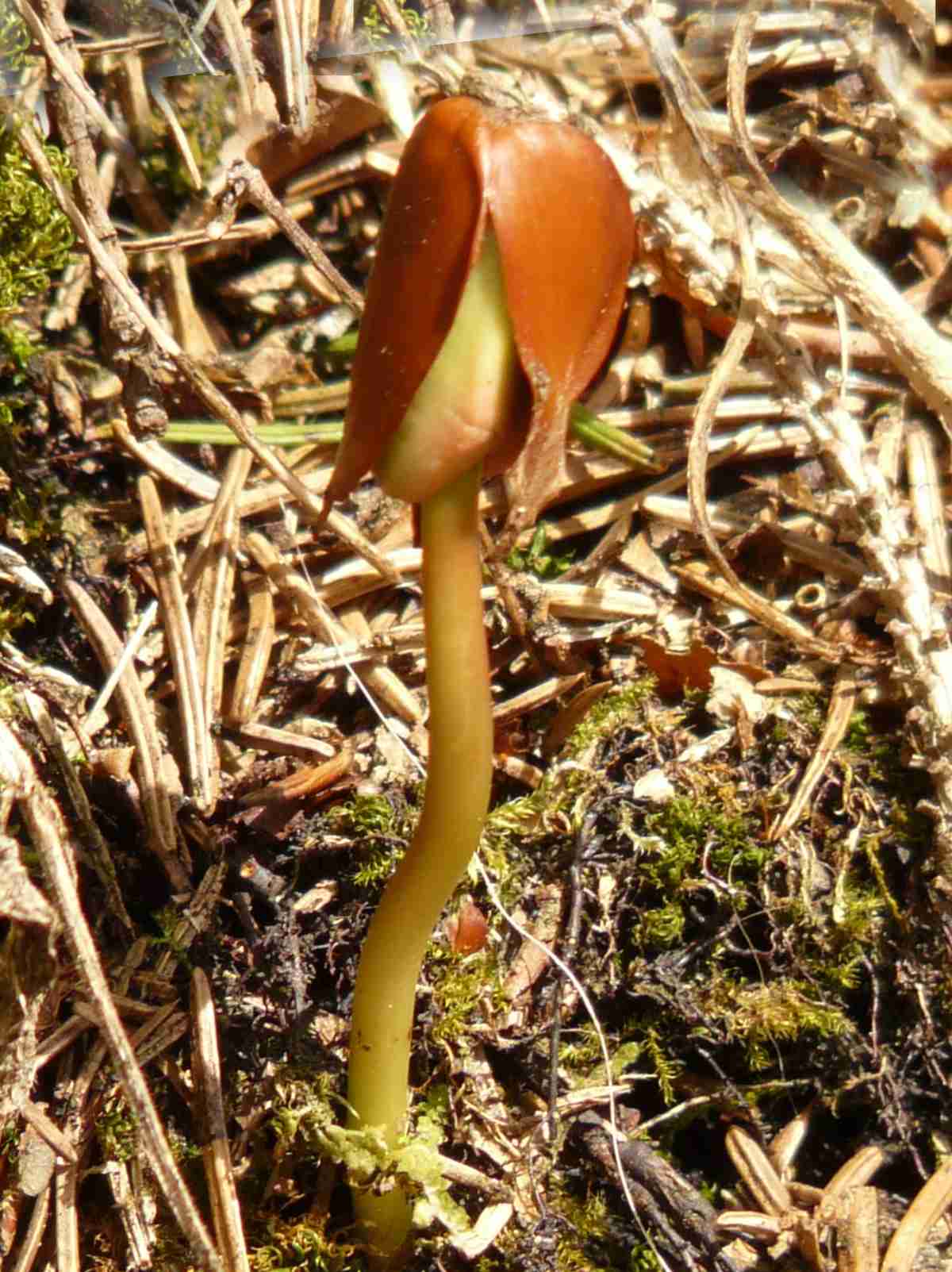
The best technique to propagate a specific specimen of Fagus is to proceed through sowing of its beechnuts in fall.
Interestingly, fruiting cycles are not at all the same from year to year. Indeed, usually, massive blooming and fruiting occur every 4-7 years. In between these peak years, you might get a few beechnuts but not a lot.
This is the result of evolution: irregular fruiting helps control natural predators like wild boar.
Fagus sylvatica is occasionally vulnerable to canker, especially adult specimens (following the pruning of a particularly large branch, for instance).
In hot and wet settings, mildew may also lead to issues.
As for pests and insects, above all others you’ll have to deal with aphids and scale insects.
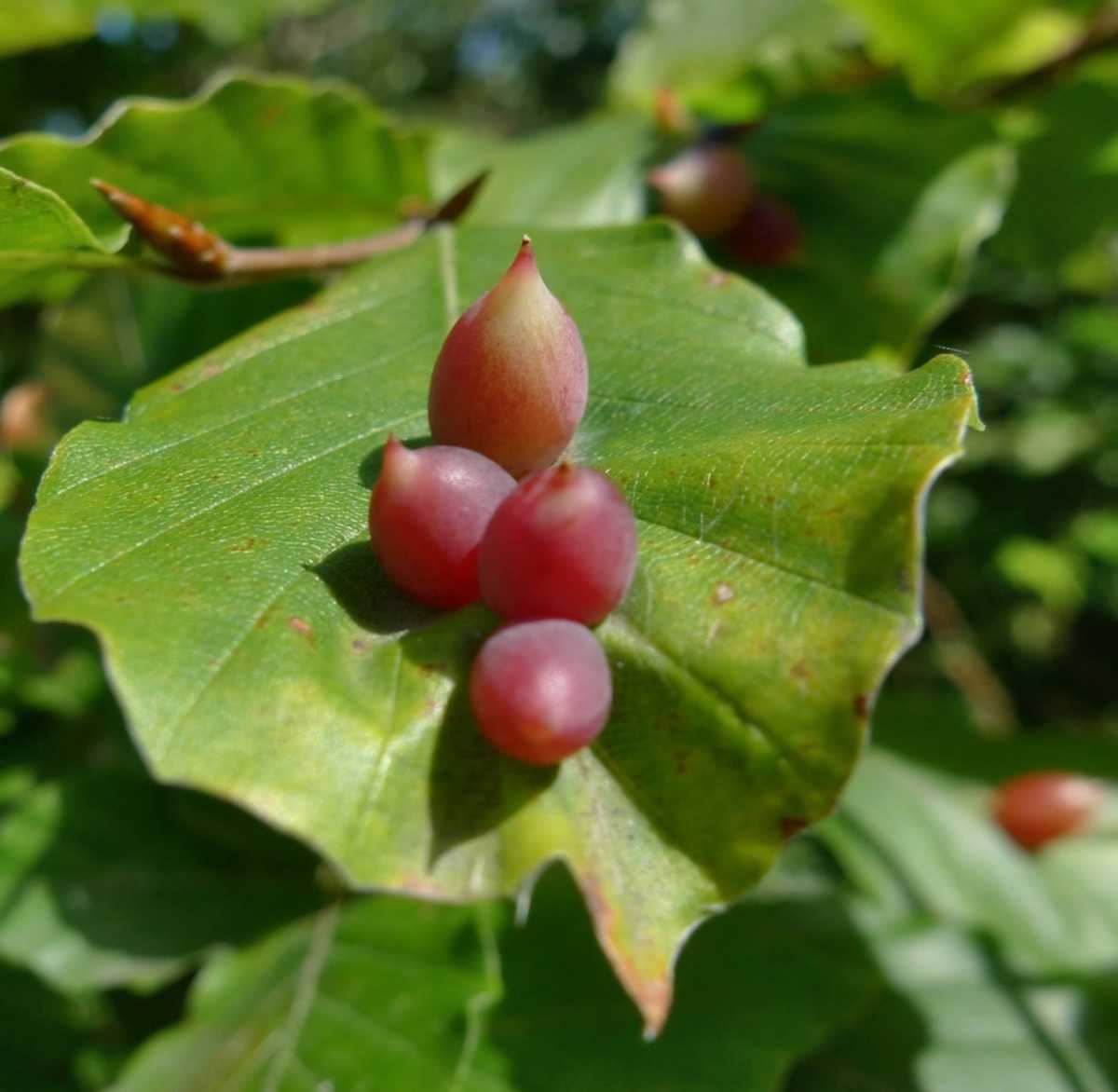
Another common fiend is Mikiola fagi, a small fly that attacks beech trees. This insect has a larva that produces a tiny, pointed gall on leaves, at first green and then red.
The massive size of common beech make it a preferred choice for landscaping large gardens and public parks. Nonetheless, since it copes very well with regular pruning, it also functions great when creating a trimmed hedge.
Beechnuts are edible once roasted and shelled, though raw ones taste bitter and upset the stomach if eaten in quantity.