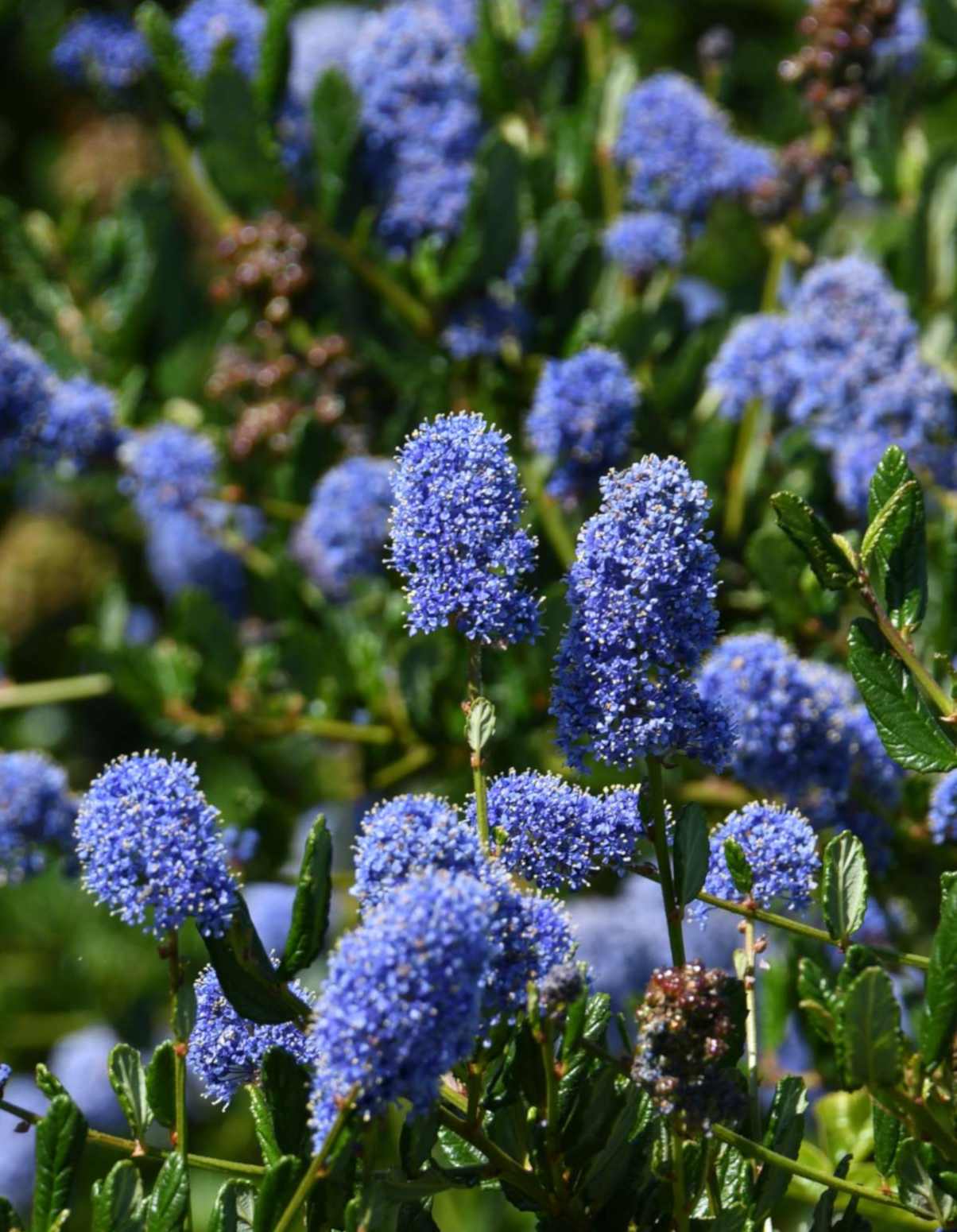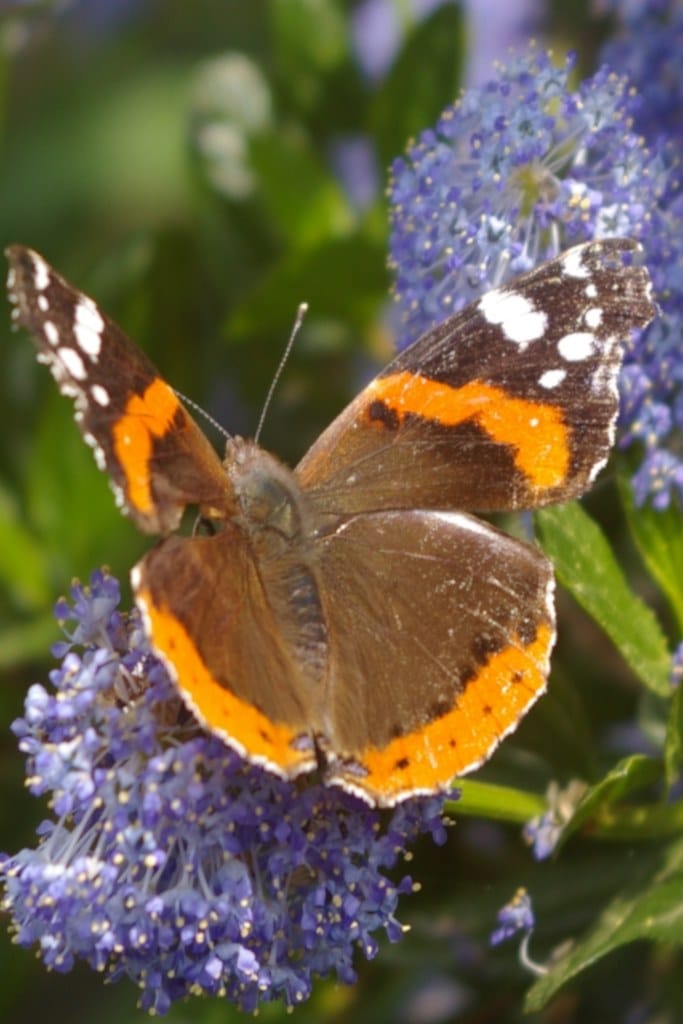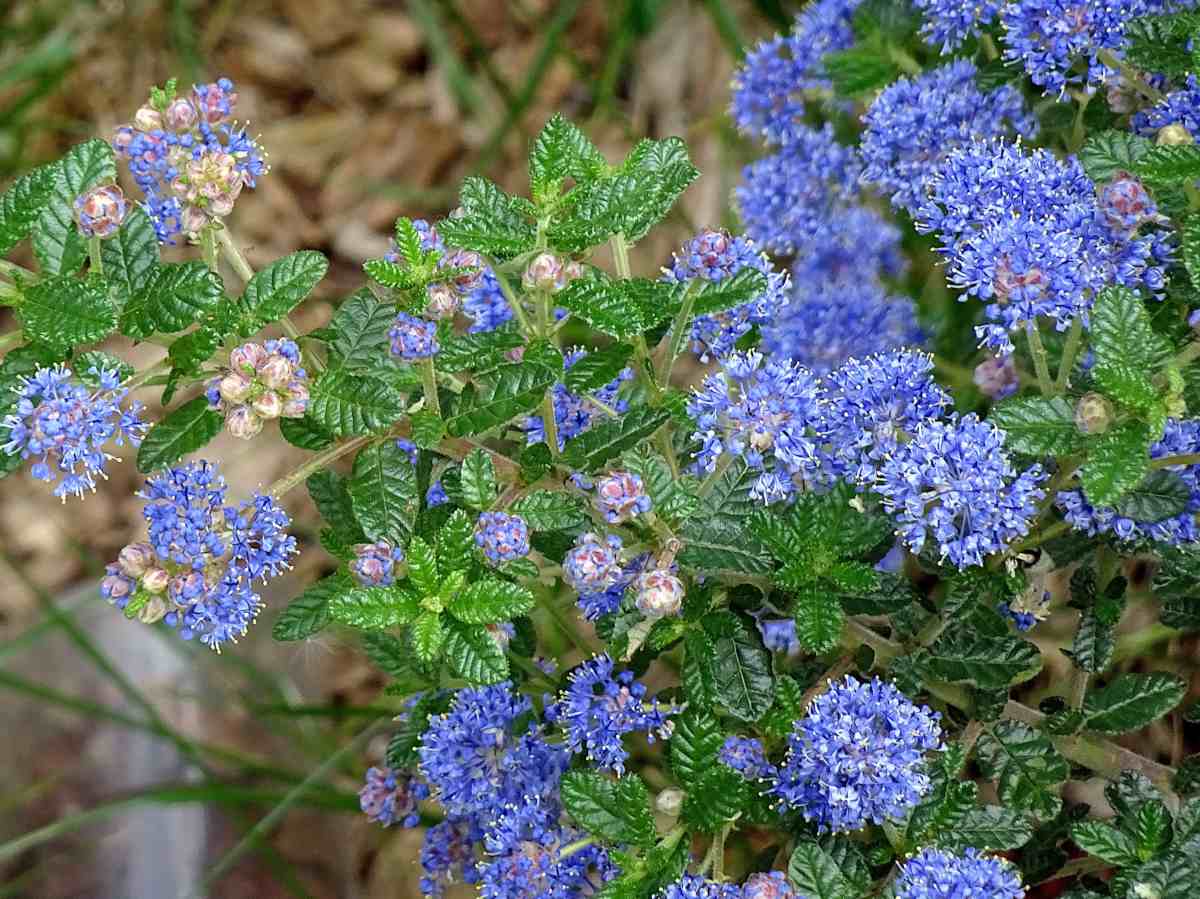
In spring the whole shrub disappears under panicles of blue, drawing bees and butterflies; other forms come in pink, white and shades of violet. Native to North America, California lilac (Ceanothus) is grown as a thick hedge, a standalone or in a shrub bed, and asks only sun and reasonable drainage to flower abundantly.
| Name | Ceanothus |
|---|---|
| Family | Rhamnaceae |
| Type | shrub |
| Exposure | full or part sun |
| Soil | any type is suitable |
| Flowering | March, April, May, or even summer for certain species |
| Foliage | evergreen |
| Height | from 6.5 to 16 feet (2 to 4m) |
Ceanothus doesn’t require much care, at most a little pruning to keep it under control since it grows easily and produces abundant flowers!
Full shade is too dark. Best plant your Ceanothus in a spot where it will get either full sun or part sun.
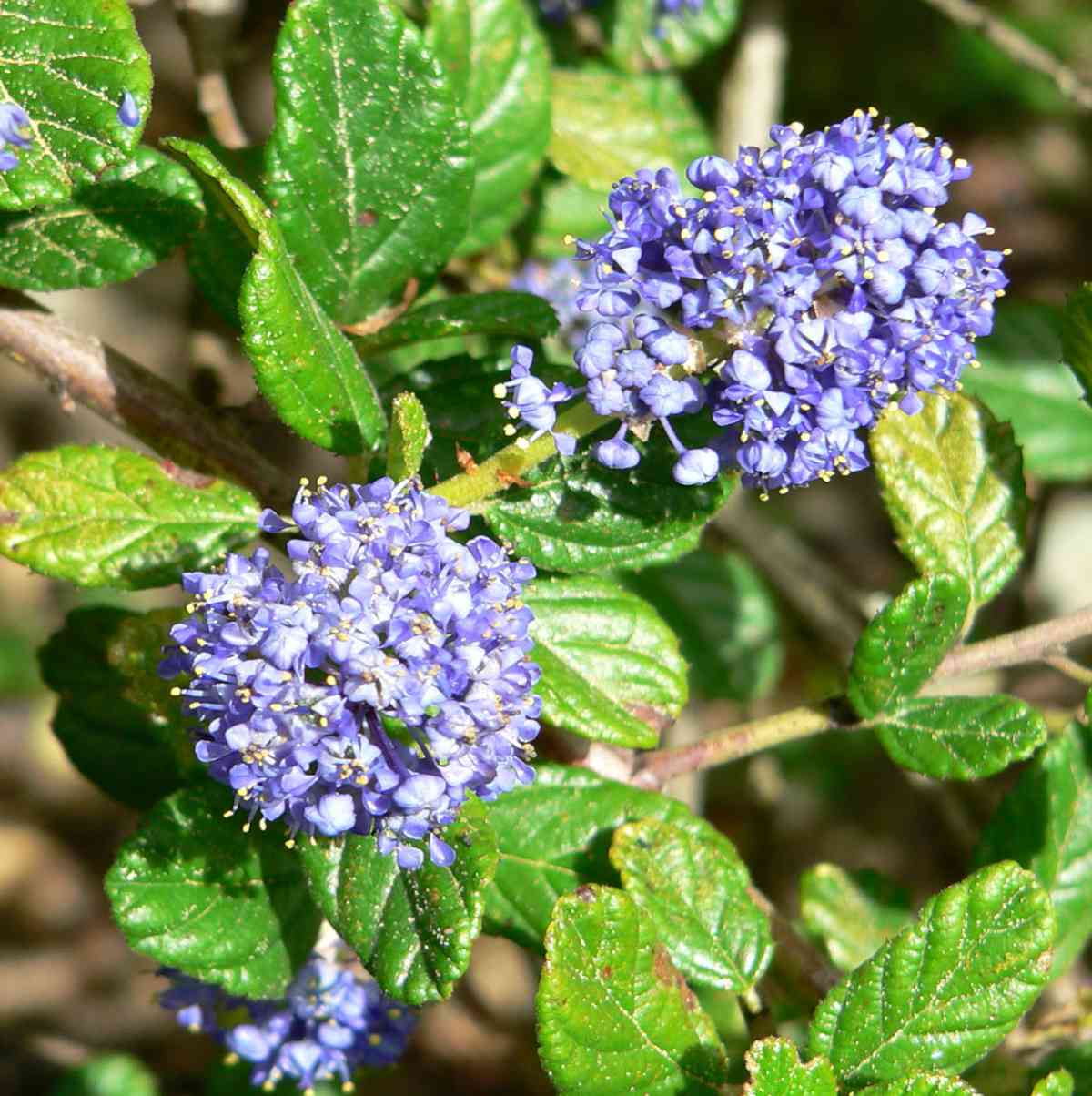
Spring and fall are the two best times of year for planting Ceanothus. Avoid heat waves or days of frost.
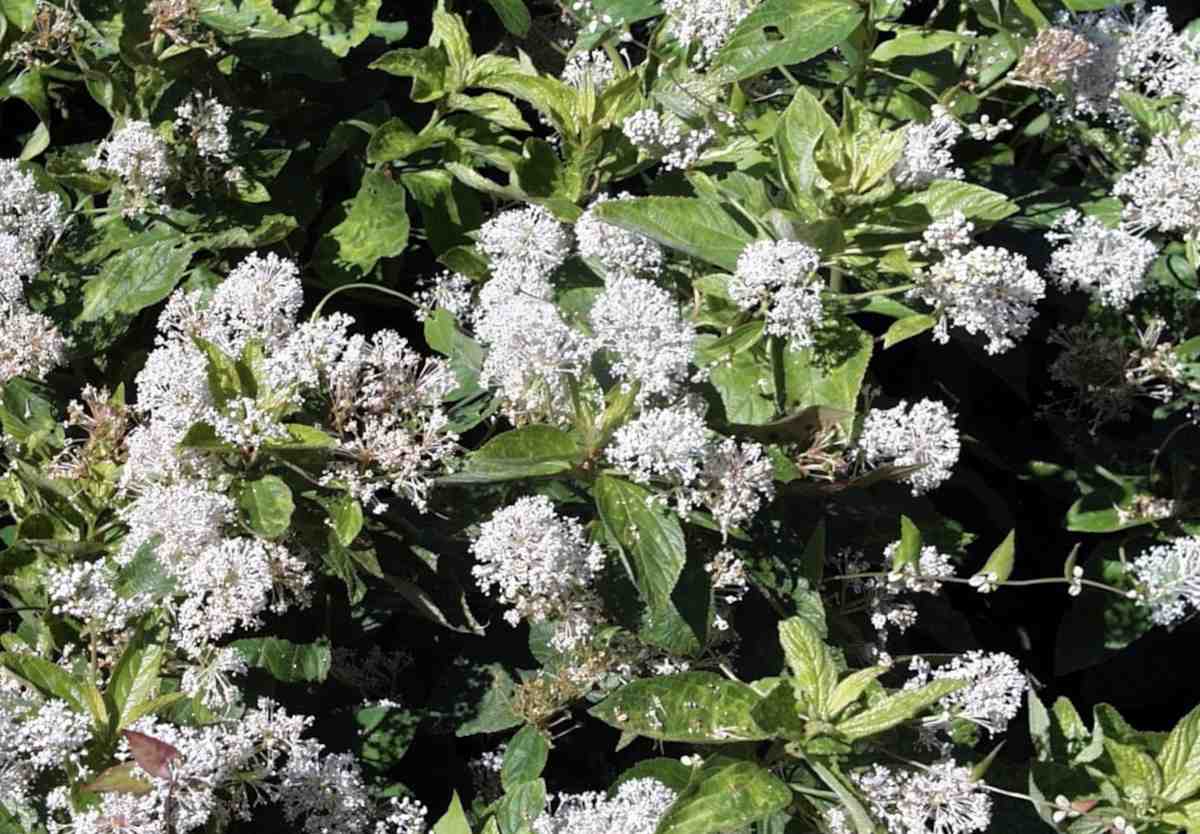
Make sure you get flowers on your ceanothus every year by pruning either in summer or fall. If you prune in spring, you’ll be cutting flower buds off. Don’t prune ceanothus at the end of winter.
Some Ceanothus species are deciduous. For these, control growth by cutting back branches that are a year old. Pruning last year’s growth will make your Ceanothus branch out and bear more flowers.
You won’t need to water your Ceanothus at all, except for the first two years.
Ceanothus asks for very little, but the few jobs it does need are strictly tied to the calendar. Here is when each one falls, and what happens if you get the timing wrong.
| Task | When | Why it matters |
|---|---|---|
| Planting | Spring or autumn | Avoid heat waves and days of frost |
| Pruning | Summer or autumn, never late winter | Spring pruning removes the flower buds |
| Deadheading | As flowers fade | Triggers a new flush of blooms |
| Watering | First two years only | Established shrubs need none at all |
| Winter protection | Where it often drops below 17°F (-8°C) | Wrap the bush with fleece |
Keep to this rhythm and the shrub will flower abundantly year after year with almost no other attention.
Ceanothus is rather hardy and must spend its life outside. It won’t thrive at all indoors.
Ceanothus is hardy down to about 14°F (10°C). If ever your area gets any colder, you’ll have to winterize your ceanothus.
It’s possible to grow Ceanothus in pots.
Ceanothus ranges from ground-hugging mats to small trees, and from the classic spring blues to deciduous forms that flower right through summer and autumn. This table sets out the varieties most often offered in garden centres and catalogues, so you can match flower colour, season and habit to your spot.
| Variety | Flower colour | Flowering season | Habit | Foliage |
|---|---|---|---|---|
| Puget Blue | Dark violet-blue | Late spring | Upright, good against a wall | Evergreen |
| Trewithen Blue | Deep blue, scented | Spring | Tall, vigorous | Evergreen |
| Autumnal Blue | Sky blue | Summer to autumn | Medium, wall shrub | Evergreen |
| Italian Skies | Bright blue | Mid spring | Spreading, medium | Evergreen |
| Julia Phelps | Dark indigo | Early to mid spring | Dense, mounded | Evergreen |
| Concha | Deep indigo-blue | Mid to late spring | Arching, medium | Evergreen |
| Skylark | Rich mid-blue | Late spring | Compact, bushy | Evergreen |
| Burkwoodii | Bright blue | Summer to autumn | Rounded, medium | Evergreen |
| Gloire de Versailles | Powder blue | Summer to autumn | Open, medium, hard-pruned | Deciduous |
| Dark Star | Deep purple-blue | Early to mid spring | Arching, medium | Evergreen |
| Snow Flurry | White | Spring | Tall, vigorous | Evergreen |
| Victoria | Dark blue | Spring | Upright, hedging | Evergreen |
| Yankee Point | Soft mid-blue | Spring | Low and spreading, ground cover | Evergreen |
| Ray Hartman | Mid-blue | Spring | Tall, trainable as a small tree | Evergreen |
| Marie Simon | Soft pink | Summer to autumn | Bushy, medium | Deciduous |
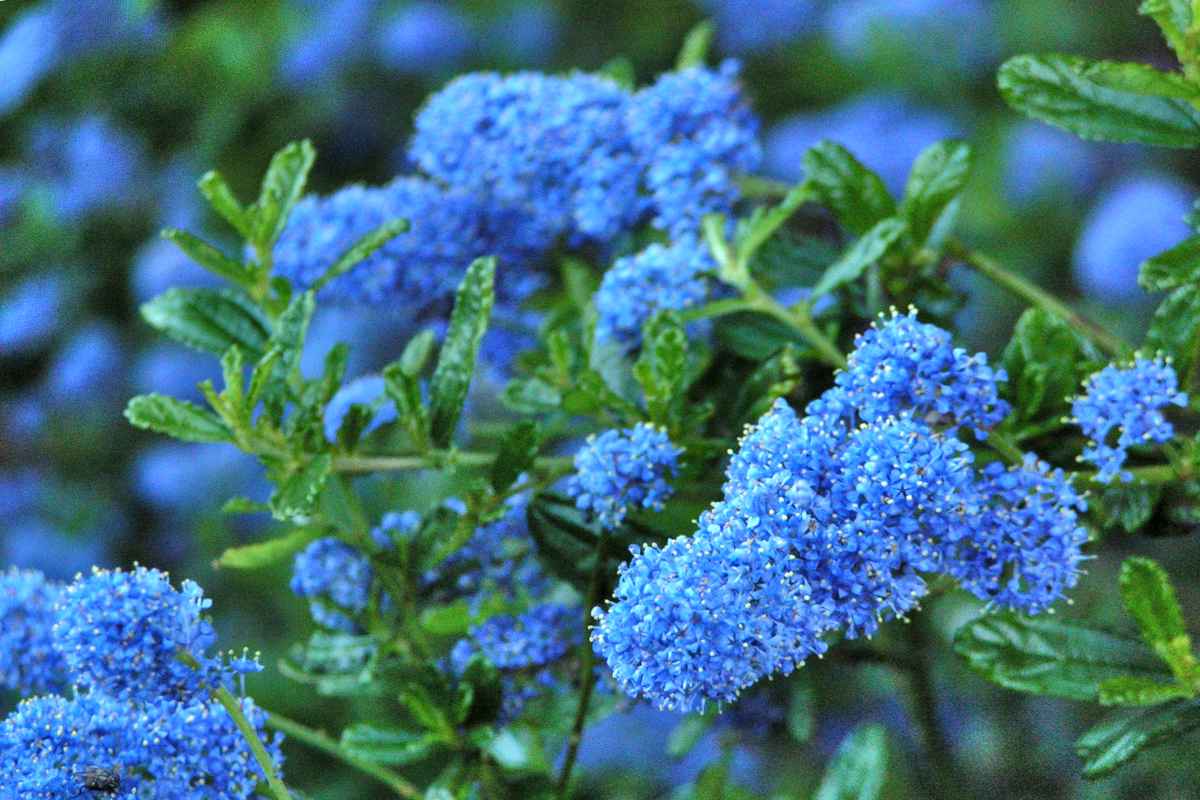
Blue is the color of most Ceanothus species. The shrub is covered in flower panicles in spring.
Other colors include pink and white, and various shades of violet.
Ceanothus is native to North America. It has successfully been introduced in many temperate climates.
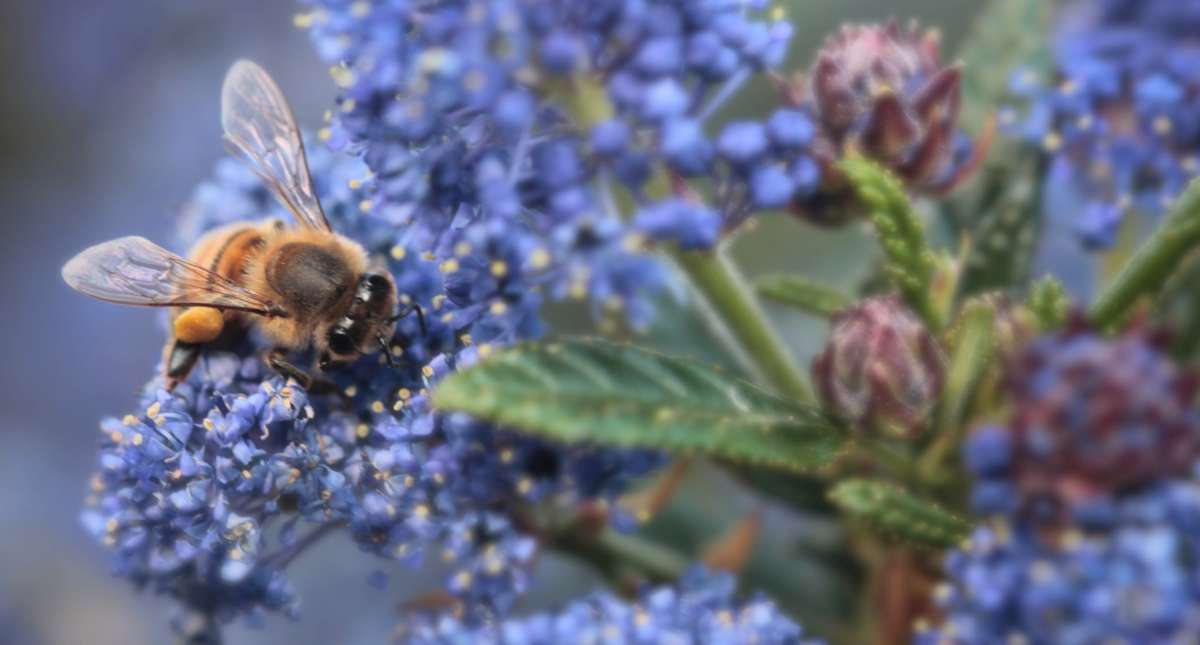
Bees and butterflies will be attracted by the wonderfully abundant flowers during the blooming.
Some varieties (essentially hybrids) bloom in summer and fall: Ceanothus × delileanus ‘Topaze’, Ceanothus × pallidus (like the ‘Perle Rose’), Ceanothus ‘Burkwoodii’ and Ceanothus arboreaus ‘Autumnal blue’, to name but a few.
Ceanothus, commonly called soap bush and California lilac, also comes in ground-hugging varieties that are great to quickly cover rocky terrain!