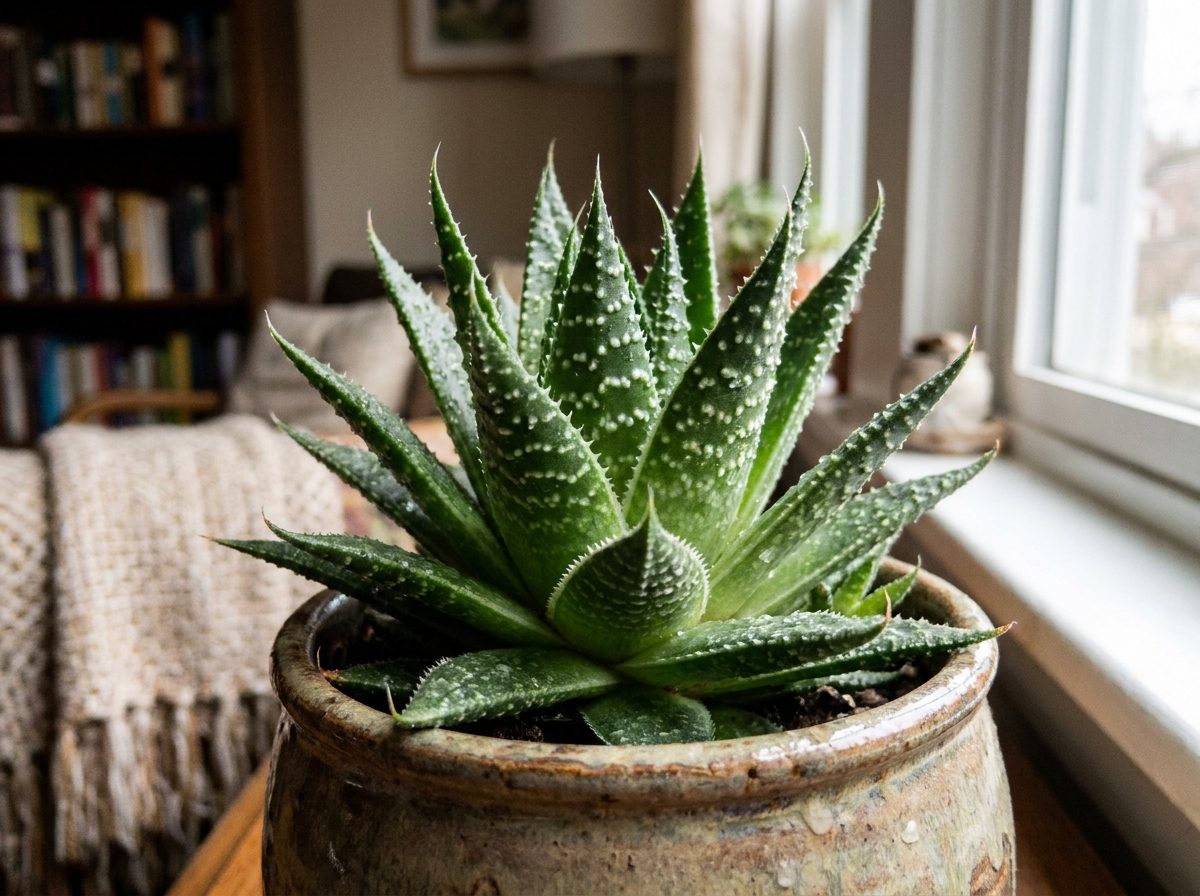
Aloe aristata is a neat, low-growing succulent that forms a tight rosette of dark green, lance-shaped leaves spangled with white tubercles and edged with soft, pale teeth. Each leaf ends in a fine, hair-like bristle — the “awn” that gives the plant its botanical name — and in summer established clumps throw up slender spikes of coral-orange, tubular flowers. It is one of the toughest aloe-like succulents in cultivation, happy in a gravel garden, a trough or a bright windowsill pot.
Growing conditions
Lace aloe wants the brightest position you can give it, though it is more forgiving of light shade than most succulents. Outdoors, aim for at least four to six hours of direct sun; under glass or indoors, a south- or west-facing windowsill suits it best. Leaves grown in very low light stretch, pale and flop outwards, losing the tight rosette shape.
Drainage matters far more than fertility. Use a gritty, free-draining mix — a proprietary cactus compost, or two parts loam-based compost to one part horticultural grit or perlite — and a slightly acid to neutral pH of around 6.0 to 7.5. In the open garden, plant on a slope, raised bed or gravel scree so winter rain drains away from the crown.
The plant tolerates brief frost to roughly −8 °C provided it is bone dry at the root; prolonged winter wet at 2 °C will kill it far faster than cold. In mild coastal and Mediterranean gardens it is reliably perennial outdoors, whilst in wetter temperate regions it is safest in a pot that can be moved under cover from late October.
How to plant Aloe
Plant or pot on in spring, between April and June, when temperatures are rising and the roots are actively growing. Autumn planting leaves the plant sitting cold and wet with little chance to establish.
Space rosettes 25–30 cm apart so offsets have room to fill the gaps within two or three seasons without crowding and trapping damp.
Set the plant so the base of the lowest leaves sits just at soil level — never bury the crown, as buried leaf bases rot quickly.
Fork plenty of grit, sharp sand or fine gravel into heavy soils, and build a planting mound 10–15 cm high if drainage is doubtful.
Water in lightly once, then leave for a week to ten days before watering again; this encourages roots to search outwards.
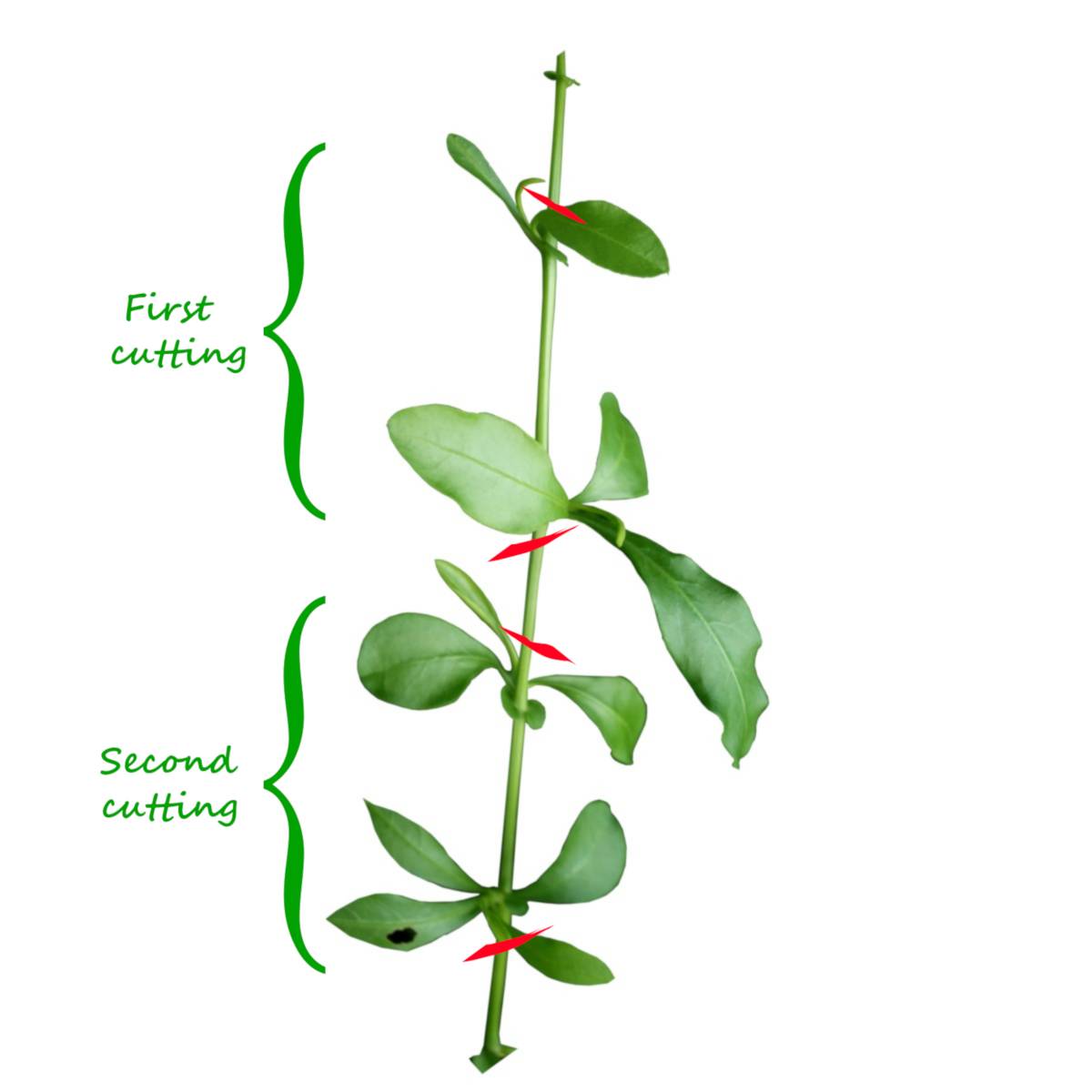
Propagate by detaching rooted offsets in late spring with a clean knife, letting the cut surface callus for two or three days, then potting into barely moist gritty compost.
Aloe aristata displayed as a houseplant in a home interior
Care through the seasons
Spring: Resume regular watering as new growth appears, letting the compost dry out fully between soakings. Apply a weak high-potash or cactus feed once a month from April to August. This is the moment to divide congested clumps and repot anything that has filled its container.
Summer: Water thoroughly but infrequently — roughly every ten to fourteen days in pots, less in the ground. Flower spikes appear from June; leave them to attract bees and, in warmer regions, sunbirds, then cut them off at the base once the last blooms fade. Plants in full sun may take on a bronze or reddish flush, which is a harmless stress response, not a disease.
Autumn: Taper watering off sharply from late September so the plant enters winter dry. Move containers under glass, into a cold greenhouse or against a sheltered wall before the first hard frost. Avoid mulching over the crown with organic matter; a 2 cm collar of gravel is far safer.
Winter: Growth stops below about 10 °C and the rosette may close inwards and look shrunken — this is normal. Keep it almost completely dry, giving no more than a splash of water every six weeks if the leaves shrivel badly.
Best varieties to grow
The species itself is the mainstay, but a handful of selections and intergeneric hybrids are well worth seeking out.
Aloe aristata (species form) — holder of the RHS Award of Garden Merit, with the crispest white speckling and the most reliable summer flowering.
Aloe aristata ‘Variegata’ — slower and smaller, with creamy longitudinal striping; needs slightly more shade to prevent scorch.
×Gasteraloe ‘Green Ice’ — a cross with Gasteria, offering broader, ice-green mottled leaves and excellent tolerance of lower light indoors.
×Gasteraloe ‘Lizard Lips’ — knobbly, heavily tuberculate leaves in a flatter rosette, very tough and quick to offset.
Pests, diseases and common problems
Root and basal rot: Leaves turn translucent, brown or mushy at the base, often after a wet winter. Unpot immediately, cut away all soft tissue, dust with sulphur and rerot the healthy top in dry grit; prevent by watering only when the compost is completely dry.
Mealybug: White, cottony clusters hide deep between the leaves and around the roots, causing stunting and sticky residue. Dab colonies with a cotton bud dipped in surgical spirit and drench the rootball with an organic soap-based spray, repeating fortnightly for six weeks.
Aloe rust: Circular black or brown spots with yellow haloes appear on the leaves in humid, still conditions. Remove affected leaves, improve ventilation and avoid wetting the foliage; the damage is cosmetic and rarely fatal.