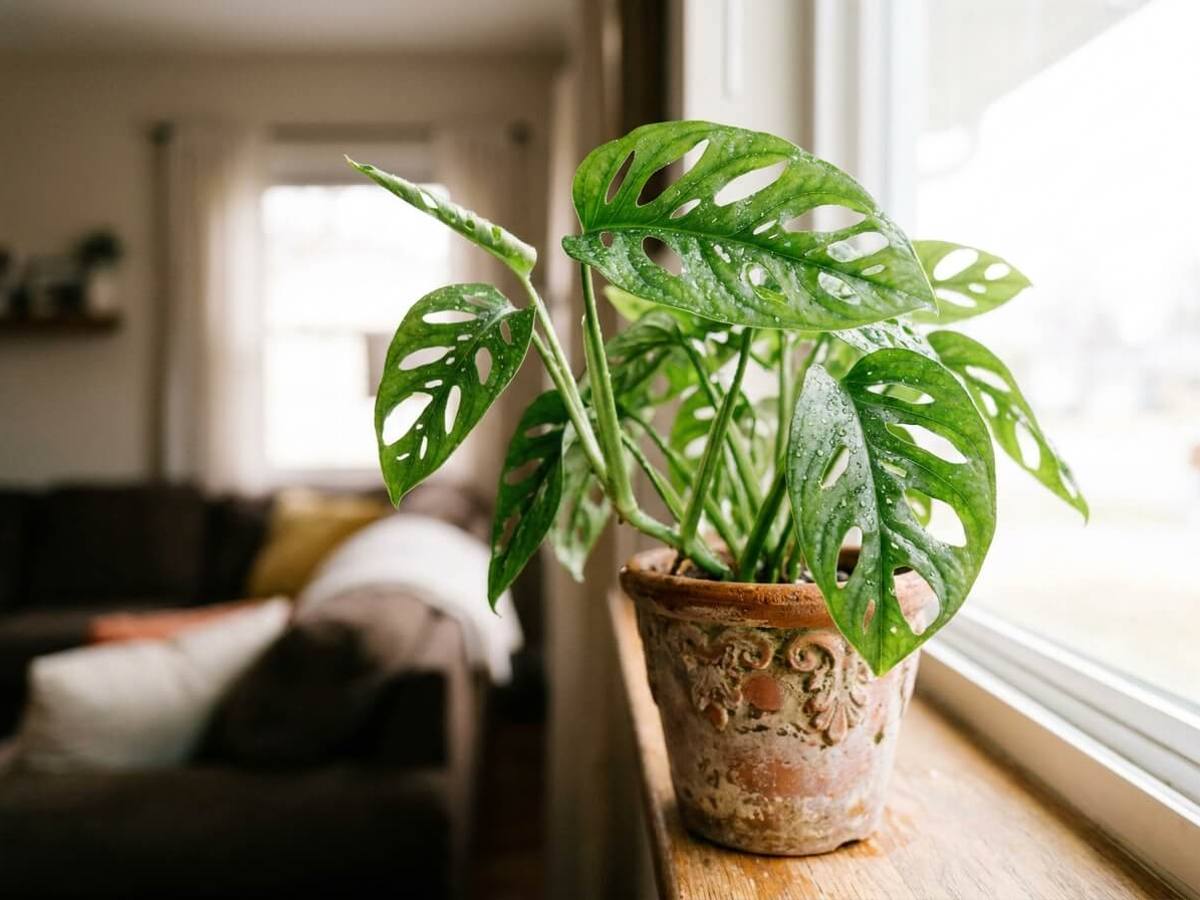
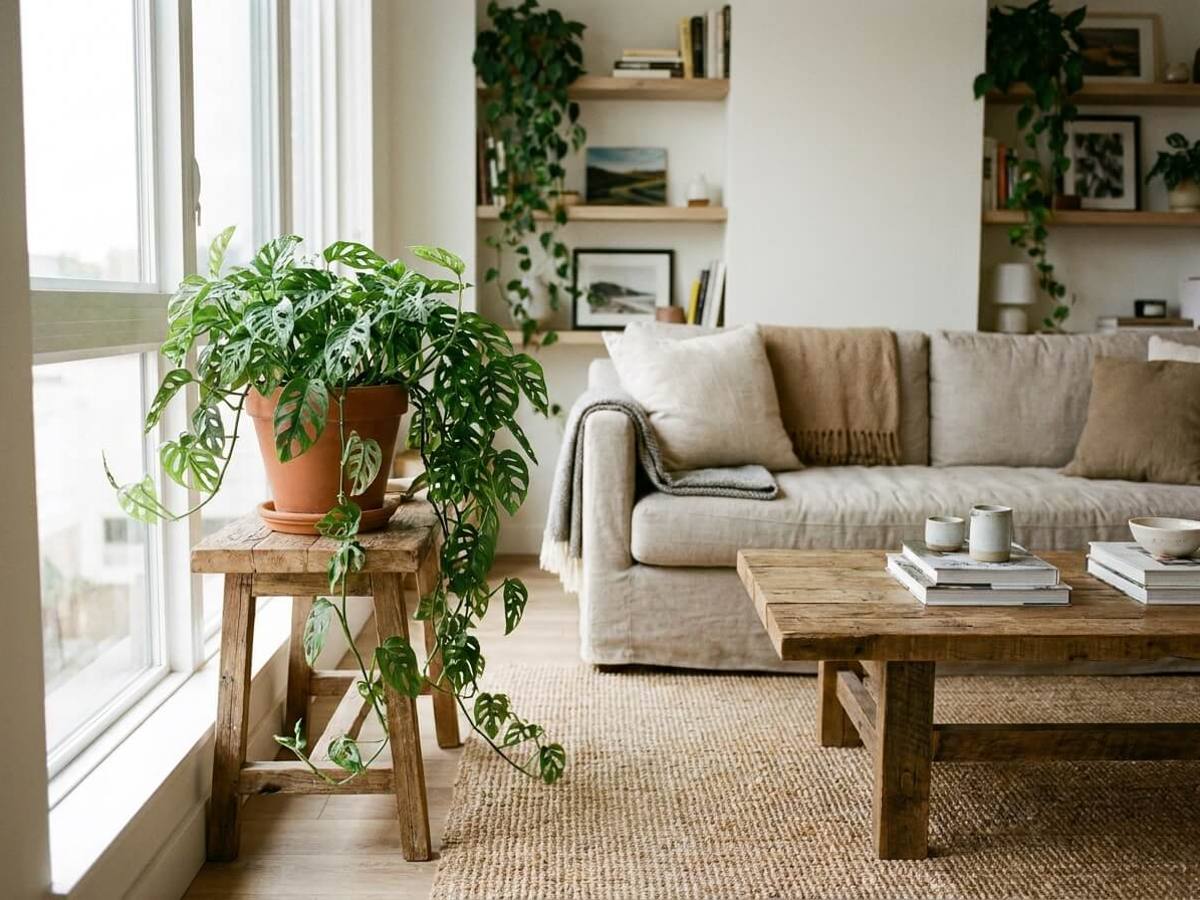
Monstera adansonii is the climbing aroid that turned the word “fenestration” into everyday gardening vocabulary, its oval leaves punched through with neat, enclosed oval holes. It is grown almost everywhere as a houseplant, trained up a moss pole for a lush vertical column or left to spill from a high shelf or hanging basket. Unlike its larger cousin Monstera deliciosa, its perforations usually stay closed within the leaf blade rather than splitting out to the margin.
Growing conditions
Bright, filtered light is the single biggest factor in leaf quality. An east-facing windowsill, or a position a metre or so back from a south- or west-facing window, suits it perfectly. Harsh midday sun scorches the thin leaves, whilst deep shade produces small, solid, hole-free foliage on stretched, leggy stems.
In the wild it roots in leaf litter and climbs, so it wants an open, airy medium rather than dense compost. Blend roughly two parts peat-free houseplant compost with one part orchid bark, one part perlite and a handful of horticultural charcoal. A slightly acidic to neutral pH of 5.5–7.0 is ideal, and the pot must drain freely — soggy compost is the commonest cause of collapse.
Warmth and humidity matter: aim for 18–27 °C and above 60% relative humidity. Growth stalls below 15 °C and cold damage appears below about 10 °C, so outdoor cultivation only works year-round in zones 10–12. Elsewhere, treat it as a summer patio plant in dappled shade and bring it in before nights drop below 12 °C.
How to plant Monstera
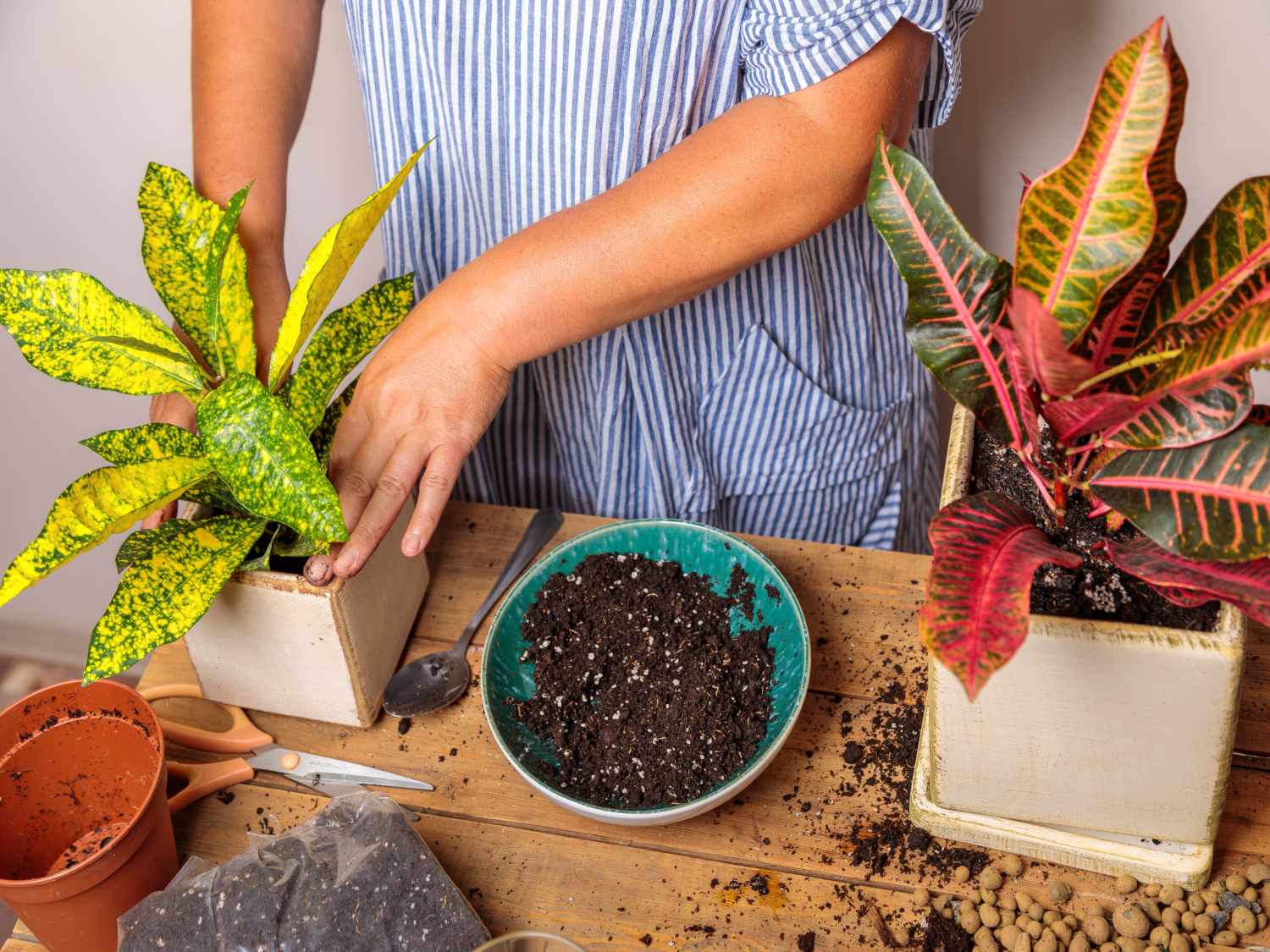
Pot or repot in spring or early summer, when rising light levels and warmth let the roots recolonise fresh compost quickly. Avoid disturbing the rootball from late autumn onwards, when growth has slowed.
Allow one plant per 15–20 cm pot, or set three rooted cuttings 8–10 cm apart around the rim for a full, bushy effect from the start.
Plant at the same depth as before, keeping the base of the stems at compost level — burying the nodes invites rot.
Push a moss pole or coir support firmly into the compost before planting, not afterwards, to avoid spearing the roots.
Water in thoroughly until it runs from the drainage holes, then let the top 3–4 cm dry before watering again.
Propagate from stem cuttings with at least one node and one aerial root; they root in water or damp sphagnum in three to four weeks at 22 °C.
Monstera adansonii displayed as a houseplant in a home interior
Care through the seasons
Spring: Growth resumes as days lengthen — start feeding fortnightly with a balanced liquid fertiliser diluted to half strength. This is the moment to repot if roots are circling the drainage holes, and to tie new shoots onto the support whilst they are still flexible. Pinch out a growing tip or two to encourage branching lower down.
Summer: Water when the top 3–4 cm of compost feels dry, which may mean twice weekly in warm rooms. Keep feeding, mist or group plants to raise humidity, and shade from direct glass-magnified sun. Train the longest stems upwards rather than letting them trail — climbing stems reliably produce bigger, better-fenestrated leaves.
Autumn: Taper feeding from early autumn and stop by late October as light falls. Take any cuttings early in the season so they root before the cold sets in, and prune back leggy, bare stems just above a node to tidy the plant. Wipe the leaves to remove dust, which seriously reduces light capture in the darker months.
Winter: Growth pauses; water only when the compost is dry two-thirds down, and keep the plant away from radiators and cold draughts. Never let the temperature fall below 12 °C.
Best varieties to grow
There are few true cultivars, but several distinct forms and variegated selections are widely traded.
Monstera adansonii var. laniata — the “wide form”, with broader, glossier, slightly leathery leaves and generous fenestration; the easiest and most vigorous.
Monstera adansonii “narrow form” — slimmer, more tapered leaves with proportionally larger holes, often sold as ‘Friedrichsthalii’.
Monstera adansonii ‘Archipelago’ — a sought-after variegated form with creamy-white sectors and marbling; needs brighter light and grows more slowly.
Monstera adansonii ‘Aurea’ — yellow-variegated, with splashes ranging from flecks to half-leaves; protect from direct sun, as pale tissue scorches readily.
Pests, diseases and common problems
Spider mite: Fine speckling, dull leaves and gossamer webbing in the leaf axils, worst in dry winter air. Raise humidity, rinse the foliage in the shower and treat weekly with insecticidal soap or neem until clear.
Mealybug: White, cottony clusters tucked into nodes and aerial roots, with sticky honeydew below. Dab individual colonies with a cotton bud dipped in surgical spirit, then follow up with a soap spray every seven days for a month.
Root rot: Yellowing lower leaves, a sour smell and mushy black roots caused by overwatering or compacted compost. Unpot, cut away all soft roots, repot into fresh chunky mix and water far more sparingly.