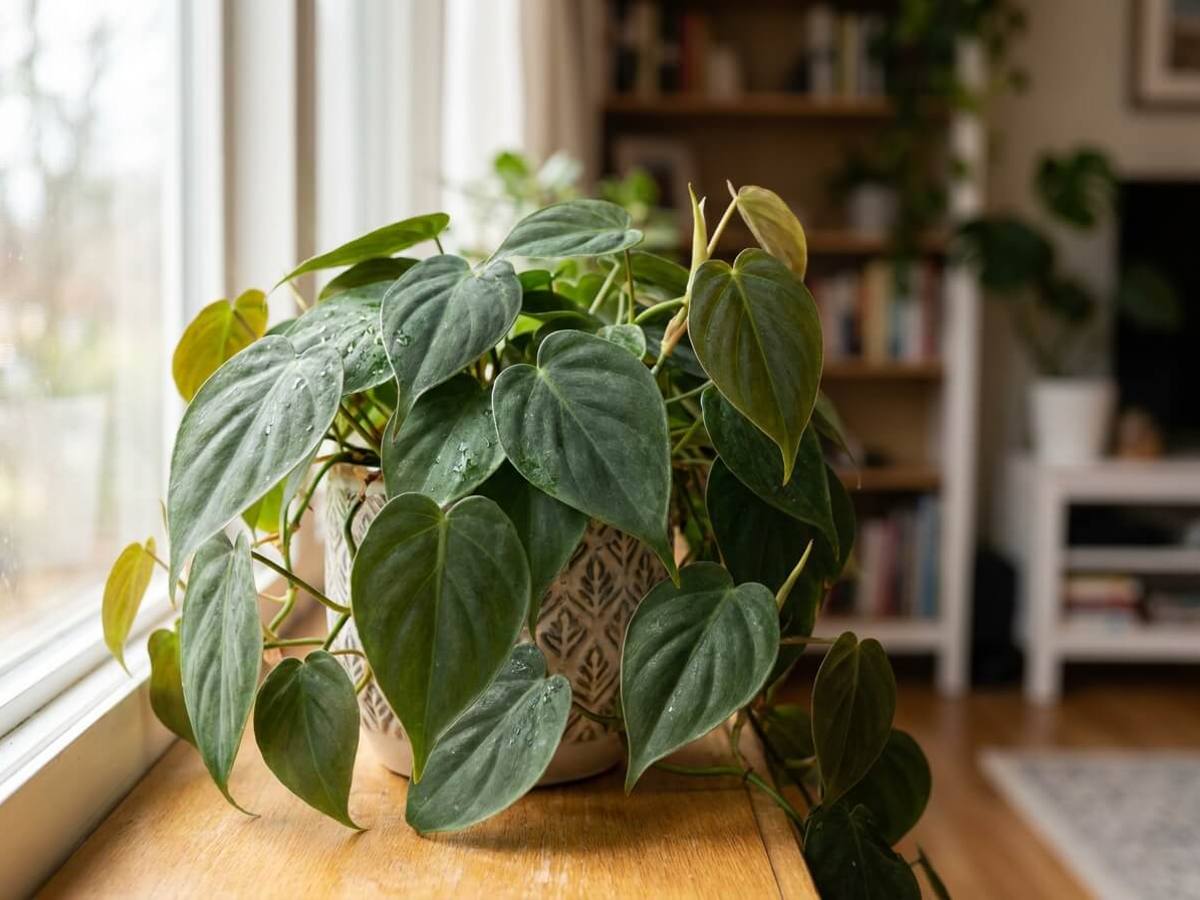
Shiny evergreen leaves that mop up ammonia and benzene, and trailing spider plants (Chlorophytum) dangling tiny white flowers that turn into rooted baby plants: the easiest houseplants clean confined indoor air as they grow. Allow one leafy plant for every ten square yards, match each to its light and moisture, and every room feels fresher.
Take your pick from these plants which are among the easiest to care for.
Ferns are plants that are both easy going and that have been proven to have air-purifying properties. To always keep them in top shape, cut the dry fronds regularly. Shown right (above on mobiles) are various species of Dracaena.
You can pair them with other plants, to which they will adjoin their luxurious wild greenery.
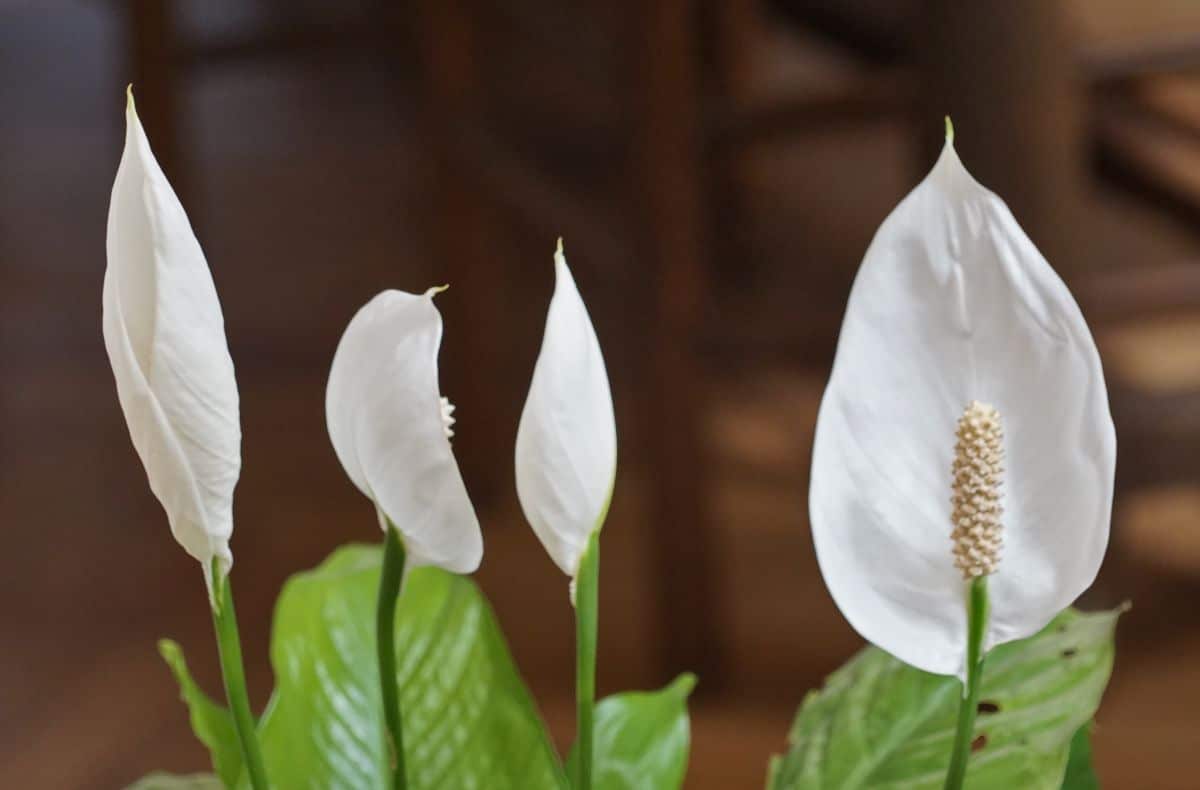
Spathiphyllum, also called “peace lilies”
Peace lily leaves absorb many common domestic pollutants
It furnishes shiny green evergreen leafage that absorbs many domestic pollutants (ammonia, acetone, carbon dioxide, benzene…) that result from varnish and paint, and cigarette smoke, too.
It favors moist environments and will relish living in your kitchen or bathroom, even if quite dark.
Peace lilies wilt dramatically when dry and usually recover within hours of watering, but rather than waiting for that stress signal, water when the top inch of soil feels dry.
Brown, crisp leaf tips have several possible causes, including dry air, inconsistent watering, over-fertilising, root damage, and salt or fluoride build-up from tap water, which rainwater or distilled water helps avoid.
Cut spent white spathes back to the base once they fade to green.
Aroids such as dieffenbachia, philodendron, pothos and peace lily contain calcium oxalate crystals throughout the plant that irritate the mouth, so keep those pots away from cats, dogs and small children.
A dark bathroom keeps the foliage handsome but rarely brings flowers; move the pot somewhere with bright indirect light if you want spathes.
Ficus trees are a classic
This is one of the plants most grown in apartments the world over. There are over 1,000 species, the most common of which is the weeping ficus (especially Ficus benjamina).
It cherishes luminous settings and doesn’t quite like dry air: move them away from radiators in winter and mist leaves during heat waves in summer.
Give your ficus a fixed spot and leave it there, since a sudden change of light or temperature makes it shed leaves within days.
Let the top of the compost dry before watering again because soggy roots cause far more ficus losses than thirst.
Most popular indoor foliage plants originate in warm tropical regions, so sheltering them from cold winter draughts near doorways and open windows helps avoid the chilling that can cause leaf drop.
Wipe the glossy leaves with a damp cloth from time to time to clear dust and let the plant work at full light.
Hanging plants
Ivy has a preference for cool and well-lit environments. You can either hang it or let it grow along a stake.
To make it last, water moderately during the growth phase (from March to October) and almost stop watering it during the dormancy. Pinch new stems to favor the growth of lateral growth.
Variegated ivies keep their cream and yellow markings only in bright light, and fade to plain green in a dim corner.
Red spider mite thrives on ivy in dry, heated rooms.
Ivy sap irritates the skin and the leaves are toxic if chewed, so hang it out of reach of children and pets and wear gloves to pinch it back.
Chlorophytum
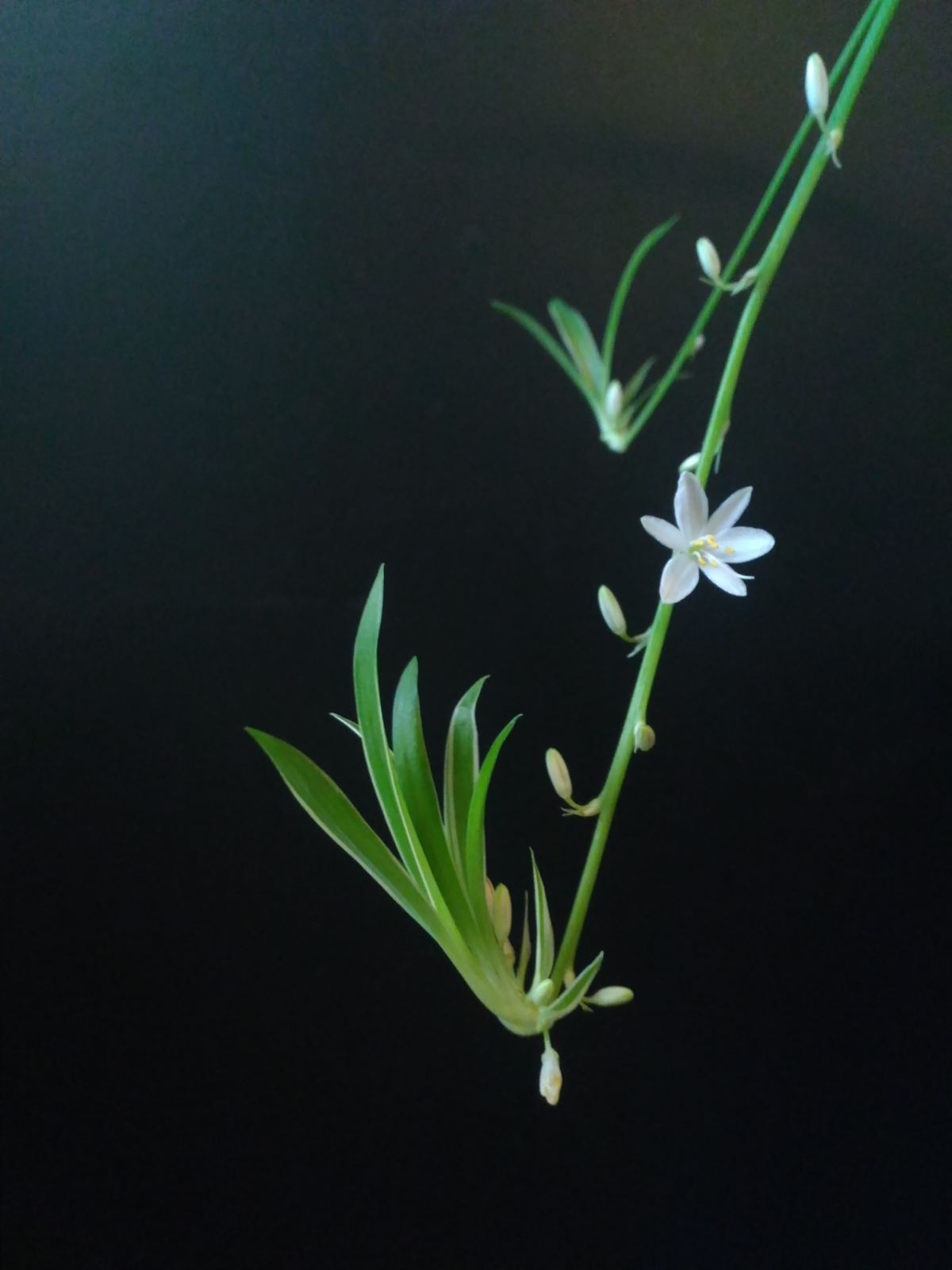
Hanging chlorophytum reveals white flowers and rooted baby plants
Does great in rooms both warm and cool, from bathroom to winter garden. It tolerates indirect light.
Set up the Chlorophytum as a hanging plant, you’ll discover its tiny white flowers and clumps of small leaves. These turn into tiny plants equipped with roots.
This makes the spider plant so easy and enjoyable to propagate!
Brown, papery tips on spider plants have several causes—low humidity, underwatering, fertilizer salt buildup, and sensitivity to fluoride—and since standing water only dissipates chlorine, use rainwater or distilled water to avoid fluoride.
Peg a plantlet onto a small pot of compost while it is still attached to its runner, then cut the runner once roots take hold.
The spider plant (Chlorophytum comosum), in particular, grows thick fleshy white tuberous roots that store water, so it tolerates an occasional missed watering better than many other houseplants do.
Written by Gaspard Lorthiois | Loves helping out, especially when it comes to growing things. Worked in herbal medicine, runs a farm, and dabbles in tech. Master's degree and engineer.