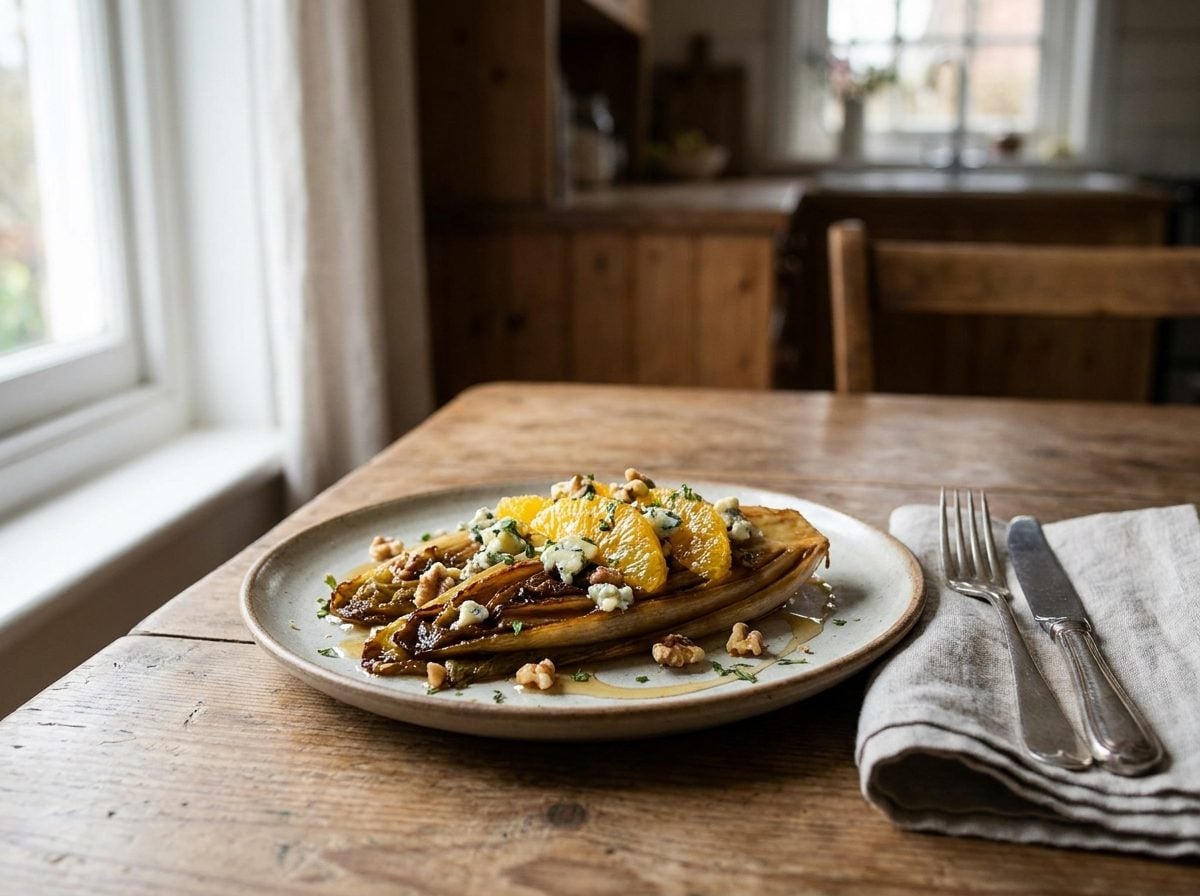
Chicory grows wild along roadsides with cornflower-blue flowers that open at dawn and shut by noon, but the pale, tight chicons on the plate come from a trick: roots lifted after the first frosts, packed in damp sand and left in a dark cellar to sprout. That darkness keeps them ivory and gently bitter. Caramelised hard, braised in orange juice and honey, they become a first course with real backbone.
4 medium heads chicory / Belgian endive / witloof, about 1¼ lb (600 g) total
2 tbsp (30 g) unsalted butter, plus 1 tbsp (15 g) cold butter for finishing
1 tbsp (15 ml) olive oil
1 tbsp (20 g) runny honey
1 large orange — 2 pared strips of zest plus ⅓ cup (80 ml) juice
1 tbsp (15 ml) cider vinegar
2 fresh bay leaves
⅓ cup (80 ml) water or light vegetable stock
2 oz (60 g) blue cheese — Roquefort, Gorgonzola piccante, Stilton or Danish blue
¼ cup (30 g) hazelnuts
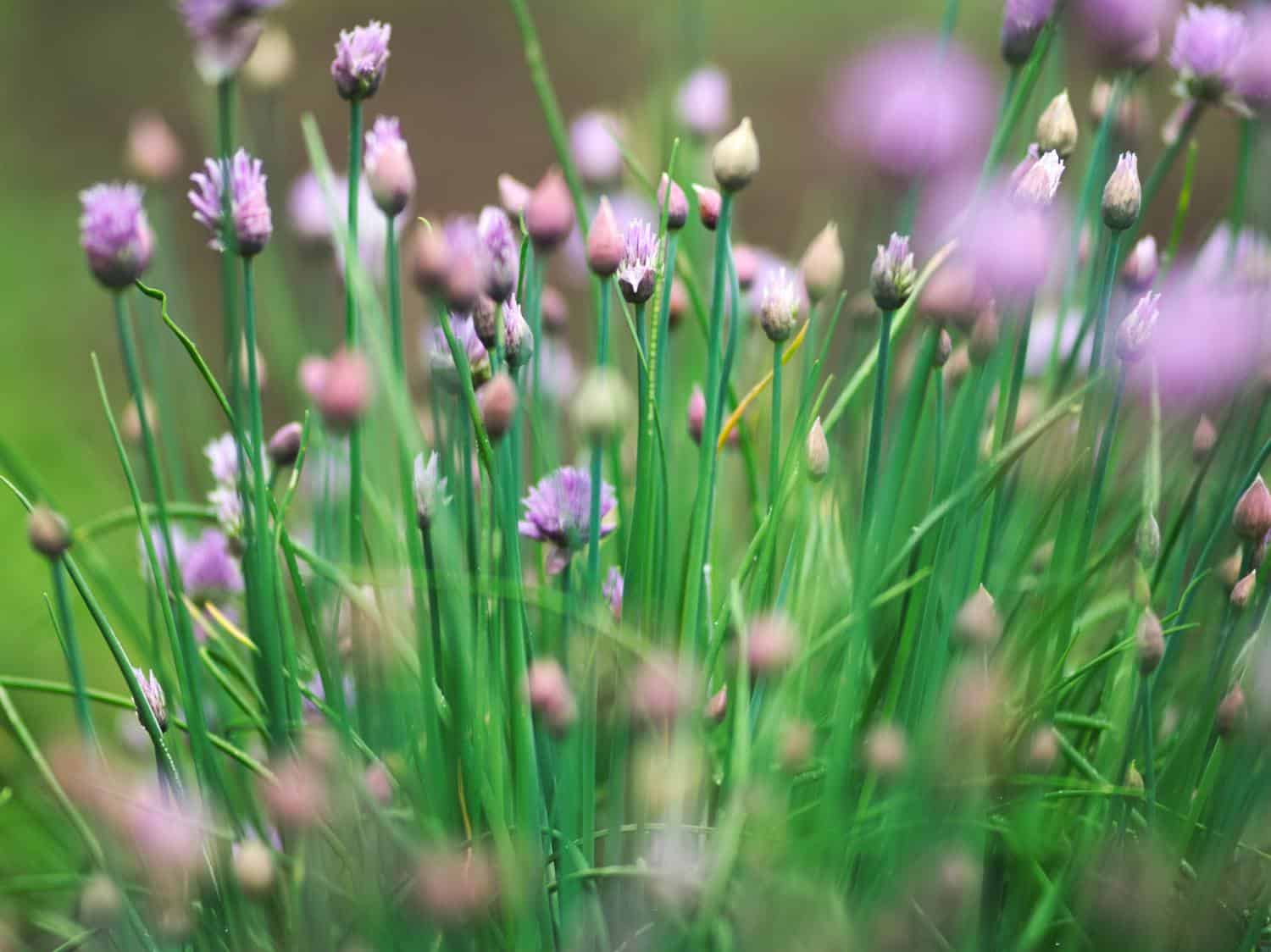
1 tbsp chopped chives, or the pale inner leaves of flat-leaf parsley
Flaky sea salt and coarsely cracked black pepper
The Recipe
Halve each chicon lengthways through the root, then cut a shallow V-shaped cone about ½ in (1 cm) deep out of the root end. The bitter lactones are concentrated in that dense white core; take it out and the bitterness drops to a pleasant edge rather than a sting. Cut no deeper or the leaves will fan apart in the pan.
Wipe every cut face dry with a cloth. Chicory is around 94 % water and any surface moisture will steam the face grey instead of browning it — this one wipe is the difference between pale and mahogany. Do not skip this step.
Melt the 2 tbsp butter with the olive oil in a wide, heavy pan over medium-high heat and wait until the foam subsides and the butter smells nutty. Lay the halves cut side down in a single layer with space between them; crowding traps steam. Do not salt yet — salt draws water to the surface and stalls the browning you are working for.
Leave them absolutely still for 5–6 minutes. You are listening for the sizzle to quieten and looking for the rim of each cut face to turn deep chestnut; lift one with a palette knife to check. Moving them early tears off the crust that carries most of the flavour.
Turn the halves over, drop in the honey, orange zest strips and bay leaves, and swirl for 30 seconds until the honey bubbles and smells of caramel. Go past amber and it turns acrid — the window is short, so have the liquids ready.
Pour in the orange juice, cider vinegar and water. The liquid should come a third of the way up the chicory, no more, or you will boil away the caramelisation. Cover, lower the heat to a bare simmer and cook 12–15 minutes, until the tip of a knife slides into the root end with no resistance. Now season with salt: long gentle heat also mellows the remaining bitterness, so taste at this point and not before.
Lift the chicory onto warm plates, caramelised side up so it stays glossy rather than sitting in liquid. Raise the heat under the pan and reduce the juices for 2–3 minutes to about 4 tbsp (60 ml) of syrup that coats the back of a spoon, then take it off the heat and whisk in the cold butter until it turns satiny — the cold fat emulsifies instead of splitting.
Toast the hazelnuts in a dry pan over medium heat for 4 minutes, shaking often, until the skins crack and the kitchen smells of toasted nut; rub them in a tea towel and chop coarsely. Spoon the syrup over the chicory, crumble the blue cheese on while the vegetable is still hot so the edges slump without melting into oil, then scatter the hazelnuts, chives, cracked pepper and a few flakes of salt. Serve warm rather than scalding — at blood heat the orange aroma lifts and the cheese stays creamy.