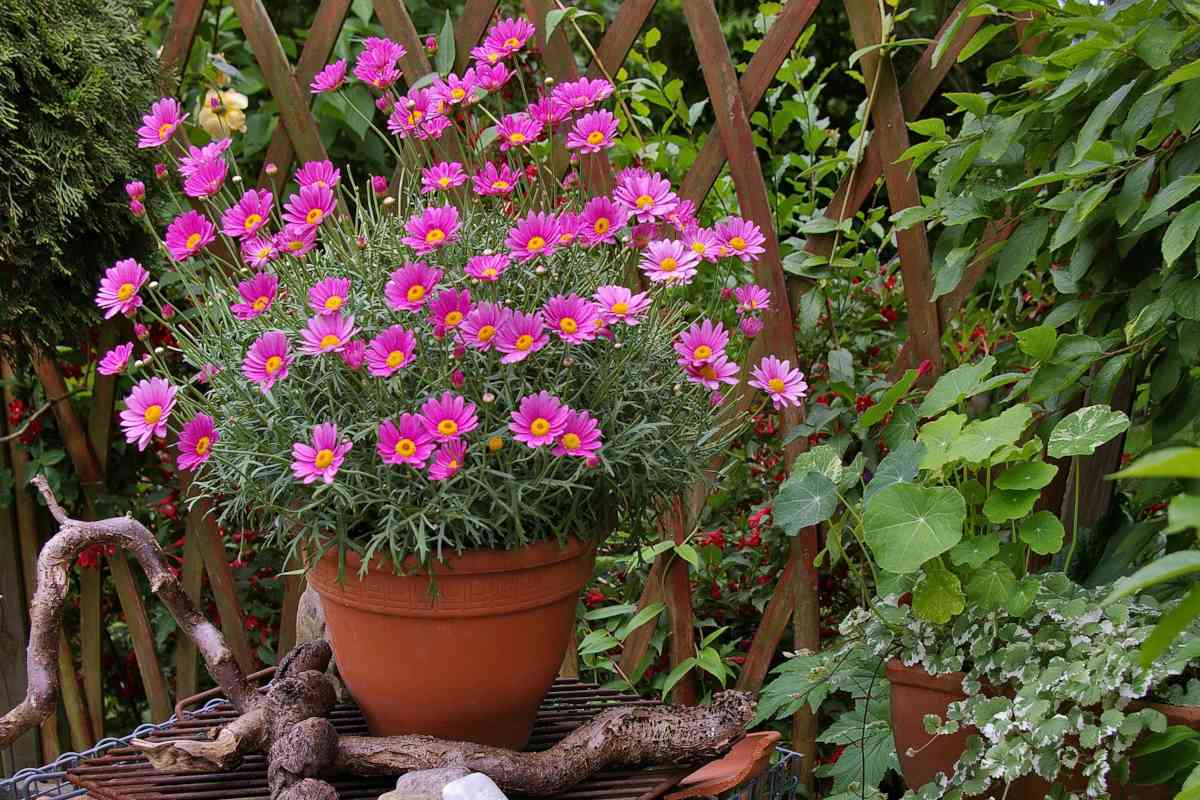
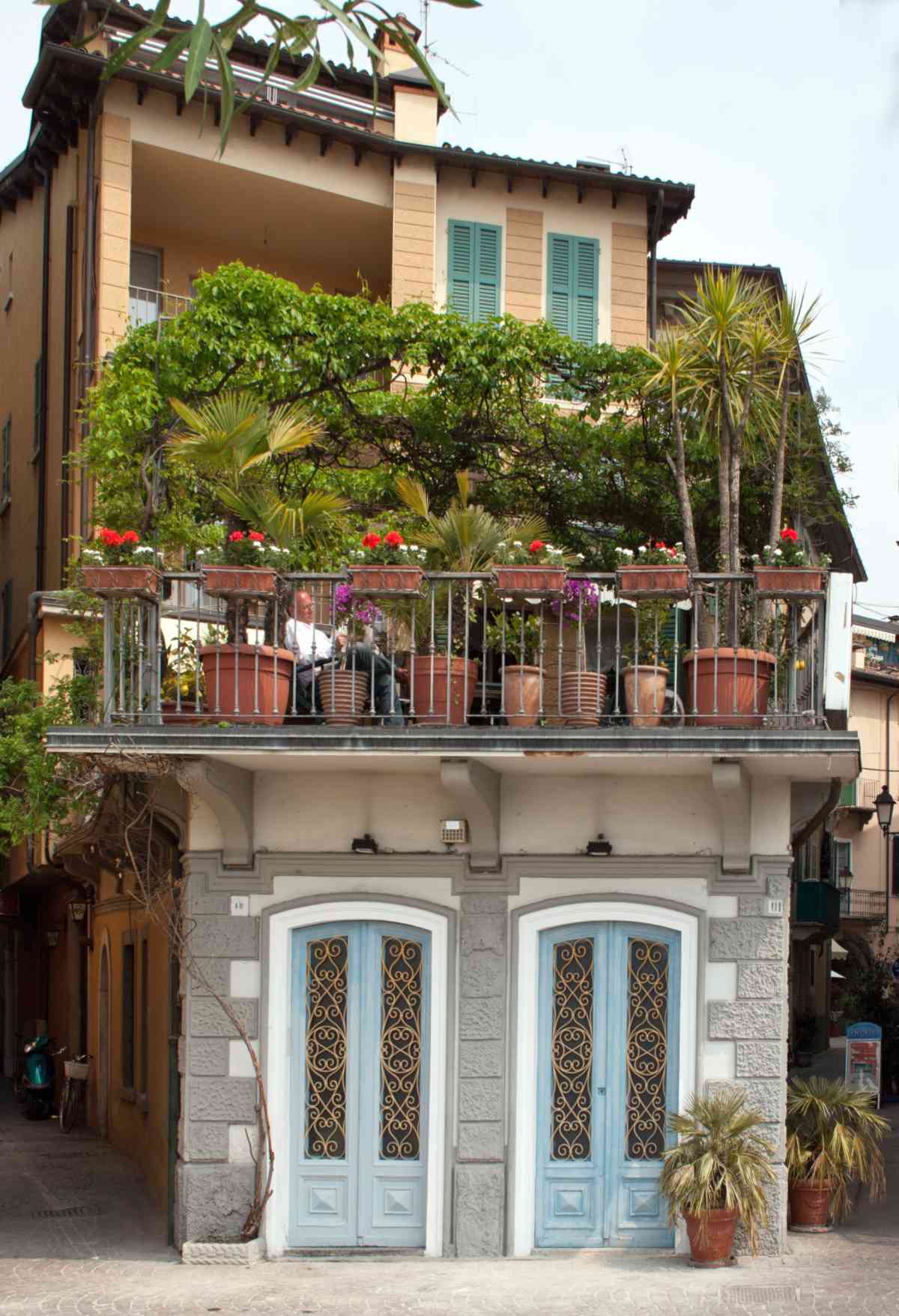
On a deck, terrace or balcony, it is easy to set up a container garden in pots for every season. Plant a series of garden box flowers that will bloom one after the other.
Read also:
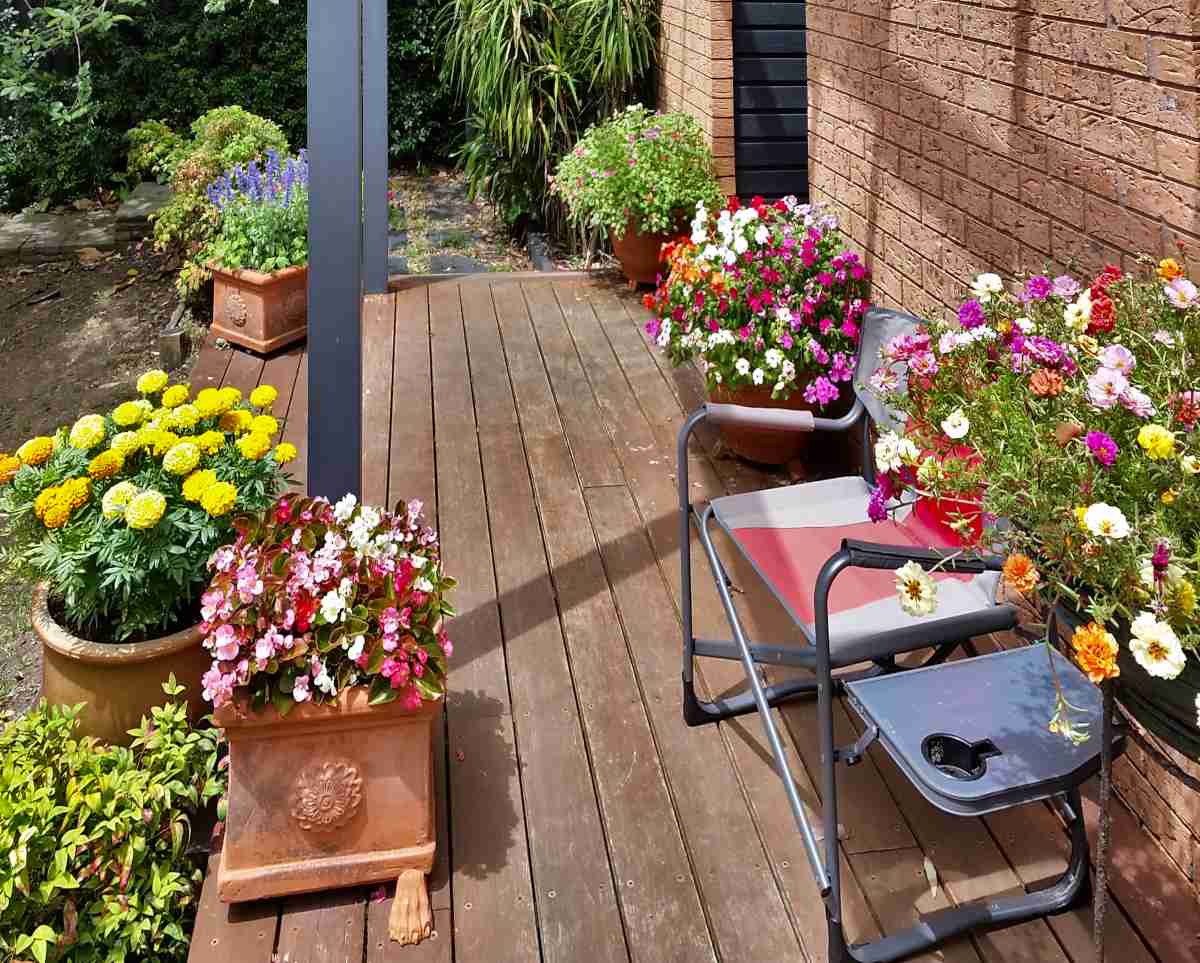
If you’ve got the space, always prefer larger pots to smaller ones: soil in small pots dries up very quickly in hot weather. Also, terra cotta or clay pots are better than metal, since they act as a barrier to both heat and cold.
Carefully select the location. Pot arrangements along walls will almost never collect any rainwater, and will need to be watered more often.
Designer plants (grasses, leaf plants, succulents) are usually highlighted when planted in separate containers. Otherwise, generally, plants are usually more ornamental when they are paired, with several different species in the same pot.
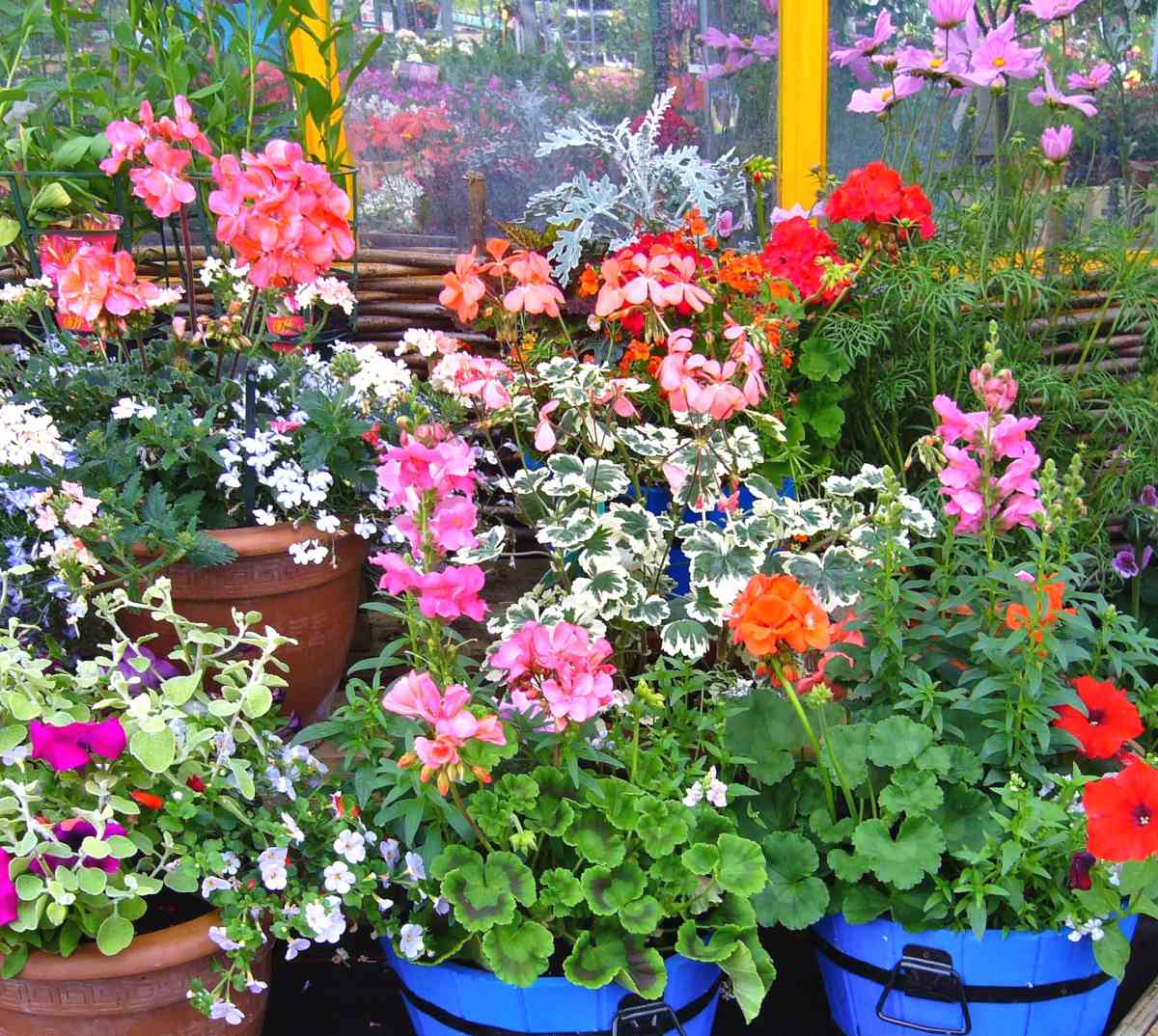
Remember to associate plants that share the same needs: heat, shade… lily and impatiens love shade; French marigold and begonia like lounging around in the sun, as do petunia; and snapdragon and geranium both resist foul weather extremely well…
Take note: time-release fertilizer usually present in soil mix will usually cover about ten week’s worth of plants’ needs in terms of nutrients. After that, you’ll have to add supplemental nutrients with an all-around liquid fertilizer.
Before buying plants, the container itself and the spot you stand it in decide how much watering and cleaning you will be doing. Here is how the choices set out in this article compare.
| Option | Effect on the plants | Practical note |
|---|---|---|
| Larger pots | More soil, so it stays damp longer in hot weather | Always the first choice when you have the room |
| Small pots | Soil dries up very quickly in hot weather | Avoid whenever a bigger pot will fit |
| Terra cotta or clay | Acts as a barrier to both heat and cold | Preferable to metal containers |
| Wooden containers | Rotting wood is a haven for fungus and bacteria | Scrub and treat with a non-toxic product |
| Pots lined up along a wall | Almost never collect any rainwater | Plan on watering more often |
| One plant per container | Highlights grasses, leaf plants and succulents | Keep for designer plants |
| Several species in one pot | Creates a micro-environment, raising moisture and resilience | Tall, bushy plants at the centre, trailers at the rim |
Match the container to the position first, and the planting scheme second.
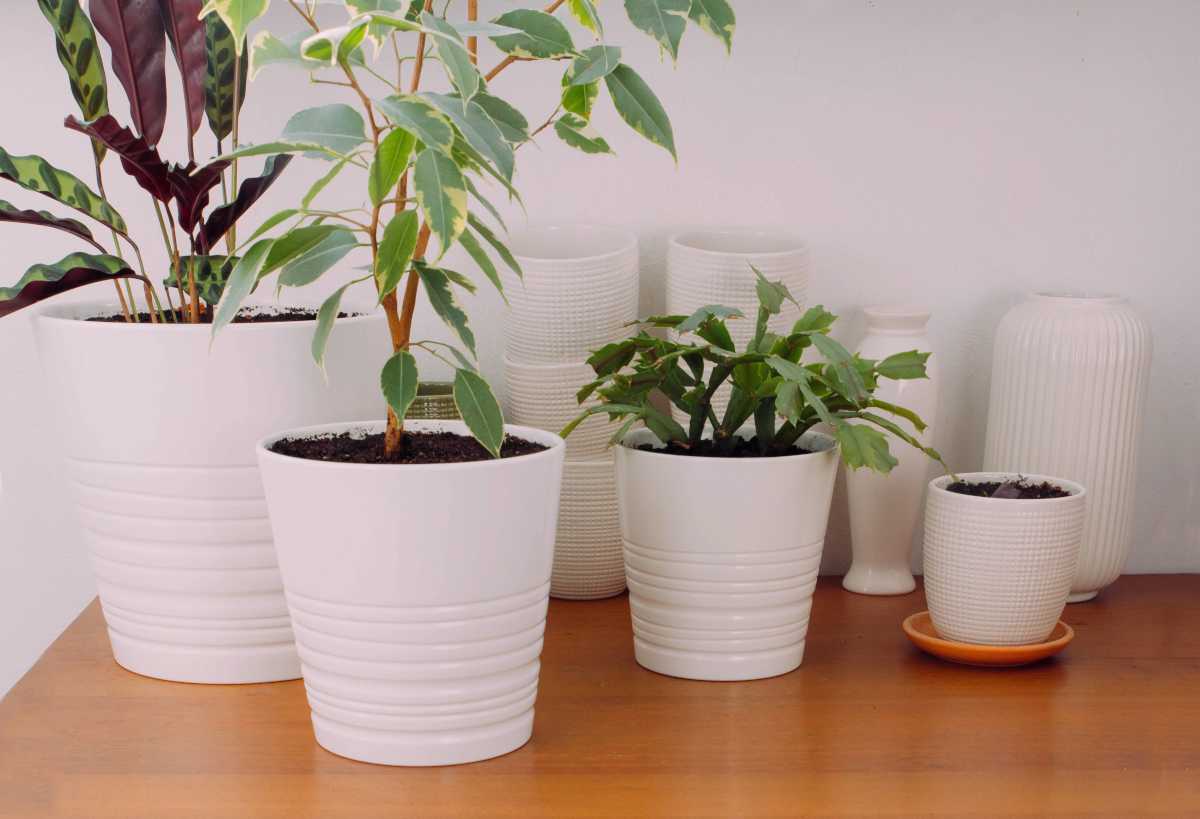
Planting amounts to nothing if the pots aren’t clean. No problem with new containers, but if your pots have already served, clean them diligently before assigning them to any new mission. Store unused pots in a garden shed to keep them from aging and breaking due to weather cycles.
Wooden containers must be carefully scrubbed and treated with a non-toxic product, because rotting wood is usually a haven for fungus diseases and undesirable bacteria. Even accessories such as stakes and labels must be pristine.
Also regularly clean the walls and tiles around the pots to remove moss and algae. Last but not least, your gardening tools must also be scrupulously cleansed, from the small hand hoe to the hand pruner – which should ideally be disinfected after each pruning!
Lastly, never reuse old soil mix. Not only does it not have any nutrients left anymore, it also might harbor a host of fungus and bacteria which you wouldn’t want to spread to your new plants.