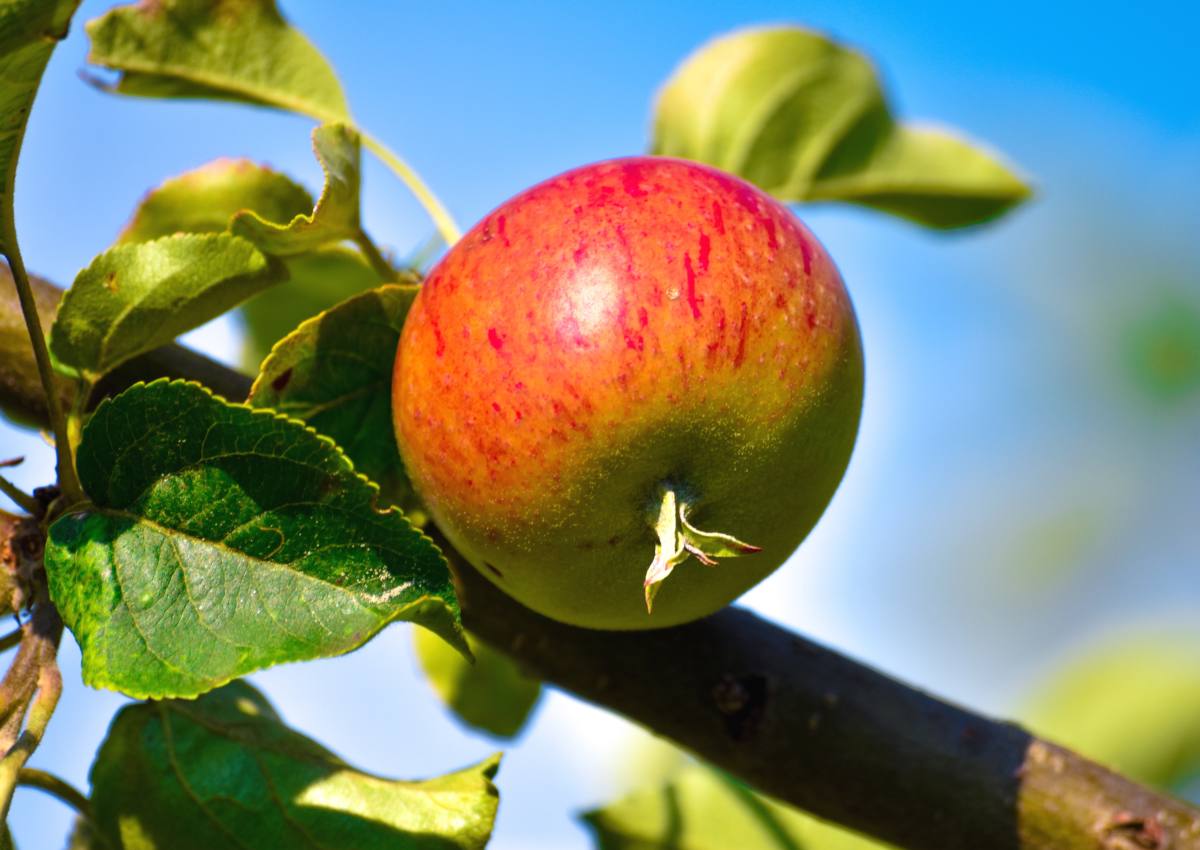
Cherries, apples and pears picked from your own garden — and even on a balcony, where dwarf trees no taller than 5 feet (1.5 metres) still bear normal-sized fruit. Fruit trees come in shapes and sizes to fit any plot, but all of them want sun and shelter from cold winds before they will crop.
Full-blown orchard, small garden or just a deck or balcony? Rest assured! You’re certain to find the fruit tree variety that will meet your particular configuration!
The absolute best way to choose the perfect fruit tree: taste its fruits! Feel free to ask the storekeeper. If you’re not allowed to do so, gather information about the harvest dates, how the fruits can be preserved or used, how long they’ll keep and what they taste like!
The best option is often to go for local cultivars that are perfectly suited to your area’s soil and climate, but if you’re in doubt, select a hardy variety that will settle most anywhere, such as the ‘Golden Delicious’ for apple trees and the ‘Beurré Hardy‘ for pear tree. Peach tree and apricot tree generally require the warmth that is often found in the South, but the ‘Gros Peche de Nancy’ and ‘Bergeron’ varieties are planted in places where it freezes occasionally.
Most garden centres and catalogues stock the same short list of proven cultivars. The table below sets out what each one is for, and whether it will crop on its own or needs a partner nearby.
| Variety | Fruit tree | Pollination | Picking season | Best use |
|---|---|---|---|---|
| Stella | Cherry | Self-fertile | Midsummer | Dessert, single-tree gardens |
| Discovery | Apple | Needs a pollinator | Late summer | Eat fresh, poor keeper |
| Egremont Russet | Apple | Needs a pollinator | Early autumn | Dessert, nutty flavour |
| Conference | Pear | Partly self-fertile | Early to mid-autumn | Dessert and bottling |
| Peregrine | Peach | Self-fertile | Late summer | Dessert, warm sheltered wall |
| Cox’s Orange Pippin | Apple | Needs a pollinator | Mid-autumn | Dessert, aromatic |
| Beurré Hardy | Pear | Needs a pollinator | Early autumn | Dessert, widely adaptable |
| Bramley’s Seedling | Apple | Triploid, needs two pollinators | Mid to late autumn | Cooking, keeps into spring |
| Golden Delicious | Apple | Needs a pollinator | Mid to late autumn | Dessert, stores well |
| Victoria | Plum | Self-fertile | Late summer | Eating, jam and cooking |
| Gala | Apple | Needs a pollinator | Early to mid-autumn | Dessert, sweet and crisp |
| Williams’ Bon Chrétien | Pear | Partly self-fertile | Early autumn | Dessert and canning |
| Moorpark | Apricot | Self-fertile | Midsummer | Dessert and jam |
| Honeycrisp | Apple | Needs a pollinator | Early autumn | Dessert, very crisp |
| Doyenné du Comice | Pear | Needs a pollinator | Mid to late autumn | Dessert, rich and juicy |
| Czar | Plum | Self-fertile | Late summer | Cooking, frost-tolerant blossom |
| Morello | Cherry | Self-fertile | Late summer | Cooking, jam, shady walls |
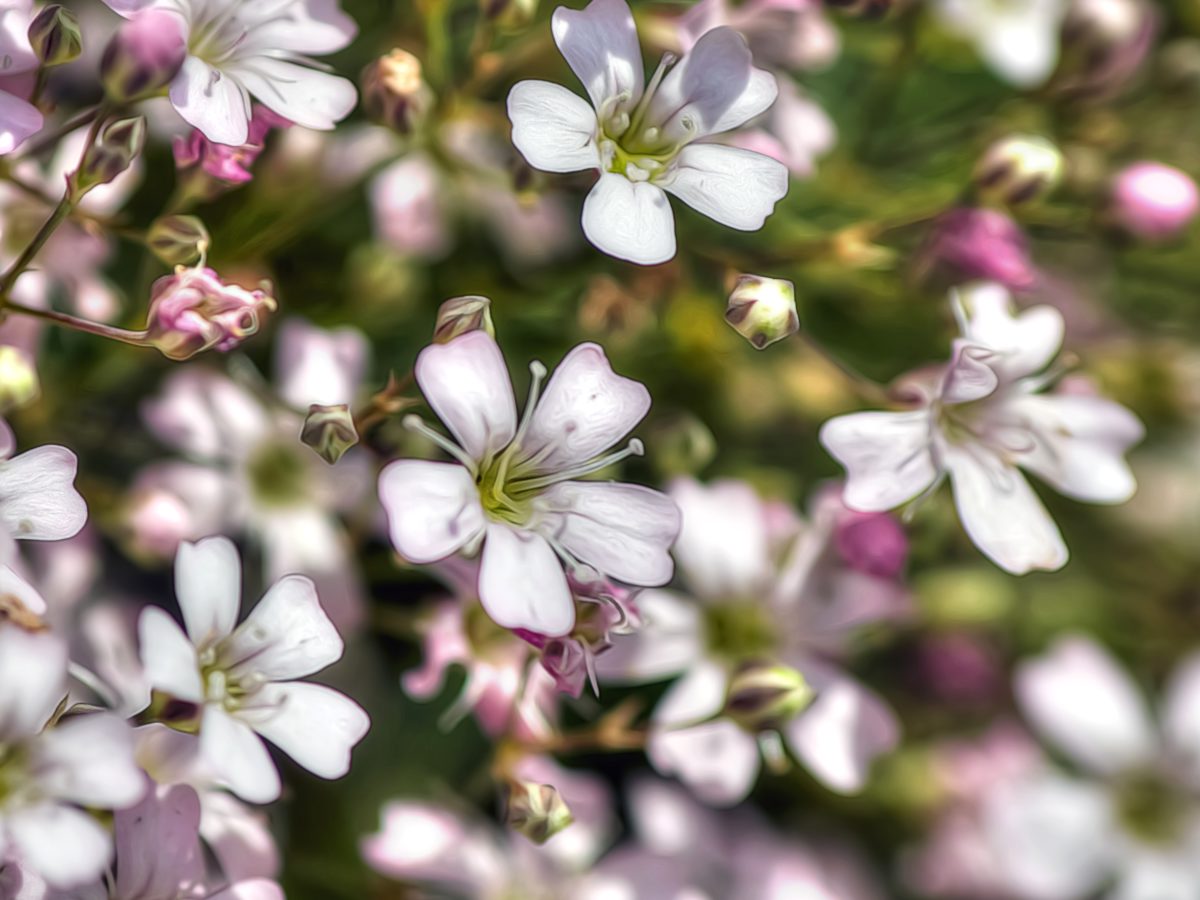
Fruit trees must grow in the sun and must be shielded from cold winds.
They all love well drained soil, with a preference for rich growing soil for the apple tree and pear tree, light soil for the peach tree, cherry tree and apricot tree – and these two last ones cope well with rocky and chalky soil.
Select two different varieties of each fruit type to ensure cross-pollination.
If you’re only going to plant a single tree, opt for a self-pollinating tree.
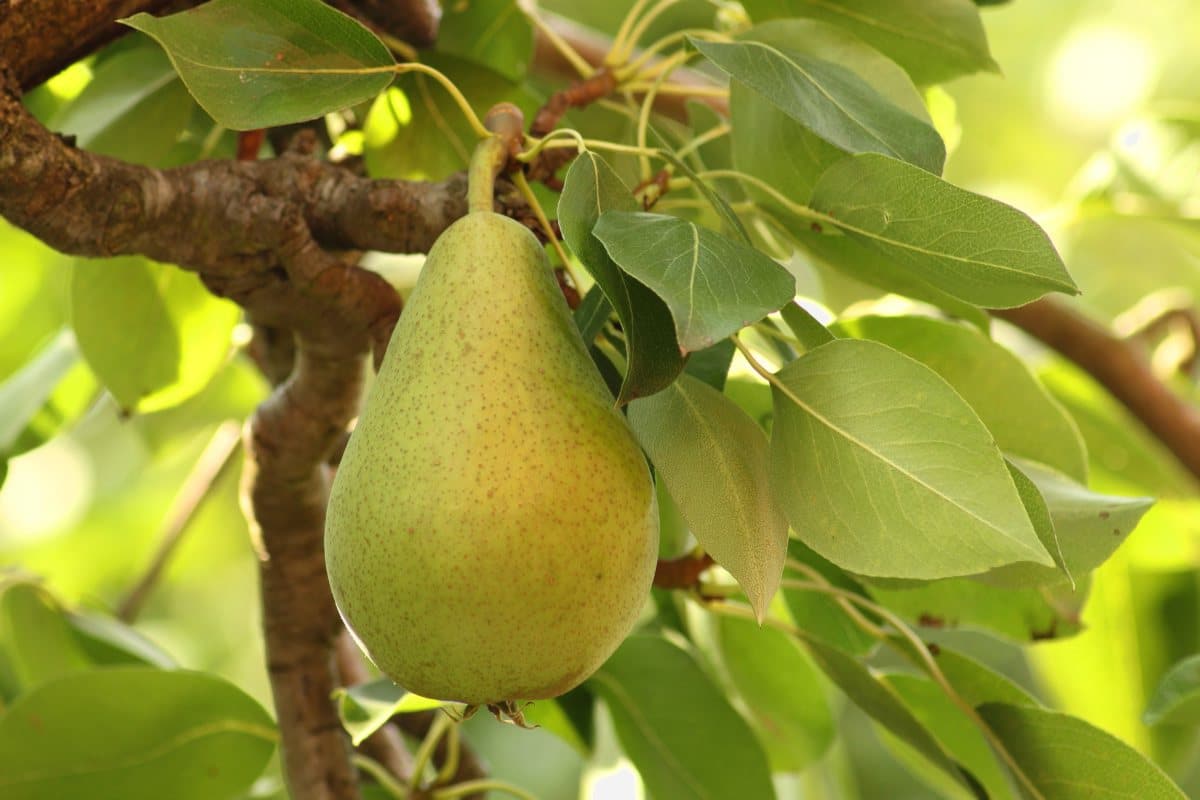
Fruit trees are available in many shapes and sizes which ensure you’ll find a fit whatever your garden looks like.
Since they don’t have a very large footprint, trees that are shaped to grow along a lattice are perfect for small gardens.
Dwarf fruit trees that never grow any taller than 5 feet (1.5 meters) even when mature can be grown in garden boxes on a balcony. Don’t worry – their fruits are normal-sized!
Shaped fruit trees are trees that are already several seasons old, which ensures they’ll bear fruit quickly, often even the first year after planting. They also don’t require as much care, so they’re great for beginners!
Fruit trees are sold trained in several ways, and the shape you buy decides how much room you need and how soon you pick. Here is how the three forms described above compare.
| Tree form | What it is | Best suited to | Main advantage |
|---|---|---|---|
| Lattice-trained (espalier) | Branches trained flat along a lattice | Small gardens | Takes up very little room |
| Dwarf fruit tree | Never taller than 5 feet (1.5 m) at maturity | Garden boxes on a balcony | Fruits are still normal-sized |
| Shaped fruit tree | Sold already several seasons old | Beginners | Bears fruit quickly, often the first year, and needs less care |
Whatever the form, remember to drive stakes or the espalier lattice into the ground before the tree goes in.
Plant your fruit tree at the end of fall – this enhances root development – in a hole twice a wide and deep as the root clump itself. Drive any stakes or espalier lattice in the ground before planting the tree. Treat the roots with root dip, add a few handfuls of ripe compost and water abundantly to press the soil down.
The graft joint must be set just above soil level.
Mulch and water in case of dry spells over the two first years.
Laure Hamann
Never plant into frozen or waterlogged ground; heel the tree in and wait.