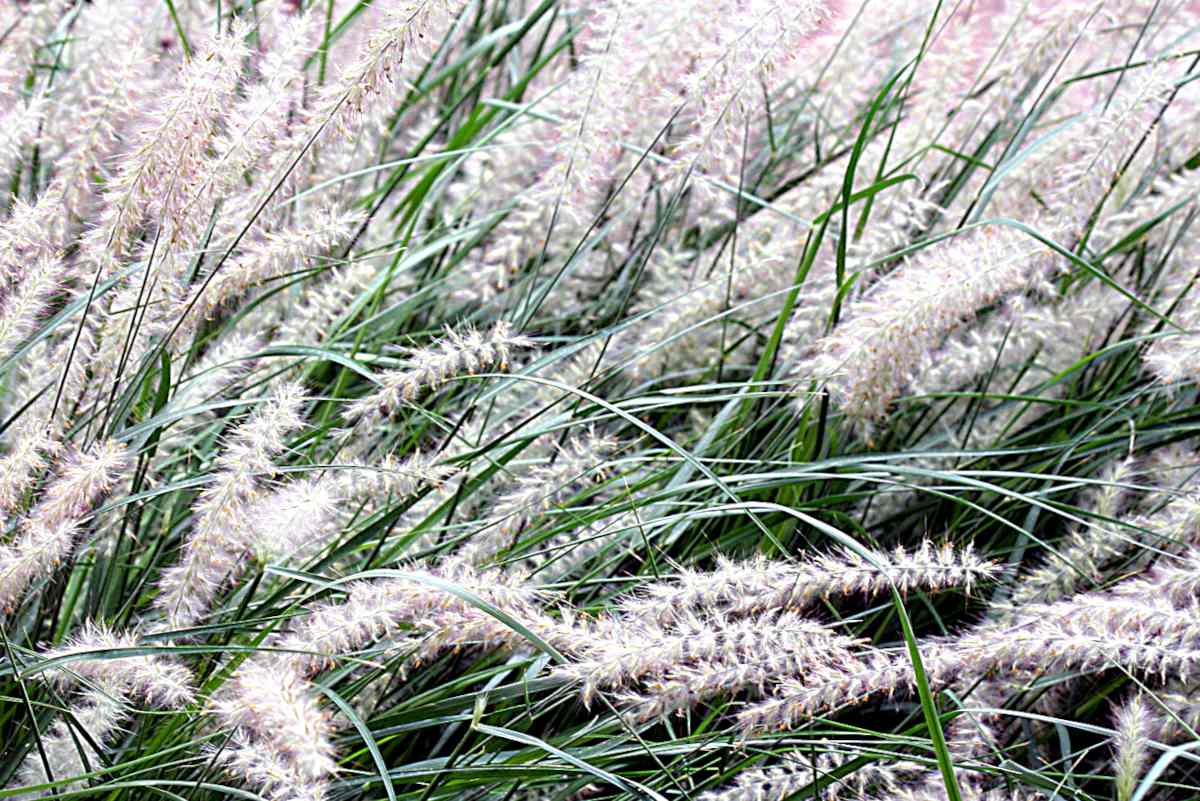
Its flower panicles arch out like furry caterpillars above tender green leaves that turn the colour of ripe wheat as autumn comes on. Oriental fountain grass (Pennisetum orientale) is grown for that long bloom from summer to fall; plant it in full sun and it will light up beds, edges and mounds.
| Name | Pennisetum orientale |
|---|---|
| Family | Poaceae |
| Type | perennial, grass |
| Height | 28 inches (70 cm) |
| Exposure | full sun |
| Soil | ordinary |
| Foliage | deciduous |
| Flowering | midsummer to mid-autumn |
Caring for it is easy and the blooming is wonderful from summer to fall.
Preferably in spring.
Nonetheless, you can plant in fall and summer but avoid periods of strong heat and freezing cold that might compromise the growth of your plant.
Almost all the work this grass asks for is a question of timing. Here is what to do, when to do it, and what each job achieves.
| Job | Season | Why it matters |
|---|---|---|
| Planting | Early to late spring, or early autumn and summer outside heatwaves | Spring is the safest window; avoid strong heat and freezing cold |
| Dividing | Spring, once every three years | Keeps clumps vigorous and makes new plants |
| Cutting back | Late winter | Clears dried leaves so new shoots and flower panicles come through |
| Flowering | Midsummer to mid-autumn | Panicles shaped like caterpillars are the whole point of the plant |
Beyond that, a mineral mulch is all the upkeep the clump really needs.
Cut the dried leaves short at the end of winter.
Oriental fountain grass is quite unique thanks to its flower that resembles a caterpillar.
This grass bestows us with a magnificent inflorescence formed into panicles. Its tender green leaves evolve as the seasons turn to look quite like ripe wheat in fall.
Set it in full sun to decorate beds, edges or mounds.
Mineral mulch makes the superb foliage stand out and will hinder weed growth.