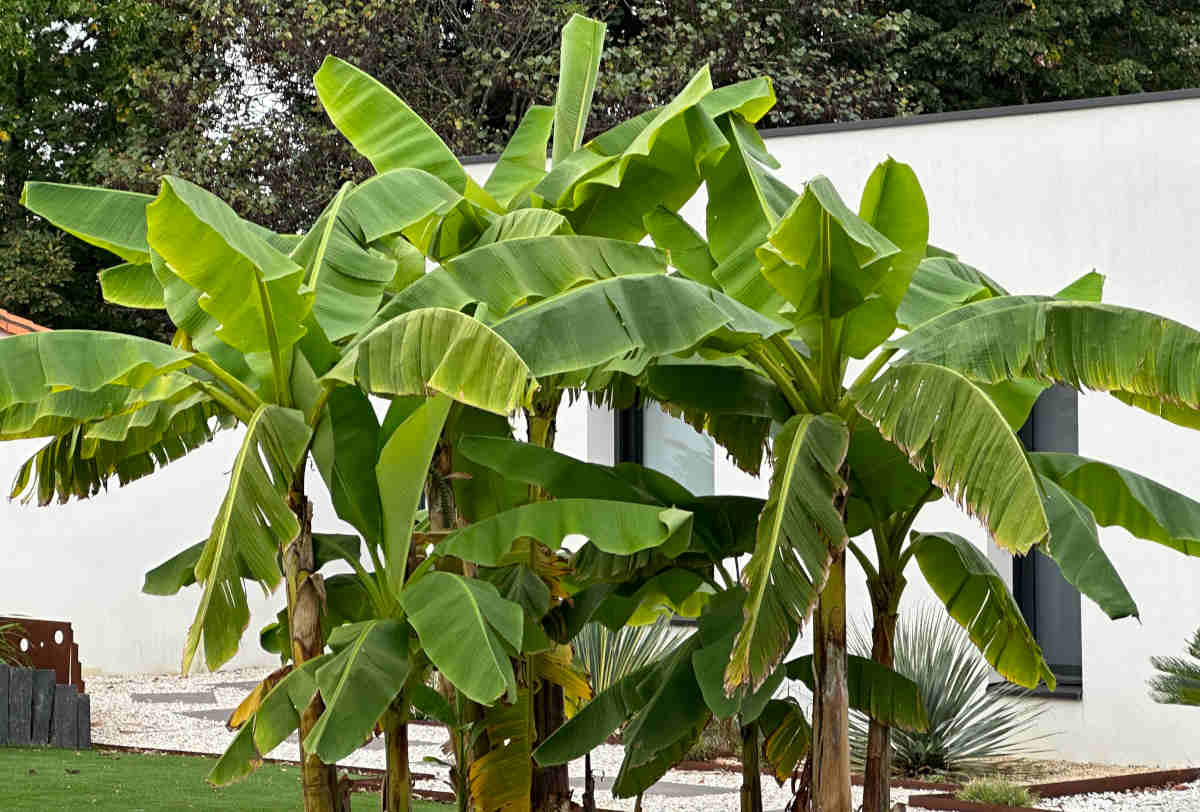
Broad, elegant leaves on a stem with no trunk at all: the banana tree (Musa) is the largest grass on earth, standing anywhere from 3 to 23 feet tall depending on variety and climate. Grown for its exotic foliage, it asks for very good light without direct sun — give it that, and it thrives indoors all year.
| Name | Musa |
|---|---|
| Type | herbaceous plant |
| Height | 3 to 23 feet (1 to 7 meters) depending on the variety and the climate |
| Exposure | very well-lit |
| Soil | soil mix |
| Foliage | evergreen or deciduous depending on the climate |
The banana tree requires good soil mix that can be amended with ⅓ compost, if you’ve got any.
In order to enhance drainage, pour clay pebbles or small stones into the pot to form a layer at the bottom.
T
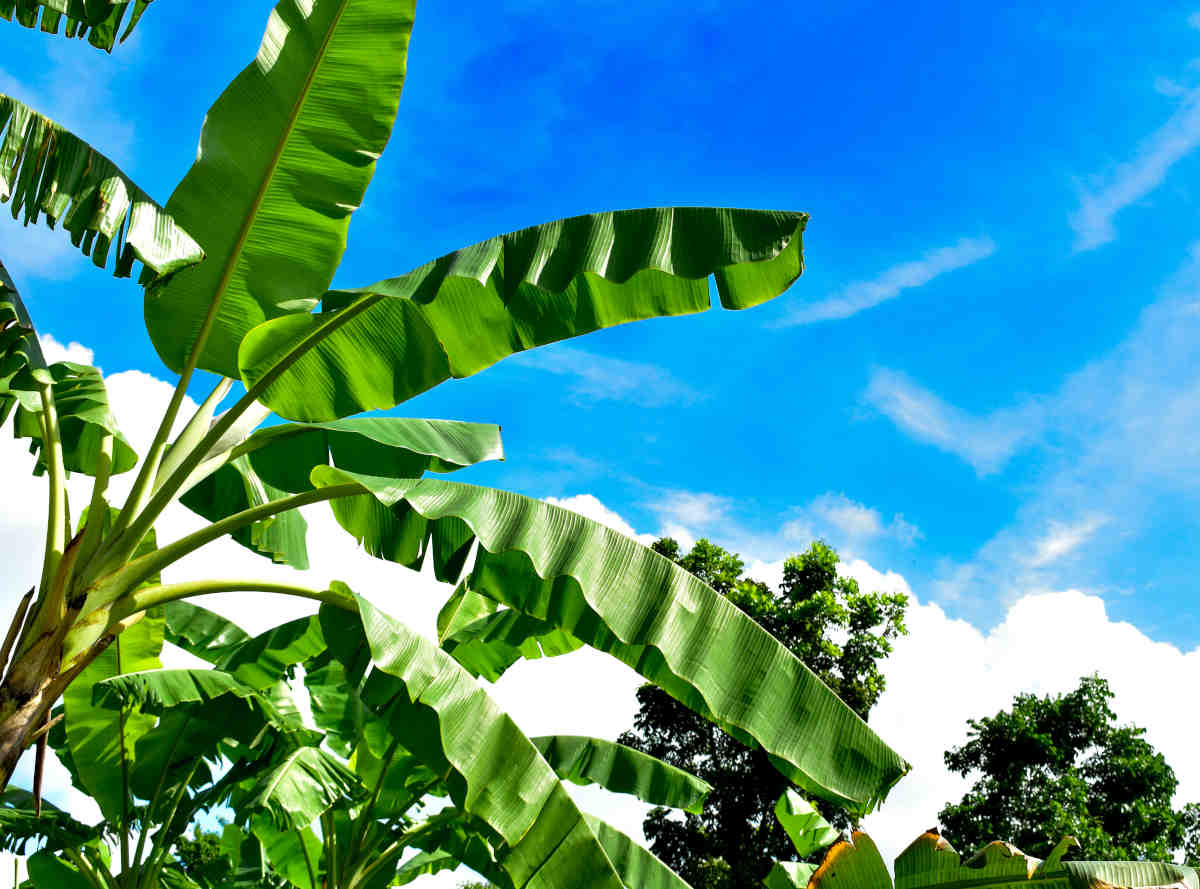
he right time to plant is spring and summer:
Just as might be done in pots, feel free to place a bed of gravel, small stones or clay pebbles to ensure proper drainage.
Generally speaking, the banana tree can’t cope with the winter cold, it tends to lose its leaves when temperatures drop below 35°F (2°C), and it will need to be protected in winter.
However the airborne parts fare, it should grow back in the following spring because its root system is much more hardy and can survive down to -2° F (-19°C). Tropical banana trees will die if temperatures drop below 50°F (10°C), and they can only be grown in greenhouses.
A banana tree can be kept in a pot, planted out, or grown under cover, and the choice comes down to how cold your winters get and how much light you can offer. Here is what each situation asks for.
| Where it grows | Light | Cold limit | When to plant or move |
|---|---|---|---|
| Potted indoors, all year | Very good light but no direct sun | Keep around 65 to 72°F (18 to 22°C) | Repot in spring every 2 or 3 years |
| Potted, taken outdoors for the season | Bright, sheltered spot | Bring back under cover before the cold | Out from late spring to late summer |
| In the open ground, subtropical variety | Facing the equator, against a sheltering wall | Loses leaves below 35°F (2°C); roots hardy to -2°F (-19°C) | Plant in spring and summer |
| Greenhouse or winter garden, tropical variety | Very well-lit, moist air | Dies below 50°F (10°C) | Kept under cover all year |
Whichever situation you pick, drainage at the bottom of the pot or planting hole matters as much as the temperature.
The ideal setting faces towards the equator, along a wall that shelters it from wind.
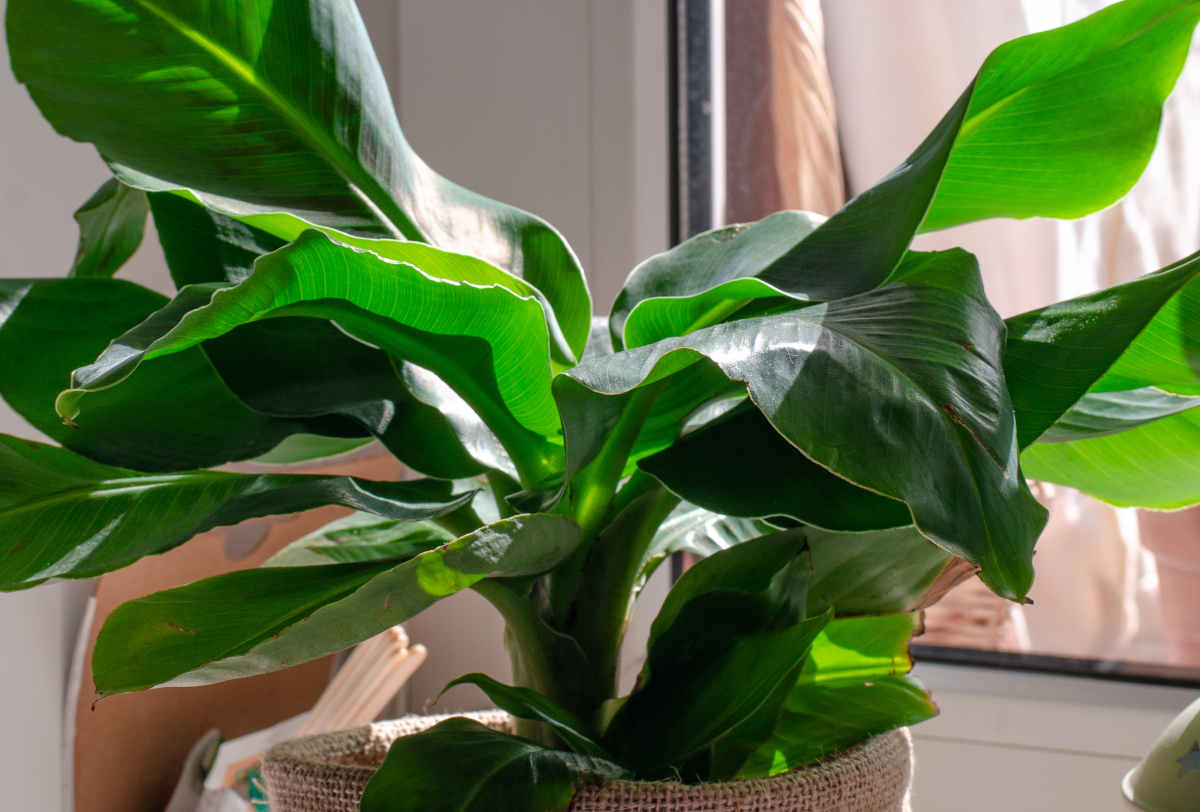
Under our climates, banana adapts well to living indoors in our apartments and homes.
It grows best when surrounding temperatures hold around 65 to 72°F (18 to 22°C) and requires very good light, but not direct sunlight.
Behind a window, best avoid too much direct exposure to the sun which might dry your banana tree up.
Best place it near a window facing to the West so that it would still have a good deal of light.
If you live in a house that is quite dark, avoid purchasing a banana tree because it won’t cope well with the lack of luminosity.
Indoors, it is important to mist water on the leaves regularly to recreate its natural living conditions which are rather moist.
For strong growth and magnificent leafage, you can add leaf plant fertilizer.
This is usually the time of the year when the banana tree grows most.
For potted banana trees, water regularly while letting the soil mix dry at the surface before watering again.
When outdoors, watering must be regular but limited, in order to not suffocate the plant’s roots.
You might say that watering every 2 or 3 days is often needed, especially when the heat rises.
More or less every two weeks, you can offer it some liquid fertilizer, taking great care to moisten the soil mix beforehand.
Start reducing the watering because the plant’s water needs begin to decrease.
Only when the soil is dry down to the first inch or so (a couple centimeters), water to moisten the entire soil mix clump again.
Finally, this season is also the one to stop adding fertilizer, from October all the way to March and April.
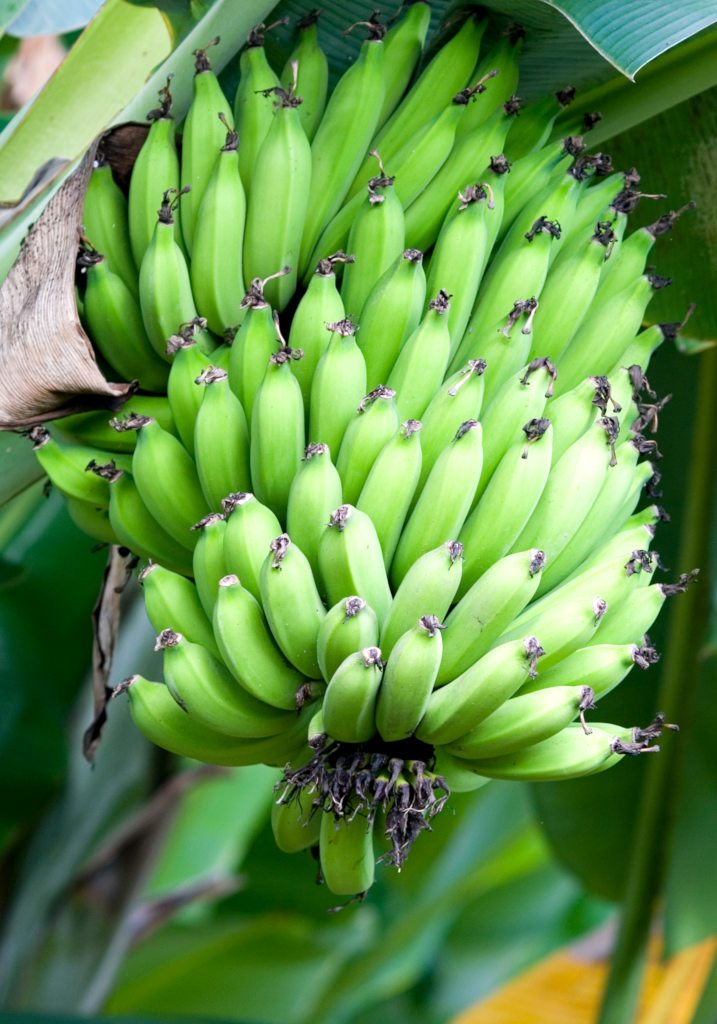
In Europe and in temperate climates, the weather makes it tough for bananas to develop, it’s simply not warm enough.
For Europe, bananas mainly come from 4 parts of the world: Guadeloupe, Martinique, the Canary Islands and Madeira.
As for the rest of the world, production mostly comes from India, Brazil, and South American countries.
If you want to succeed in harvesting bananas in an indoor greenhouse, you’ll need to recreate the tropical conditions of its native environment:
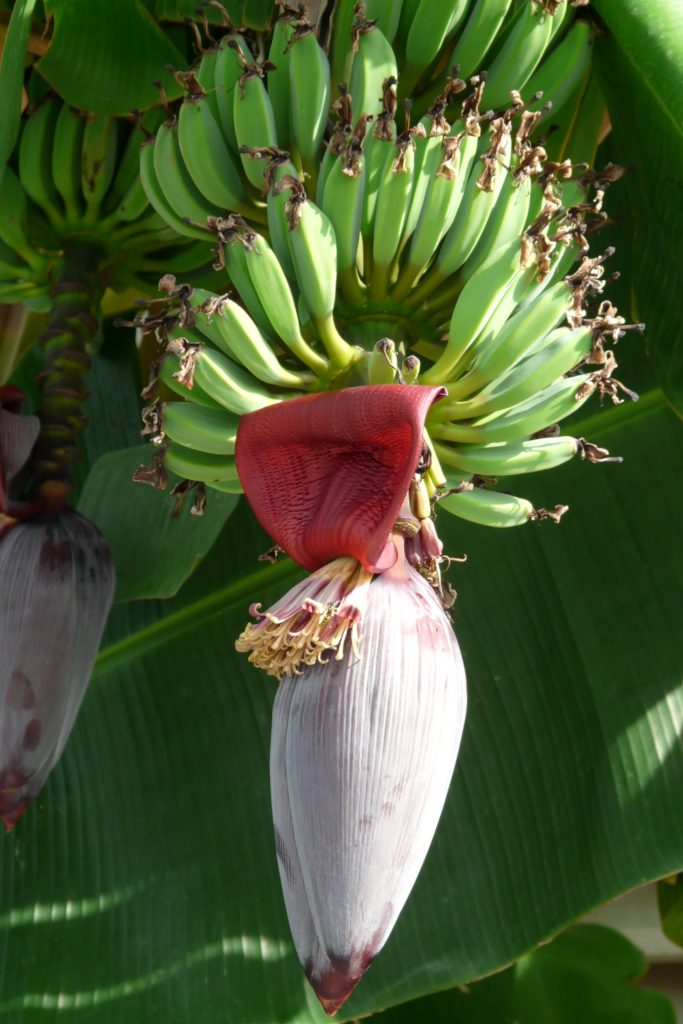
The banana tree isn’t a tree, it’s actually a type of herbaceous plant because it doesn’t have any trunk. It is technically the biggest grass in the world!
Although subtropical banana varieties can grow in our climates, tropical banana trees are prone to freezing and can thus only be grown in greenhouses, winter gardens and indoors.
Both appealing to the eye and very easy to grow, it is among the most liked indoor plants for houses and apartments.
Its foliage is particularly elegant and brings a touch of exotic life to a living room, dining area, or any other room of the house that is well-lit.
Banana is a fruit with a high calorie count which makes it very interesting for athletes.
It has high sugar contents like starch and carbohydrates.
Banana is one of the richest common fruits in potassium, a mineral that helps muscles contract properly and is often blamed for cramps when it runs low.
As the peel turns from green to spotted, the starch inside converts into simple sugars, so a ripe banana tastes sweeter and releases its energy faster than a firm one.
Never store unripe bananas in the fridge, because the cold blackens the skin and stops the fruit from ripening any further.
If well cared for, your banana tree will resist diseases and parasites well.
But if you discover something unusual, feel free to ask a question on our forum to quickly get an answer.
Soggy soil rots the base of the stem, so empty the saucer after every watering.
Brown, crisp leaf margins on an indoor banana usually mean dry air or scorching sun rather than any disease, and cutting the damaged strip away keeps the plant looking tidy.