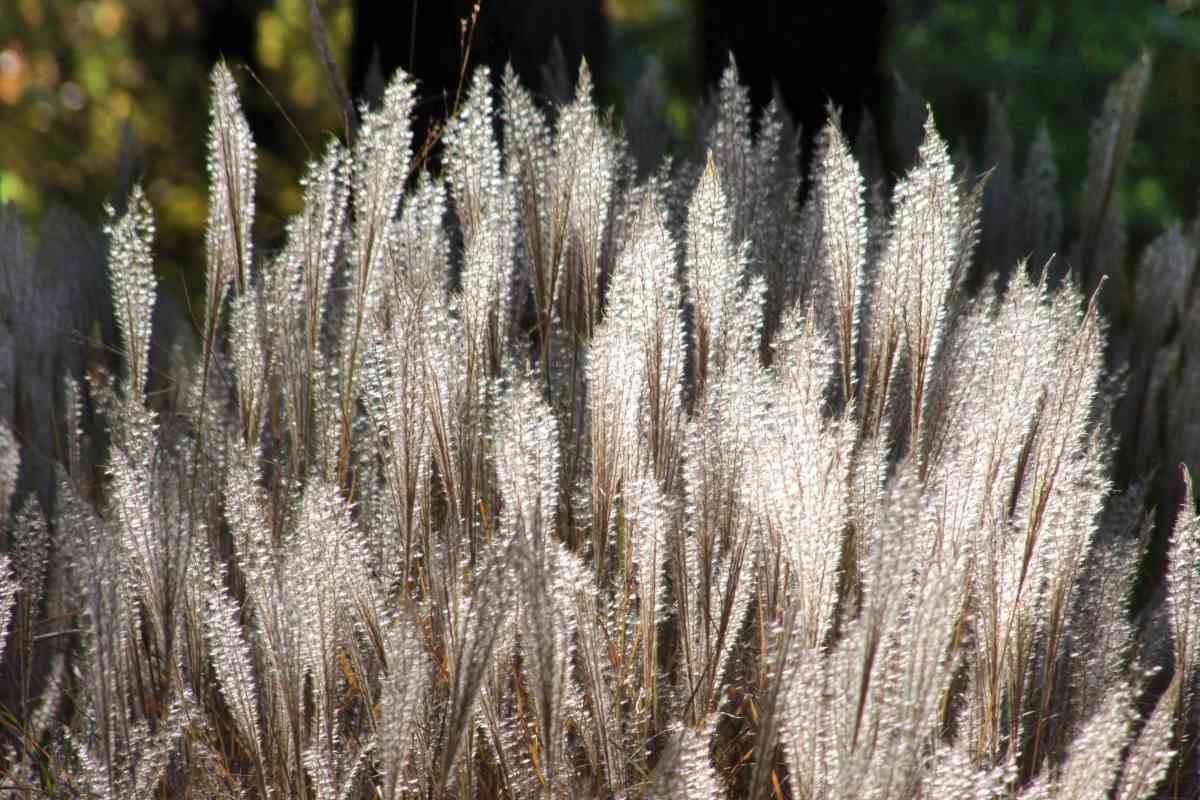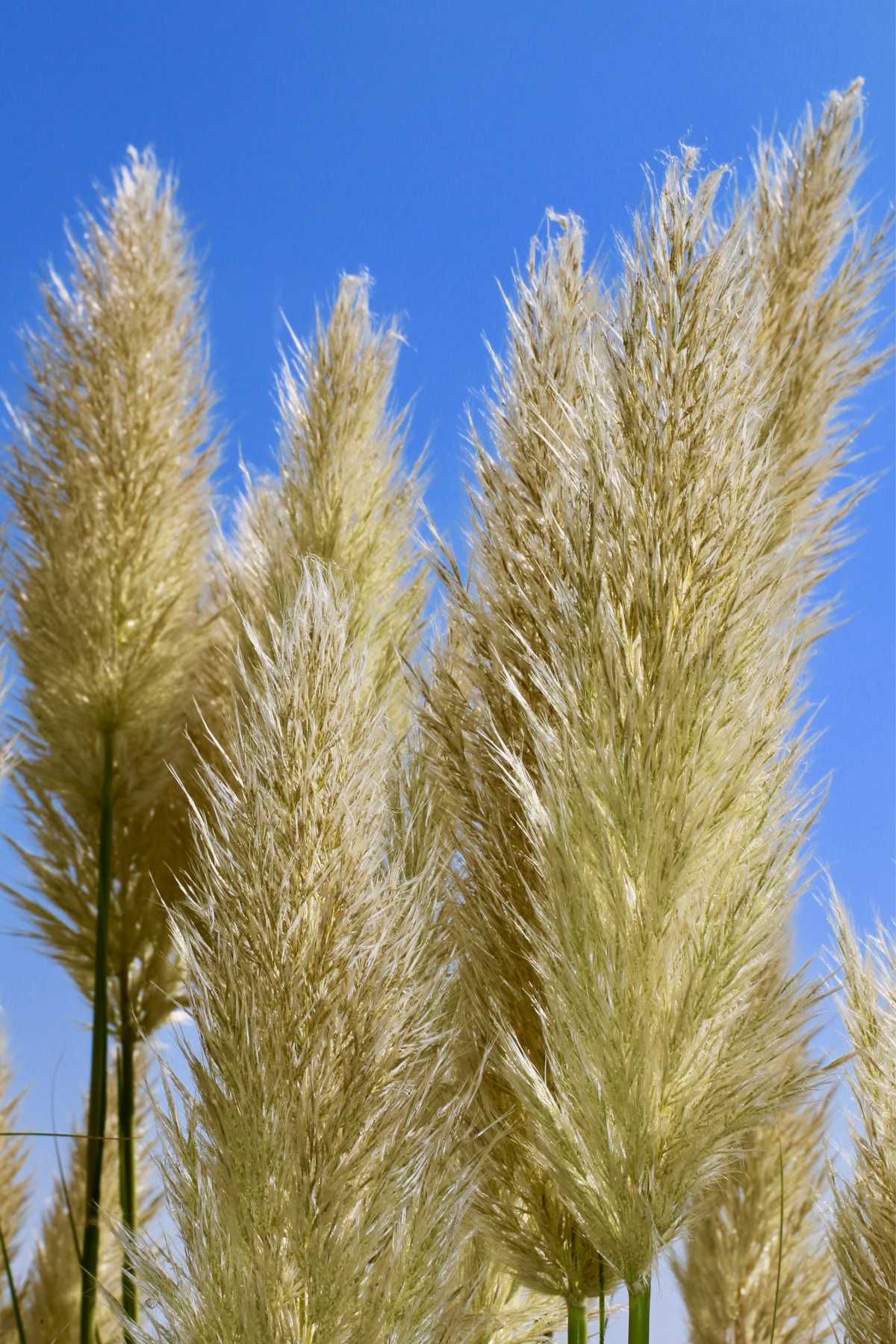
Feathery panicles borne on scapes over 13 feet (4 metres) tall rise above a fountain of arching blades: pampas grass (Cortaderia selloana) is grown as a standalone specimen that shows off its uniqueness, or massed into great swaying plains. Give it full sun and space well clear of a hedge, because it grows seriously large.
| Name | Cortaderia selloana |
|---|---|
| Family | Poaceae |
| Type | grass, perennial |
| Height | 1 ⅓ to 13 feet (1.5 to 4 metres) |
| Exposure | full sun |
| Soil | ordinary |
| Flowering | early to mid-autumn |
Preferably in spring or fall in soil amended with soil mix.
Everything this grass asks for comes down to four moments in the year. Here they are side by side, so you can see at a glance what is due and when.
| Job | When | What it involves |
|---|---|---|
| Planting | Spring or autumn | Set it in soil amended with soil mix, in full sun |
| Propagating | Spring | Split the clump by crown division |
| Hard cutting back | Late autumn | Cut the plant right back once blades and flowers have dried up |
| Protecting the base | Early winter, harsh climates only | Mulch the foot of the clump with dried leaves |
| Light trim | Late autumn, mild climates | Shorten to 20 inches (50 cm) and leave the base unprotected |
Whichever route you take, cutting back is also what keeps this grass from turning invasive.
It’s up to you whether you want to keep the leafage and blooms in winter or not, because it can either be trimmed and evened out, or simply kept as is.
But since Pampas grass can quickly turn invasive if nothing is done, here is our advice on trimming it:
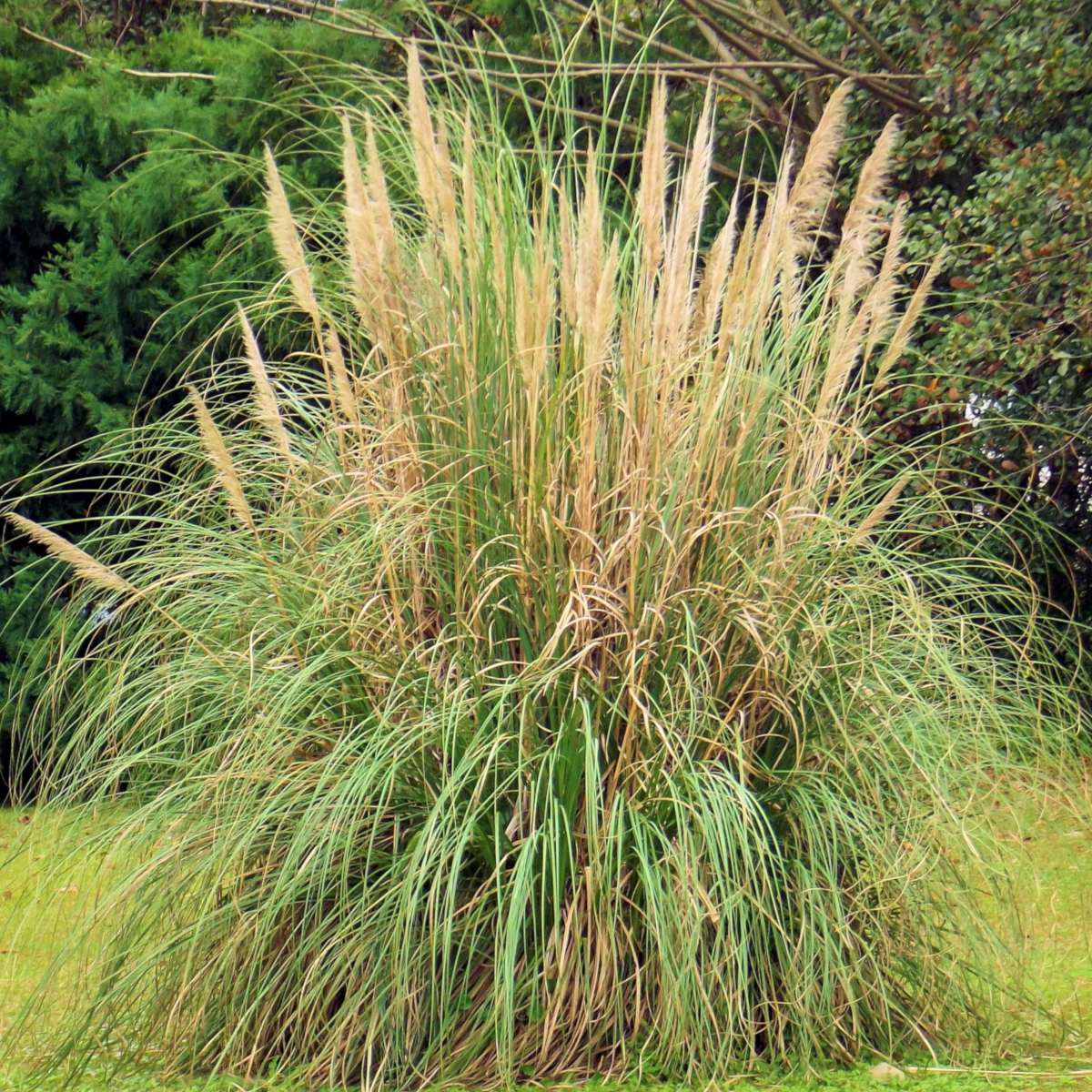
This very ornamental and sometimes spectacular perennial sends up beautiful flowers scapes and panicles that tower at over 13 feet (4 meters) high. It’s a type of feather grass.
However, its beauty doesn’t make it any less invasive. In some areas of the globe, legislation is underway to actually ban its sale, because it tends to propagate extremely fast. It wipes out native plants entirely as it encroaches the land.
It is fine as a standalone, that’s what best highlights its uniqueness. But if you’ve got a lot of space available, you can also create large swaying plains of Pampas grass.
Upon planting, take great care not to plant too near a hedge or a neighbor’s plot, because it grows seriously large!
Read also:
Pozzolana looks great and makes the Pampas grass look astounding. Spread this mineral mulch around the clump.