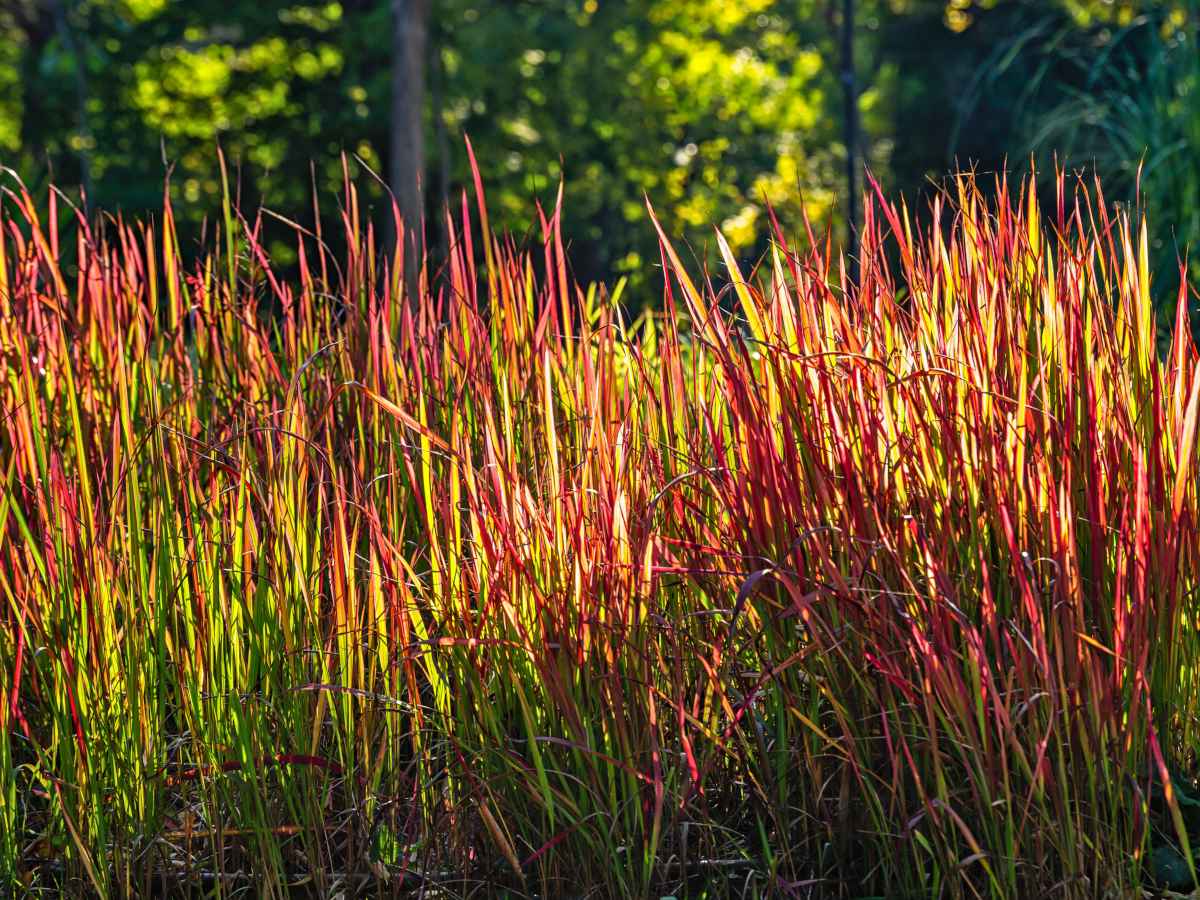
A lush summer perennial, Imperata cylindrica ‘Red Baron’ really makes a stand.
Key Imperata cylindrica facts
Botanical name – Imperata cylindrica
Common name – cogongrass
Family, Type – Poaceae, Grass
Bearing – Upright mound
Foliage – deciduous
Height – 16 to 36 inches (40 to 90 cm)
Spacing: 6 to 8 plants per sq. yard (m²) – Exposure: full sun
Soil: cool, well-drained but not too dry – Flowering: – fall (rare)
Red baron blood grass stands out gainst other grasses with the intriguing shape and color of its leaves.
 To make sure your Imperata cylindrica ‘Red baron’ feels right at home, aerate the soil and lighten it up with either soil mix or compost. If the soil seems really heavy to you, you can also mix in a little sand which will increase drainage. Water thus won’t linger around for too long.
Actually, once it has settled in properly, Imperata cylindrica ‘Red baron’ will cope with drought much better than it will with flooding.
You won’t need a very deep pot for this grass. 6 inches / 15 cm is deep enough.
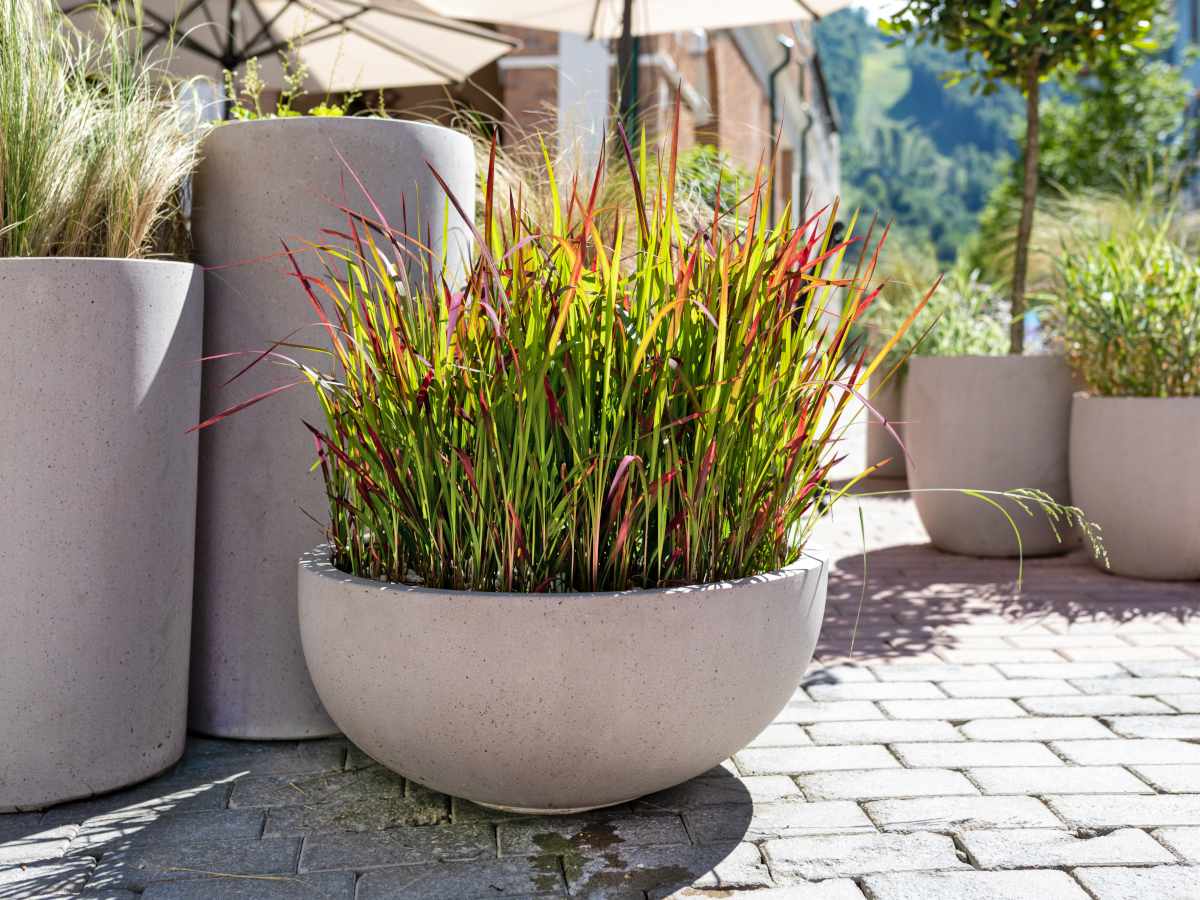 Choose a pot that is as wide as you wish your clump to become. Make sure there’s lots of drainage:
This grass is difficult to grow together with other plants, so you’ll have to prefer multi-pot compositions instead. Indeed, Imperata grass tends to kill other plants off, waging a kind of plant warfare underground with its roots.
Grasses have the ultimate advantage over all other plants if you don’t like gardening: they require practically zero care. The only important step to perform is to trim the clump short at the end of winter. Usually, March is the best month to do so.
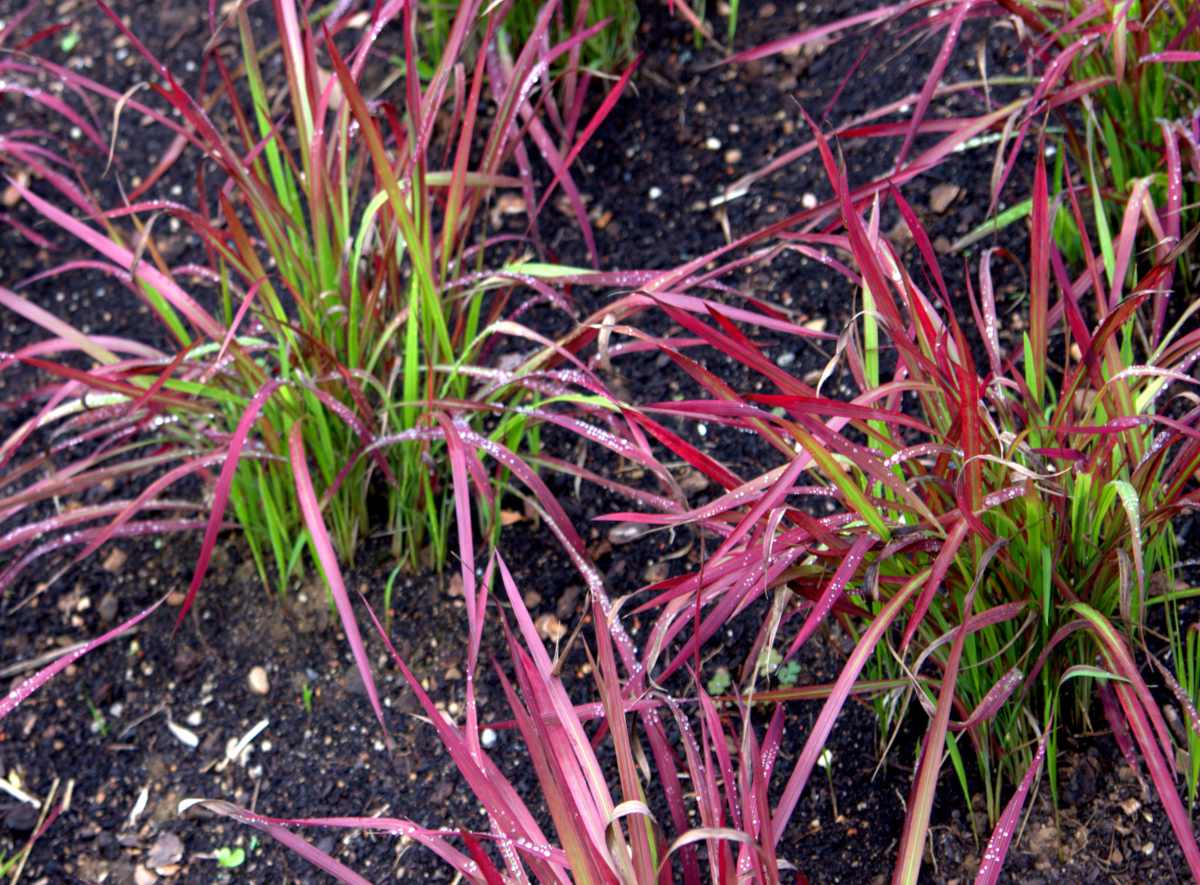 Special note of caution: if the area suits it well, Imperata cylindrica ‘Red baron’ may quickly turn invasive because of its prolific runners. Nonetheless, it’s not so difficult to control if you’re wary: simply pull running shoots out every now and then. In cases where the clump has grown too large for your taste, sink a spade round the center and pull everything outside of it away.
As is the case for many perennials, Imperata cylindrica ‘Red baron’ is an easy plant to multiply. You’ll quickly end up with a great many shoots.
Your ‘Red baron’ bloodgrass is almost invulnerable to pests and diseases.
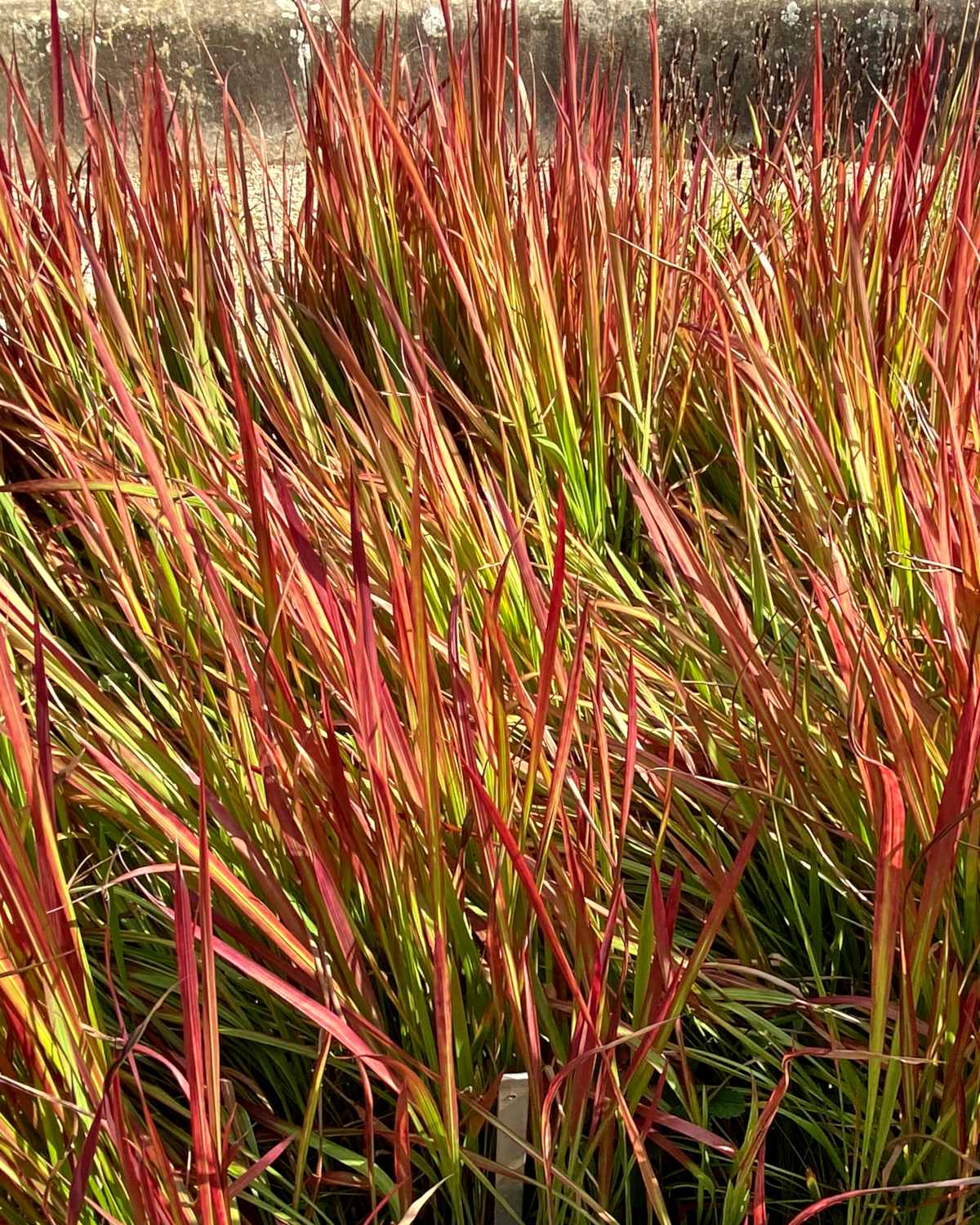 Although it doesn’t grow very tall, the ‘Red baron’ Imperata cylindrica will for sure fit the spot in your flower beds.
Whichever option you choose, your I. cylindrica ‘Red baron’ will bring warm colors to your garden with its red hues and rare bearing.
This is an excellent plant to play around with as you landscape. Use a rhizome barrier to carve a pattern in the ground. As the plant spreads and grows, it will fill the pattern in for a surprising effect!
Similarly, use this root barrier technique to lock the grass in along edges lining your walkways or entry points to the garden.
Apart from the striking looks of varieties such as the ‘Red Baron’ and the ‘Ruby’, cogon grass has other positive aspects as well.
In its native territories, this grass has quite a few uses:
This plant also has the name “bloodgrass”. Earlier, it was because of its red color. Now, since it is one of the world’s worst invasive plants, it almost deserves the name because it exterminates other native plants as it spreads!