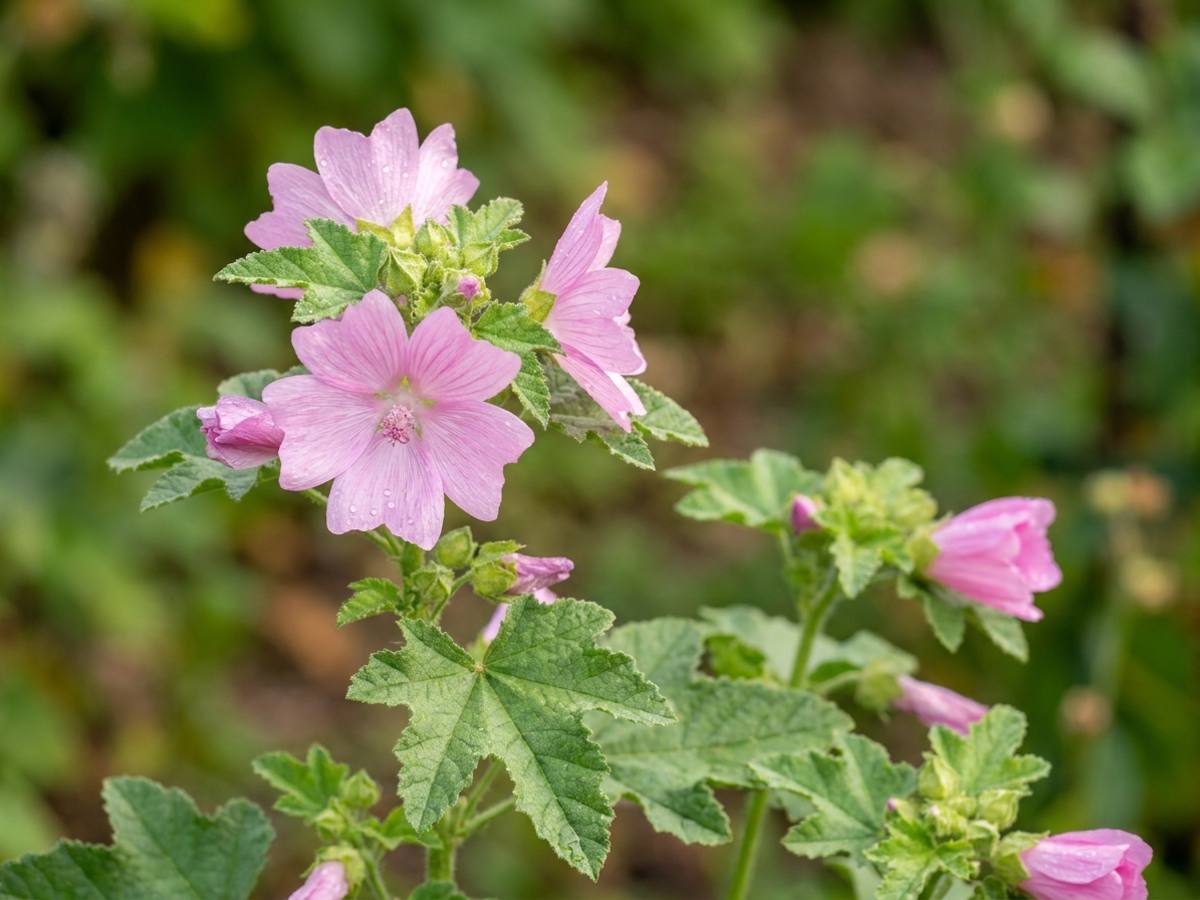
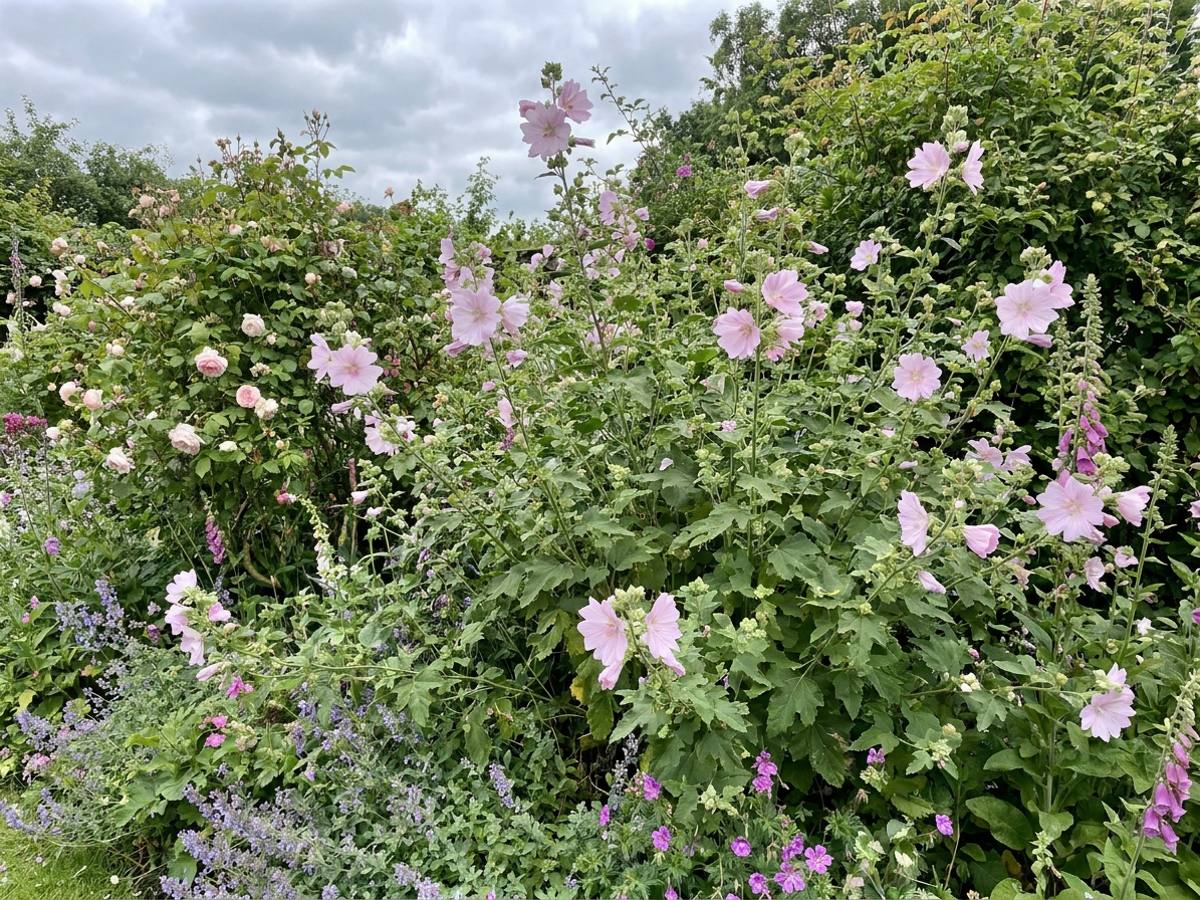
Lavatera thuringiaca, commonly known as garden mallow or Thuringia mallow, is a robust herbaceous perennial prized for its large, papery pink or magenta flowers that bloom prolifically throughout summer. This cottage-garden stalwart brings cottage-style charm and informal elegance to mixed borders, wildflower schemes, and sunny beds. Its vigorous, bushy habit and long flowering season make it invaluable for gardeners seeking reliable, low-maintenance colour.
Growing conditions
Lavatera thuringiaca thrives in full sun, where it produces the most abundant flowers and develops a sturdy, compact habit. Partial shade is tolerated, though flowering may be reduced and stems may become drawn or leggy in poor light. Ensure good air circulation around plants to minimise fungal issues.
This mallow prefers well-drained soil of light to moderate fertility; overly rich soil encourages excessive leafy growth at the expense of flowers. Neutral to slightly alkaline soil is ideal, though it adapts well to slightly acid conditions. Avoid waterlogged or clay-heavy soils, which cause root rot and stem collapse.
Hardy throughout the British Isles and northern Europe, Lavatera thuringiaca tolerates cold winters down to −15 °C with ease. In areas subject to late spring frosts, young growth may be damaged, but plants recover quickly from the base.
How to plant Lavatera
Plant in spring (April–May) or early autumn (September), allowing sufficient time for root establishment before winter stress or summer drought. Spring planting is preferred in exposed or frost-prone gardens.
Space plants 90–120 cm apart to accommodate mature spread without crowding neighbouring plants
Plant at the same depth as in the nursery pot; ensure the crown sits level with the soil surface
Work in grit or coarse sand if soil is heavy; add organic matter sparingly to avoid excessive nitrogen
Water in thoroughly after planting and maintain consistent moisture for the first four weeks
Propagate from softwood cuttings in late spring or by seed sown indoors in March; division of established clumps is possible but rarely necessary
Full sun brings the most flowers and sturdiest habit
The Lavatera year at a glance
Almost everything this mallow asks for comes down to cutting it back at the right moment. The table below sets out the one job that matters in each part of the year, and what it buys you.
The Lavatera year at a glance
Season
Main task
Why it matters
Early spring
Cut all growth back to 30 cm as new shoots emerge; feed with a balanced, low-nitrogen fertiliser
Drives strong basal growth and keeps the plant compact
Summer
Deadhead regularly; shorten the top third of tall stems; water deeply in dry spells
Keeps blooming continuous and growth bushier
Late summer to late autumn
Stop deadheading, then cut stems to 15–20 cm and mulch lightly with compost
Prevents wind rock and reduces disease risk before winter rains
Winter
Nothing, beyond making sure drainage stays free
Prolonged waterlogging can kill even established plants
Of these, the hard spring cut is the one that cannot be skipped.
Care through the seasons
Spring: Cut back all growth to 30 cm above ground level in late March or early April as new shoots emerge. Feed with a balanced, low-nitrogen fertiliser to encourage strong basal growth. Remove any dead wood and discard the cuttings (do not compost, as they root readily in the garden heap).
Summer: Water deeply during prolonged dry spells, particularly in the first season after planting. Deadhead spent flowers regularly to encourage continuous blooming; if stems become tall and ungainly, cut back the top third to promote bushier, more compact growth. In very sheltered gardens, support may be necessary in exposed positions.
Autumn: Stop deadheading from late August onwards to allow seed set and encourage self-seeding if desired. Cut back stems to 15–20 cm in late October or early November before winter rains arrive; this prevents wind rock and reduces disease risk. Mulch lightly with compost or composted bark in November.
Winter: The plant remains dormant and requires no intervention. In exceptionally severe winters with prolonged waterlogging, established plants may fail; excellent drainage is essential for winter survival.
Best varieties to grow
The species itself is the most commonly grown form, though a few named selections offer subtle variations in colour and habit.
Lavatera thuringiaca — The species with large, soft pink flowers and deep veining; the benchmark for cottage-garden appeal
‘Barnsley’ — Pale pink flowers with a darker pink or magenta eye; more compact than the species and slightly less vigorous
‘Bredon Springs’ — Deep rose-pink flowers; an outstanding selection with exceptional flower production and a tidy, upright habit
‘Ice Cool’ — Distinctive white to very pale pink flowers with minimal veining; a striking alternative for mixed plantings and cool colour schemes
Pests, diseases and common problems
Rust: Orange or brown pustules appear on leaf undersides, causing yellowing and premature leaf drop. Improve air circulation, remove affected leaves promptly, and avoid overhead watering; apply sulphur dust in mild cases or bordeaux mixture if infection is severe.
Anthracnose and stem rot: Dark lesions on stems and leaves, or sudden collapse of plants, often following wet weather. Remove affected stems immediately, cut back plants to ground level if necessary, and ensure excellent drainage; do not mulch heavily against the crown.
Leaf beetles and sawfly larvae: Foliage becomes riddled with small holes or appears skeletonised. Inspect plants regularly and remove affected leaves by hand; encourage natural predators such as ladybirds and parasitic wasps.
Leggy, weak growth: Excessive tall stems with sparse flowering, typically from insufficient light or too much nitrogen. Relocate to sunnier spots, reduce feeding, and cut back hard in spring to promote bushier branching from the base.