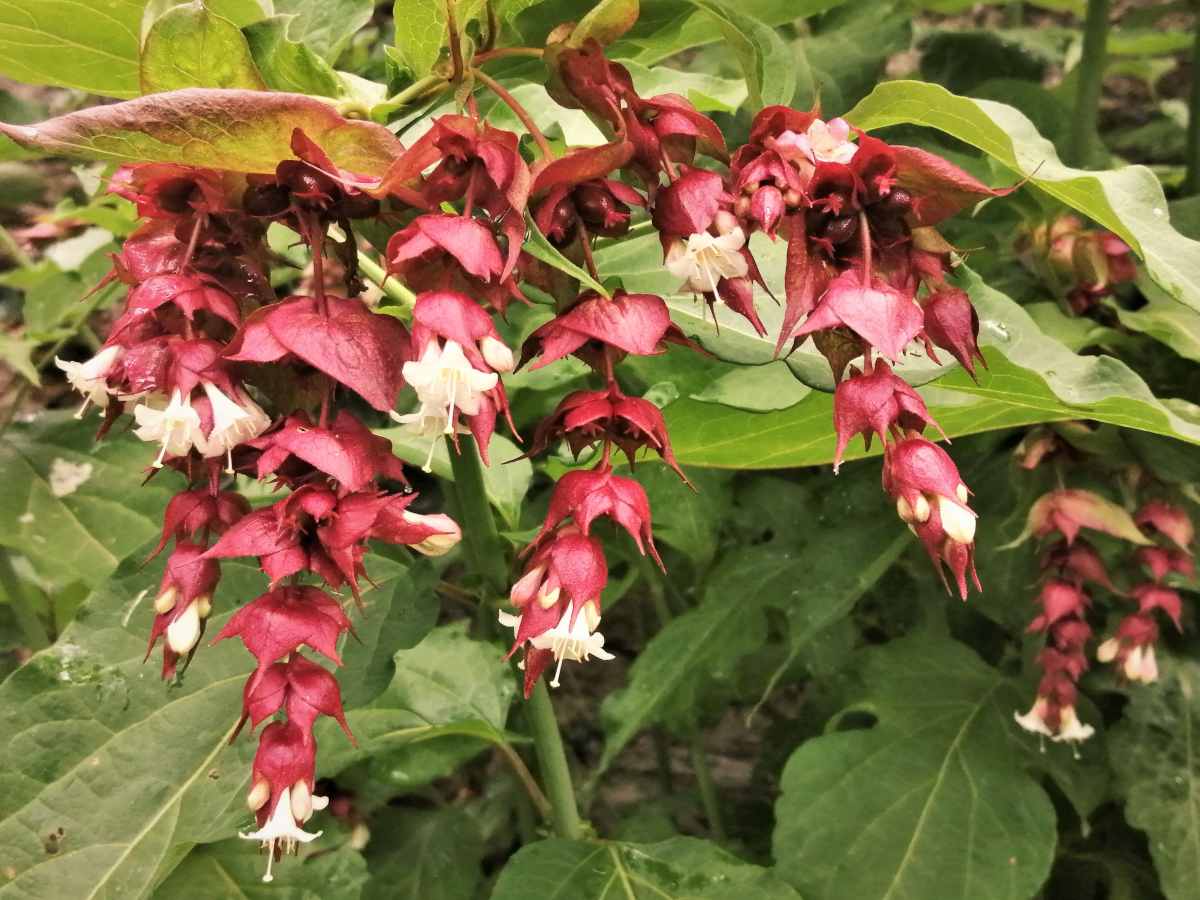
Few shrubs bring so much late-season theatre as Himalayan honeysuckle (Leycesteria formosa). Its arching, bamboo-like canes drip with chains of white flowers sheathed in claret-red bracts from midsummer until mid-autumn, then turn to glossy purple-black berries that the blackbirds strip through autumn. Cut it hard in spring, and it flowers on the growth it makes that same year – which makes it one of the easiest shrubs to keep in shape.
Himalayan honeysuckle facts
Name – Leycesteria formosa
Family – Caprifoliaceae
Type – deciduous shrub, often grown as a cut-back subshrub
Height – 5 to 6½ ft (1.5 to 2 m), as much across
Exposure – full sun to part shade
Soil – any moist but well-drained soil, clay and chalk included
Hardiness – about 5°F (−15°C) – Flowering – early summer to mid-autumn

Himalayan honeysuckle is refreshingly unfussy. It flowers most freely in full sun or dappled shade, but copes with several hours of shade a day – useful under a high tree canopy or against a north-facing fence. In deep shade expect leggier canes and fewer flowers.
In mild maritime gardens it behaves as a true shrub; inland, treat it as a cut-back subshrub and mulch the crown.
Plant container-grown shrubs in autumn or early spring, when the soil is warm and naturally moist. Autumn planting gives the roots a head start before the first flowering season. Our general guidelines for planting a shrub apply here without change.
Prune in early spring or mid-spring, cutting every stem back to 12 to 24 in (30 to 60 cm), or right to the ground for a neater, more vigorous shrub. Nothing is lost: the flowers come on the new growth.
The same principle governs most shrubs that flower on new wood – see our guide to pruning shrubs.
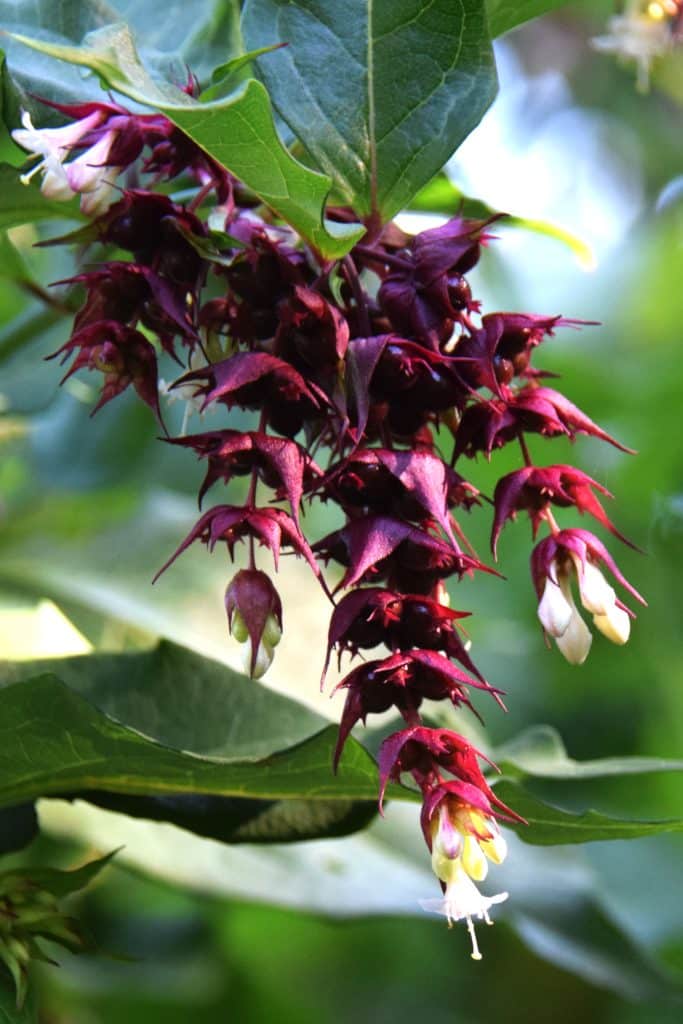
The species is lovely, but four selections offer brighter foliage or a tidier frame.
| Variety | What sets it apart | Best used |
| ‘Golden Lanterns’ | Golden-yellow leaves flushed pink at the margins, with the usual claret bracts | Part shade – full sun scorches the foliage |
| ‘Purple Rain’ | Deeper, richer bracts and a slightly more upright habit | Mixed borders where you want the flower colour to carry |
| ‘Notbruce’ (sold as GOLDEN PHEASANT) | Vivid chartreuse foliage all summer | Lighting up a shady border |
| ‘Jealousy’ | Compact and denser, around 4 ft (1.2 m) | Small gardens and large containers |
Three methods, in order of ease:
Outstandingly so, and for an unusually long stretch of the year. The flowering season from early summer to mid-autumn provides nectar for bumblebees when most shrubs have finished, and the purple-black berries are a favourite of blackbirds, thrushes and pheasants – hence the name pheasant berry. It sits well among other berrying shrubs planted for birds.
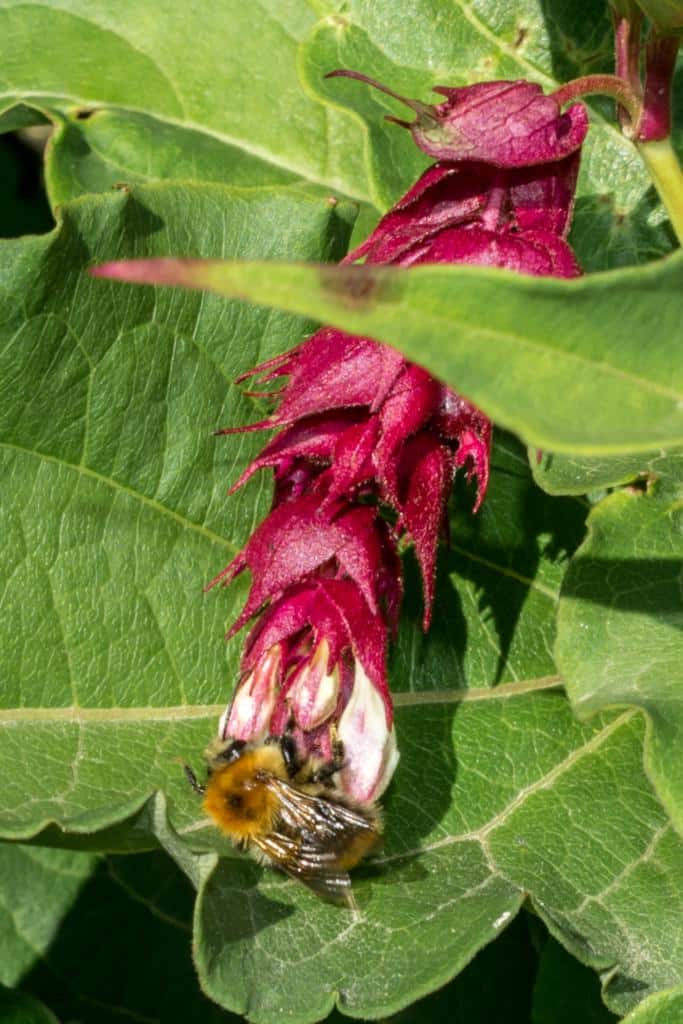
Prune hard in early spring, never in autumn. Those two half-sentences contain almost everything that separates a shapely, free-flowering plant from a sprawling one that dies back at the crown. The hollow canes are the shrub’s own winter coat – leave them on.
It depends where you garden. It is classed as an invasive weed in New Zealand, parts of Australia and coastal areas of western North America, where birds carry the seed into native bush. In British and northern European gardens it self-seeds enthusiastically but is easily controlled: remove the fruiting stems in early autumn and hoe off seedlings while they are small.
Very fast. A spring-pruned plant will typically throw up 5 to 6½ ft (1.5 to 2 m) of new cane in a single season and flower on it the same year. Expect a young plant to reach full size within two to three years of planting.
In early spring or mid-spring, cutting all stems back to 12–24 in (30–60 cm), or right down to the base for a neater and more vigorous shrub. Never prune in autumn: the hollow canes shelter the crown from frost, and removing them early is the commonest cause of winter damage.
Outstandingly. The early summer-to-mid-autumn flowering provides nectar for bumblebees when most shrubs have finished, and the purple-black berries are a favourite of blackbirds, thrushes and pheasants.
It is hardy to about 5°F (−15°C). Below roughly 10°F (−12°C) the top growth is killed, but an established plant regrows from the base in spring. In cold inland gardens, mulch the crown and simply treat it as a cut-back subshrub.
They are edible but insipid, sometimes said to taste faintly of caramel – hence the name flowering nutmeg. They are worth far more to the birds than to you, so leave them on the plant.
No. True honeysuckles belong to the genus Lonicera. Leycesteria formosa shares only the family, Caprifoliaceae, and neither its climbing habit nor its scent.
Read also: