When temperatures spike, garden birds face a genuine survival crisis — and most of them are suffering quietly in plain sight. Unlike mammals, birds can’t sweat. They pant. They seek shade. And they desperately need clean, accessible water. During a heatwave, providing the right water source in the right place can be the difference between a bird making it through the day and not. So, here’s exactly what to do, starting right now.
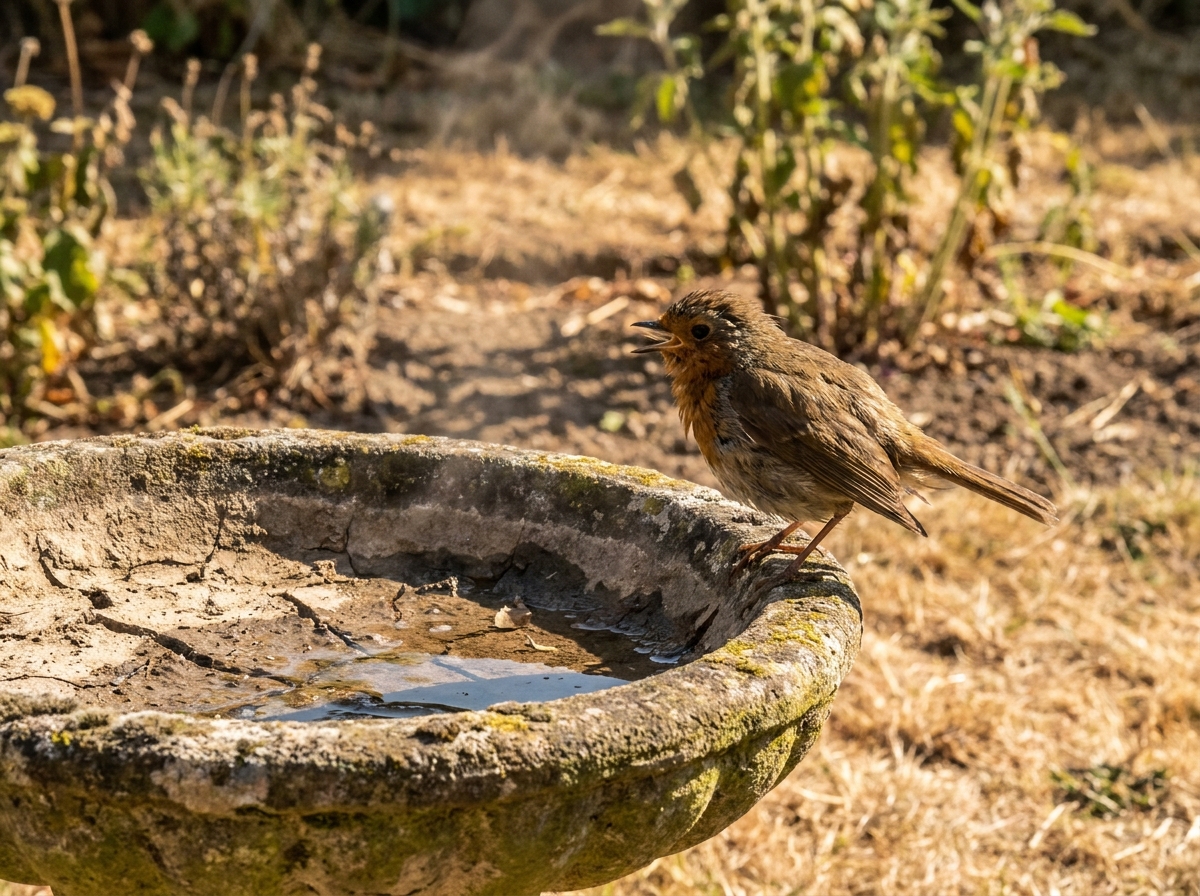
Birds regulate body temperature almost entirely through behaviour — panting with an open beak, pressing themselves into shade, holding their wings slightly away from their body to release heat. But it works only up to a point.
Once air temperatures push past 30°C (86°F), the system starts to fail. This is especially true for small species like sparrows, wrens, and goldfinches, whose tiny bodies heat up and lose moisture with alarming speed. It’s a proper issue.
Fledglings are the most exposed. But they haven’t yet learned where water sources are. They can’t fly far. And they often end up stranded in open, sun-baked areas at exactly the wrong time of year. Quite dodgy.
And with El Niño driving increasingly extreme summer temperatures across the Northern Hemisphere right now, this isn’t a rare edge case. It’s the new summer normal. Sorted.
Want to identify which birds are visiting your garden during the heat? This guide to garden birds does wonders for spotting who’s coming to drink.
Natural water sources — puddles, ponds, garden streams — evaporate fast in a heatwave. The thing is, within 48 hours of sustained heat, a garden that had adequate water on Monday can be bone dry by Wednesday.
Birds that can’t find water within a few hours of onset of severe heat begin to show signs of distress: panting heavily. They move sluggishly. And they sit motionless on the ground.
Motionless on the ground is bad. That’s not a bird resting.
That’s a bird in serious trouble. Bang on.
The RSPB is clear: freshwater provision during hot spells is a non-negotiable step for local bird populations. And the National Audubon Society echoes this for North American readers — especially during prolonged dry heat in western states.
The most non-negotiable thing is also the simplest. Get water out.
But the details matter enormously.
Yes, it’s fiddly getting the height, shade, and depth all right at once. It’s a bit much. But it’s absolutely non-negotiable. Do it anyway — the difference is night and day.
Birds find new water sources remarkably fast. Within 20 minutes of placing a fresh bath in a good spot, you’ll often see your first visitor.
Also put out soft, moisture-rich foods. Overripe fruit. Soaked raisins. Wet mealworms.
Dry seed mixes are actually counterproductive in extreme heat — birds need extra hydration from food as well as direct drinking, and dry seeds pull moisture from their bodies during digestion.
Watch for these — they’re easy to miss. But each one is a signal worth acting on immediately.
If you find a bird collapsed and unresponsive, move it gently into deep shade. Place a properly shallow dish of cool (not cold) water nearby. And leave it alone for 30 minutes. Don’t handle it more than necessary.
Most birds in early-stage heat stress recover on their own once the temperature drops — but they need shade and water to get there.
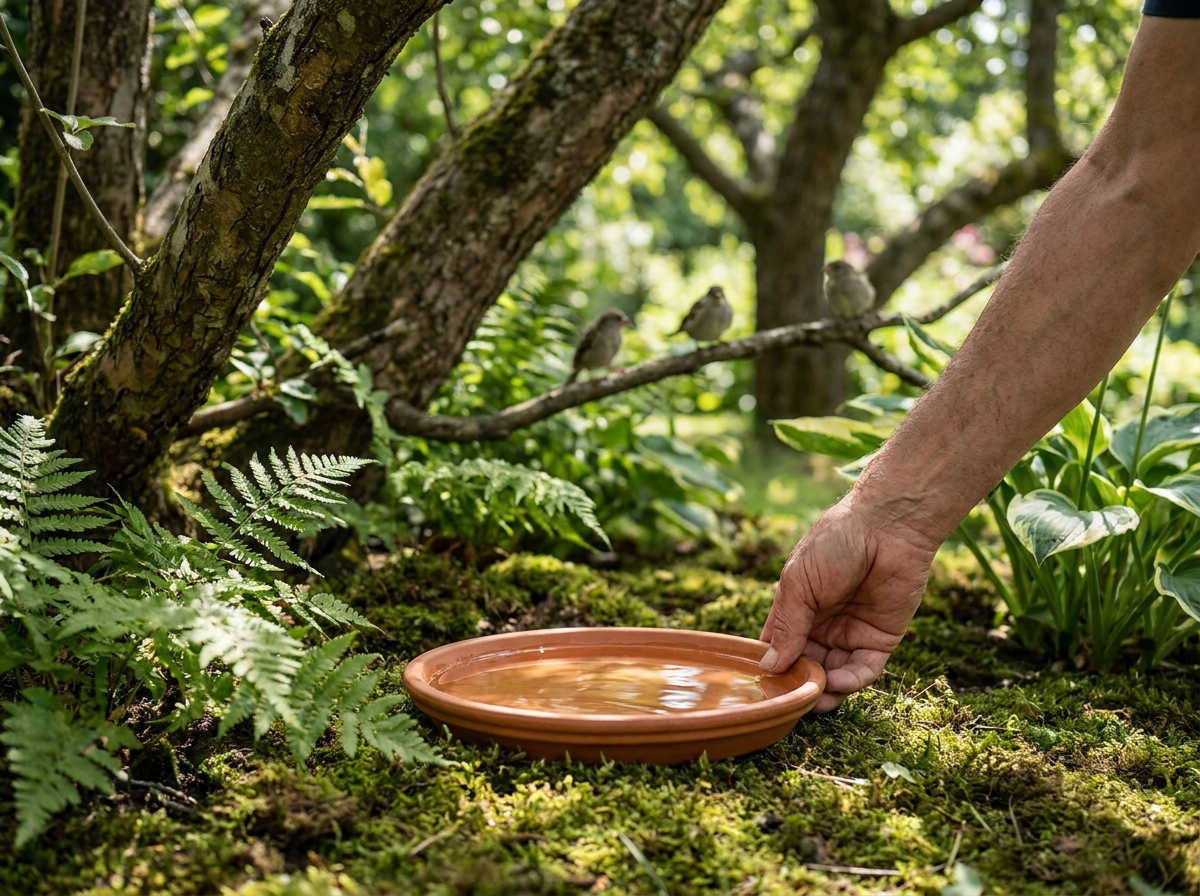
Smart tip: Place your bird bath in dappled shade, no deeper than 5cm, and refill it twice daily during any heatwave.
A single ice cube dropped in is fine and will do wonders for keeping the water cool for longer — but never fill the bath entirely with ice-cold water, as the sudden temperature shock can stress smaller birds.
Yes — wet, moisture-rich foods like soaked raisins, soft fruit, or wet mealworms do wonders for hydration. Avoid dry seed mixes alone during extreme heat, as they require birds to use extra body water to digest them.
Every 2 days minimum during hot weather — standing warm water breeds bacteria and algae fast, and a contaminated bath can make birds sick. A quick rinse with plain water (no soap or chemicals) is all it needs.
In June, Australian, South African, and New Zealand gardeners are heading into winter — but this advice applies exactly to your December and January. Bookmark it now for your summer heatwave season.